
 Budi Mulyono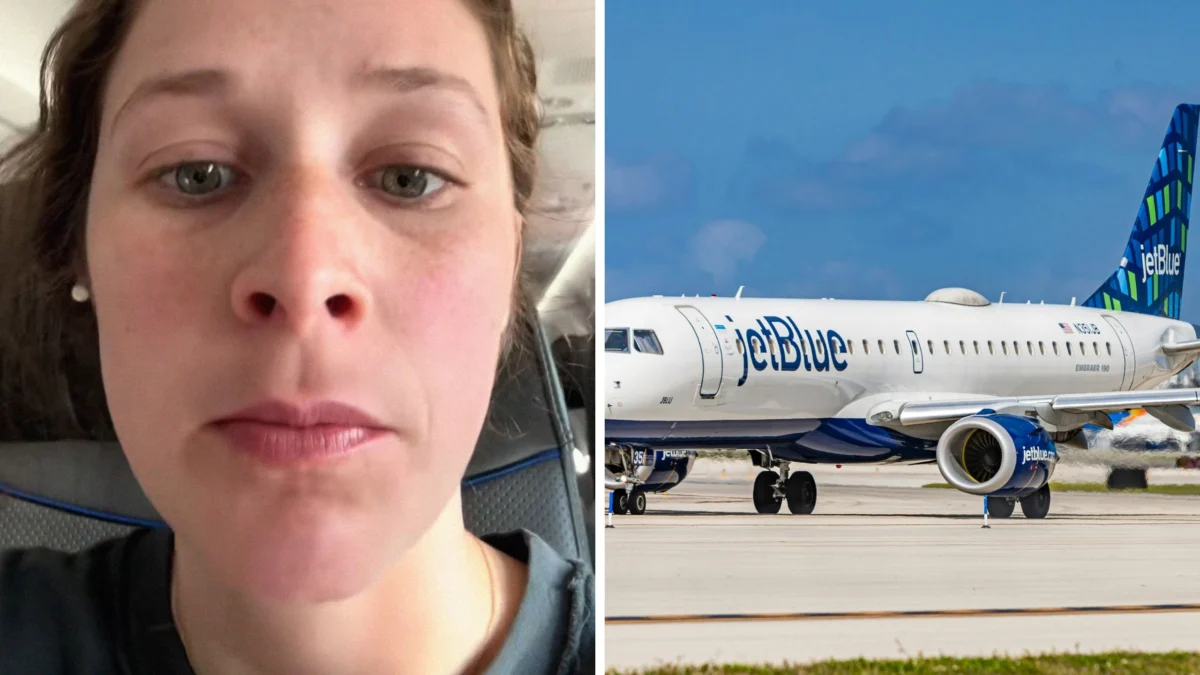
The intersection of air travel safety, medical necessity, and social media discourse has reached a flashpoint following a viral TikTok video involving a JetBlue passenger with a life-threatening peanut allergy. Julia Remillard, a TikTok creator and the founder of Epi-Pals—an organization dedicated to allergy awareness and the production of epinephrine carrier cases—shared her experience boarding a recent JetBlue flight, during which she claims her medical concerns were met with indifference by flight crew members. The video, which has garnered over 5.7 million views, has ignited a fierce debate regarding the responsibilities of airlines toward passengers with disabilities and the growing lack of public empathy toward those managing chronic health conditions in shared spaces.
The incident highlights a significant point of friction in the aviation industry: the lack of standardized, federally mandated protocols for food allergies. While the Air Carrier Access Act (ACAA) protects passengers with disabilities, the specific accommodations for food allergies remain largely at the discretion of individual carriers, leading to inconsistent experiences for the millions of Americans living with anaphylactic sensitivities.
Chronology of the Incident
The event transpired as Remillard boarded a JetBlue flight, traveling solo. According to the video footage and her subsequent statements, Remillard approached the flight attendants upon boarding to disclose her medical status. In the clip, she is heard stating, “I just want to let you know I’m in 21E, but I have an anaphylactic peanut allergy. So just so you guys know…” The video then transitions to Remillard seated in the aircraft, visibly distressed. She alleges that the crew’s initial response was to look at her with confusion before telling her to “proceed to your seat” without offering any immediate safety measures or acknowledging her request for a “buffer zone.”
Remillard further claimed that when she requested advocacy via the aircraft’s intercom or a seat reassignment to mitigate risk, her requests were initially dismissed. She described the crew’s demeanor as lacking empathy and education regarding the severity of anaphylaxis. According to her account, it was only after the aircraft had taken off that a flight attendant approached the surrounding rows to notify them of the allergy—a timing Remillard described as "inappropriately late," as the risk of exposure begins the moment passengers begin consuming snacks during the boarding and taxiing process.
In an email correspondence following the viral post, Remillard noted that while JetBlue eventually responded in the comment section of her video, the response felt impersonal. The airline’s public comment reportedly focused on reiterating their standard "buffer zone" procedures rather than addressing the specific breakdown in communication she experienced on that flight.
The Medical Reality of Peanut Allergies in the United States
The controversy surrounding Remillard’s experience is rooted in the very real medical dangers faced by a significant portion of the American population. According to data from the National Institutes of Health (NIH) and the Centers for Disease Control and Prevention (CDC), between 1.4% and 2% of the U.S. population suffers from a peanut allergy. This translates to millions of individuals for whom exposure to trace amounts of peanut protein can trigger a systemic allergic reaction known as anaphylaxis.
Anaphylaxis is a medical emergency characterized by a rapid drop in blood pressure, constriction of the airways, and swelling of the tongue or throat, which can lead to shock or death if not treated immediately with epinephrine. In the context of a commercial flight, the stakes are exceptionally high. An emergency landing due to a medical crisis is not only life-threatening for the patient but also creates a massive logistical and safety disruption for the airline and all other passengers on board.
While some researchers suggest that the risk of aerosolized peanut dust causing a reaction is lower than previously thought, the risk of contact-based transfer in an enclosed cabin remains a primary concern. Crumbs on tray tables, residue on armrests, and the close proximity of passengers eating nut-based products create a high-risk environment for those with severe sensitivities.
JetBlue’s Stated Allergy Policies
To understand the conflict, it is necessary to examine JetBlue’s official stance on food allergies. The airline’s policy, as stated on its website, is a blend of proactive measures and liability disclaimers. JetBlue does not serve peanuts on its flights; however, it does serve other tree nuts and cannot guarantee that the meals and snacks provided by third-party vendors are free of cross-contamination.
The airline’s "buffer zone" policy is the centerpiece of its accommodation strategy. JetBlue states that upon request, an inflight crewmember will create a buffer zone consisting of the row where the allergic passenger is seated, as well as the row directly in front and the row directly behind them. Crew members are then tasked with asking passengers in those rows to refrain from consuming nut products they may have brought on board.
Crucially, JetBlue’s policy notes that they do not make gate-area or cabin-wide announcements regarding allergies, nor do they restrict other passengers from bringing peanuts onto the aircraft. This creates a reliance on individual crew members to execute the buffer zone protocol effectively and empathetically—a process Remillard claims failed in her instance.
Public Reaction and the Rise of "Allergy Hostility"
The reaction to Remillard’s TikTok video has been sharply divided, reflecting a broader societal tension regarding personal responsibility versus collective accommodation. While many commenters with similar medical conditions praised her for advocating for herself, a substantial portion of the feedback was characterized by intense backlash and hostility.
Critics of the video argued that Remillard’s delivery was "rude" or "entitled," suggesting that she should have personally informed the passengers sitting around her rather than relying on the flight crew. Others questioned the airline’s responsibility altogether, with some users stating that they should not have to alter their behavior for a single passenger’s medical needs.
The most alarming aspect of the backlash involved direct threats. Remillard reported receiving multiple comments from individuals threatening to find her and intentionally expose her to peanuts. "I saw at least five comments threatening to find me and rub peanut butter on me," Remillard stated. This "allergy hostility" is a documented phenomenon where the perceived inconvenience of an accommodation triggers an aggressive or dismissive response toward the person with the disability.
Supporters, including healthcare professionals, countered that Remillard was following standard safety protocols by informing the crew. They argued that a passenger should not be expected to manage a medical emergency alone in a high-altitude environment and that the flight crew, as the primary authority on the aircraft, is the only party capable of effectively enforcing a safety buffer.
Analysis of Implications for the Aviation Industry
The JetBlue incident underscores a lack of regulatory clarity that continues to plague the airline industry. Unlike the European Union, where some regulations provide clearer mandates for food allergy accommodations on flights, the United States relies on a patchwork of airline-specific policies.
The Department of Transportation (DOT) considers food allergies a disability under the Air Carrier Access Act if the allergy substantially limits a major life activity, such as breathing. However, the DOT has stopped short of mandating "nut-free" flights or standardized announcement protocols. This leaves passengers in a precarious position where their safety depends entirely on which airline they book and the specific temperament of the crew on duty.
From a logistical standpoint, the failure to accommodate a passenger with a known anaphylactic allergy is a significant liability risk for an airline. If a passenger suffers a severe reaction mid-flight, the aircraft must often divert to the nearest capable airport. The cost of such a diversion—including fuel, landing fees, and passenger compensation—can reach tens of thousands of dollars. Therefore, advocates argue that simple accommodations, such as pre-boarding for seat cleaning and timely announcements, are not just matters of "decency" but are essential for operational efficiency and safety.
Conclusion and Future Outlook
Julia Remillard’s experience serves as a case study in the challenges of navigating the modern world with a "hidden" disability. While her TikTok video was intended to highlight a lack of professional adherence to safety protocols, it instead exposed a deep-seated societal divide regarding the limits of public accommodation.
For JetBlue and other major carriers, the incident may serve as a catalyst for renewed training on disability empathy and protocol consistency. As the prevalence of food allergies continues to rise—particularly among younger generations—the demand for standardized, reliable safety measures in air travel will only intensify.
For now, passengers with severe allergies remain caught between their need for medical safety and a public that is increasingly resistant to perceived inconveniences. The resolution of this tension likely lies in a combination of federal regulation, clearer corporate policies, and a shift in public discourse toward understanding that a "buffer zone" is not an act of entitlement, but a necessary barrier against a potentially fatal medical emergency.




 Anjar Salim
 Chandra Hamzah
 Tatiana Tantri Indah Sari
 Lukman Taruna Persada Ramadan
