
 Budi Mulyono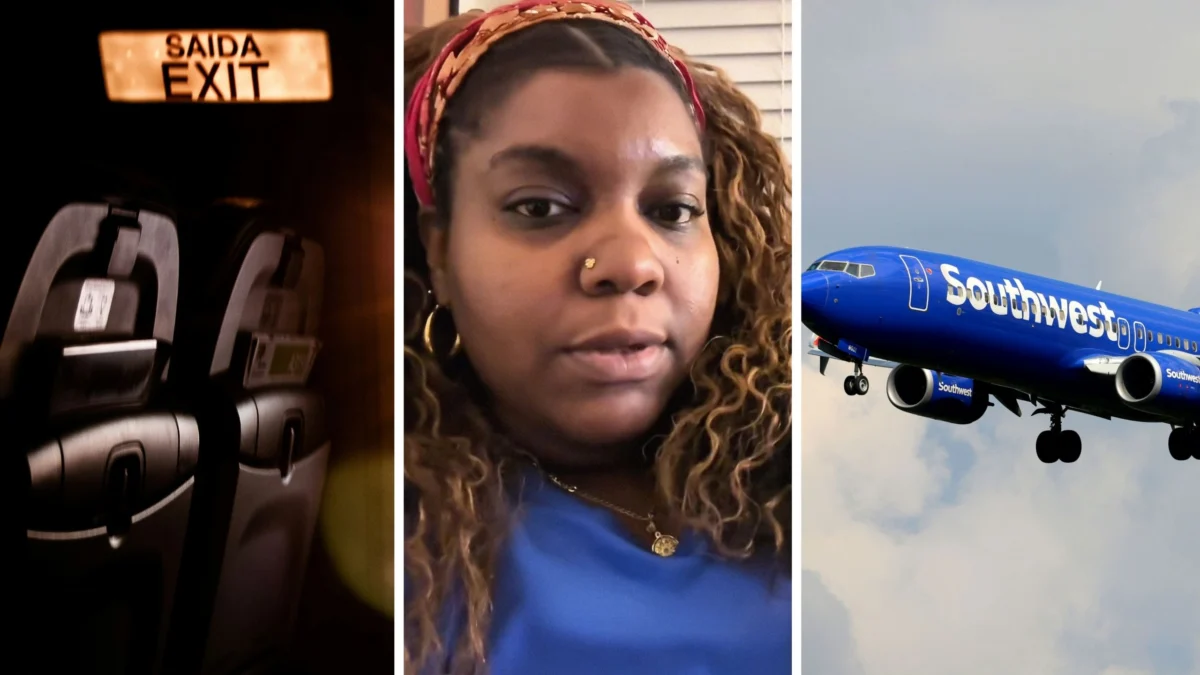
A travel dispute involving a Southwest Airlines passenger has reignited the conversation regarding the intersection of aviation safety regulations and the treatment of "customers of size" within the airline industry. Jessica, a passenger traveling from Baltimore-Washington International Thurgood Marshall Airport (BWI) to Jamaica, recently shared a detailed account of her experience on TikTok, alleging that she was subjected to public humiliation by airline staff after a misunderstanding regarding exit row seating requirements. The incident, which has since garnered nearly 400,000 views, highlights a growing tension between strict Federal Aviation Administration (FAA) safety protocols and the professional standards of customer service expected by the flying public.
The conflict began when Jessica, who identifies as a frequent traveler typically loyal to United Airlines, opted for a Southwest Airlines flight due to a lower fare. Seeking additional legroom for the international leg of her journey, she purchased a seat in the exit row. During the boarding process, Jessica requested a seat belt extender from the cabin crew. This request triggered a series of events that would lead to her removal from the exit row and, according to her testimony, a series of unprofessional interactions with ground and flight personnel.
The Chronology of the Incident at BWI
Upon boarding the aircraft, Jessica was approached by a flight attendant who informed her that she would be unable to remain in the exit row. The justification provided was the use of a seat belt extender, which is classified as a safety disqualification for exit row occupancy under Southwest’s internal policies and broader federal guidelines. Jessica states that she initially accepted this explanation without protest, offering to move to any other available seat on the aircraft.
However, the situation escalated when a second airline representative, described as a gate agent or supervisor equipped with an iPad, boarded the plane to facilitate the reseating. Jessica alleges that this agent repeatedly and loudly announced to the surrounding passengers that Jessica "couldn’t fit" in various seats. According to the passenger’s account, the agent’s repetitive phrasing and lack of discretion created an atmosphere of public embarrassment.
Jessica was eventually relocated to Row 29 of the 30-row aircraft, a seat she described as being in poor physical condition. Following the reseating, a third agent reportedly approached her to question whether she should have purchased a second seat under Southwest’s "Customer of Size" policy. Jessica, feeling targeted and disrespected, declined to engage further and utilized headphones to signal the end of the interaction. While the cabin crew reportedly attempted to rectify the situation later in the flight by offering complimentary refreshments and a small token of apology, Jessica maintained that the damage to the customer experience had already been sustained.
The Regulatory Framework: FAA Rule 121.585
The core of the dispute rests on a legitimate safety regulation that is often misunderstood by the traveling public. Under 14 CFR § 121.585, the Federal Aviation Administration mandates that no air carrier may seat a person in an exit row if it is likely that the person would be unable to perform one or more of the applicable functions required during an emergency evacuation. These functions include reaching for, opening, and lifting an exit door that can weigh up to 60 pounds, as well as exiting the aircraft quickly and assisting others.
The FAA grants airlines the authority to establish specific criteria for determining who is "likely" to be able to perform these duties. Most major U.S. carriers, including Southwest, Delta, and Alaska Airlines, have determined that the use of a seat belt extender is a disqualifying factor for exit row seating. The primary rationale is that the additional length of the extender could pose a significant tripping hazard in the narrow confines of an exit path during a high-stress evacuation scenario. Furthermore, the extender itself could potentially become entangled with the exit door mechanism or other passengers’ luggage during a crisis.
While the safety rule is nearly universal across the industry, the method of disclosure varies significantly. Jessica noted that during her booking process, the usual exit row safety acknowledgments were present, but the specific disqualification regarding seat belt extenders was not explicitly flagged. This lack of transparency at the point of sale is a common grievance among passengers who find themselves reseated after paying a premium for exit row access.
Comparative Analysis of "Customer of Size" Policies
The interaction between Jessica and the Southwest staff also touched upon the airline’s "Customer of Size" policy, which is unique among major U.S. carriers. Southwest’s policy encourages passengers who occupy more than one seat to purchase a second seat in advance to ensure the comfort and safety of all passengers. Notably, Southwest is the only major airline that offers a full refund for the cost of the second seat after travel is completed, even if the flight was sold out.
In contrast, other airlines have more restrictive or less consumer-friendly approaches:
- United Airlines: Requires passengers who cannot fit into a single seat with the armrests down to purchase an additional seat or upgrade to a higher class of service. If no such accommodations are available on the current flight, the passenger may be rebooked on a later flight at the original fare.
- Delta Air Lines: Does not require the purchase of a second seat but notes that if a passenger cannot fit within the seat’s boundaries, they may be asked to move to another location or wait for a flight with more available space.
- American Airlines: Requires the purchase of a second seat if a passenger’s body extends more than one inch beyond the outermost edge of the armrest.
The dispute in Jessica’s case highlights a critical failure in communication. While the gate agent suggested she should have bought a second seat, the passenger argued that she was a paying customer who had simply selected an inappropriate seat based on a technicality she was not informed of during booking.
The Role of Social Media in Aviation Accountability
The viral nature of Jessica’s TikTok video underscores the power of social media in shaping public perception of airline brands. With over 397,000 views, the video served as a platform for other travelers to share similar experiences. The comments section of the video revealed a divide in the industry: while some flight attendants confirmed that the seat belt extender rule is a strict safety requirement at Delta and Southwest, others claimed it is handled with far more discretion and privacy at carriers like United or American.
For airlines, these viral incidents represent a significant public relations challenge. Southwest Airlines, which has long marketed itself on the "LUV" brand and a reputation for friendly service, faces increased scrutiny when staff interactions are perceived as cold or exclusionary. The "POV" (Point of View) format of modern social media allows passengers to broadcast their immediate emotional reactions to a global audience, often before the airline’s corporate communications team can issue a formal response.
Legal Implications and the Path Forward
Despite the public outcry, the legal avenues for passengers in Jessica’s position are limited. Under current federal law in the United States, body size is not a protected class. The Americans with Disabilities Act (ADA) and the Air Carrier Access Act (ACAA) provide protections for individuals with recognized disabilities, but weight or size alone does not typically qualify for these protections unless it is tied to an underlying physiological disorder.
Jessica noted in a follow-up video that legal counsel advised her that a lawsuit would likely be unsuccessful and cost-prohibitive. This leaves passengers with few options other than filing formal complaints with the airline and the Department of Transportation (DOT). In this instance, Southwest Airlines reportedly responded to Jessica’s formal complaint by acknowledging that while the safety rule was correctly applied, the manner in which it was communicated was inappropriate. The airline issued a $100 travel voucher as a gesture of goodwill, adding to previous credits for a total of $250.
Broader Industry Implications
The incident serves as a case study for the airline industry on the necessity of better digital integration and staff training. To prevent similar conflicts, industry analysts suggest that booking engines should be updated to include explicit warnings that the use of a seat belt extender disqualifies a passenger from exit row seating. By moving this "discovery" from the cabin to the booking screen, airlines can avoid the logistical and emotional complications of reseating a passenger after they have already boarded.
Furthermore, the case emphasizes the need for consistent sensitivity training. While safety protocols are non-negotiable, the "human element" of aviation remains a vital component of brand loyalty. As Jessica concluded in her social media update, the financial compensation provided by Southwest was insufficient to restore her trust in the brand. For the airline industry, the challenge remains: maintaining the highest standards of safety without compromising the dignity of the diverse population it serves. As aircraft cabins become more crowded and seats continue to shrink, the frequency of these interactions is likely to increase, placing even greater importance on the professional conduct of frontline employees.



 Anjar Salim
 Chandra Hamzah
 Tatiana Tantri Indah Sari
 Lukman Taruna Persada Ramadan
