
 Anjar Salim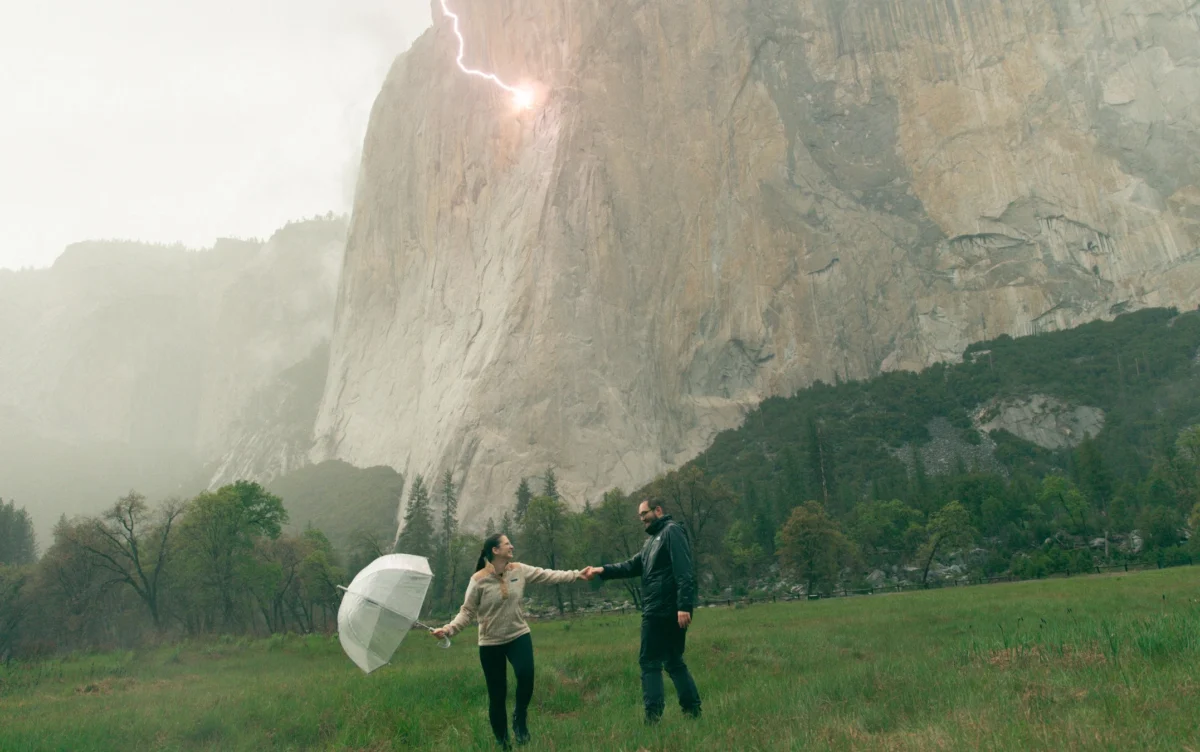
The intersection of meticulous planning and atmospheric volatility recently culminated in a photographic event that has captured the attention of the global outdoor community. In Yosemite National Park, California photographer Erica Houck successfully documented a marriage proposal framed not only by the granite majesty of El Capitan but also by a perfectly timed, mid-storm lightning strike. The image, which features a couple from Germany standing under a clear umbrella as electricity arcs across the face of one of the world’s most famous monoliths, serves as a stark reminder of the unpredictable rewards inherent in wilderness photography.
The event was the result of eight months of cross-continental coordination. The unnamed couple had traveled from Germany specifically to facilitate a proposal in the heart of the Sierra Nevada mountains. Despite the logistical complexity of the trip, the arrival of the couple coincided with a significant weather system that brought torrential rain and electrical activity to the Yosemite Valley. While many visitors retreated to the safety of their vehicles or park lodgings, the couple and their photographer, Erica Houck, elected to proceed with the scheduled session at Tunnel View, a vantage point renowned for its sweeping vistas of El Capitan, Half Dome, and Bridalveil Fall.
The Chronology of a High-Stakes Photoshoot
The timeline of the event began nearly a year prior, with the groom-to-be reaching out to Houck to secure a professional documentation of the proposal. Yosemite National Park, a UNESCO World Heritage site that attracts over 3.5 million visitors annually, is a premier destination for milestone photography. However, the success of such sessions is frequently at the mercy of the park’s microclimates.
On the day of the proposal, the forecast for the Yosemite Valley turned increasingly "grim," characterized by heavy cloud cover and high precipitation probabilities. According to reports, Houck maintained communication with the couple as the storm front approached. Recognizing the potential for a "washout," she offered to reschedule the session to a later date to ensure clearer views and more comfortable conditions. However, the couple, constrained by a strict travel itinerary and a firm commitment to their original vision, decided to brave the elements.
Upon arrival at Tunnel View, the trio was met with a deluge. The typical crowds that gather at the overlook were sparse, driven away by the booming thunder and the intensity of the downpour. Under the protection of a clear umbrella—a choice that proved vital for the aesthetic of the final image—the couple took their positions. It was during this period of "chaotic" weather that the proposal occurred.
Technical Challenges and the "Unplanned Gift"
For a professional photographer, shooting in a torrential downpour presents significant technical hurdles. The low-light conditions necessitated a careful balance of shutter speed and aperture to maintain clarity without excessive noise, while the moisture required weather-sealed equipment and constant maintenance of the lens surface.
Houck’s primary focus during the shoot was on the couple’s interaction and the framing of the proposal. The storm was so intense that the actual moment of the lightning strike went unnoticed by all three participants. It was not until Houck returned to her studio to begin the "culling" process—the systematic review and selection of the best frames from a session—that the extraordinary nature of the image was revealed.
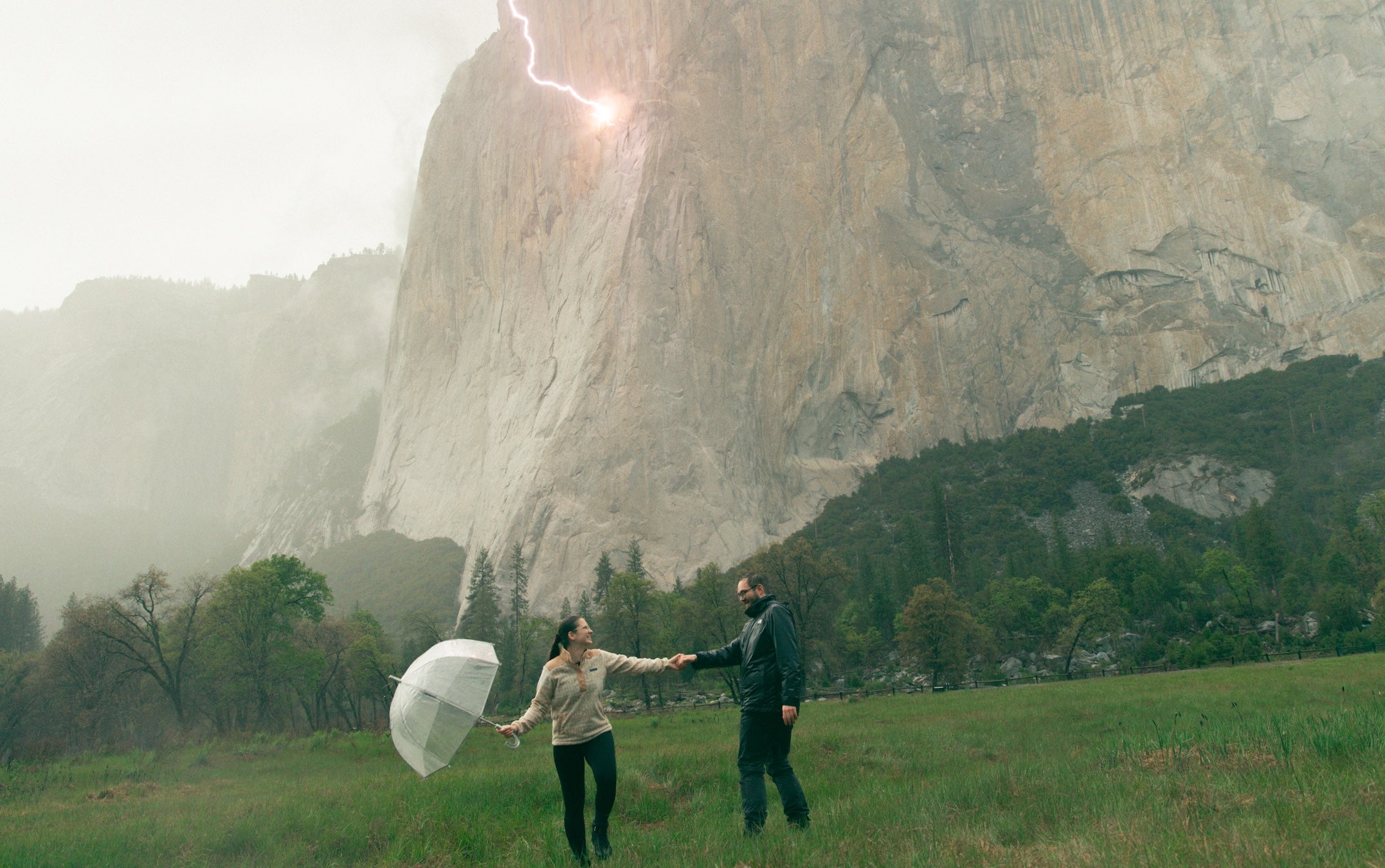
"I had no idea I even captured that photo until I got home," Houck stated in an interview with Outside. The image shows a singular, powerful bolt of lightning connecting with the upper reaches of El Capitan, the 3,000-foot granite monolith that serves as a mecca for rock climbers. The composition is remarkably balanced, with the couple centered in the foreground and the electrical discharge providing a dramatic, vertical counterpoint to the horizontal lines of the valley floor. Houck described the discovery as a moment that "stopped me dead in my tracks," noting the rare alignment of focus, composition, and timing.
Meteorological Context of the Yosemite Valley
The occurrence of lightning in Yosemite is a well-documented phenomenon, particularly during the transition between spring and summer when moisture-rich air from the Pacific interacts with the steep topography of the Sierra Nevada. El Capitan, being a massive, exposed conductor of granite, is a frequent target for cloud-to-ground strikes.
According to data from the National Weather Service (NWS), lightning in mountainous terrain is particularly dangerous due to the speed at which storms can develop. The NWS advises that "when thunder roars, go indoors," a protocol that emphasizes the risks of remaining in exposed areas like Tunnel View during an active storm. While the resulting photograph is a triumph of timing, it also highlights the inherent risks photographers and tourists take when operating in high-altitude wilderness areas during electrical activity.
The strike captured by Houck is a "cloud-to-ground" (CG) discharge. CG lightning is the most damaging and dangerous form of lightning, although it is less common than "in-cloud" lightning. In a typical year, the United States experiences approximately 20 million cloud-to-ground lightning strikes. The probability of capturing such a strike in the same frame as a human-centered milestone like a proposal is statistically negligible, categorizing the image as a "once-in-a-lifetime" occurrence.
Yosemite as a Global Stage for International Tourism
The fact that the couple traveled from Germany for this specific moment underscores the global reach of the United States National Park System. In 2023, international travelers accounted for a significant portion of Yosemite’s economic impact, which totals over $500 million annually for the surrounding gateway communities.
Tunnel View, where the photo was taken, is perhaps the most photographed location in the park. It was made famous by early pioneers of landscape photography, most notably Ansel Adams, whose black-and-white depictions of the valley helped catalyze the modern environmental conservation movement. Houck’s work follows in this tradition but introduces a contemporary element of "adventure photography," where the human story is integrated into the raw, unyielding power of the natural world.
The trend of "destination proposals" has seen a surge in recent years, fueled by social media platforms like Instagram, where Houck maintains a professional presence. Photographers specializing in National Park sessions often spend months scouting locations and monitoring light patterns. However, as Houck noted, no amount of planning can account for the "magic" of an unplanned atmospheric event.
Analysis of the Professional Implications for Wilderness Photography
The viral nature of the El Capitan lightning photo has sparked a discussion within the photography community regarding the value of "leaning into" unpredictable conditions. Houck’s experience suggests a shift away from the controlled environment of studio photography toward a more organic, high-risk, high-reward approach.
"You can create really beautiful, intentional images in a controlled environment," Houck observed. "But for me, being out in nature, especially in those wild, unpredictable conditions, just hits differently."
This sentiment reflects a broader philosophy in modern outdoor journalism and photography: the idea that the "realness" of a moment is amplified by the presence of elements that cannot be staged. From a professional standpoint, the ability to deliver high-quality results under physical duress—such as a thunderstorm in the Sierras—distinguishes top-tier wilderness photographers from hobbyists.
Safety and Ethics in Extreme Weather Photography
While the photo has been celebrated for its beauty, it also serves as a case study for safety in the outdoors. National Park Service (NPS) rangers frequently issue warnings about the dangers of lightning, especially on high ridges and near large rock formations. El Capitan, due to its height and composition, acts as a natural lightning rod.
The NPS guidelines for lightning safety include:
- Seeking Shelter: Moving to a fully enclosed building or a metal-topped vehicle.
- Avoiding High Ground: Descending from ridges and peaks.
- Staying Away from Tall Objects: Avoiding isolated trees or cliff edges.
In this instance, the group was at an established overlook, but the proximity to an active strike on El Capitan indicates they were within the danger zone. The success of the photo does not mitigate the objective hazards present during the shoot, a fact that professional photographers must weigh when deciding whether to proceed with a session in deteriorating weather.
Conclusion: The Intersection of Human Milestones and Natural Power
The El Capitan lightning proposal photo remains a definitive example of the "unplanned gift" that nature occasionally bestows upon those who persist through its challenges. For the German couple, the image is more than a wedding announcement; it is a document of their resilience and their willingness to embrace the "chaos" of the environment they chose for their engagement.
For Erica Houck, the photograph has become a career-defining achievement that validates her preference for the unpredictable. As she noted, the strike felt like a "nod from the universe," a rare moment where the grand scale of geological time and atmospheric energy intersected perfectly with a fleeting human emotion. In the realm of journalistic and landscape photography, such moments are the ultimate goal—capturing the raw, unscripted reality of life on Earth.


 Budi Mulyono

 Lukman Taruna Persada Ramadan
 Chandra Hamzah