
 Cholid Fahmi Thalib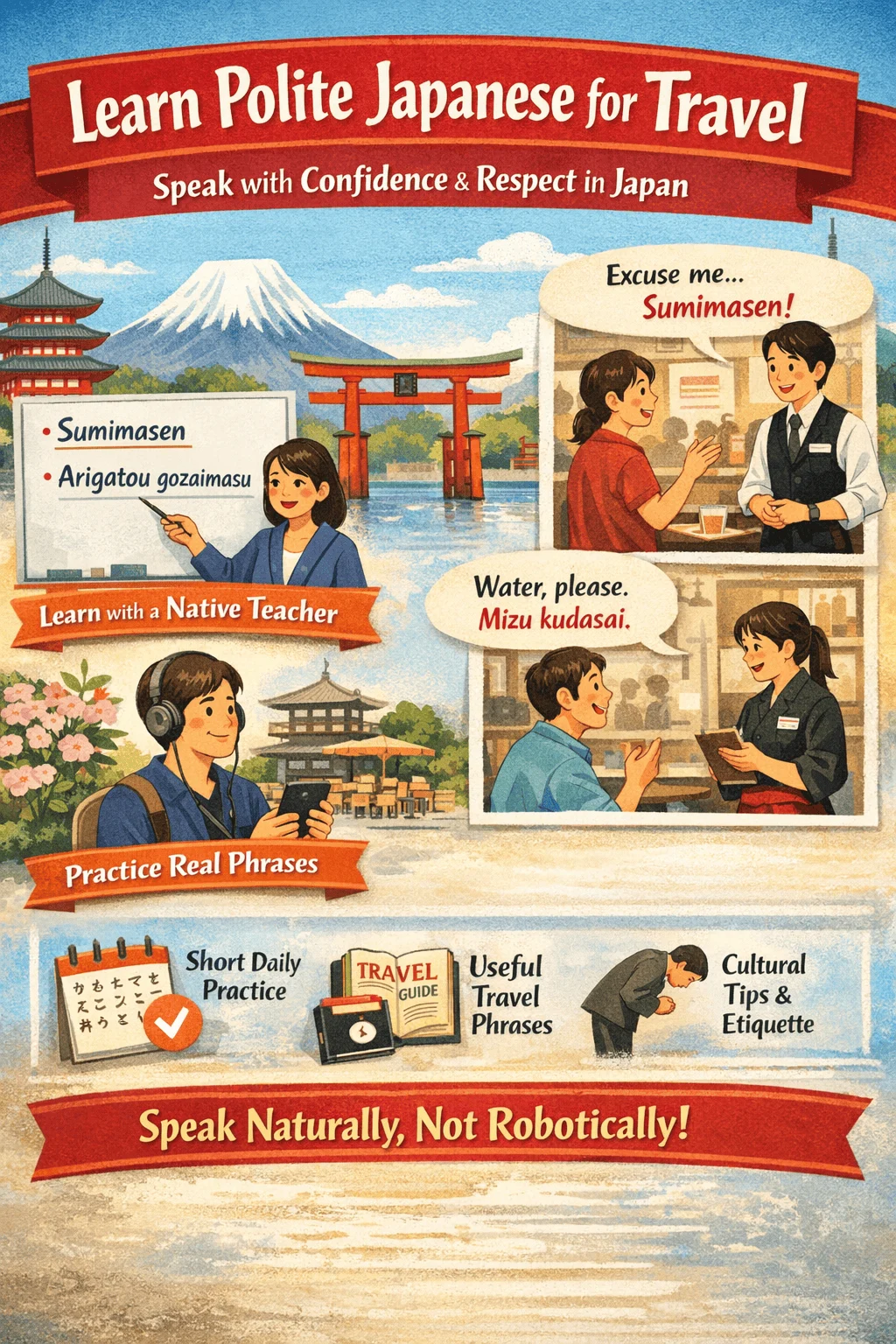
Traveling in Japan offers an unparalleled cultural immersion, yet navigating its intricacies can feel smoother and more rewarding when one can communicate with respect and confidence. While many travelers grapple with the daunting task of memorizing extensive phrase lists, a more effective and natural approach involves focusing on real conversations and practical phrases, rather than rote memorization. This method not only aids in understanding the nuances of politeness in everyday Japanese interactions but also fosters genuine connection with local communities. The key lies in understanding how politeness functions within the cultural context, enabling travelers to move beyond robotic recitation towards fluid and appropriate communication.
The efficacy of learning polite Japanese is amplified when learners are exposed to authentic usage in real-life situations. Understanding the rationale behind specific linguistic choices—why a particular honorific is used, or why a certain sentence structure conveys deference—is crucial. While some travelers opt for traditional guidebooks or short audio courses, a growing number are finding significant value in personalized instruction. Engaging a Japanese teacher for travel preparation, for instance, provides a focused curriculum tailored to common scenarios such as ordering food, checking into accommodations, or seeking directions. This targeted guidance ensures that learners prioritize practical vocabulary and phrases they are likely to encounter, rather than investing time in memorizing expressions that may seldom be used. This personalized approach can significantly accelerate the learning curve, making the travel experience more enriching and less stressful.
Evidence suggests that consistent, short-duration practice coupled with contextual exposure leads to superior retention compared to intensive textbook study. Hearing polite Japanese phrases used naturally within dialogues allows learners to internalize the rhythm, intonation, and structural patterns. Over time, this repeated exposure cultivates an ability to respond spontaneously and with confidence, rather than relying on pre-rehearsed sentences. This organic acquisition process mirrors how native speakers learn and use their language, making it a highly effective strategy for travelers aiming for practical fluency.
Key Takeaways for Effective Japanese Communication
- Contextual Learning: Prioritize understanding phrases within real-life scenarios over memorizing isolated words.
- Focus on Practicality: Concentrate on frequently used phrases for common travel situations.
- Active Listening: Pay attention to tone, intonation, and cultural cues accompanying polite speech.
- Consistent Practice: Short, daily exposure and practice yield better long-term retention.
- Cultural Nuance: Integrate basic cultural etiquette, such as bowing and appropriate greetings, with linguistic skills.
Mastering Essential Polite Japanese Quickly
Developing practical speaking skills in polite Japanese for travel purposes hinges on a strategic focus on key areas: courtesy phrases, essential greeting patterns, and concise expressions for urgent or sensitive situations. This targeted approach empowers travelers to navigate daily life in Japan with confidence, circumventing the need to memorize extensive and often overwhelming lists of vocabulary. By concentrating on these high-yield linguistic tools, individuals can build a solid foundation for respectful and effective communication.
Most-Used Courtesy Phrases and Their Functions
Certain polite words and phrases are foundational to almost every social exchange in Japan, acting as linguistic linchpins that facilitate smooth interactions. The word "Sumimasen" is a prime example; its versatility allows it to function as "excuse me" to gain attention, or as an apology for minor inconvenconveniences. For instance, a traveler might use "Sumimasen" to signal to a server in a restaurant or to apologize for accidentally bumping into someone. The phrase "Kudasai" translates to "please" and is indispensable for making respectful requests. Combining it with a noun, such as mizu kudasai ("water, please"), transforms a simple demand into a polite solicitation, demonstrating an understanding of Japanese social etiquette.
Other indispensable expressions include "Arigatou gozaimasu" (thank you very much), which conveys a higher degree of gratitude than the informal "arigatou," and "Onegaishimasu." The latter is a more formal and versatile "please," often used when making a request or entrusting someone with a task, carrying a sense of polite appeal. The key to remembering these phrases lies in understanding their specific purpose and the context in which they are appropriately used, fostering retention through application rather than rote memorization.
To achieve a natural-sounding delivery, attention to tone and timing is paramount. Polite Japanese is often spoken with a softer voice, and the verbal expression is frequently accompanied by non-verbal cues such as a slight bow. In commercial settings like shops and restaurants, the consistent, natural repetition of simple travel phrases like sumimasen or arigatou throughout the day reinforces their usage and strengthens a traveler’s comfort with these fundamental Japanese basics. This consistent reinforcement is critical for embedding these phrases into spontaneous speech patterns.
Strategic Greetings for Different Situations
Japanese greetings are not merely perfunctory exchanges; they are significant indicators of respect, awareness of time, and acknowledgment of the social setting. Mastering these greetings allows travelers to align with local customs and demonstrate cultural sensitivity. The standard greetings are time-dependent: "Ohayou gozaimasu" is used in the morning, "Konnichiwa" during the day, and "Konbanwa" in the evening. Subtle adjustments in the timing of these greetings can significantly enhance a traveler’s integration into daily routines and interactions.
While "Sayonara" is widely recognized as "goodbye," its usage can sometimes imply a more permanent parting. Among friends or in informal settings, locals frequently opt for shorter, more casual farewells such as jaa ne or mata ne. However, for polite departures in public spaces or when leaving a formal setting, "Shitsurei shimasu" (excuse me for leaving) or "Dewa mata" (see you later, in a polite context) are more appropriate. Each of these phrases is best employed within its defined context, preventing the traveler from sounding either overly formal or inappropriately casual.
The act of greeting in Japan is intrinsically linked to omotenashi, the deeply ingrained concept of wholehearted hospitality. Returning a greeting with sincerity, even if language fluency is limited, signals respect for the culture and the individual. A warm smile and a subtle nod can bridge communication gaps where perfect linguistic command is absent, fostering positive connections and demonstrating genuine goodwill.
Minimal Phrases for Emergencies and Apologies
In the unpredictable nature of travel, having a few brief, impactful expressions readily available can be crucial for managing unexpected situations. For immediate assistance, "Tasukete!" serves as a clear and urgent cry for "help!" When faced with a medical concern, knowing how to ask "Byouin wa doko desu ka?" (Where is the hospital?) can be vital. Having these concise phrases memorized ensures clear and effective communication during critical moments.
For minor mistakes or when causing inconvenience, "Sumimasen" is again the go-to phrase. However, for more significant apologies, "Gomen nasai" conveys a deeper sense of regret and responsibility, without requiring lengthy explanations. These polite acknowledgments are essential for maintaining social harmony and demonstrating accountability.
Travelers are advised to compile a concise list of essential emergency phrases before their journey:
- Tasukete! (Help!)
- Byouin wa doko desu ka? (Where is the hospital?)
- Kyuukyuusha o yonde kudasai. (Please call an ambulance.)
- Kore wa nan desu ka? (What is this?)
- Ikura desu ka? (How much is it?)
- Wakarimasen. (I don’t understand.)
- Gomen nasai. (I’m sorry.)
These minimal but crucial phrases empower travelers to respond clearly and respectfully, even under pressure, while upholding the high standards of courtesy that are so highly valued in Japanese language and culture.
Effective Learning Methods for Travelers
The acquisition of polite and functional Japanese for travel purposes does not necessitate extensive study hours. By focusing on practical expression, real-world application, and the cultivation of simple, consistent habits, travelers can achieve significant proficiency. A keen awareness of natural speech patterns and the underlying cultural context is instrumental in sounding more respectful and projecting greater confidence during travel.
Memorization-Free Techniques for Rapid Results
Rather than dedicating time to protracted vocabulary lists, an effective strategy involves learning through context. Engaging with short, authentic conversations, such as asking for directions or ordering a meal, provides immediate practical application. The repeated exposure to these concise, useful phrases facilitates faster memory consolidation than traditional rote study. This contextual approach helps learners grasp how polite words seamlessly integrate into natural dialogue.
Breaking down the learning process into small, manageable goals can also enhance efficiency. For instance, a traveler might aim to master basic greetings and farewells within the first few days, followed by phrases for ordering food and making simple requests. This incremental approach prevents overwhelm and builds a sense of accomplishment.
Shadowing practice, a technique involving the repetition of short audio clips aloud, is highly effective for improving accent and intonation without the burden of memorization. By mimicking native speakers, learners begin to naturally discern and adopt the subtle distinctions between polite and casual forms of speech, refining their auditory perception and vocal production.
Leveraging Japanese Writing Systems for Politeness
A foundational understanding of the Japanese writing system can significantly enhance a traveler’s ability to recognize and utilize polite language. Beginning with hiragana is recommended, as this phonetic script forms the basis of many polite verb endings and common expressions. Subsequent familiarity with katakana is useful for recognizing foreign loanwords that appear on signs, menus, and product labels. Later, focusing on essential kanji—such as those representing concepts like day (日), eat (食), or go (行)—can further enrich comprehension.
Each of the writing styles offers clues about the tone and formality of the text. For example, kanji often appear in formal contexts, such as on official signage in shops and train stations, signaling the presence of polite language. Reading these signs allows for the identification of polite words through visual context rather than solely through memorization, reinforcing learned phrases and introducing new ones organically. Maintaining a small notebook or digital note-taking app for useful symbols and phrases encountered in real life helps to bridge the gap between visual recognition and practical application.
Using Technology and Cultural Tools
Modern language learning apps and digital tools offer a streamlined pathway to refine linguistic skills. Speech recognition features in many applications allow for immediate pronunciation practice and correction, ensuring that spoken phrases are accurate. Translation tools, such as Google Translate, can be valuable for checking grammar and inferring tone, but it is always advisable to test phrases aloud to gauge their naturalness.
Audio-based learning resources with adjustable playback speeds are excellent for improving listening comprehension. These can be effectively paired with short role-playing exercises, simulating scenarios like seeking assistance at a train station or ordering tea.
Beyond digital aids, understanding and integrating cultural habits into communication is equally important. Subtle gestures like a slight bow, the appropriate use of honorifics such as "-san" appended to names, and demonstrating patience are all integral components of polite interaction in Japan. Combining these small cultural courtesies with basic Japanese phrases creates more meaningful and positive interactions, showcasing genuine effort and respect for Japanese customs.
In conclusion, mastering polite Japanese for travel in Japan is achievable without succumbing to the tedium of memorizing extensive phrasebooks. The most effective strategy involves concentrating on phrases directly relevant to everyday travel needs, such as greetings, requests, and expressions of gratitude. By actively using these phrases in real-life situations, they become ingrained naturally, transforming from learned material into habitual responses.
Practicing small, manageable sets of words and phrases and consciously employing them throughout the trip is a powerful retention technique. For instance, consistently using "arigatou" (thank you) or "sumimasen" (excuse me) not only facilitates smoother interactions but also signals respect to locals, who often value effort and genuine attempts at communication more than perfect linguistic accuracy. This consistent application rapidly builds confidence.
Observing and listening to how native speakers converse, paying close attention to their tone, intonation, and accompanying gestures, provides invaluable insights into what sounds natural and appropriate. Over time, these observations help cultivate habits that make polite speech an integral part of a traveler’s routine.
Ultimately, the journey to speaking polite Japanese is best undertaken through consistent application and practice, rather than through memorization alone. By focusing on meaningful phrases, actively seeking opportunities for real interaction, and maintaining patience with the learning process, travelers can gain both comfort and respect as they explore the rich tapestry of Japan. The reward is not just improved communication, but a deeper, more authentic connection with the culture and its people.



 Anjar Salim
 Dwi Wanna
 Budi Mulyono
 Lukman Taruna Persada Ramadan
 Chandra Hamzah
 Gabriela Annisa