
 Anjar Salim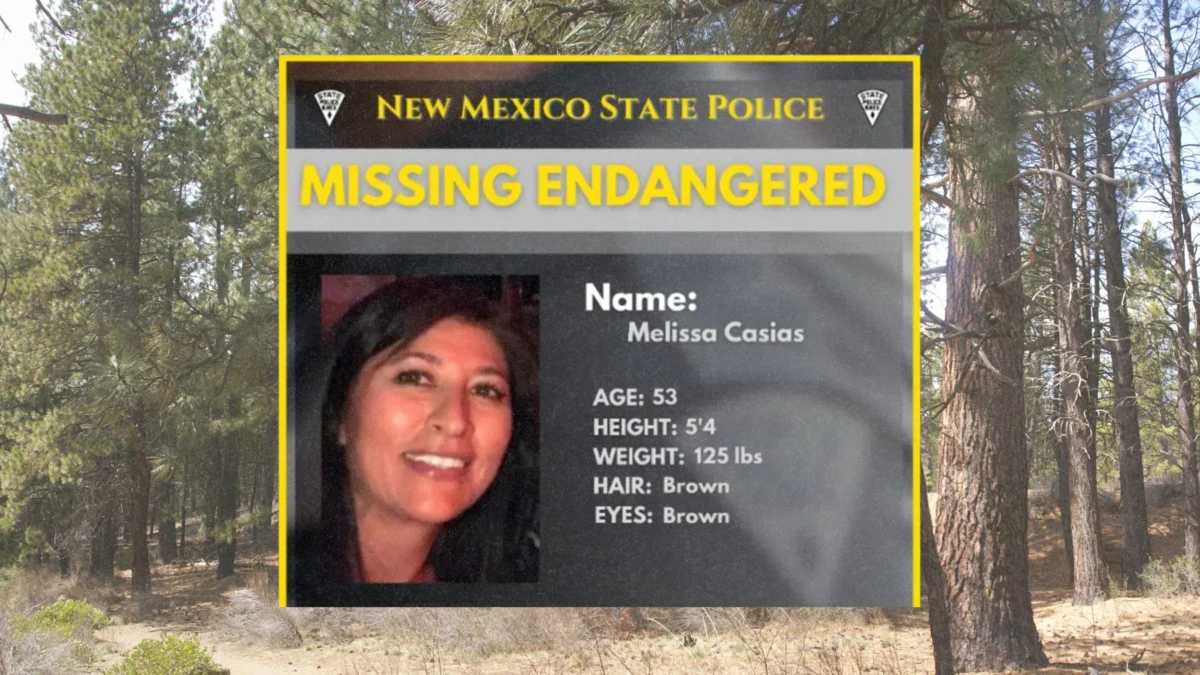
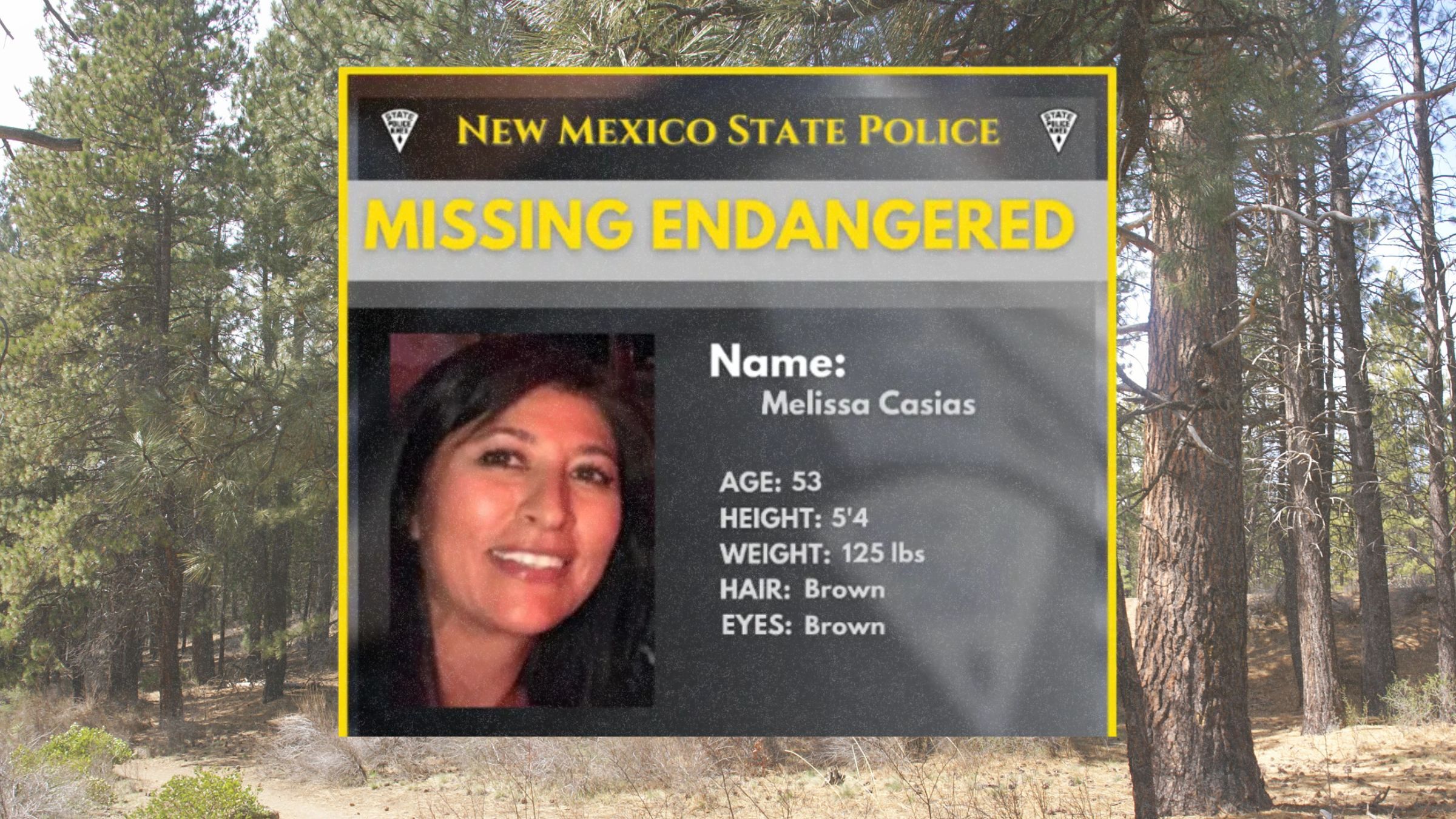
The discovery of human remains on a high-elevation ridgeline in Northern New Mexico has brought a somber conclusion to a year-long search for a missing Los Alamos National Laboratory (LANL) employee, while simultaneously opening a complex new chapter for federal and state investigators. On May 28, 2026, a hiker navigating the rugged terrain of McGaffey Ridge in the Carson National Forest stumbled upon the remains of 53-year-old Melissa Casias, who had been missing since late June of the previous year. The discovery, confirmed by the New Mexico State Police (NMSP), included a handgun found in close proximity to the body, adding a layer of forensic complexity to a case that has already captured national attention due to the victim’s professional background and the unusual circumstances of her disappearance.
Located approximately 15 miles north of the village of Peñasco, McGaffey Ridge sits at an elevation of roughly 8,600 feet. The area is characterized by a dense, timbered maze of Ponderosa Pines and Douglas Firs, accessible only by remote dirt roads and steep, rocky jeep trails. Local residents often describe this section of the Carson National Forest as "locals-only" territory, citing the steep canyons and the relative lack of marked hiking trails that make it nearly inaccessible to those unfamiliar with the specific topography. It is within this unforgiving landscape that the mystery of Casias’s final days remains centered.
A Chronology of the Disappearance
The timeline of the Melissa Casias case begins on June 26, 2025. Casias, a resident of Taos and an administrative assistant at the Los Alamos National Laboratory, was reported missing after failing to show up for her scheduled shift at the high-security research facility. Concern escalated rapidly when her family discovered that she had not returned home after a routine visit to her daughter.
Initial investigations by the New Mexico State Police revealed several troubling details. Surveillance footage captured Casias’s final known movements along a highway in the Talpa neighborhood of Taos, approximately five miles from her residence. In the footage, she was seen wearing a backpack and a turquoise shirt, having just dropped off lunch for her daughter. However, a subsequent search of her home revealed that her most essential personal belongings—including her purse, government identification, and her cellular phones—had been left behind. Most notably, forensic analysis later determined that her phones had been manually reset to factory settings, effectively wiping any immediate digital trail of her communications or GPS data prior to her disappearance.
For nearly twelve months, the case remained cold despite extensive efforts by local law enforcement and volunteer organizations. The discovery on May 28, 2026, occurred roughly 15 miles from her home, in a location that contrasts sharply with the valley floor where she was last seen.
Challenges of the Initial Search and Rescue Operation
In the days following the initial missing persons report in 2025, a massive coordinated search effort was launched. Search and Rescue (SAR) Taos, led by President and K9 unit leader Delinda VanneBrightyn, spearheaded the ground operations. VanneBrightyn, a veteran with 24 years of experience in the field, described the mission as one of the most grueling in her career.
The search teams focused their efforts on the "point last seen" (PLS), moving southbound from Highway 518. This route connects the Talpa neighborhood to the surrounding mountain passes. However, the environmental conditions at the time were catastrophic for tracking. Unseasonable weather had turned the low-lying areas into a morass of upper-thigh-deep mud. Searchers, accompanied by specialized K9 units from Sandia Search Dogs, were forced to navigate dense willow thickets and deep beaver ponds.
"We were moving just one foot at a time," VanneBrightyn recalled in an interview. "It was so intense that even the dogs were exhausted beyond anything I’ve seen on hundreds of previous missions."
Despite the use of drones, multiple K9 teams, and dozens of ground personnel, the search failed to yield results. Modern analysis suggests that Casias’s remains were located approximately 1.5 miles away from and significantly higher than the primary search zone. Reaching the ridgeline from the valley where the search originated would have required a technical ascent that typically necessitates specialized climbing equipment. At the time, SAR teams had no intelligence or physical evidence suggesting that Casias had the equipment or the inclination to attempt such a climb.
Forensic Analysis and the Carson National Forest Environment
The Carson National Forest spans 1.5 million acres and contains some of the most diverse and difficult terrain in the American Southwest. The McGaffey Ridge section is particularly isolated. The discovery of a handgun near the remains has shifted the focus of the investigation toward ballistics and forensic pathology. The New Mexico Office of the Medical Investigator (OMI) is currently tasked with determining the cause and manner of death—whether the result of foul play, an accident, or self-inflicted harm.
The presence of the firearm raises several questions for investigators. While New Mexico is a state with high rates of legal firearm ownership, the combination of a reset cell phone and a weapon in a remote location often points toward a premeditated sequence of events. However, the NMSP has cautioned the public against jumping to conclusions. The investigation must account for the possibility that the weapon was carried for protection against the region’s apex predators, such as mountain lions and black bears, or that third-party involvement was a factor.
The Los Alamos National Laboratory Connection
A significant factor contributing to the intensity of the investigation is Casias’s employment at Los Alamos National Laboratory. Established in 1943 as part of the Manhattan Project, LANL remains one of the world’s most sensitive scientific institutions, focusing on nuclear non-proliferation, space exploration, and national security research.
Casias’s role as an administrative assistant provided her with access to the facility’s 40-square-mile campus, which employs approximately 14,000 people. While there is no current evidence to suggest that her disappearance was related to her work with classified materials, the FBI has taken a keen interest in the case. This interest is driven by a statistical anomaly: Casias is one of at least ten individuals associated with sensitive national laboratories or aerospace technology firms in the region who have gone missing or been found deceased under unusual circumstances within the last 14 months.
The FBI’s involvement seeks to determine if there is a nexus between these cases or if the pattern is a tragic coincidence. The loss of lab personnel, regardless of their specific security clearance, often triggers standard counterintelligence reviews to ensure that no sensitive information has been compromised.
Official Responses and Community Impact
The news of the discovery has sent shockwaves through the Taos and Los Alamos communities. The Casias family, who have maintained a dedicated social media presence to keep the search alive, released a statement expressing their grief and their resolve to find the truth. "This is a lot to process, our hearts are heavy, and we fully intend to continue to pursue answers for justice," the family stated.
The New Mexico State Police have reiterated that the investigation remains active. "We are working closely with federal partners and forensic experts to piece together the final movements of Ms. Casias," a spokesperson for the NMSP indicated. "The location of the discovery and the items recovered at the scene are being processed with the highest level of scrutiny."
In Taos, a town known for its tight-knit community of artists, scientists, and outdoor enthusiasts, the case has highlighted the dangers of the surrounding wilderness and the lingering questions regarding the safety of those working in the state’s high-profile research sectors.
Broader Implications and Future Investigation
The Melissa Casias case serves as a stark reminder of the limitations of search and rescue operations in extreme terrain. Even with modern technology like drones and GPS tracking, the "needle in a haystack" nature of a 1.5-million-acre forest can hide remains for years, even when they are relatively close to the search perimeter.
From a law enforcement perspective, the factory-reset phones remain the most confounding piece of evidence. In modern missing persons cases, digital breadcrumbs—Google Maps history, "Find My Phone" pings, or social media activity—usually provide the most reliable leads. The deliberate erasure of this data suggests a level of intentionality that investigators must now reconcile with the physical evidence found on McGaffey Ridge.
As the autopsy results and ballistics reports are finalized, the focus will likely shift to a "backward timeline" analysis—attempting to trace how Casias reached the ridge. Was she transported there via the remote valley roads, or did she navigate the steep ascent on foot?
For now, the Carson National Forest remains a place of mourning for a family that waited a year for news. While the discovery of Melissa Casias provides a form of closure, the questions of why she was there, how she died, and whether her death is linked to a broader pattern of laboratory-related disappearances continue to loom over the high desert of New Mexico. The FBI and New Mexico State Police have requested that anyone with information regarding sightings in the McGaffey Ridge or Talpa areas in late June 2025 come forward as the investigation continues.




 Chandra Hamzah
 Tatiana Tantri Indah Sari
 Budi Mulyono
 Lukman Taruna Persada Ramadan