
 Chandra Hamzah
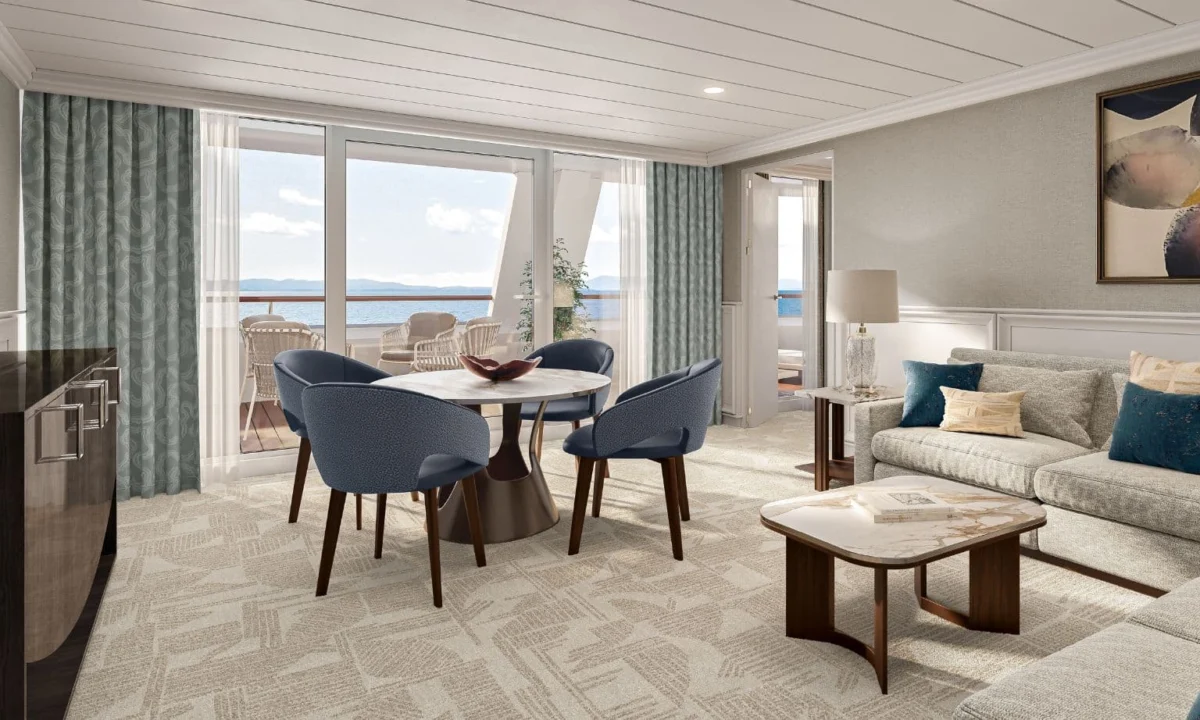
In August 2027, Oceania Cruises will officially pivot toward a new paradigm of long-form, immersive travel with the inaugural launch of the Oceania Sonata. As the lead vessel of a five-ship Sonata-class series, this debut marks the most significant fleet expansion in the company’s history. Simultaneously, the line is undertaking a comprehensive top-to-bottom refurbishment of the existing vessel Oceania Nautica, which will be rebranded as Oceania Aurelia upon its 2027 relaunch. This dual strategy of building new tonnage while revitalizing established assets underscores a broader industry shift: the move away from the high-turnover, short-voyage model toward a residential-style luxury experience that prioritizes comfort, space, and deep cultural immersion.
The Evolution of the Oceania Fleet
The arrival of the Sonata class signifies a departure from the traditional cruise design philosophy. While these new ships will be 20 to 30 percent larger in volume than the current Oceania fleet, the company has made a conscious design decision to limit passenger capacity increases. This ratio is intentional; by utilizing the additional space to expand cabin square footage and common areas rather than adding more staterooms, Oceania is creating an environment that mirrors a luxury residence.
This design evolution directly addresses the needs of the modern, affluent traveler who seeks to explore the globe without the logistical stressors of traditional tourism. By focusing on residential-style comfort, the line aims to eliminate the fatigue associated with frequent packing, airport navigation, and hotel transitions, offering instead a "home at sea" that traverses the globe.
Strategic Shift Toward Extended Voyages
The industry is currently witnessing a noticeable trend toward "slow travel." While niche operators have long served the market for fully residential vessels—where passengers purchase cabins outright, such as The World or Villa Vie Residences—Oceania is carving out a distinct middle ground. This "ultra-long-voyage" model provides the benefits of long-term global exploration without the permanent commitment of real estate acquisition at sea.
This strategy is bolstered by data indicating that the demographic of recent retirees and those with location-independent professional lives are increasingly prioritizing travel duration over frequency. By offering voyages that span several months, Oceania is positioning itself as the premier choice for travelers who view the cruise ship as a seasonal or semi-permanent living space.
Oceania Aurelia and the 2028 World Voyage
The centerpiece of this transition is the Oceania Aurelia. Engineered specifically for extended deployments, the vessel is scheduled to undertake a massive 180-day "Around the World" voyage in 2028 and 2029. This itinerary is not merely a cruise; it is a meticulously curated expedition spanning six continents.
The logistics behind the 2028 circumnavigation are extensive, covering destinations across Asia, Australia, Europe, and South America. To accommodate travelers who may not be able to commit to the full six-month duration, Oceania has launched 12 distinct segments of the voyage, ranging from 10 to 19 days. These segments include highly requested routes such as:
- A 18-day transit from Los Angeles to Papeete.
- A 14-day voyage connecting Sydney and Bali.
- A 12-day cultural immersion from Taipei to Tokyo.
With nearly 100 UNESCO World Heritage sites accessible throughout the full itinerary, the ship serves as a mobile base for deep-dive shore excursions. Oceania has expanded its shore-side infrastructure to support thousands of small-group experiences, ensuring that the luxury onboard is matched by the depth of the experience on land.

Industry Context and Competitive Landscape
Oceania is not alone in its pursuit of the long-voyage market. The cruise industry has been steadily pivoting toward this sector to capture the "grey nomad" market and high-net-worth individuals. Competitors have mirrored this trend: Viking Cruises has seen significant success with its "World Discoveries" series; Regent Seven Seas Cruises continues to sell out its "Legendary Journeys"; and Silversea Cruises has aggressively expanded its world cruise offerings to meet the surging demand for long-duration, high-service maritime travel.
This competitive environment has forced a re-evaluation of what constitutes "luxury." It is no longer defined solely by high-end dining or service ratios, but by the ability to provide an uninterrupted, high-comfort experience that mimics the stability of land-based living. By increasing the size of its ships while keeping passenger counts relatively low, Oceania is effectively lowering the "passenger-to-space" ratio, a key metric for luxury travelers who value privacy and tranquility.
Official Perspectives on Design and Comfort
The design ethos of the new fleet has been articulated by the leadership at Oceania. Jason Montague, Chief Luxury Officer of Oceania Cruises, emphasized that the development of the Aurelia was centered on the concept of "comfortable elegance."
"Oceania Aurelia was designed for travelers who want to explore the world in comfortable elegance—where space, warmth, and personalized care allow them to fully relax and enjoy the journey on a ship that truly feels like home," Montague stated.
This emphasis on "warmth" and "personalized care" is a direct response to the impersonal nature of mass-market cruising. By training staff for long-term engagement rather than rapid passenger turnover, the line intends to foster a sense of community that is vital for voyages lasting 180 days or longer.
Analytical Outlook: The Implications of the Sonata Class
The introduction of the Sonata-class ships represents a significant capital expenditure and a high-stakes bet on the future of the luxury cruise segment. If successful, this model could redefine the standard for the entire premium cruise industry.
The economic implications are clear: by securing passengers for 30, 60, or 180 days, Oceania reduces the marketing and logistics costs associated with constant guest turnover. Furthermore, the residential nature of these voyages allows the line to command higher price points for the added value of space and exclusive, long-term itineraries.
From a technical standpoint, the build-out of the Sonata class will be monitored closely by industry analysts to see if the 20-30% increase in ship size yields the expected improvement in passenger satisfaction. If the "residential-style" cabins and increased public space succeed in attracting the target demographic, it is highly probable that other lines will follow suit, leading to a new generation of "mega-luxury" ships that prioritize volume over capacity.
Timeline of the Transition
- August 2027: Official debut of the Oceania Sonata, the first of the new five-ship Sonata class.
- Late 2027: Re-launch of Oceania Aurelia (formerly Oceania Nautica) following extensive renovations.
- January 2028: Departure of the inaugural 180-day Around the World voyage on Oceania Aurelia.
- 2028-2029: Full rollout of long-form global itineraries across the new Sonata-class fleet.
Conclusion
The shift toward longer, residential-style voyages is more than a marketing trend; it is a structural change in how cruise lines serve their most loyal clientele. By investing in the Sonata class and revitalizing the Aurelia, Oceania Cruises is aligning itself with a lifestyle that values time, depth, and comfort above the rapid-fire pace of modern tourism. As the cruise industry moves further into the late 2020s, the focus on the "home-at-sea" experience is poised to become the new benchmark for excellence in global travel, offering a compelling alternative for those who wish to see the world without leaving their personal standards of comfort behind.

 Diana Nuri Rohmawati

 Gabriela Annisa

 Lukman Taruna Persada Ramadan

 Tatiana Tantri Indah Sari

 Anjar Salim

