
 Chandra Hamzah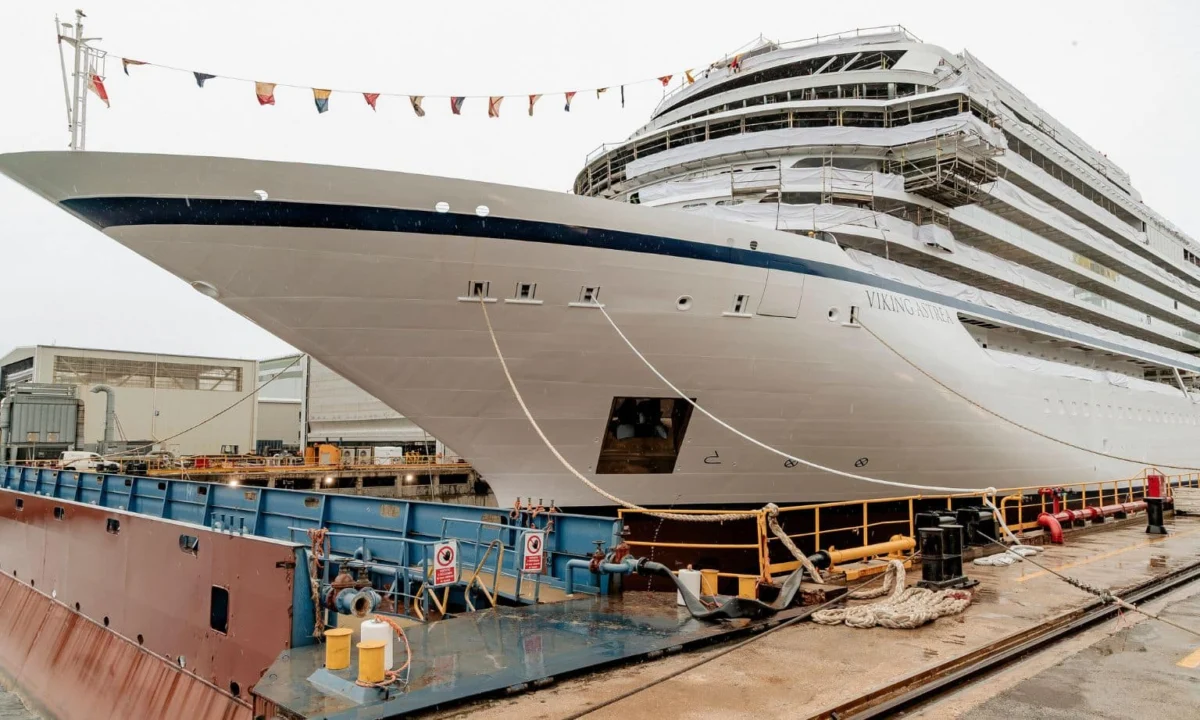
The Viking Astrea, the latest addition to the Viking ocean fleet, has officially achieved a critical construction milestone by floating out for the first time at the Fincantieri shipyard in Italy. This ceremonial event, a time-honored maritime tradition, signals the transition of the vessel from the dry dock to the water, where it will undergo its final interior fit-out and systems integration. As the second vessel in the Viking fleet to integrate advanced hydrogen-based hybrid propulsion, the Viking Astrea represents a significant technical evolution in the cruise industry’s pursuit of decarbonization and regulatory compliance.
The Significance of the Float-Out Ceremony
In maritime shipbuilding, the float-out ceremony serves as a pivotal bridge between the structural assembly of the hull and the complex interior outfitting phase. At the Fincantieri facility, the process involves carefully flooding the dry dock until the ship is buoyant, allowing it to be maneuvered to an outfitting berth. For the Viking Astrea, this moment was marked by the traditional cutting of a ceremonial cord, a gesture that officially transitions the project from a steel assembly to a functional vessel.
This milestone is not merely symbolic; it adheres to a rigorous construction schedule that positions the ship for its maiden voyage in May 2027. Following the float-out, the focus shifts to the installation of luxury amenities, advanced navigation systems, and, most critically, the final calibration of its hybrid hydrogen propulsion architecture.
Engineering for Sustainability: The Hydrogen Hybrid System
The defining characteristic of the Viking Astrea is its hybrid propulsion system, which utilizes a combination of traditional marine fuel and liquified hydrogen fuel cells. This technical configuration is designed to provide the vessel with the flexibility to operate with zero emissions in sensitive maritime zones.
The integration of fuel cell technology into a 54,300-ton vessel is a complex engineering challenge. By leveraging hydrogen, the ship can significantly reduce its carbon footprint and nitrogen oxide emissions, effectively mitigating the environmental impact of its operations in protected waters. This capability is particularly vital as the cruise industry faces increasing pressure to minimize its ecological footprint.
The Viking Astrea operates with a capacity for 998 guests across 499 staterooms. Maintaining this level of passenger comfort while simultaneously housing the bulky infrastructure required for hydrogen storage and fuel cell conversion is a testament to the design collaboration between Viking and Fincantieri. The ship’s architecture ensures that the environmental systems do not detract from the guest experience, balancing the weight and space requirements of the propulsion technology with the luxury standards Viking is known for.
A Strategic Fleet Expansion
The Viking Astrea follows in the wake of the Viking Libra, the first vessel in the fleet to feature this hybrid capability. This sequential rollout suggests a broader strategic roadmap for Viking, as the company transitions its fleet toward more sustainable energy sources.
The chronology of Viking’s recent developments underscores a rapid acceleration in technology adoption. Since the launch of its first ocean ship, the company has consistently refined its vessel design to be more energy-efficient. The move toward hydrogen is the logical next step in a trajectory that began with optimized hull designs and advanced waste-heat recovery systems. By standardizing this technology across its newer vessels, Viking is creating a fleet that is not only modular in its luxury offerings but also standardized in its environmental performance.
Industry Context and Regulatory Pressures
The global cruise industry is currently navigating a period of intense regulatory scrutiny. International maritime organizations, including the International Maritime Organization (IMO), have set ambitious targets for the reduction of greenhouse gas emissions. Regionally, the pressure is even more pronounced.
Norway, a flagship destination for cruise tourism, has pioneered legislation that mandates zero-emission operations in its World Heritage fjords. Other European nations, including Denmark and Iceland, are exploring similar restrictions. For cruise operators, these regulations present an existential challenge: either adapt to carbon-neutral technologies or lose access to some of the most popular and lucrative itineraries in the world.
The Viking Astrea is explicitly "future-proofed" against these shifting regulations. By investing in hydrogen hybrid technology, Viking ensures that it can continue to provide access to remote, environmentally fragile destinations that might otherwise be closed to conventional cruise ships. This strategic investment mitigates the risk of regulatory-driven itinerary disruption and positions Viking as a leader in sustainable maritime tourism.
Official Perspectives on the Milestone
The leadership at Viking views the progression of the Viking Astrea as a reflection of the company’s long-term commitment to innovation. Leah Talactac, President and Chief Executive Officer of Viking, emphasized that the float-out represents a "milestone for Viking" in its ongoing effort to design more efficient ships.
"From the beginning, we have sought thoughtful ways to design more efficient ships, and the Viking Astrea is an important step forward in that ongoing effort," Talactac stated. This sentiment aligns with the company’s history of prioritizing efficiency—a move that has historically provided them with a competitive advantage in fuel costs and operational flexibility.
While official statements from Fincantieri remain focused on the technical successes of the shipyard, the collaborative relationship between the builder and the cruise line is evident in the vessel’s progress. Shipbuilders are increasingly being tasked with integrating green technologies into larger vessels, and the success of the Viking Astrea is a positive indicator for the broader cruise manufacturing sector.
Economic and Operational Implications
The economic impact of the Viking Astrea extends beyond the shipyard. As the ship nears its 2027 debut, the planning for its inaugural season—focused on the Mediterranean and Northern Europe—is already underway. These markets are among the most regulated in the world, making them the ideal testing grounds for the ship’s zero-emission capabilities.
From a market analysis perspective, the adoption of hydrogen technology carries significant long-term benefits. While the capital expenditure for hydrogen-ready ships is higher than that of traditional diesel-electric vessels, the long-term savings in carbon taxes and the ability to operate in restricted ports provide a hedge against future volatility. As carbon pricing mechanisms become more prevalent in the European Union and elsewhere, the operational costs of conventional ships are expected to rise, potentially making Viking’s investment in hybrid technology a cost-saving measure over the ship’s lifecycle.
Analyzing the Future of Cruise Travel
The debut of the Viking Astrea in May 2027 will be a defining moment for the cruise sector. If the ship’s performance meets the technical expectations for emission reductions, it will likely accelerate the adoption of similar hybrid technologies across the rest of the fleet.
Moreover, the success of this project could influence the procurement strategies of other major cruise lines. Currently, the industry is experimenting with various solutions, including LNG (Liquefied Natural Gas), battery-electric propulsion, and biofuels. The hydrogen hybrid model chosen by Viking stands out for its potential to provide true zero-emission operation in sensitive areas, a standard that other methods may struggle to meet in the same capacity.
Looking Toward the Maiden Voyage
With the float-out now behind them, the construction team at Fincantieri will transition to the next phase of the project: the meticulous interior fit-out. This phase involves thousands of workers installing everything from the sophisticated navigation bridge and engine rooms to the individual luxury suites that define the Viking brand.
As the vessel takes shape, the maritime community will be watching closely to see how the hydrogen fuel cells perform during sea trials, which are expected to take place in late 2026. These trials will be the ultimate test of the ship’s hybrid propulsion system, verifying its efficiency, safety, and operational reliability under real-world conditions.
The Viking Astrea is not just a new ship; it is a declaration of intent. By marrying high-end hospitality with cutting-edge environmental technology, Viking is attempting to redefine the cruise experience for the next generation of travelers. In an era where sustainability is becoming as important as destination, the ability to sail cleaner is set to become the industry’s new gold standard. As the ship floats in the Fincantieri basin, it represents a tangible manifestation of the industry’s transition—a move toward a future where luxury travel and environmental stewardship are no longer mutually exclusive.


 Tatiana Tantri Indah Sari
 Anjar Salim

 Budi Mulyono