
 Lukman Taruna Persada Ramadan

The enduring allure of Long Island’s East End has welcomed a sophisticated new hospitality landmark with the official opening of the Oyster Estate, a 34-room boutique hotel located in the heart of Greenport Village. The property represents the third regional acquisition and development venture spearheaded by Boston-based hospitality investment firm Blue Flag Capital on the North Fork peninsula. Developed in strategic partnership with in-house management company Collared Martin Hospitality, the boutique hotel occupies the former site of the iconic Greenporter Hotel. Following an extensive, multi-month gut-renovation and repositioning project executed in collaboration with acclaimed design firm Islyn Studio, the newly minted Oyster Estate aims to bridge Greenport’s historic maritime roots with modern, design-forward luxury. The debut underscores a broader regional trend toward experiential boutique accommodations that honor local architectural heritage while meeting the elevated expectations of contemporary travelers.
Architectural Transformation and Historic Preservation
The inception of Oyster Estate required a delicate balance between modernization and historic preservation. Situated centrally near the waterfront of Greenport Village—a historic whaling and fishing port that has evolved into a premier culinary and leisure destination—the original structural framework of the former Greenporter Hotel was intentionally maintained. Blue Flag Capital’s leadership emphasized that the objective was not to erase the property’s storied past, but rather to elevate the physical plant and redefine the guest journey.
Brad Guidi, co-founder and chief development officer of Blue Flag Capital, noted that the development team approached the legacy property with profound respect for its contributions to the local community. By retaining the primary structural bones while completely reimagining the interiors, the design and development teams sought to craft a distinct sense of place. Islyn Studio drew direct inspiration from the maritime heritage, coastal topography, and creative counterculture of the North Fork.
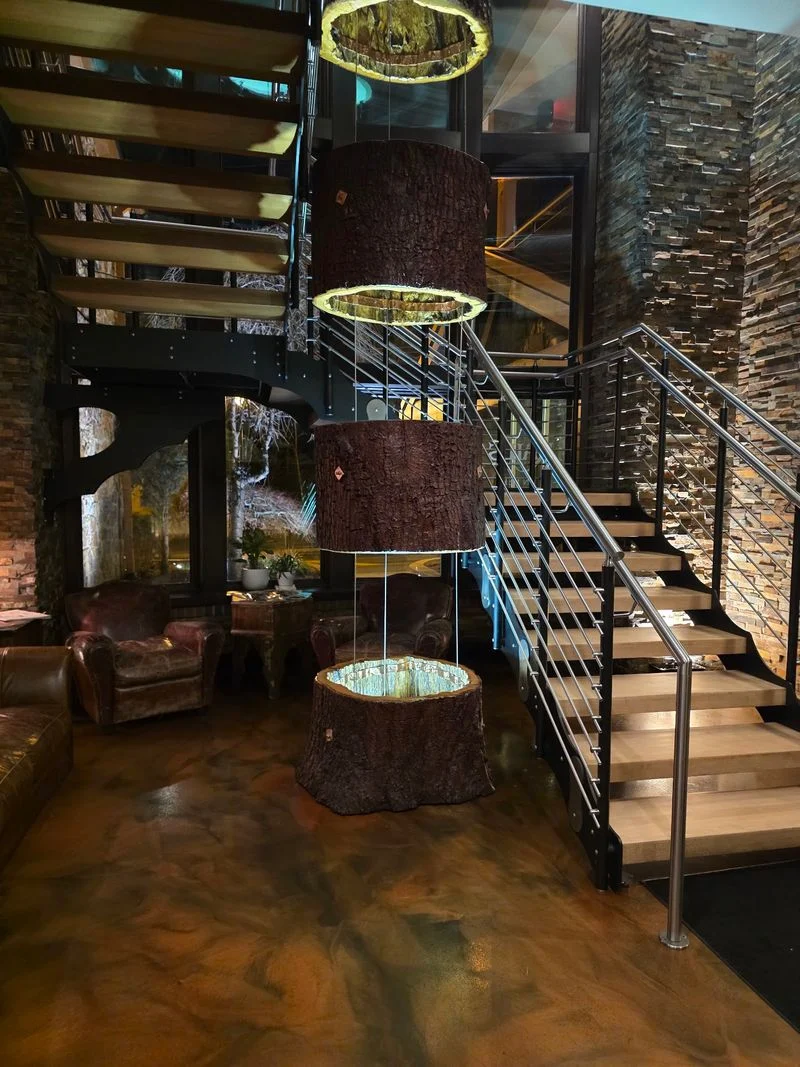
The resulting aesthetic relies on an ocean-inspired palette that mirrors the natural elements of the local shoreline. Interiors feature softly weathered greens, earthy clay tones, and exposed natural stone elements that create an immediate tactile connection to the outdoors. Guest accommodations are curated to evoke a lived-in, highly personalized residential feel rather than a sterile corporate environment. Every room is outfitted with high-end amenities designed to maximize comfort, including luxury bathrobes and premium linens supplied by Parachute Home, artisanal bath products from Salt & Stone, Tivoli Bluetooth audio systems, well-stocked in-room minibars, and discreet minifridges.
Demonstrating an acute attention to detail, the property has also incorporated dedicated tea kettles alongside complimentary specialty coffees and loose-leaf teas. This deliberate design choice addresses a common traveler grievance by providing a separate kettle for tea drinkers, thereby eliminating any lingering residue or flavor notes of coffee. Throughout the guest rooms and public common areas, the atmosphere is enriched by thoughtfully curated collections of locally sourced found objects, regional literature, and lush botanical installations, reinforcing the impression of staying in a well-traveled private residence rather than a traditional hotel.
Chronology and Development Timeline
The transformation of the property from the vintage Greenporter Hotel into the contemporary Oyster Estate follows a calculated expansion timeline by Blue Flag Capital across the Northeast resort corridor. The Boston investment firm, recognized for its lifestyle-driven hospitality portfolio including the celebrated Faraway hotel brand, has systematically established a robust footprint across prime leisure markets. Blue Flag’s existing portfolio includes prominent properties in high-demand destinations such as Martha’s Vineyard and Nantucket in Massachusetts; Montauk, Sag Harbor, and Greenport in New York; and Jackson Hole in Wyoming.
The acquisition of the Greenporter asset marked a strategic entry point for Blue Flag into the North Fork’s burgeoning lodging sector, which has historically received less institutional capital investment compared to the neighboring Hamptons on the South Fork. Following the acquisition, planning and architectural design commenced in partnership with Islyn Studio. Construction and interior fit-outs progressed through successive phases to minimize local disruption while ensuring strict adherence to historical aesthetic standards within Greenport Village.
By engaging Collared Martin Hospitality for operational oversight, Blue Flag ensured that day-to-day management would align with the high-touch service standards associated with their broader portfolio. The recruitment of Eric Freitas Orford, managing director for New York under Faraway Hotels, signaled a clear intention to integrate the property seamlessly into regional tourism networks while fostering community-centric engagement. The soft opening and subsequent public debut of Oyster Estate position the property to capture robust year-round demand, capitalizing on both the lucrative summer tourism season and the increasingly popular North Fork shoulder and winter seasons.
Culinary Integration: Fortune Favors and the Listening Room Experience
A central pillar of the Oyster Estate value proposition is its newly introduced food and beverage concept, Fortune Favors. Operating as a signature restaurant and cocktail lounge, Fortune Favors is engineered to function as a communal anchor for both hotel guests and local residents. The culinary program features an Asian-inspired menu developed to highlight the fresh seasonal abundance of local Greenport purveyors, agricultural producers, and regional seafood harvests.
Complementing the dining program is the venue’s dedicated Listening Room, an acoustically engineered space designed to elevate the sensory experience of dining and socializing. The room features a custom, space-specific sound system paired with an extensive curated vinyl collection. This deliberate integration of high-fidelity audio and acoustic design creates a cohesive, immersive environment where sound and culinary arts intersect.
Eric Freitas Orford emphasized that the introduction of Fortune Favors adds a vital cultural dimension to the Oyster Estate property. By designing a venue where visitors and neighborhood residents can congregate over progressive cocktails, elevated dining, and curated music, the hotel establishes itself as an active participant in the local social fabric. Furthermore, management has outlined plans to roll out specialized cultural programming designed to connect visitors more deeply with the broader cultural landscape of the North Fork while offering year-round incentives for local patrons to return.
Market Implications and Economic Impact on the North Fork
The opening of Oyster Estate arrives at a pivotal juncture for the regional economy of Long Island’s North Fork. Historically characterized by agricultural fields, roadside farm stands, and modest maritime commerce, Greenport and surrounding towns have experienced an accelerating wave of upscale tourism and real estate investment over the past decade. The proliferation of boutique vineyards, craft breweries, and farm-to-table dining establishments has transformed the peninsula into a premier weekend escape for urban professionals from New York City and surrounding metropolitan areas.
The arrival of institutional-backed boutique operators like Blue Flag Capital signals a maturation of the North Fork hospitality market. Analysts note that properties such as Oyster Estate help extend the traditional tourism calendar by appealing to affluent travelers seeking off-season retreats, wine-tasting excursions, and wellness getaways during autumn, winter, and spring. This shift helps mitigate the economic volatility traditionally associated with seasonal resort markets, providing stable year-round employment opportunities and generating increased local tax revenues for municipal infrastructure and services.
Moreover, the property’s focus on community integration—exemplified by locally tailored dining menus, dedicated local event programming, and collaborations with regional artisans—addresses a common community concern regarding outside real estate development. By positioning Oyster Estate as an accessible neighborhood hub rather than an exclusive enclave, ownership has sought to align commercial success with community goodwill.
As Blue Flag Capital continues to scale its presence across the Northeast and Mountain West, the performance of Oyster Estate will likely serve as a benchmark for future boutique hotel developments in secondary and tertiary leisure markets. By successfully marrying historic preservation with contemporary luxury standards, the property demonstrates how legacy assets can be revitalized to meet modern consumer demands without sacrificing local character or architectural integrity.




 Budi Mulyono
 Cholid Fahmi Thalib

 Diana Nuri Rohmawati

 Tatiana Tantri Indah Sari

 Anjar Salim
