
 Anjar Salim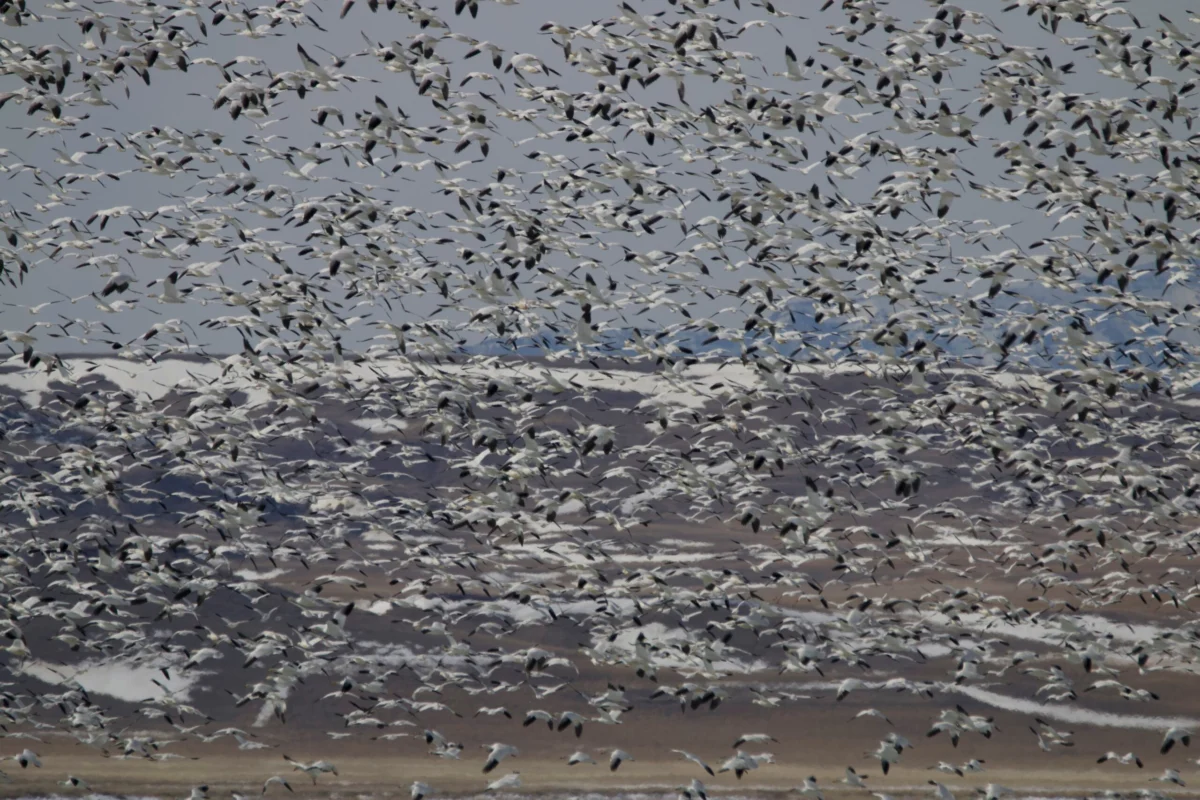
In the early morning hours of a misty day in May 2025, wildlife photographer Tony Gangemi documented a biological rarity that has captured the attention of the scientific community and birding enthusiasts alike. At a secluded lake in Northwest Montana, Gangemi identified and photographed a leucistic common loon (Gavia immer) chick, an occurrence estimated by ornithologists to happen in approximately one out of every 30,000 births. This rare genetic mutation, which results in a stark white appearance, presents both a unique opportunity for wildlife documentation and a significant survival challenge for the individual bird.
The encounter took place at approximately 6:00 A.M. as fog blanketed the alpine waters. Gangemi, a seasoned photographer based in Whitefish, Montana, had been scouting the region’s waterways specifically for the arrival of new loon hatchlings, commonly referred to as loonlets. Using a kayak to navigate the shoreline silently and an 800-millimeter lens to maintain a respectful and non-intrusive distance, he observed a family unit consisting of two adult loons and two chicks. While one chick displayed the standard brown-grey down feathers typical of the species, the other was entirely white, standing out in sharp contrast against the dark, reflective surface of the lake.
The Science of Leucism vs. Albinism
The white plumage observed in the Montana loonlet is the result of leucism, a genetic condition that causes a partial or total loss of pigmentation in an animal’s skin, hair, or feathers. It is frequently confused with albinism, though the two are biologically distinct. Albinism is characterized by a complete lack of melanin, the pigment responsible for color in most living organisms. This lack of melanin affects the entire body, including the eyes, which typically appear pink or red due to the visible blood vessels behind the unpigmented iris.
In contrast, leucism only affects the integumentary system—the external layers such as feathers or fur. Animals with leucism retain normal pigment in their eyes, which remain dark. This distinction is critical for survival; the lack of pigment in the eyes of albino animals often leads to poor eyesight or total blindness, whereas leucistic birds generally maintain the keen vision required for hunting and navigation. However, the lack of melanin in feathers can also lead to structural weaknesses, as melanin provides a degree of protection against wear and tear.
Ornithological data suggests that while leucism is rare across all bird species, it is exceptionally uncommon in the common loon population. The common loon is known for its iconic breeding plumage—a black head, white underparts, and a checkered black-and-white back. The appearance of a leucistic individual disrupts this evolutionary camouflage, making the bird a "beacon" for predators in an environment where blending into the dark water is a primary defense mechanism.

Chronology of the 2025 Observation
The observation of the leucistic loonlet spanned several months, providing a rare window into the development of a bird with such a mutation. Following the initial sighting in May 2025, Gangemi returned to the site periodically to monitor the chick’s progress.
- Initial Discovery (May 2025): The chick was first photographed when it was roughly one week old. At this stage, it was highly dependent on its parents for protection and food. It was frequently seen "back-riding," a behavior where loonlets climb onto their parents’ backs to stay warm and avoid underwater predators like large pike or snapping turtles.
- Growth and Development (June – July 2025): Over the next eight weeks, the leucistic chick and its sibling grew rapidly. Despite its lack of camouflage, the white chick survived the most vulnerable weeks of its life. During this period, the adult loons were observed being fiercely protective, a necessary trait given that loonlets are often targeted by bald eagles and osprey.
- Independence and Pre-Migration (August 2025): By late August, the leucistic loon had reached near-adult size and had begun to achieve independence from its parents. The family remained on the lake, preparing for the arduous southward migration.
- Migration (September 2025): As the temperatures dropped, the loon family departed the Northwest Montana lake. Common loons from this region typically migrate to the Pacific Coast, wintering in the waters ranging from British Columbia down to Baja California.
Regional Significance and the Montana Ecosystem
Montana serves as a critical corridor for avian migration. The state’s diverse geography—ranging from the high peaks of the Rockies to the vast plains of the east—provides various stopover points for hundreds of species. One of the most significant of these is Freezeout Lake Wildlife Management Area in Central Montana. Each year, hundreds of thousands of snow geese and tundra swans descend upon the lake to rest during their journey along the Pacific Flyway.
While loons do not congregate in the same massive numbers as snow geese, they are a vital indicator species for the health of Montana’s aquatic ecosystems. Loons require clear, high-quality water and an abundant supply of fish to thrive. The presence of a successful breeding pair, especially one producing a rare leucistic offspring, suggests a stable local environment.
The common loon is protected under the Migratory Bird Treaty Act, and in Montana, organizations such as the Montana Common Loon Working Group (MCLWG) work to monitor populations. The MCLWG coordinates "Loon Day" surveys and works with land managers to protect nesting sites from human disturbance, which is one of the leading causes of nest abandonment.
Survival Implications for Leucistic Wildlife
The survival of the leucistic loonlet into adulthood remains a subject of interest for wildlife biologists. In the wild, color mutations often carry a "fitness cost." The primary concern for a white loon is predation. In the crystal-clear lakes of Northwest Montana, a white object moving across the surface is easily spotted by aerial predators like the bald eagle.
Furthermore, there are concerns regarding social acceptance and mating. In many bird species, plumage plays a vital role in courtship rituals and territory defense. If an individual does not possess the correct "visual markers" of its species, it may struggle to find a mate or be driven off by other loons. However, because loons are known for their complex vocalizations—including the wail, the tremolo, the yodel, and the hoot—it is possible that acoustic communication may override visual anomalies during social interactions.

The Cultural and Personal Impact of the Encounter
For Gangemi, the sighting was not merely a professional achievement but a bridge to a lifelong passion for ornithology. He traces his interest back to the 1960s, influenced by his father’s use of Audubon bird call records to interact with local wildlife. This early exposure to the "language" of birds fostered a deep respect for the natural world that has defined his career as a photographer.
The "haunting" call of the loon—a sound often described as synonymous with the North American wilderness—remains a central focus of his work. The wail of a loon is used to maintain contact with other loons, while the yodel is a territorial signal given only by males. Documenting a rare variant of a species so deeply embedded in the cultural identity of the American West adds a layer of historical significance to the 2025 photographs.
Broader Implications for Avian Research
The documentation of the leucistic loon provides valuable data points for researchers studying genetic mutations in wild populations. As habitats change and climate shifts affect migratory patterns, monitoring how these rare individuals navigate their environment can offer insights into the resilience and adaptability of the species.
While the 1-in-30,000 statistic highlights the rarity of the event, it also serves as a reminder of the importance of citizen science and professional wildlife photography in conservation. High-quality visual evidence allows biologists to track specific individuals without the need for invasive tagging or capture, providing a non-disruptive method of studying rare phenomena.
As of late 2025, the leucistic loon has successfully transitioned into its first migratory cycle. Whether it will return to Montana in future years to breed remains to be seen. If it does return, it will provide a landmark opportunity for scientists to study the long-term viability of leucistic loons in the wild, potentially rewriting what is known about the survival rates of unpigmented waterbirds. For now, the images captured on that misty May morning stand as a testament to the unpredictable beauty of the natural world and the enduring mystery of the Montana backcountry.




 Chandra Hamzah
 Tatiana Tantri Indah Sari
 Budi Mulyono
 Lukman Taruna Persada Ramadan