Gabriela Annisa
Air Canada at a Strategic Crossroads
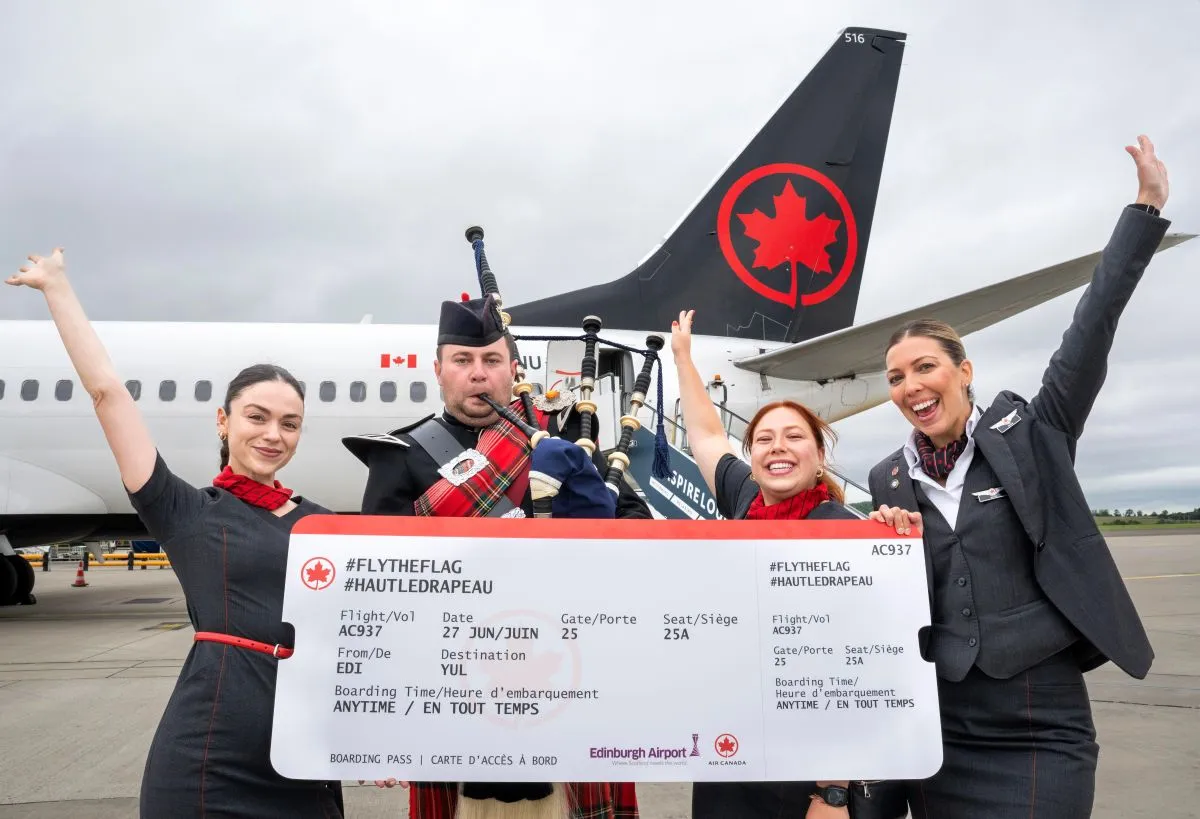
The appointment of a new executive leadership team at Air Canada—specifically under the influence of the "Anko" transition—marks a pivotal moment for the national carrier. The airline currently stands at a delicate intersection of massive opportunity and mounting systemic pressure. Following the retirement of long-time leaders, the carrier is now tasked with navigating a complex landscape defined by labor negotiations, fleet modernization, and the integration of new long-haul capacity.
Historically, Air Canada has relied on its robust sixth-freedom traffic strategy, funneling international passengers through its primary hubs in Toronto, Vancouver, and Montreal. This model proved highly effective in the decade leading up to 2020. However, the current environment has shifted. With global supply chain constraints affecting aircraft maintenance and delivery schedules, the airline must balance the expansion of its network with the reality of limited resource availability.
Industry analysts observe that the incoming leadership must address the "Anko" inheritance with a focus on operational reliability. Air Canada has faced public scrutiny regarding flight cancellations and baggage handling efficiency, issues that have plagued many North American carriers. To maintain its competitive edge against low-cost entrants and entrenched international rivals, the airline must optimize its cost structure while simultaneously investing in a premium cabin experience that justifies higher price points in an inflationary environment.
The Financial Malaise of China’s Big Three
In the second half of their latest analysis, Gordon and Jay turn their attention to the Asian market, specifically the underwhelming financial performance of China’s "Big Three"—Air China, China Eastern Airlines, and China Southern Airlines. Despite the optimistic projections surrounding the removal of travel restrictions, the second quarter of the current fiscal year has been characterized by stagnant revenue growth and widened operating losses for these state-backed entities.
The primary factor behind this downturn is the structural change in domestic travel demand. While passenger volume has returned, the yield—the average fare paid per mile—has struggled to recover to 2019 levels. This is largely due to an oversupply of capacity on domestic trunk routes, which has triggered a "race to the bottom" in pricing as carriers compete for a price-sensitive consumer base.
Furthermore, the recovery of international traffic to and from China remains uneven. Visa processing delays, geopolitical tensions, and the slower return of business travel have prevented the Big Three from leveraging their most profitable long-haul routes. Unlike their Western counterparts, which have seen a surge in "revenge travel" spending, Chinese consumers are exhibiting more cautious spending habits, opting for rail travel or budget-conscious domestic tourism, which directly impacts the bottom line of the major flag carriers.
Chronology of the Aviation Recovery
To understand the current pressures on the industry, one must look at the timeline of the post-2020 recovery:
- 2020-2021: The industry experiences near-total shutdown. Massive government aid packages, including the Large Employer Emergency Financing Facility (LEEFF) in Canada, prevent mass insolvencies.
- 2022: Travel demand surges unexpectedly. Airlines struggle with staffing shortages, leading to widespread operational meltdowns across the summer season.
- 2023: The "Recovery Year." International borders fully reopen, and capacity begins to normalize. However, inflation in jet fuel and labor costs begins to eat into profit margins.
- 2024: The current phase. Airlines are now forced to transition from "surviving" to "optimizing." Focus shifts to balance sheet repair, debt reduction, and long-term fleet strategy.
Supporting Data and Market Performance
The Skift Travel 200 (ST200) index provides a quantitative look at how these pressures manifest in the stock market. The airline sector index has shown significant divergence from broader travel categories, such as cruises and tours. While cruises have benefited from a massive rebound in consumer discretionary spending, airlines are viewed by institutional investors with higher skepticism due to their capital-intensive nature and susceptibility to fuel price spikes.
Current financial reports for the airline sector reveal that while revenue per available seat mile (RASM) has reached historical highs for some carriers, the cost per available seat mile (CASM) has risen at a disproportionate rate. This "margin squeeze" is the primary reason for the stagnant year-to-date performance in airline stocks. Investors are currently weighing whether the industry has reached "peak travel" and are concerned about the potential for a softening economy to erode the premium pricing power that airlines enjoyed throughout 2023.
Official Responses and Industry Outlook
While specific executive commentary from the boards of the Big Three or Air Canada remains guarded, industry briefings suggest a unified strategy: capacity discipline. Executives have repeatedly emphasized that they are no longer chasing market share at the expense of profitability.
In recent earnings calls, airline leadership across the globe has signaled a shift toward "rational capacity growth." This means airlines are intentionally slowing down the deployment of new aircraft to ensure that load factors remain high. By keeping supply tight, carriers hope to maintain fare floors, even if demand fluctuates. However, this strategy is risky; if a competitor decides to aggressively lower prices to capture market share, the entire pricing ecosystem could destabilize.
Broader Impact and Implications
The implications of these trends extend beyond airline balance sheets. For the consumer, the current market climate suggests that the era of ultra-cheap airfare is likely over. Airlines are now prioritizing operational stability and margin preservation, which often translates to higher base fares and more aggressive unbundling of services.
For the aviation sector at large, the challenges faced by Air Canada and the Chinese carriers serve as a microcosm of global economic pressures. The transition from a pandemic-era emergency footing to a standard competitive environment is proving to be a multi-year process. The winners of this next phase will be the carriers that can successfully manage three primary levers:
- Fleet Efficiency: Moving away from gas-guzzling older aircraft to newer, more fuel-efficient models like the Airbus A321XLR or the Boeing 787-10.
- Labor Stability: Securing long-term agreements with unions to prevent the operational disruptions that defined the 2022-2023 period.
- Digital Transformation: Using data analytics to better forecast demand and optimize yield management in an increasingly unpredictable geopolitical environment.
As Air Canada moves forward under its new leadership and the Chinese carriers attempt to navigate a difficult domestic market, the global aviation industry remains in a state of flux. The narrative is shifting from "how fast can we grow" to "how sustainably can we operate." While the recovery has been significant, the path to sustained profitability is paved with operational hurdles, rising costs, and a shifting consumer landscape that demands more value for every dollar spent. The coming quarters will serve as a critical test for whether these airlines can adapt to the "new normal" of the post-pandemic era.



 Lukman Taruna Persada Ramadan

 Tatiana Tantri Indah Sari

 Anjar Salim

 Budi Mulyono