
 Hendra Ismail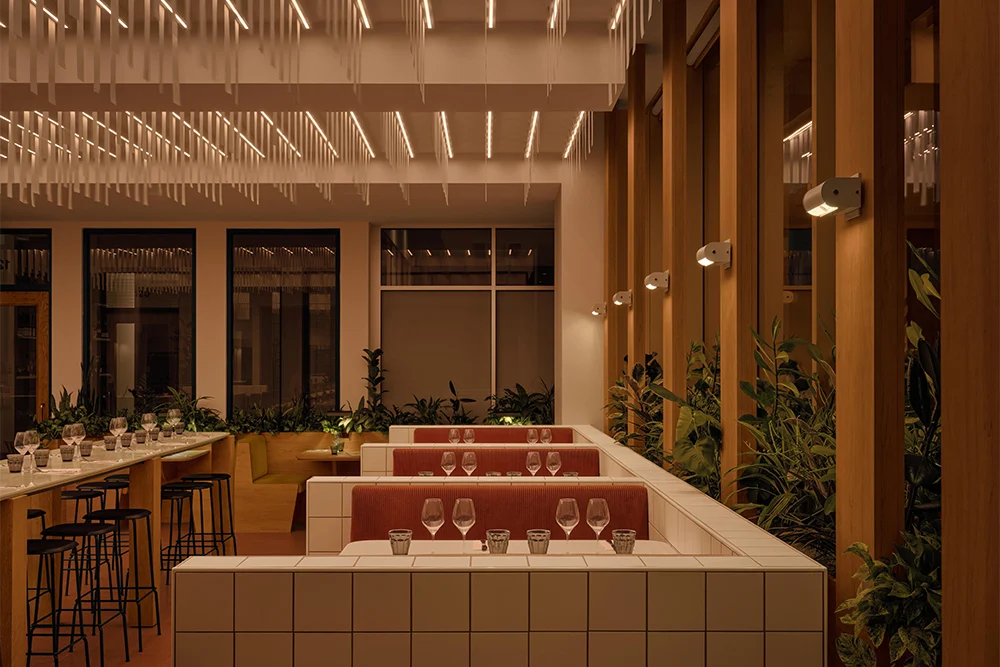
The culinary landscape is no longer solely defined by its flavors and service; increasingly, the architectural and interior design of dining establishments are becoming paramount to the overall guest experience. From intimate cocktail lounges and cozy neighborhood bistros to grand, destination-dining concepts, the most compelling restaurants today are strategically employing design as a fundamental ingredient, aiming to immerse patrons in an unforgettable sensory journey. This global survey highlights a dozen recently completed projects that brilliantly marry bold creative visions with exceptional hospitality, offering a fresh perspective on the future of dining environments worldwide. These establishments represent a significant investment in creating not just places to eat, but immersive experiences that engage patrons on multiple levels, fostering repeat visits and strong brand loyalty. The trend underscores a growing understanding within the hospitality sector that ambiance, aesthetics, and spatial design are as critical to a restaurant’s success as its menu.
Peridot, Hong Kong: A Theatrical Oasis of Light and Reflection
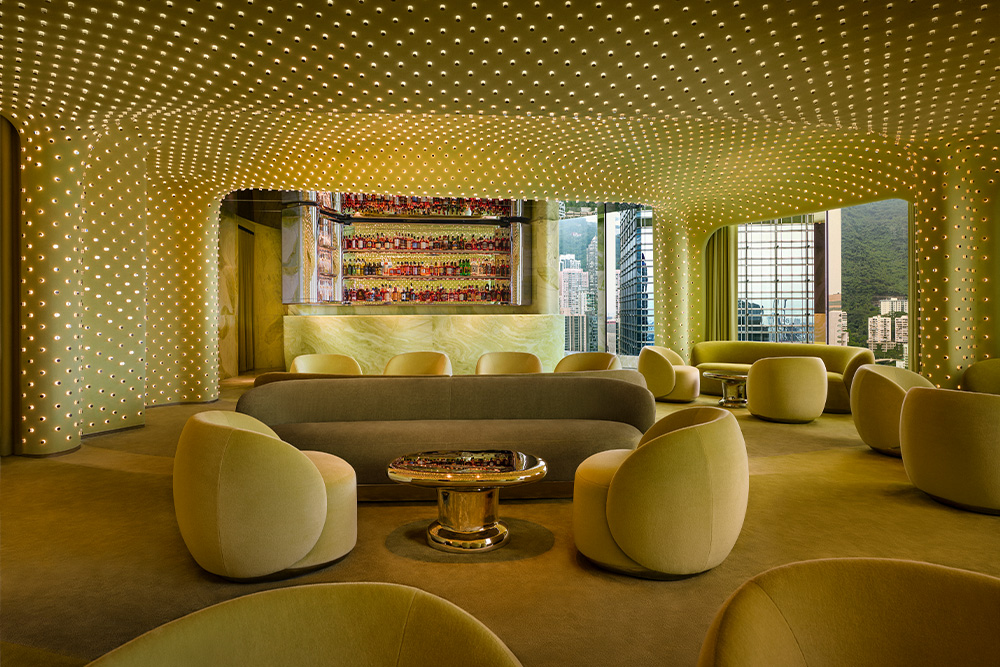
Swathed in ethereal, soft green hues, Peridot Bar in Hong Kong presents a theatrical experience where the flow of movement is in constant dialogue with a sinuous architectural shell. Designed by the acclaimed Toronto-based Studio Paolo Ferrari, the interior is a captivating spectacle, punctuated by an astonishing 20,000 softly glowing, steel-capped frosted acrylic cylinders. These elements, reminiscent of minimalist and conceptual art installations, anchor the space in an abstract yet sumptuously inviting atmosphere. The design ingeniously incorporates mirrored finishes that capture panoramic city views, reflecting the vibrant shimmer and kinetic energy of Hong Kong’s bustling streets, thereby blurring the lines between the interior and its dynamic urban surroundings.
The bar itself is a standout feature, carved from a monolithic piece of green marble. This monumental element adds another layer of otherworldly elegance to the already dreamlike design. Here, bartenders orchestrate the preparation of cocktails, transforming the act of mixology into a heightened performance at the heart of the space. The sense of discovery extends into a secluded private dining room, which boasts a bespoke stainless steel and marble bottle display, offering an exclusive and intimate experience. Studio founder Paolo Ferrari elaborates on the design’s transformative quality: "There’s a moment when the light begins to shift in the evening, as the tones warm and the reflections deepen, and the space becomes more intimate, almost suspended in time. What I find most compelling is how everything begins to dissolve into one continuous atmosphere: light, material, movement, and people." This holistic approach to design emphasizes the interconnectedness of all elements, creating a truly immersive environment.
Limusina, New York: A Maximalist Reverie of Unconventional Futurism
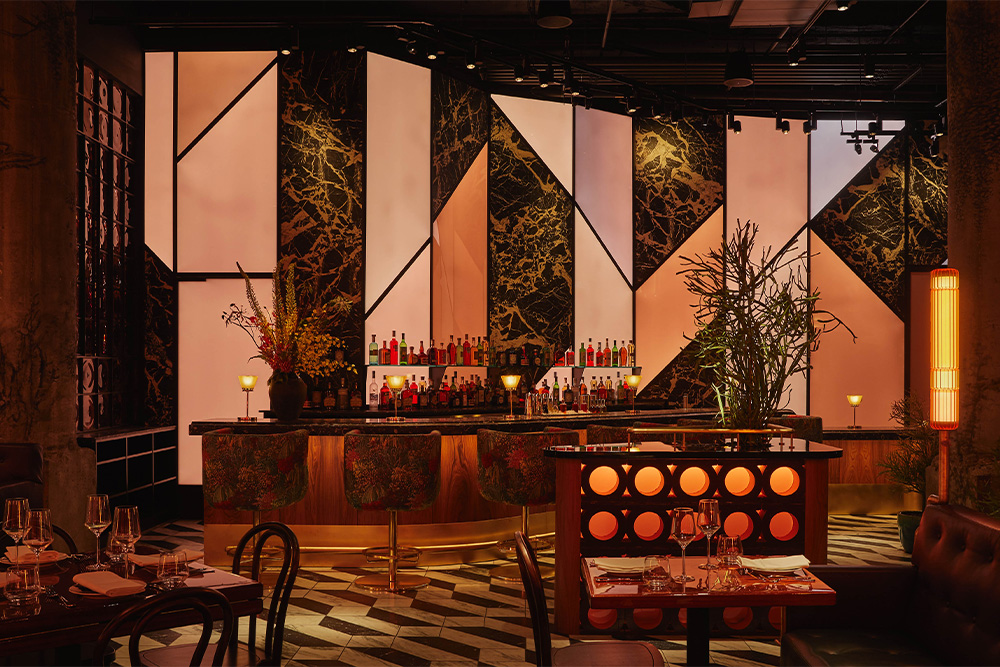
In New York City, Limusina, a concept designed by Brooklyn-based GRT Architects, embraces an ethos of "un-authenticity" and deliberate contrast. This immersive Mexican eatery is a testament to grit and glam, drawing inspiration from the audacious spirit of the 1980s. The design manages to convey both intimacy and expansive grandeur across its three-story former warehouse space, strategically positioned between the glitzy Hudson Yards and the more rugged lower Midtown. Details such as hand-dyed curtains imbue the raw, exposed interior with warm, orange-sherbet hues, simultaneously establishing an air of mystery about what lies within.
"Limusina is a new take on maximalism," states GRT founding partner Rustam Mehta, "one that does not look to the past or to any fixed cultural reference point." The monumental backbar serves as a striking welcome, its glowing panels concealing a clandestine 12-person dining room housed within a lightbox. Violet hues dominate the palette in the form of handblown crown glass used to glaze steel partitions. This same hue fills the open pores of red travertine, creating an uncanny hybrid that masterfully edges the line between the natural and the man-made. Custom, futuristic light fixtures are strategically employed to illuminate imperfections, such as sloping floors, and to highlight artful touches like the layered vegetal motifs adorning rough concrete mushroom columns. The space is further enhanced by luxe chandeliers composed of colorful, glowing tubes shrouded in handmade fabric and metal mesh, evoking what Mehta describes as the "layered retrofuturism of ‘Blade Runner’," where Frank Lloyd Wright’s Ennis House—itself a reinterpretation of pre-Columbian architecture—is reinhabited and reimagined. This approach to design, rooted in deconstruction and reimagining, challenges conventional notions of authenticity and cultural representation in dining spaces.

Motorino, London: A Harmonious Blend of East-West Aesthetics and Tactile Richness
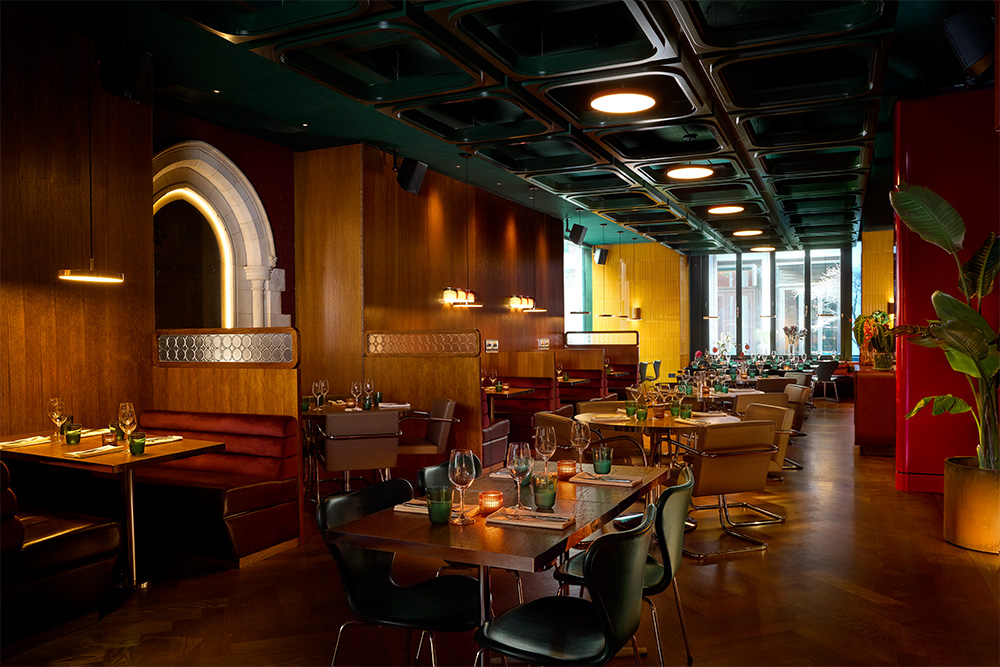
Motorino, a vibrant Fitzrovia restaurant in London, is characterized by its rich, inviting color palette and a design conceived by local firm North End Design in collaboration with restaurateur Jonathan Downey. The 150-seat eatery builds upon the cues of its sister restaurant, Town, but with a more expressive and organic approach. "We were feeling the room rather than designing by 3D rendering," explains North End Design founder and creative director Samuel Hosker, describing the process as "a far more organic way to design."
The aesthetic draws inspiration from the stately and streamlined Japanese and American boardrooms of the 1980s, creating a sophisticated backdrop for colorful punctuations that echo the avant-garde flair of British graphic designers like Alan Aldridge and Hapshash. A carefully placed cutout even offers a glimpse into the neighboring Fitzrovia Chapel, adding a subtle touch of Byzantine style. The private dining room is designed to evoke the atmosphere of a 1970s recording studio, featuring soft carpeting and timber panels that juxtapose with materials such as pyrolave (a volcanic lava stone quarried in France), high-gloss lacquer paint finishes, plush velvet, sumptuous leather upholstery, reclaimed flooring, and glossy ceramic tiles. "The biggest change was the introduction of the acoustic ceiling panels," Hosker notes. "This created a deep forest green that makes the large dining room feel more snug." This thoughtful integration of materials and acoustic design contributes to a more intimate and enveloping dining experience, demonstrating how practical considerations can elevate the overall aesthetic and comfort.
Egeo, Madrid: A Futuristic Interpretation of Ancient Greek Mythology
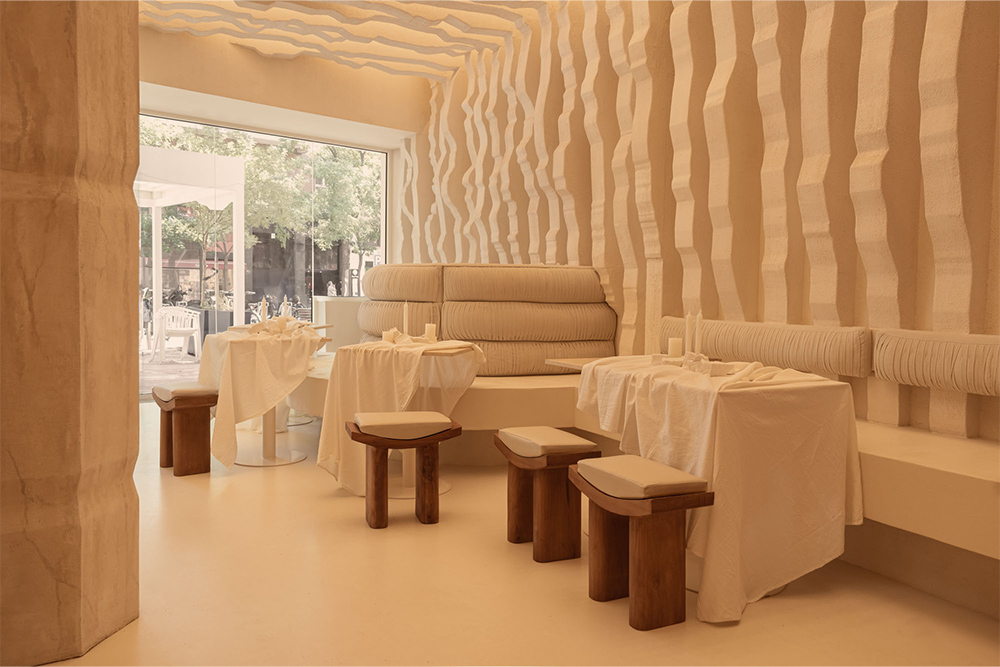
Valencia-based Masquespacio adopts a decidedly futuristic lens for Egeo in Madrid, immersing guests in a conceptual reimagining of Ancient Greek ruins. Inspired by the enduring message of hope found in the story of Pandora’s Box, the concept aims to evoke authenticity without resorting to clichés of the nation’s traditional coastal aesthetics. "We wanted guests to feel, for a moment, [like they are] in an environment that represents Greece, but not through the use of blue and white that we traditionally see used in this type of environment," says Masquespacio cofounder Christophe Penasse.
Soft beige tones and 3D-printed columns, artfully crafted to resemble marble, envelop guests within the nearly 540-square-foot space. Complementing surfaces of stone and warm wood, tiles further enhance the earthy palette. "Madrid is especially saturated by an Art Deco vibe," Penasse adds, "so this concept brings a [fresh] look for hospitality." This approach to design highlights how cultural narratives can be reinterpreted through contemporary materials and techniques, offering a unique and sophisticated dining environment that stands out in a city with a strong existing design identity. The use of 3D printing also points to the increasing integration of advanced manufacturing technologies in creating custom architectural elements for hospitality spaces.
Olia + Mimi, Edmonton, Alberta: A Tale of Two Contrasting Atmospheres
Anchoring a new residential development in downtown Edmonton, Alberta, is an expansive 8,500-square-foot multi-venue food and beverage concept. The development’s two key attractions—the elegant Italian eatery Olia and the chic modern cocktail lounge Mimi—are both meticulously crafted by Vancouver firm Ste Marie, employing contrasting design philosophies to attract a diverse clientele.
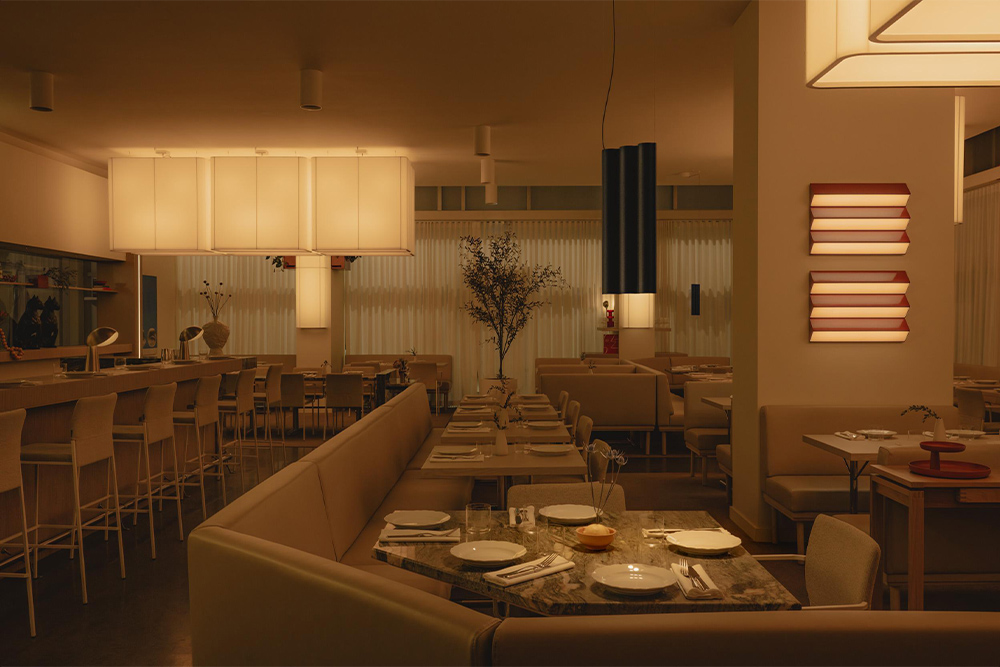
Olia channels the refined intimacy of a private members’ club, its warm, buttery glow inviting guests to linger amidst custom Portuguese walnut tables and supple ecru leather benches. Creamy polished marble, high-gloss tawny-toned lacquered cabinets, and a bar clad with backlit fluted glass are each accented by oversized custom pendants. These fixtures emit ambient color, texture, and rhythm, artfully shifting the mood as the space transitions from day to night. "We obviously wanted it to be immersive," says Ste Marie founder and creative director Craig Stanghetta of Olia, "letting them fade a little bit more as a backdrop, creating just more volume rather than a sense of drama or contrast."
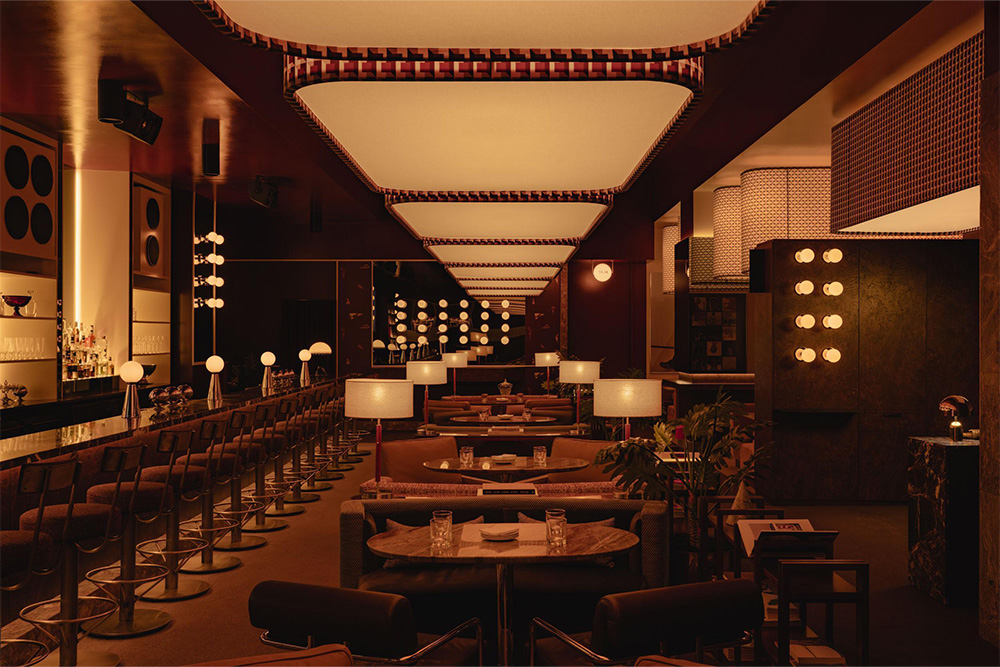
In stark contrast, Mimi is driven by artwork inspired by Italo disco and midcentury cinematic references, imbuing the space with an uptempo vibe. Deep browns, glossy reds, and amber tones complement Rosso Rubino marble and chrome details, while custom burnt orange velvet sofas recall the sunken lounges of the 1960s. Monolithic burled walnut panels further infuse the space with a transportive quality, rounded out by optimal acoustics designed to support curated music and live DJs. "Mimi is the living room. This is where it’s more about lounging," Stanghetta explains. "We love the ethos, the era, the drama, the contrast. The concept just allows you to go all in." The success of this dual concept lies in its ability to offer distinct yet complementary experiences, catering to different moods and occasions within a single development, a strategy increasingly seen in mixed-use projects aiming to maximize appeal.
My Girl, Boston: A Sensual Revival of Pre-Castro Cuban Charm
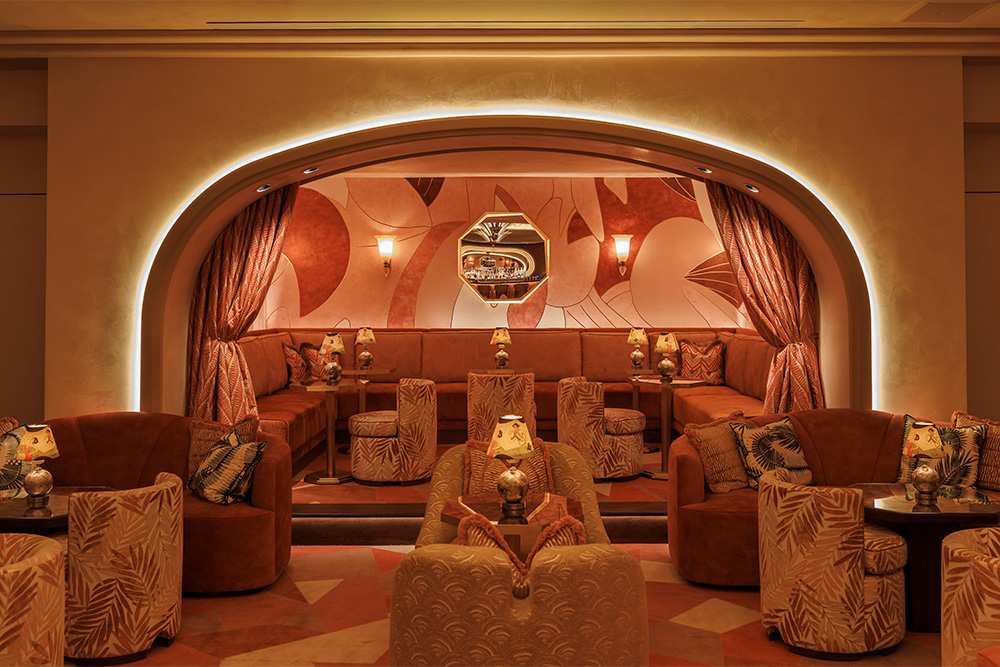
The warm, expressive splendor of pre-Castro Cuba is vibrantly revived by London designer Natalia Miyar within a subterranean space in Boston. My Girl is designed to be both intimate and energetic, enveloping guests in a sensual palette rich in color and texture. "I was drawn to Cuba’s stylistic heritage, especially the way it layers materials, color, and art to create spaces that feel both intimate and alive," Miyar shares. "Ultimately, I wanted guests to feel transported."
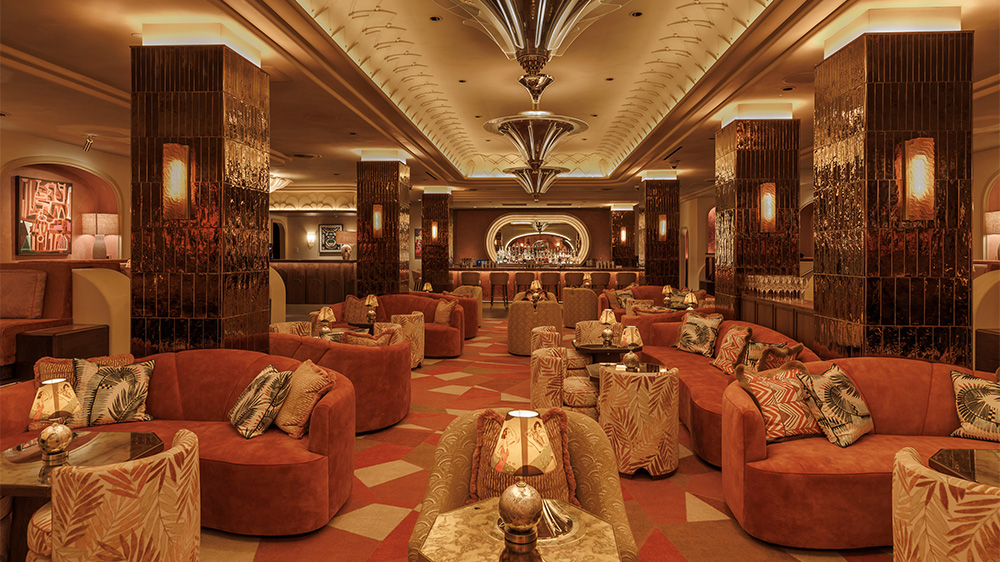
The jubilant lifestyle photography from early-20th-century Cuban magazine Social served as a key muse for Miyar, who transmutes images of convivial Cuba into a sumptuous color story of blush, coral, and gold. This palette forms a rich backdrop for velvet textures and Art Deco accents that evoke a tropical ambiance, while plush upholstered booths and low-slung lounge tables establish a sense of intimacy. Detailed touches, such as hand-painted lampshades and coral-colored walls honoring the work of artist Wifredo Lam, further enrich the cultural narrative, alongside a curated selection of contemporary Cuban artwork. Handmade bronze-glazed ceramic tiles, varying in size and shade, adorn columns "to catch the light and create depth and movement," Miyar adds. "Every material was chosen to enhance that sense of depth, texture, and atmosphere." This meticulous attention to detail and cultural immersion demonstrates a sophisticated approach to themed dining, moving beyond superficial representation to a deeper, sensory engagement.
Bistro Siège Social, Longueuil, Quebec: An Office-Inspired Transformation
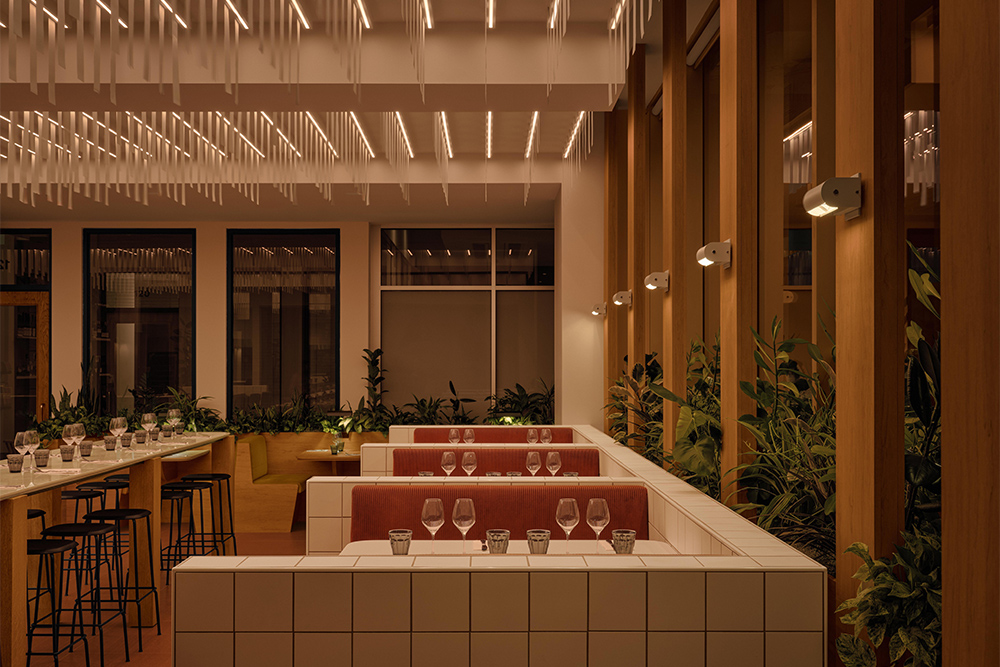
For the Quebec eatery Bistro Siège Social, local firm Blanchette Archi.design drew inspiration from an unexpected source: the office. Housed within a postmodern corporate lobby, the restaurant occupies a vernacular reminiscent of the 1960s and ’70s, a period interior design project manager Sarah Arsenault found particularly fruitful. "The design embraces its formal rigor, modular grids, and material expression, and reinterprets them through a softer, more contemporary lens," she explains. "The project draws from postmodernist interiors of that era, especially their earthy palettes, bold textures, and strong geometries, but refines them to feel timeless rather than nostalgic."
Thoughtful lighting, modular ceilings, stone cladding, and repetitive tile patterns facilitate the restaurant’s transition from a bright daytime café to a sophisticated evening bistro. Matte white ceramic tiles wrap vertical surfaces and integrated millwork, reinterpreting existing stone grids into a unified, rhythmic motif. Travertine-style porcelain also echoes postmodern aesthetics, alongside filtered glass partitions and updated ceilings inspired by vertical blinds. Wood finishes and dark walnut tones infuse warmth into the café, while lighter notes of oak in the bistro amplify openness and conviviality. Terracotta, integrated greenery, and rich velvets in olive and rust tones further distinguish the bistro with textural depth. "We wanted guests to feel a subtle sense of familiarity while experiencing a shift toward comfort and sociability," Arsenault concludes. This innovative approach highlights how everyday environments can be transformed into unique hospitality experiences, demonstrating the power of repurposing and recontextualizing familiar design elements.
Genso, Hong Kong: A Sci-Fi Infused Equestrian Spectacle
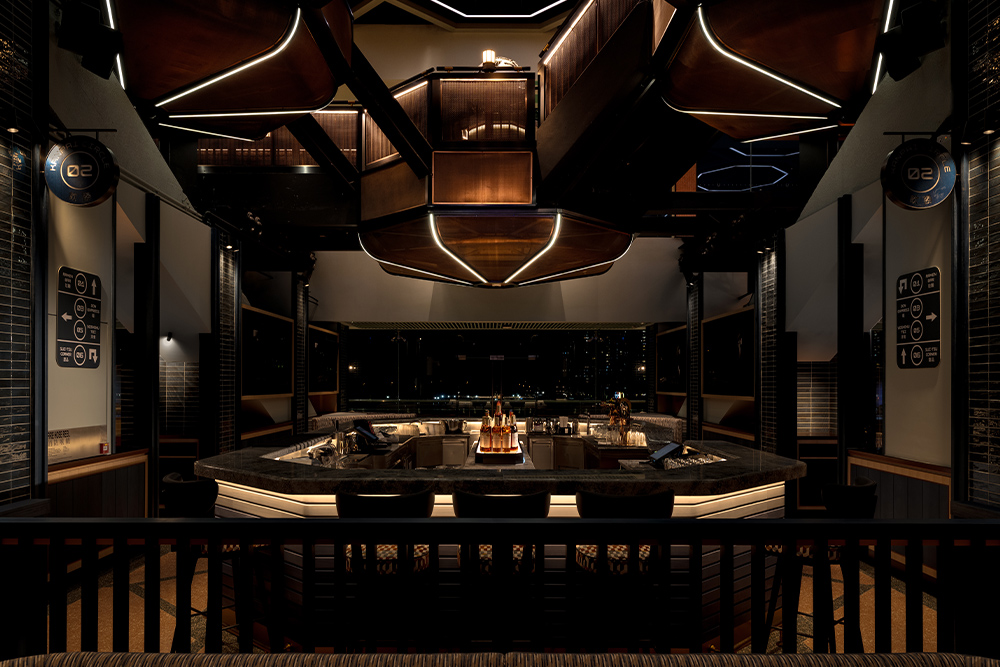
At the Hong Kong Jockey Club’s Sha Tin Racecourse, Genso offers patrons a nostalgic yet fantastical depiction of equestrian culture. For this bi-level restaurant, the locally and London-based Joyce Wang Studio found inspiration in the iconic sci-fi film "Blade Runner," the vibrant art of manga, and Golden Gai, Tokyo’s renowned bar-laden nightlife hub.
On the ground floor, Japanese street food takes center stage at Fudo Town Hall. Studio founder and principal Joyce Wang reveled in the subtle shifts between the motley stalls: "Each counter features its unique graphic language through expression in signage, wallcovering, tile pattern, and menu collaterals. Yet, the overarching theme of retrofuturism stitches their identities together cohesively."
Upstairs, Izakaya beckons with its suspended walkway of neon-wrapped floating islands, a "defining moment within the space," Wang notes, "drawing the eye and staging the layered, cinematic backdrop. There’s a notable feeling of drama to the elevated nooks, which sit poised above the action." A playful energy permeates Genso through the marriage of bold teal, aqua, orange, and peach hues. Lantern-embellished ceilings and columns enveloped in ceramic tiles evoke an animated Tokyo streetscape and its defining facades, while upholstery motifs, midcentury geometrical details, and wood finishes add jolts of sophistication. Ultimately, the racecourse itself is central to Wang’s narrative. "Our design was very much about framing the views of the race," she says, "carving out a sequence of viewing points and crafting an environment that celebrates and amplifies the atmosphere of the track." This multi-layered design approach, drawing from diverse cultural and cinematic influences, creates a truly immersive and engaging dining environment that directly relates to its unique location and purpose.
Loqa, Hyderabad, India: An Introspective Sanctuary of Bamboo and Green Marble
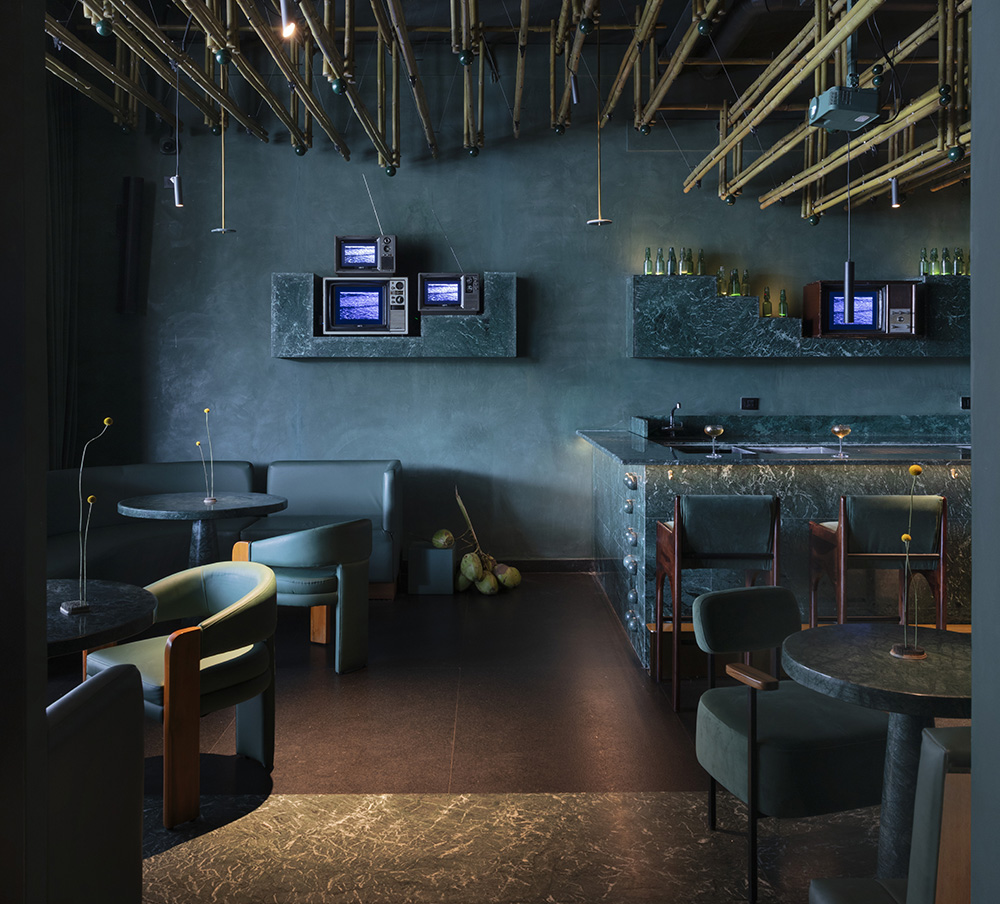
For those seeking a moment of transcendence in Hyderabad, India, Loqa, a cocktail lounge crafted by local firm Sona Reddy Studio, offers an escape into a timeless elsewhere. "The environment is designed to slow things down, allowing people to settle into the moment rather than feel rushed," says principal architect Sona Reddy. "Loqa encourages a more personal experience, where guests feel received individually and can connect more closely with the space and with each other."
Subdued lighting and immersive materials inspire a quieter spatial rhythm across the narrow interiors, where a dense canopy of bamboo rods evokes intimacy and acoustic support. "Its lightness contrasts with the solidity of the materials below, giving the space a slightly dreamlike quality," Reddy adds. Green marble walls, tabletops, and bartops introduce depth with rich tones and sheens that counterbalance the bamboo. A curious grid of stone slabs and hemispherical elements rounds out the design. "In a local F&B landscape often shaped by strong themes, nostalgia-driven aesthetics, or high-energy spectacle, Loqa takes a quieter and more introspective approach," Reddy explains. "Rather than competing for attention through visual excess, the space draws guests inward." This deliberate departure from overt theming signifies a growing trend towards creating spaces that prioritize emotional connection and sensory experience over explicit narrative, offering a unique proposition in a competitive market.
Seoul, New Delhi: A Japandi-Inspired Fusion of Durability and Elegance
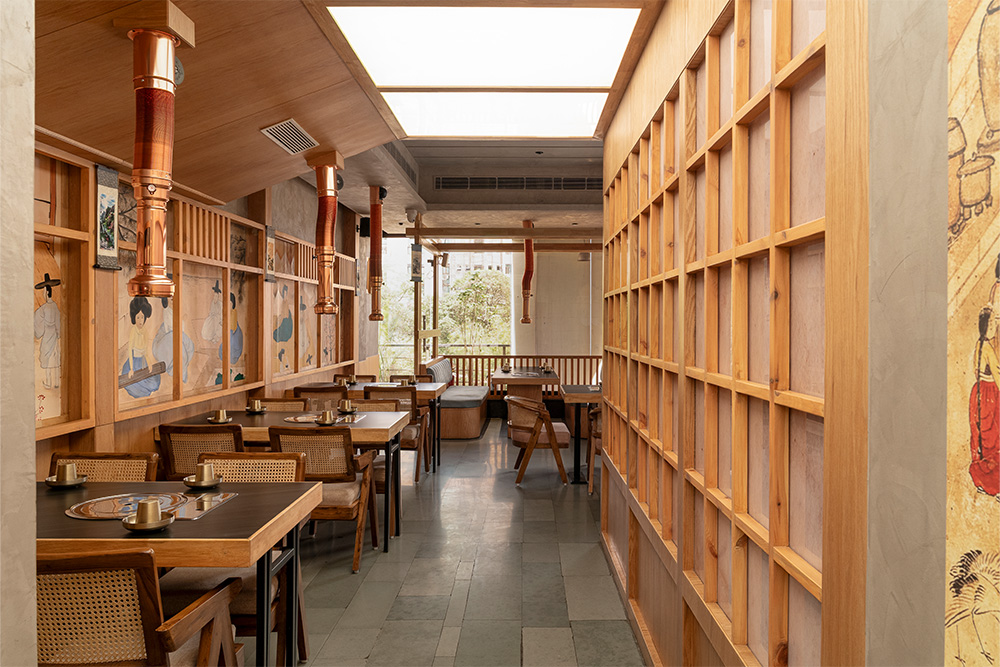
As delectable as Korean cuisine is, its oils, grills, and hot pots demand exceptional durability from restaurant surfaces. To create a fitting space for the Korean-Indian concept Seoul, Urban Mistrii conceived a palette rich with cultural cues that are as resilient as they are authentic. "The inspiration stemmed from the Japandi design ethos: minimal, functional, and timeless," says Ritika Rakhiani, founder of the local firm. "We wanted to create a Korean dining space that feels calm and uncluttered yet can withstand the practical realities of the cuisine."
Clean lines and proportions establish an open, inviting layout with effortless flow. Granite and veneers incite a dialogue between Indian sensibility and Korean tradition beneath stretched ceiling fabrics. Gray walls are finished in textured paint for added depth, showcasing oil paintings that reinterpret traditional Korean layered paintings, capturing myriad quotidian scenes. Suspended above black marble tables, Korean stainless steel chimneys are painted in a warm copper tone to accent the earthy materiality. "Every material was selected to endure deep cleaning and the wear-and-tear of heavy use without losing its elegance," Rakhiani emphasizes. The fusion of minimalist aesthetics with robust materials ensures longevity and ease of maintenance, crucial for a restaurant serving demanding cuisine. This approach underscores the importance of integrating practical considerations into the design process without compromising on aesthetic appeal or cultural resonance.
Bocado Collingwood, Collingwood, Ontario: A Modern Hacienda for Tapas Tradition
Convivial tapas gatherings are a beloved ritual in Spain, and Toronto-based design studio Nivek Rimas was intent on bringing that warmth to Bocado Collingwood, the second Ontario outpost of the seasonally driven, Spanish-influenced restaurant. Partners and cofounders Samer Shaath and Kevin Chan undertook a research trip to Madrid, immersing themselves in this essential slice of culinary culture defined by day-into-night shared plates.
At Bocado Collingwood, located approximately two hours north of Toronto, "we want diners to feel transported yet at ease," Shaath states. "The experience is designed to shift with the energy of the room, whether it’s lively and social or more private and understated. To us, it should always be grounded in comfort and connection."
To achieve this, the duo reinterpreted traditional hacienda architecture "through a modern, rustic lens to create a residential atmosphere," adds Shaath. Finished in coastal shades of sand and oceanic blue, Bocado Collingwood features a sculptural tile-clad bar. The heart of the restaurant, the bar is intentionally packed and vibrant but is juxtaposed with "quiet architectural gestures," as Chan describes. These elements include earthy plasterwork, gentle arches with "corners that dissolve rather than terminate, and the cove ceilings that subtly reveal the beam structure above," Chan elaborates. Flowing drapery also cleverly forges thresholds, a spatial solution that organically shapes movement throughout the space. "What’s not immediately apparent is how much experimentation informed the final result," he concludes. "It’s a reminder that good design isn’t always about excess, but about how thoughtfully you approach each decision." This philosophy of thoughtful design, rooted in cultural understanding and material experimentation, creates a space that is both aesthetically striking and deeply functional, fostering the communal spirit of tapas dining.
These twelve establishments represent a powerful testament to the evolving role of design in the hospitality industry. They demonstrate that a restaurant’s physical space is not merely a backdrop but an active participant in the guest experience, shaping perceptions, influencing emotions, and ultimately contributing to the success of the establishment. As dining continues to evolve, so too will the innovative ways designers and restaurateurs collaborate to create memorable and impactful spaces. The integration of technology, sustainable materials, and culturally resonant narratives will undoubtedly continue to shape the future of dining environments globally.


 Anjar Salim
 Chandra Hamzah
 Tatiana Tantri Indah Sari
 Budi Mulyono
 Lukman Taruna Persada Ramadan
