
 Gabriela Annisa
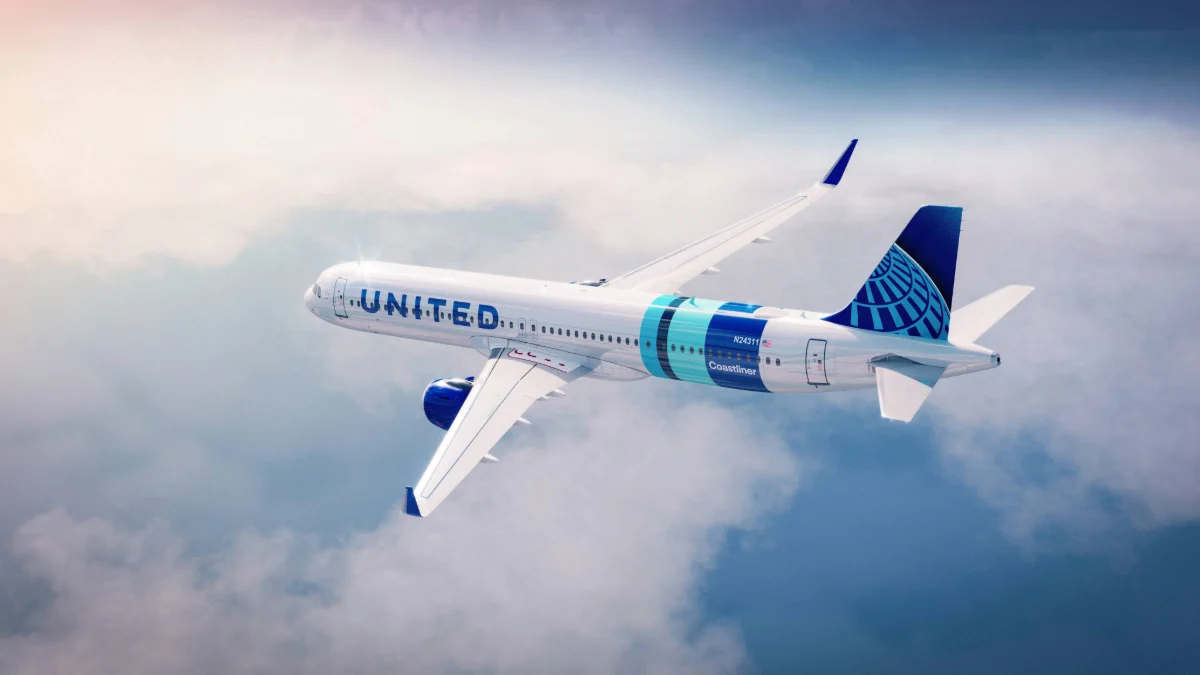
The recent flurry of transatlantic expansion announcements from United Airlines and American Airlines marks a significant pivot in the operational strategies of major U.S. network carriers. As these industry giants announce new routes to secondary and tertiary European markets, the underlying catalyst is the deployment of the Airbus A321XLR. This aircraft, characterized by its extended range and narrow-body configuration, is fundamentally altering the economics of long-haul travel. By enabling direct flights between smaller city pairs that were previously underserved or required a hub connection, carriers are testing a new hypothesis: that the future of international travel lies not just in the high-volume traffic between major hubs like London-Heathrow or Paris-Charles de Gaulle, but in the agility offered by smaller, premium-heavy aircraft.
A New Era of Transatlantic Connectivity
For decades, the transatlantic market was dominated by wide-body aircraft—the "heavy metal" of aviation—designed to shuttle hundreds of passengers between major global capitals. However, the post-pandemic recovery has seen a shift in consumer behavior and operational requirements. United Airlines and American Airlines have responded by diversifying their networks.
The strategy is clear: bypass the congestion of major hubs and utilize the A321XLR to capture point-to-point demand. This shift is not merely about adding routes; it is about recapturing the efficiency lost during the industry’s consolidation phase. By deploying an aircraft with lower trip costs than a wide-body, carriers can maintain profitability on routes with lower passenger volumes, provided those passengers are willing to pay a premium for direct service.
The A321XLR: A Technological Catalyst
The Airbus A321XLR (Xtra Long Range) represents the latest evolution in the A320neo family. With a range of up to 4,700 nautical miles, the aircraft is specifically engineered to bridge the gap between regional operations and true long-haul flight. The technological leap here is the integration of a permanent Rear Center Tank (RCT) for increased fuel capacity, which does not sacrifice cabin space.
For airlines, the A321XLR offers a unique value proposition. It allows for a cabin configuration that heavily favors premium seating—business and premium economy—which has become the primary driver of airline profitability in the post-2020 landscape. While wide-body jets like the Boeing 777 or Airbus A350 are essential for high-density routes, they are often difficult to fill profitably during shoulder seasons. The A321XLR mitigates this risk by offering a smaller seat count that is easier to manage, allowing for higher load factors and better yield management throughout the year.
Financial Performance and the Skift Travel 200 Context
To understand the broader financial environment in which these decisions are being made, one must look at the Skift Travel 200 (ST200) index. This index, which aggregates the performance of nearly 200 global travel companies, serves as a barometer for the health of the sector. Year-to-date performance data indicates a nuanced recovery for network carriers. While the demand for international travel remains robust, airlines are grappling with inflationary pressures, fluctuating fuel prices, and the need for significant capital expenditure to modernize fleets.
The ST200 data underscores a critical reality: investors are closely watching how airlines balance capacity growth with margin protection. The decision to invest in A321XLR fleets is an attempt to optimize both. By moving away from the "hub-and-spoke" dependency, airlines are seeking to insulate their balance sheets from the volatility associated with operating large, fuel-thirsty aircraft on thin routes. The current financial trend shows that those carriers that can maintain high yields—often driven by premium product demand—are the ones outperforming their peers in the index.
Historical Context of Transatlantic Strategy
The history of transatlantic travel has moved in cycles. In the 1990s and early 2000s, the "hub-and-spoke" model was the undisputed king, with carriers funneling passengers through major gateways to maximize efficiency. The 2010s saw the rise of low-cost, long-haul carriers attempting to break this model, often with mixed success. Today, the strategy has evolved into a hybrid approach.
United and American are effectively taking the lessons learned from the failures of early low-cost, long-haul attempts—which often lacked the premium product necessary for profitability—and applying them to a premium-focused model. By leveraging the A321XLR, they are creating "boutique" long-haul routes. This is a direct response to the democratization of travel, where consumers increasingly value time and convenience over the potential cost savings of a connecting flight.
The Risks of a Premium-Heavy Model
While the excitement surrounding the A321XLR is palpable, industry analysts remain cautious regarding the reliance on premium demand. The aircraft’s economics are predicated on the assumption that travelers will continue to pay a premium for direct flights, even as global economic conditions shift.
If there is a cooling in the corporate travel sector or a reduction in disposable income for leisure travelers, the premium-heavy configuration of the A321XLR could become a liability. Unlike wide-body aircraft, which can be reconfigured to add more economy seats to stimulate demand during downturns, the narrow-body cabin is more rigid. Airlines are effectively placing a bet that the current trend toward "premiumization"—where travelers opt for business or premium economy classes—is a structural change in the market rather than a temporary post-pandemic phenomenon.
Official Perspectives and Industry Reactions
While specific financial guidance regarding individual route profitability remains proprietary, executives from both United and American have signaled their intent to continue this expansion. During recent earnings calls, leadership teams have emphasized "network flexibility" as a core pillar of their operational strategy.
Industry analysts suggest that this shift is also a defensive maneuver against potential entrants. By occupying the secondary city-pair markets now, major carriers are creating a "moat" that makes it harder for smaller or regional carriers to establish a foothold. Furthermore, the ability to pivot these aircraft between domestic transcontinental routes and transatlantic routes during different seasons provides a level of operational resilience that was previously unavailable.
Broader Implications for Global Aviation
The ripple effects of this strategy are significant. Airports that were previously relegated to short-haul traffic are now seeing the potential for direct connectivity to the U.S. This changes the economic development trajectory for these regions, as direct access to North American markets is a major draw for tourism and business investment.
For the traveler, the shift represents a potential improvement in the quality of long-haul travel. The A321XLR, despite being a narrow-body, features modern cabin interiors, improved air quality systems, and the latest in-flight entertainment technology. However, it also signifies the potential for a new "tiering" of transatlantic service, where the major hubs remain the domain of the ultra-long-haul wide-body, and the secondary markets become the domain of the premium-focused narrow-body.
Looking Ahead: The Sustainability Challenge
As airlines integrate these new aircraft, they must also contend with the industry’s broader sustainability goals. The A321XLR is significantly more fuel-efficient per seat-mile than the previous generation of long-haul aircraft. This is not just an environmental imperative; it is a regulatory one, as carbon reporting and environmental, social, and governance (ESG) mandates become increasingly central to airline financial reporting.
The move toward more efficient, smaller aircraft is perhaps the most tangible step carriers have taken toward decarbonization in the short term. By reducing fuel burn per passenger, airlines are simultaneously lowering their operating costs and their carbon footprint.
Conclusion
The strategic pivot toward the A321XLR by United and American Airlines represents a sophisticated recalibration of the transatlantic model. By focusing on secondary markets and leveraging the technological advancements of narrow-body aircraft, these carriers are betting on a future defined by flexibility and premium service. While the reliance on premium demand presents a clear economic risk, the current trajectory suggests that the industry is moving away from the one-size-fits-all hub model. As the Skift Travel 200 data continues to track the financial health of these entities, the success of this strategy will likely be measured by the ability of carriers to maintain high yield margins while navigating the complexities of a volatile global economy. The era of the "heavy metal" hub-and-spoke system is not dead, but it is being augmented by a new, agile force that promises to make the Atlantic feel a little smaller for the modern traveler.




 Lukman Taruna Persada Ramadan

 Budi Mulyono

 Cholid Fahmi Thalib

 Diana Nuri Rohmawati

 Tatiana Tantri Indah Sari

 Anjar Salim
