
 Anjar Salim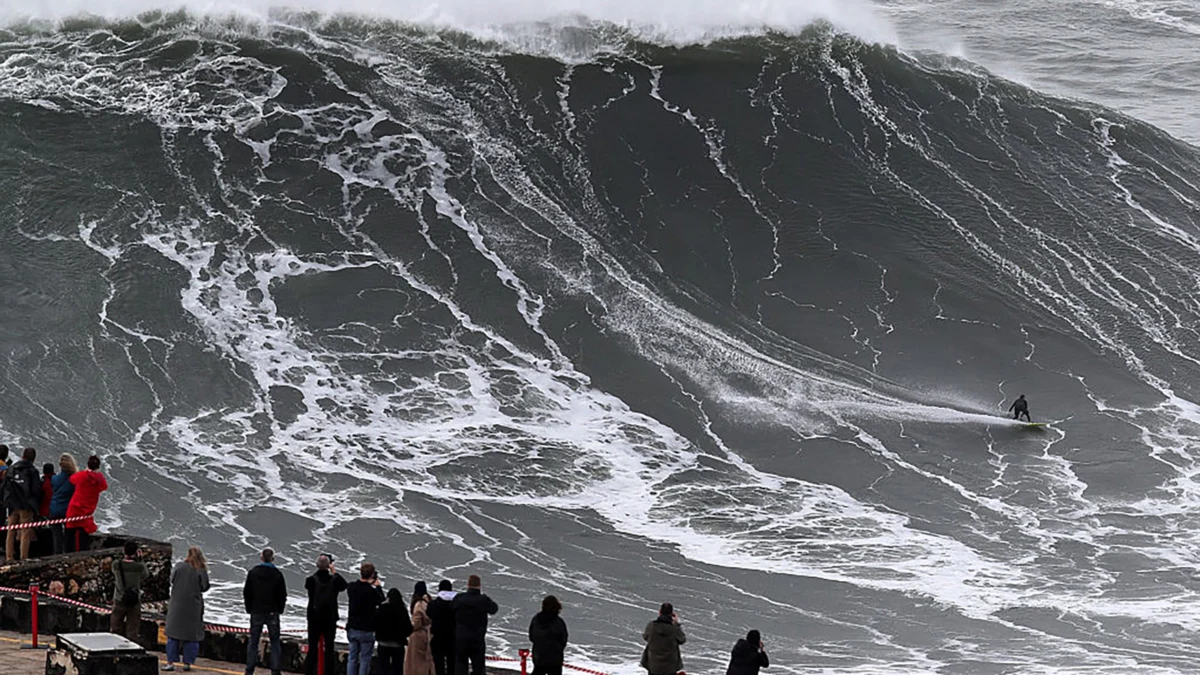
The pursuit of the world’s largest surfable swell has long been a discipline defined by a divide between traditional athleticism and mechanized assistance. While tow-in surfing, which utilizes personal watercraft (PWC) to launch riders into mountainous waves, has redefined the ceiling of what is possible, a small elite group of athletes remains dedicated to the "paddle-in" method. Among them is Tahitian big-wave specialist Tikanui Smith, who has recently intensified his efforts to break the standing world record for the largest wave ever paddled into. Currently, that benchmark is held by American surfer Aaron Gold, who successfully paddled into a 63-foot wave at the Jaws break in Maui, Hawaii, in 2016. Smith’s recent endeavors at Nazaré, Portugal, have pushed him to the brink of physical endurance and highlighted the extreme risks inherent in the sport’s most dangerous discipline.
The Mechanics and Danger of the Nazaré Canyon
Nazaré’s Praia do Norte has become the epicenter of global big-wave surfing due to a unique geological feature known as the Nazaré Canyon. This underwater trench, the largest in Europe, extends approximately 140 miles along the coast and reaches depths of up to 16,000 feet. As massive North Atlantic swells travel through the canyon, the sudden decrease in depth at the shoreline causes the waves to compress and amplify, often doubling or tripling in height. Unlike other big-wave spots that break over coral reefs or rock shelves, Nazaré is a beach break with shifting sandbars, making the "impact zone"—the area where the wave’s energy is released—unpredictable and exceptionally violent.
For paddle surfers like Smith, Nazaré presents a unique challenge. While tow-in surfers use the momentum of a jet ski to match the speed of a 50-to-70-foot wave, paddle surfers must rely entirely on upper-body strength and precise timing to catch the moving wall of water. The difficulty is compounded by the sheer volume of water; a 70-foot wave can weigh several thousand tons, and the turbulence of the "whitewater" can hold a human being underwater for extended periods, subjecting them to pressures that can rupture eardrums and collapse lungs.
A Near-Fatal Encounter at Praia do Norte
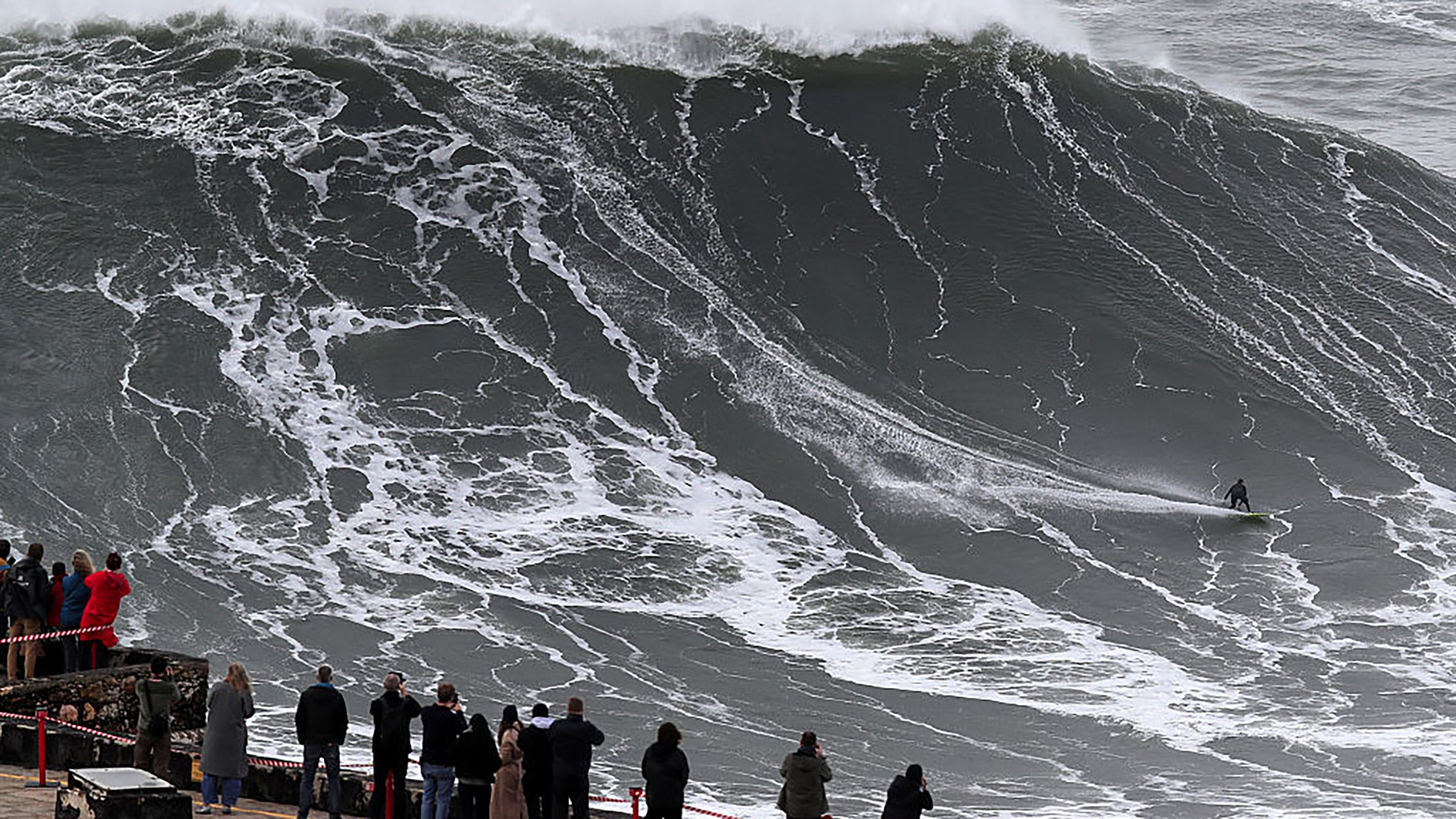
During a recent swell at Nazaré, Smith attempted to paddle into a wave estimated to be 70 feet in height—a size that would have shattered Gold’s 2016 record. The attempt occurred in a crowded lineup dominated by 20 to 30 jet skis assisting tow-in teams. Smith, choosing to distance himself from the mechanized traffic, paddled north of the main cliff to find a window of opportunity.
The sequence that followed nearly cost the Tahitian his life. After realizing he could not catch the massive peak, Smith found himself trapped in the impact zone as the wave began to crest. A safety jet ski attempted a "sled pickup"—a maneuver where the surfer grabs a floating mat attached to the back of the craft—but the speed required to outrun the breaking wave caused the jet ski to collide with Smith’s 12-foot surfboard. With only seconds before the impact, Smith was forced to abandon his equipment and dive deep.
Witnesses and safety personnel described the ensuing wipeout as catastrophic. Smith was held underwater for approximately 20 seconds during the first wave, a duration that is considered critical given the physical exertion required just before the submersion. Despite deploying his inflatable CO2 vest—a standard safety tool that provides buoyancy—Smith remained submerged in the "darkness" of the turbulent water. Upon surfacing, he was immediately struck by a second wave. The impact resulted in cracked ribs and internal trauma, with Smith later reporting a sensation of "something breaking" near his heart and abdomen.
The Chronology of a Career Defined by Resilience
Tikanui Smith’s journey to the 70-foot mark at Nazaré is a narrative of repeated recovery and psychological fortitude. His obsession with the paddle-in record can be traced back to 2018, during the World Surf League’s (WSL) Big Wave Challenge at the same location. In that event, Smith survived a four-wave "hold-down," a scenario where a surfer is unable to reach the surface between successive breaking waves. Rather than deterring him, the experience solidified his belief that it was his "destiny" to push the limits of the sport.
However, the path was interrupted by a series of personal and physical setbacks:
- 2018: Survival of the four-wave hold-down at Nazaré, establishing Smith as a premier big-wave talent.
- 2019: A severe mountain biking accident resulted in spinal injuries. Medical professionals initially informed Smith that his ability to walk was in jeopardy, leading to a temporary retirement from professional surfing.
- 2020–2023: Smith relocated to Mo’orea in French Polynesia, where he stepped away from his sponsors and established a tourism business. During this period, he struggled with the psychological transition away from high-risk athletics.
- 2024: Seeking closure, Smith consulted a hypnotherapist to assist with his retirement. The sessions reportedly had the opposite effect, reinforcing his identity as a "phoenix" and leading to his return to full-time training.
- February 2026: Smith returned to Nazaré with minimal financial backing, living in a shipping container at the harbor to maintain proximity to the break. This grassroots approach earned the respect of the local surfing community and veterans like Garrett McNamara, the pioneer of Nazaré surfing.
Comparative Analysis: Paddle-In vs. Tow-In Standards
The distinction between paddle-in and tow-in surfing is central to the current debate within the World Surf League and the broader surfing community regarding "the real spirit" of the sport. Tow-in surfing, popularized in the 1990s by Laird Hamilton and others, allowed surfers to access 80-to-100-foot waves that were previously considered uncatchable. Sebastian Steudtner currently holds the world record for the largest wave ever surfed (tow-in) at 86 feet, set at Nazaré in 2020.
Paddle-in surfing, however, is viewed by many purists as the ultimate test of human capability. The 63-foot record held by Aaron Gold since 2016 has remained untouched for nearly a decade, largely because the physical requirements to paddle into a wave of that size are at the absolute limit of human physiology. Smith’s attempt at a 70-foot wave represents a 10% increase in the current record, a leap that experts suggest requires a perfect alignment of swell period, wind direction, and athlete positioning.
The Role of Media and HBO’s "100-Foot Wave"
Smith’s pursuit is being documented by a film crew for the HBO series 100-Foot Wave. The Emmy-winning documentary has played a significant role in bringing big-wave surfing to a mainstream global audience. By focusing on the personal toll and the technical preparation involved, the series has highlighted the shift in the sport toward a more professionalized, safety-conscious era.
Garrett McNamara, the central figure of the HBO series, has been vocal in his support of Smith. McNamara’s endorsement is significant; as the man credited with "discovering" Nazaré for the international surfing community, his recognition of Smith’s "paddle-only" approach validates the Tahitian’s standing among the world’s elite. The presence of high-end film production also provides an objective record of wave heights, which is essential for official WSL certification of any new world records.
Cultural Context and the "Ocean Warrior" Identity
Smith’s approach to surfing is deeply rooted in his Tahitian heritage. In French Polynesia, surfing (known anciently as horue) carries historical and spiritual significance. Smith has frequently referenced his family lineage on his father’s side, describing them as "ocean warriors" or paratha. This cultural framework informs his perspective on risk; he views the ocean not as a hostile force to be conquered, but as a domain where he is protected.
Following his recent injury, Smith sought the counsel of a tahu’a, a traditional Tahitian visionary. This spiritual consultation reinforced his conviction that his survival at Nazaré was not accidental. This blend of modern athletic training and traditional belief systems is common among Polynesian watermen, providing a psychological buffer against the fear of death that often paralyzes others in high-consequence environments.
Future Implications for Big-Wave Safety and Records
The injuries sustained by Smith—cracked ribs and potential internal bruising—underscore the ongoing need for advancements in safety technology. The inflatable vests used by Smith have become mandatory in the sport, but as wave heights approach the 80-foot mark for paddle-in attempts, the limits of these devices are being tested. The impact of a 70-foot wave can be enough to pull the canisters or the vest itself off a surfer’s body, or render the buoyancy insufficient against the downward pressure of the water column.
Despite the trauma of his recent attempt, Smith has confirmed his intention to return to Nazaré in September 2026. His immediate plans include training in the heavy barrels of Teahupo’o, Tahiti, which offer a different kind of intensity—shallow reef breaks as opposed to deep-water canyon swells.
The quest for the 70-foot paddle-in record remains one of the final frontiers in extreme sports. As Smith continues his preparation, the surfing world remains focused on Nazaré, a location that continues to redefine the boundaries of human potential and the price of entry into the history books. Smith’s journey is more than a pursuit of a numerical record; it is a testament to the resilience of the human spirit and the enduring allure of the world’s most powerful natural forces.


 Chandra Hamzah
 Gabriela Annisa
 Tatiana Tantri Indah Sari
 Hendra Ismail
 Walid Sujud Trenggono
 Budi Mulyono