Budi Mulyono
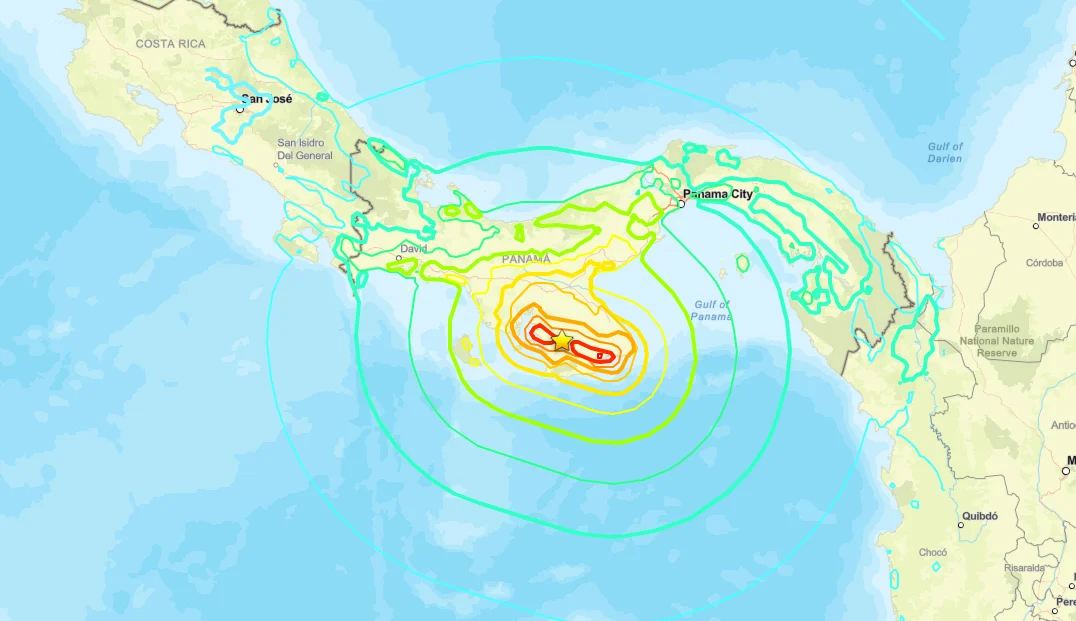
Travelers with upcoming itineraries to southern Panama and the broader Central American region are facing severe disruptions following a major seismic event. Early Friday, October 9, 2026, a powerful earthquake measuring 7.7 on the Richter scale struck the region, prompting an immediate tsunami warning from regional authorities and triggering widespread precautionary measures across the country’s infrastructure. According to data published by the United States Geological Survey (USGS), the epicenter of the shallow yet high-magnitude quake was located approximately twelve kilometers west-southwest of Pitaloza Arriba. The impact of the tremor rippled across neighboring provinces, raising urgent concerns for public safety, structural integrity, and national transportation networks.
As response teams mobilize to assess the damage, international observers and travel coordinators are closely monitoring the situation. While initial reports from local emergency management services indicate that the nation has largely avoided catastrophic, widespread destruction, localized structural failures have been documented near the epicenter and surrounding districts. The ongoing threat of aftershocks, coupled with an active tsunami warning, has created a complex operational landscape for both residents and visitors. Aviation authorities, ground transit operators, and tourism boards are working rapidly to restore a semblance of normalcy, but significant hurdles remain for anyone attempting to navigate the country in the immediate aftermath of the disaster.
Chronology of the Event and Immediate Aftermath
The sequence of events began in the pre-dawn hours of Friday, October 9, 2026, when seismic monitors registered sudden, high-intensity movements originating from the western sector of southern Panama. The primary shockwave, officially recorded at a magnitude of 7.7, was felt acutely throughout several provinces, causing widespread panic as buildings swayed and residents evacuated to open areas.
Within minutes of the primary tremor, the Pacific Tsunami Warning Center and national emergency agencies issued a formal tsunami warning for coastal regions, advising populations near the shoreline to seek higher ground immediately. The immediate hours following the main shock were characterized by continuous seismic activity. Seismologists at the USGS and local observatories recorded more than 40 aftershocks within the first half-day alone. Several of these secondary tremors were classified as strong, registering high enough on the scale to cause additional anxiety and compound structural weaknesses already induced by the initial earthquake.
Transportation hubs experienced immediate operational paralysis. Tocumen International Airport, the primary aviation gateway serving Panama City and a critical international transit hub for the Americas, temporarily suspended all arriving and departing flights as a precautionary measure. Engineering teams were rapidly deployed to conduct rigorous safety inspections of runways, taxiways, and terminal architecture to check for foundational cracks or subterranean shifts. Fortunately, these initial inspections yielded positive outcomes, allowing aviation authorities to lift the suspension later in the day and resume standard flight paths, albeit with expected delays as airlines cleared backlogs.
Geological Data and Seismological Context
The 7.7 magnitude earthquake represents one of the most significant seismic events to impact Panama in recent years. To contextualize the geological mechanics of the incident, seismologists look to the complex tectonic setting of Central America, where the Cocos, Nazca, Caribbean, and Panama microplates interact. Panama’s geographic position makes it uniquely susceptible to seismic activity, driven primarily by subduction zones and strike-slip fault systems running parallel to its coasts.
The USGS report detailing the event placed the hypocenter at a relatively shallow depth, a factor that frequently amplifies the perceived intensity and surface-level destructiveness of an earthquake of this magnitude. Shallow earthquakes allow seismic energy to reach the Earth’s surface with less attenuation, meaning that structures located near the epicenter experience exceptionally high peak ground acceleration.
The recording of over 40 aftershocks in rapid succession is consistent with the readjustment of crustal plates following a primary fault rupture of this scale. Seismologists note that while aftershocks typically decrease in frequency and magnitude over time, the initial cluster presents a persistent hazard. These secondary movements elevate the risk of secondary structural collapses, particularly in older masonry or unreinforced buildings that sustained unseen micro-fractures during the initial tremor.
Emergency Response and Official Assessments

In the wake of the disaster, national and municipal emergency services launched coordinated response operations to evaluate the human and material toll. At the time of initial reporting, emergency response coordinators confirmed that no fatalities or severe injuries had been officially documented—a fortunate outcome attributed in part to strict modern building codes in urban centers and the specific geographic distribution of the epicenter.
However, damage assessments remain ongoing in rural and semi-urban communities closer to Pitaloza Arriba. Reports from local civil protection agencies indicate that several older buildings, exterior walls, and municipal structures suffered varying degrees of damage, ranging from cosmetic cracking to partial structural failure. Emergency shelters were swiftly established to accommodate residents displaced from coastal zones due to the tsunami warning or from inland areas where homes were rendered temporarily uninhabitable.
Government ministries, including the Ministry of Government and the National Civil Protection System (SINAPROC), have urged the public to remain vigilant. Emergency personnel continue to patrol affected zones, clearing debris from roadways, inspecting bridges, and assisting local municipalities with search-and-water rescue readiness should the tsunami threat materialize along vulnerable coastal stretches.
Implications for Tourism and Travel Operations
For the international travel community, the October 2026 earthquake serves as a stark reminder of the unpredictable nature of regional natural disasters. While Tocumen International Airport has resumed operations, the broader travel ecosystem within Panama requires careful navigation over the coming days and weeks.
Travelers with imminent plans to visit southern Panama or transit through the country are advised to adopt a cautious approach. Airlines operating routes to Panama City have implemented flexible rebooking policies for affected passengers, though standard schedules are largely returning to normal. Experts recommend that travelers proactively contact their respective carriers to confirm flight statuses before heading to departure airports, as sudden aftershocks could theoretically prompt localized, temporary ground stops or airspace evaluations.
Ground transportation networks present a more volatile picture. While major highways connecting the capital to major economic zones have generally remained operational following preliminary safety checks, secondary roads—particularly those branching toward rural southern districts and coastal areas—may be subject to lane closures, bridge inspections, or blockages caused by minor landslides and rockfalls.
Furthermore, travelers must account for potential disruptions to local commerce and infrastructure. Many businesses, historical sites, and tourist attractions in affected zones may experience temporary closures as proprietors conduct safety audits of their facilities or deal with localized utility outages. Verifying the operational status of hotels, tour operators, and public amenities prior to arrival is strongly encouraged.
Broader Economic and Infrastructural Analysis
From an economic perspective, the October 9 earthquake poses a localized test of Panama’s infrastructural resilience. As a vital logistics, financial, and transportation hub for Latin America, the country relies heavily on the uninterrupted functionality of its supply chains, ports, and aviation networks.
Initial market analyses and economic assessments suggest that the long-term impact on the national economy will likely be contained, provided that major infrastructure such as the Panama Canal and primary international trade routes remain uncompromised. Reports from the Panama Canal Authority indicate that canal operations proceeded with heightened monitoring protocols but avoided significant structural damage, shielding global maritime trade from major bottlenecks.
Nevertheless, the incident highlights the ongoing necessity for continuous investment in earthquake-resistant infrastructure and rigorous disaster response frameworks. As climate and geological risks continue to present challenges to global mobility, the ability of a nation to swiftly transition from crisis containment to infrastructural recovery remains paramount. For Panama, the immediate focus remains on life safety, coastal monitoring, and the gradual, secure restoration of normal civil and commercial routines.




 Lukman Taruna Persada Ramadan

 Tatiana Tantri Indah Sari
 Anjar Salim