
 Anjar Salim
The physical demands of backcountry skiing, mountaineering, and long-distance hiking place immense mechanical stress on the human body, particularly the lower extremities and spinal column. Navigating uneven terrain while carrying heavy loads frequently leads to micro-traumas, chronic stiffness, and overuse injuries in the small, often neglected stabilizing muscles of the feet, ankles, and core. While conventional conditioning regimens often emphasize high-impact strength training or linear stretching, a growing segment of endurance athletes and physical therapists are turning toward alternative somatic movement systems to address deep-seated joint and muscle fatigue. Among these modalities, Gyrotonic and Gyrokinesis—two movement methodologies originally designed for dance rehabilitation—have emerged as highly effective interventions for optimizing joint mobility, enhancing core stability, and accelerating physical recovery in outdoor athletes.
Origins and Mechanics: Bridging Dance Rehabilitation and Eastern Movement Principles
Developed in the 1980s by former professional dancer Juliu Horvath, the Gyrotonic expansion system and its equipment-free counterpart, Gyrokinesis, were created in response to severe physical injuries sustained during Horvath’s dancing career. Seeking a method to heal his own body and restore fluid articulation to his joints, Horvath integrated foundational movement concepts from yoga, swimming, gymnastics, and tai chi. Unlike traditional weight training, which typically isolates muscles within a single plane of motion, Gyrotonic and Gyrokinesis prioritize continuous, circular, and three-dimensional pathways.
The Gyrotonic system utilizes specialized, pulley-tower equipment outfitted with weighted handles and sliding benches, allowing users to execute fluid, resistance-assisted movements that decompress joints while engaging opposing muscle groups simultaneously. Gyrokinesis adapts these exact movement principles for mat- and stool-based exercises, utilizing rhythmic contractions, spinal articulation, and coordinated breathing patterns.
According to certified Gyrotonic instructor Leslie Hubbard, owner of Hidden Root Studio in Maple Falls, Washington, the methodology’s unique efficacy stems from its holistic perspective on human anatomy. "There’s a lot of energetic qualities to the system in the movement," Hubbard explains. "It’s very circular; it’s very three-dimensional. It looks at the body as a whole, and that all the systems are connected." By harmonizing the nervous, circulatory, and musculoskeletal systems, the practice aims to optimize micro-circulation, enhance cellular repair, and foster neuromuscular integration from the center of the body outward.
Chronology of Adoption in Outdoor Sports and Injury Mitigation
The integration of somatic disciplines like Gyrotonic and Gyrokinesis into mainstream outdoor conditioning represents a notable shift in athletic training chronologies. Historically, backcountry athletes relied almost exclusively on cardiovascular endurance training—such as running and cycling—alongside traditional resistance training like squats and deadlifts. While these conventional workouts build gross motor strength, they frequently overlook the intricate network of intrinsic foot muscles and deep spinal stabilizers necessary for navigating dynamic outdoor environments.
During the early 2000s, elite dancers and performing artists dominated the user base for Gyrotonic apparatuses. However, as sports medicine researchers increasingly highlighted the correlation between core stability, proprioception, and injury prevention, physical therapists began adopting the modalities for broader rehabilitation applications. By the mid-2010s, specialized studios across North America and Europe began tailoring Gyrokinesis sequences specifically for endurance athletes, climbers, and backpackers seeking low-impact alternatives to traditional cross-training.
By 2026, the methodology has transitioned from a niche rehabilitation tool to a recognized preventative discipline within the outdoor community. Athletes participating in multi-day backcountry expeditions increasingly utilize portable Gyrokinesis routines in base camps to mitigate the cumulative fatigue associated with heavy packs and uneven terrain.
Supporting Data and Anatomical Implications for Hikers
Biomechanically, carrying a loaded backpack—often weighing between 30 and 50 pounds—alters an individual’s center of gravity, placing abnormal shear forces on the lumbar spine and increasing plantar pressure on the feet. Clinical studies on backpacking-induced injuries consistently indicate that prolonged exposure to uneven terrain leads to cumulative fatigue in the intrinsic muscles of the foot, diminishing shock absorption and significantly raising the incidence of ankle sprains, plantar fasciitis, and Achilles tendinitis.
The core-centric philosophy of Gyrokinesis directly combats these mechanical vulnerabilities. By initiating movements from the pelvis rather than the neck or peripheral joints, the practice activates the transverse abdominis and deep pelvic floor muscles, establishing a stable cylinder of support around the spine. Furthermore, the specialized attention given to the foot and ankle complex—incorporating intrinsic muscle massage, joint mobilization, and multi-directional rotations—actively restores synovial fluid production within the tarsal joints. This targeted maintenance reduces joint stiffness, enhances proprioceptive feedback, and ensures that the foot can dynamically adapt to shifting surfaces on the trail.
Professional Perspectives and Individualized Application
A core tenet of both Gyrotonic and Gyrokinesis is the rejection of standardized, one-size-fits-all programming. Because every athlete possesses a distinct structural history, previous injury profile, and range of motion, effective instruction requires continuous adaptation.
"Not everybody is the same," Hubbard notes. "And that’s one thing that’s really beautiful about this system: we look at who is in front of us. It’s not a cookie-cutter."
This individualized framework is particularly valuable for hikers managing chronic joint degeneration or recovering from acute trauma. Rather than forcing joints through aggressive, end-range stretches—which can trigger inflammatory responses or protective muscle guarding—the methodology emphasizes working within comfortable, pain-free thresholds. Hubbard stresses that even micro-movements can yield significant physiological benefits, particularly when executed with focused attention after an arduous day on the trail. "The smallest range of motion could be so satisfying for the body, especially after a long day of hiking," she adds.
Practical Application: Self-Guided Gyrokinesis Sequences for the Backcountry
Athletes seeking to incorporate these movement principles outside of a professional studio setting can perform tailored Gyrokinesis sequences using basic, field-accessible props such as a camp stool, rock, or log. Practitioners should maintain a relaxed breathing pattern and immediately cease any movement that elicits sharp pain or discomfort.
Spinal Mobilization Sequence
Following hours of forward-flexed posture beneath a heavy backpack, the spinal column requires multi-planar decompression to restore natural articulation.
- Sit upright on a stable surface, such as a camp stool, rock, or sturdy log, ensuring both feet rest flat on the ground.
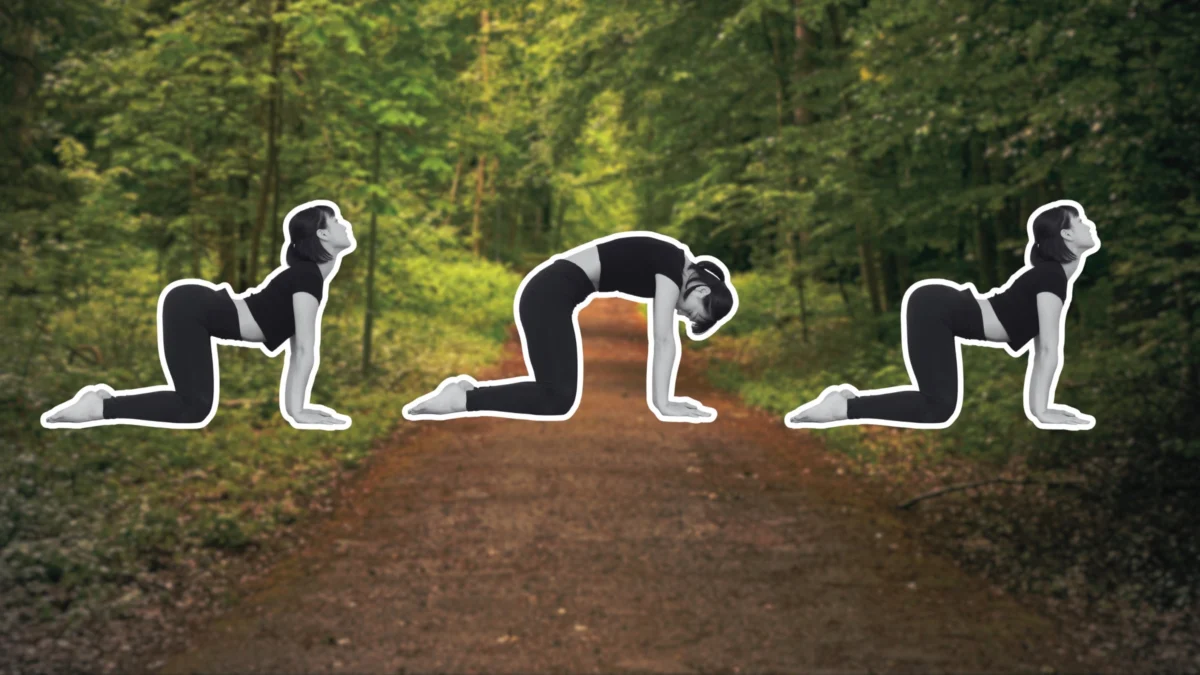
- Begin gentle spinal articulation by alternating between an arched and a curled position. Initiate the movement from the pelvis, allowing the motion to ripple upward through the lumbar, thoracic, and cervical spine, mirroring the mechanics of a seated yoga cat-cow pose. Repeat fluidly.
- Introduce a spinal spiral by gently rotating the trunk from side to side, continuing to drive the rotation from the base of the spine rather than turning from the head or shoulders.
- Execute lateral side arches by slowly leaning the torso to the left and right, opening the intercostal spaces along the lateral body.
- Conclude with a wave-like spinal pattern: keeping the arms relaxed at the sides, sequentially curl and arch the spine while drawing the chest forward and backward in a continuous, fluid loop.
Comprehensive Foot and Ankle Sequence
Restoring mobility to the intrinsic muscles of the foot can substantially alleviate post-hike soreness and improve balance on subsequent days of travel.
- Remove footwear and cross one ankle over the opposite knee to establish comfortable access to the sole of the foot.
- Execute foot openings by massaging the plantar fascia with the thumbs, moving methodically from the heel through the arch and out toward the metatarsals, paying particular attention to tender or tightly contracted areas.
- Grasp each toe individually, gently articulating it forward, backward, and side-to-side, while gently stretching the webbed spaces between the digits.
- Interlace your fingers snugly between your toes so that the webbing of your fingers meets the webbing of your toes. Stabilize the ankle with your opposite hand, and use the hand threaded through your toes to rotate the forefoot in wide, slow circles, reversing direction halfway through.
- Shift the stabilizing hand to a position just above the ankle joint while maintaining the finger-toe interlace, and execute larger, deliberate circles with the entire ankle joint to simultaneously build structural strength and create intra-articular space.
- Gently withdraw your fingers and lightly tap the sole of the foot with an open palm. According to Hubbard, this unconventional step stimulates local micro-circulation and blood flow to the plantar surface. Conclude this segment by vigorously shaking out the ankle.
- To stretch the anterior ankle, place the dorsal surfaces of the toes against the ground while seated, gently alternating between the left and right foot. With the toes anchored, roll the ankle joint outward from the big toe to the little toe to mobilize the anterior joint capsule.
- Place the soles of the feet flat on the ground, lifting and spreading the toes before reaching them forward. Next, actively pull the toes backward to simulate gripping a towel, elevating the longitudinal arch. Reverse the motion, ensuring continuous engagement of the intrinsic foot musculature.
- Transition to a standing position, hinging forward to place both hands on a stable support surface such as a rock, log, or stool while keeping the core engaged and the spine neutral. With a slight bend in the knees, elevate onto the balls of the feet and execute outward ankle circles, rolling across the metatarsals toward the lateral edge of the foot before lowering the heels and rolling along the medial arch. Reverse the directional flow, ensuring that the movement remains smooth, controlled, and massage-like in sensation.
Broader Economic and Athletic Implications
As the intersection of outdoor recreation and holistic wellness continues to expand, the incorporation of somatic movement systems like Gyrotonic and Gyrokinesis underscores a broader philosophical evolution in athletic training. Rather than focusing exclusively on brute strength and endurance, modern conditioning protocols increasingly prioritize neuromuscular efficiency, postural awareness, and long-term joint preservation.
For the outdoor industry, this shift points toward a future where preventative mobility work is viewed as an essential component of adventure preparation. By investing in practices that honor the body’s interconnected biomechanics, athletes can extend their participation longevity, reduce medical interventions associated with chronic overuse injuries, and cultivate a deeper, more sustainable relationship with the physical demands of the natural world.



 Gabriela Annisa

 Lukman Taruna Persada Ramadan

 Tatiana Tantri Indah Sari


 Dwi Wanna
