
 Walid Sujud Trenggono
Penang’s cultural identity is inextricably linked to its gastronomy, an obsession that governs the daily routines of both its residents and visitors. This culinary-centric culture manifests itself immediately upon arrival; a typical taxi journey from the international airport into the historic core of George Town rarely bypasses a spirited discussion regarding local eateries. For travelers navigating dietary restrictions—particularly plant-based diets—Penang presents a rare paradox: an island renowned for rich, complex flavors that operates simultaneously as an accommodating sanctuary for vegans.
Rather than a modern concession to Western dietary trends, this inclusivity is deeply rooted in the island’s centuries-old Chinese Mahayana Buddhist heritage. Known locally as su zhai or temple food, plant-based cuisine in Penang originated in sixth-century monasteries. Over generations, these culinary traditions migrated beyond monastic walls into neighborhood hawker stalls, family-run cafes, and bustling street markets, effectively normalizing a compassionate, meat-free diet across a multicultural society.
Historical Context and Multicultural Heritage
The flourishing of plant-based cuisine in Penang cannot be isolated from the island’s complex geopolitical and demographic history. Situated strategically in the Malacca Strait, Penang’s modern trajectory began in 1786 when Captain Francis Light established a trading post for the British East India Company. The subsequent influx of migrants—predominantly from southern China, alongside Indian, Malay, Peranakan, and European communities—created a vibrant, pluralistic society.
While British administration and the legacy of the regional opium trade shaped the economic architecture of the Straits Settlements, the demographic weight of Chinese immigrants permanently imprinted the cultural landscape. Today, this heritage is visibly preserved in the island’s architecture, religious institutions, and daily social life. Historic shrines, colonial-era shophouses, and neighborhood watering holes coexist within George Town, a designated UNESCO World Heritage site since 2008. This historic preservation extends to culinary arts, where ancient monastic cooking techniques have been meticulously maintained and adapted for the modern palate.
Spiritual Landmarks and Architectural Preservation
The intersection of spirituality, architecture, and gastronomy is most clearly observed at Kuan Yin Teng, the Temple of the Goddess of Mercy. Constructed in the early 19th century by early Hokkien and Cantonese immigrants, Kuan Yin Teng stands as the oldest Taoist and Buddhist temple on the island. Dedicated to Guanyin—the Bodhisattva of Compassion, who is widely revered for bestowing peace, protection, and fertility—the temple remains an active spiritual hub. Worshippers continue centuries-old traditions by lighting joss sticks, burning lotus-shaped candles, and offering prayers amid clouds of incense.
Architecturally, the temple exemplifies traditional southern Chinese craftsmanship, featuring intricately carved stone pillars, ceramic roof dragons, and quiet courtyards that offer a respite from George Town’s tropical climate. Beyond the immediate temple grounds, Penang’s clan architecture—typified by structures such as the Han Jiang Ancestral Temple and the floating water villages known as the clan jetties—highlights the communal organizational systems established by early immigrants. Constructed largely from the mid-19th century onward, these jetties provided essential social welfare, housing, and economic networks for newly arrived laborers, preserving distinct dialect groups and ancestral customs.
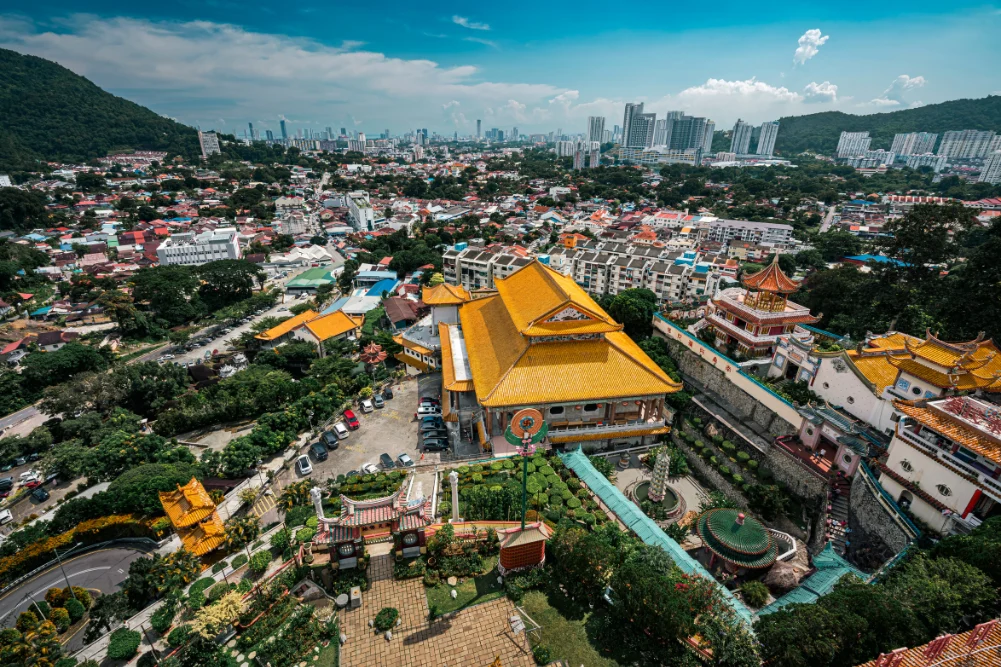
At the macro-level, the island’s architectural and religious topography culminates at Kek Lok Si, the largest Buddhist temple complex in Malaysia. Perched upon Crane Hill in Air Itam, the sprawling complex—whose name translates to the "Temple of Supreme Bliss"—broke ground in 1891 under the visionary leadership of Venerable Beow Lean, a monk from Fujian province. Over subsequent decades, the complex expanded to incorporate a seven-tier pagoda representing a synthesis of Chinese, Thai, and Burmese architectural styles, alongside a towering 36.5-meter bronze statue of Guanyin erected in 2002. Kek Lok Si serves not only as a major pilgrimage site for Buddhists across Southeast Asia but also as a case study in heritage conservation, continually maintained by monastic communities and supported by international patronage.
The Evolution and Science of Plant-Based Gastronomy
Penang’s vegan culinary sector transcends basic vegetarianism, offering an elaborate sub-cuisine centered on sophisticated mock-meats. Historically developed by Buddhist monks who abstained from animal slaughter for ethical reasons, this culinary tradition utilizes wheat gluten, soy, and root vegetables to replicate the textures and flavors of fish, poultry, pork, and lamb.
Nutritional and culinary analyses of traditional su zhai reveal a deliberate avoidance of the "five pungent spices"—garlic, onions, shallots, leeks, and chives—which, according to traditional Mahayana monastic codes, were believed to agitate the mind and hinder meditation. Instead, chefs rely heavily on complex combinations of fresh mushrooms, fermented soy pastes, local herbs, and aromatic roots to achieve deep umami profiles.
Prominent local establishments exemplify this culinary lineage. Ee Beng Vegetarian Food, situated on Lebuh Dickens in George Town, operates as a self-service institution providing an extensive array of plant-based adaptations of Chinese, Malay, and Nyonya specialties. Diners encounter mock-duck, salt-and-pepper tofu, peanut satay skewers, and minced mushroom mapo tofu, alongside complex curries incorporating soy-derived proteins that mimic the flaky texture of fish or the rich marbling of roasted meats. Similarly, specialized eateries such as Yun Shan Ge Vegetarian House offer high-end interpretations of Nyonya cuisine, while neighborhood stalls like Penang Famous Samosa on Queen Street deliver Michelin-recommended deep-fried snacks, demonstrating the seamless integration of Indian culinary influences into the island’s multicultural food ecosystem.
Socioeconomic Impact and Tourism Implications
The global recognition of Penang as a premier culinary destination carries significant socioeconomic implications for the region. According to tourism data from the Penang Global Tourism bureau, gastronomic tourism accounts for a substantial percentage of the state’s visitor demographic, driving economic activity across the hospitality, agricultural, and service sectors.
Industry analysts note that Penang’s ability to cater to diverse dietary requirements—including halal, vegetarian, and vegan diets—enhances its competitiveness in the global tourism market. The widespread availability of plant-based cuisine without premium pricing or specialized segregation reflects a broader cultural ethos of inclusivity. Unlike many Western markets where veganism often commands higher price points or limited menu selections, Penang’s plant-based offerings are democratized, seamlessly integrated into hawker centers, morning markets, and casual cafes alongside traditional meat dishes.
Furthermore, grassroots initiatives such as the Hin Bus Depot weekend markets illustrate the modernization of Penang’s cultural economy. Transforming a defunct bus depot into a creative hub for local artists, artisans, and organic food vendors, the market space supports sustainable commerce, local entrepreneurship, and community engagement.
Strategic Outlook and Future Trajectory
As Penang continues to balance rapid urbanization with the preservation of its UNESCO-listed historic core, the safeguarding of its intangible cultural heritage—specifically its culinary traditions—remains a priority for local authorities and cultural preservationists. Challenges such as rising commercial rents in George Town and generational shifts in the hawker trade require proactive policy measures to ensure that traditional culinary artisans can sustain their operations.
At the same time, the increasing global demand for sustainable, plant-based dining positions Penang uniquely for future tourism growth. By leveraging its historic foundation as a multicultural trading post and its long-standing monastic culinary traditions, Penang offers a replicable model of how cultural diversity and culinary innovation can intersect to create a resilient, globally appealing destination. Whether through quiet contemplation at the Kuan Yin Temple, architectural appreciation at the clan jetties, or gastronomic exploration in its backstreet cafes, visitors to Penang engage with a living history that honors the past while adapting gracefully to the demands of the modern world.
Essential Travel Information
Logistics and Transportation
Malaysia Airlines operates regular connecting flights to Penang International Airport (PEN) via Kuala Lumpur from major Australian hubs, including Sydney, Brisbane, Melbourne, Perth, and Adelaide. The regional climate is tropical, characterized by high humidity year-round; however, the period from December to February generally experiences lower rainfall and moderate temperatures.
Accommodation Recommendations
- The Blue Mansion (Cheong Fatt Tze Mansion): Located in the heart of George Town, this meticulously restored 19th-century Hakka-style mansion offers luxury accommodations steeped in architectural history and global cinematic renown.
- The Edison George Town: A restored colonial-era mansion providing deluxe rooms complemented by complimentary breakfast provisions, all-day refreshments, and evening receptions.
- Olive Tree Hotel: Positioned near the international airport and major convention facilities, offering contemporary high-rise accommodations with an emphasis on corporate sustainability standards.
Recommended Dining Establishments
- Ee Beng Vegetarian Food: Lebuh Dickens, George Town (Self-service vegan buffet featuring diverse Chinese and Malay mock-meat specialties).
- Penang Famous Samosa: Queen Street, George Town (Renowned hawker stall specializing in traditional vegetarian samosas, pakodas, and Indian sweets).
- Yun Shan Ge Vegetarian House: Penang Street, George Town (Specializing in upscale plant-based Nyonya cuisine).




 Gabriela Annisa

 Lukman Taruna Persada Ramadan

 Tatiana Tantri Indah Sari

 Anjar Salim


 Dwi Wanna
