Gabriela Annisa
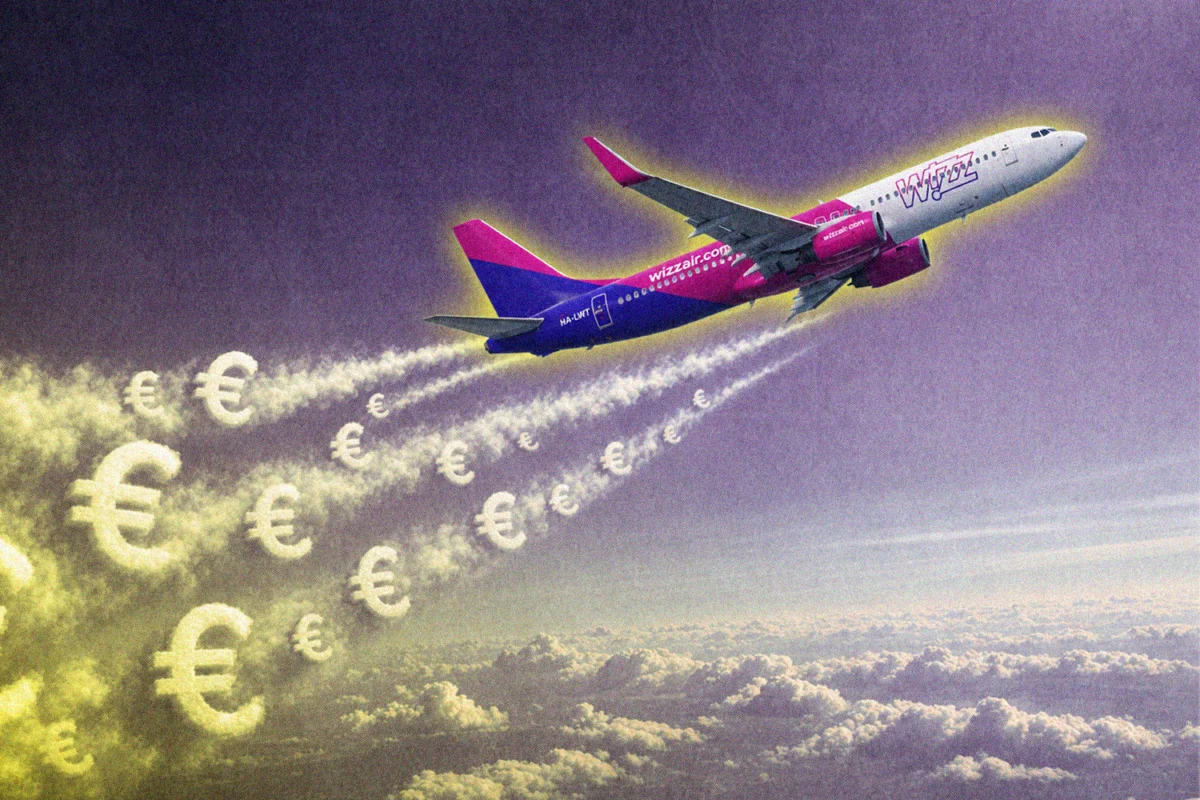
As the aviation industry enters the final quarter of the year, the spectre of volatile fuel markets has once again become the defining challenge for airline executives, with Wizz Air finding itself at a critical juncture. The low-cost carrier, known for its aggressive expansion and reliance on ultra-efficient fleet management, is navigating a macro-economic environment that feels increasingly alien to the growth-fueled era of the last decade. As fuel costs remain stubbornly elevated, the industry is grappling with a historical precedent: every period of sustained high energy prices has historically concluded with a significant market correction. The central debate among analysts and stakeholders is whether the sector is heading toward a supply-side stabilization reminiscent of 2015, or a demand-side contraction similar to the global financial crisis of 2008.
The Anatomy of an Airline Built for Growth
Wizz Air’s business model was forged in the fires of rapid European expansion. By leveraging the Airbus A321neo family of aircraft, the airline has consistently maintained one of the lowest unit costs in the industry. This cost leadership allowed the carrier to aggressively penetrate emerging markets across Central and Eastern Europe, often stimulating new demand where none existed previously.
However, this model thrives on predictability. When fuel prices spike, the margin of error for a low-cost carrier shrinks dramatically. Unlike legacy carriers that often employ complex hedging strategies to mitigate risk, Wizz Air’s model relies heavily on the ability to pass costs to consumers while maintaining high load factors. In the current environment, where discretionary spending is being squeezed by inflationary pressures, the carrier’s ability to maintain this balance is being tested. The "longing for the past" cited by industry observers is not a reflection of nostalgia, but a recognition that the conditions which enabled Wizz Air’s rapid ascent—cheap energy and robust consumer confidence—have fundamentally shifted.
Chronology of Energy Volatility in Aviation
To understand the current predicament, one must look at the historical markers that have defined the relationship between aviation and crude oil prices over the last two decades.
- 2008: The Demand Collapse: The global financial crisis saw crude oil prices peak at nearly $147 per barrel in July 2008. The subsequent economic crash decimated air travel demand. Airlines were forced to ground fleets and slash capacity, as the issue was not just the cost of fuel, but a complete evaporation of the customer base.
- 2014–2016: The Supply Bonanza: Following a period of high prices, the market saw a massive influx of supply, driven largely by the U.S. shale revolution. Oil prices collapsed from over $100 per barrel to under $30 by early 2016. For airlines, this period was a "goldilocks" era: fuel costs plummeted, while the global economy remained relatively stable, leading to record-breaking profitability.
- 2020–2021: The Pandemic Disruption: While fuel prices were initially low due to the collapse in travel, the subsequent recovery saw a rapid, demand-driven price surge that caught many carriers unprepared.
- 2023–2024: The New Uncertainty: The current climate is defined by geopolitical instability in energy-producing regions and a sluggish global economic recovery, creating a hybrid environment that does not fit the clean definitions of 2008 or 2015.
Supporting Data and Financial Implications
The financial health of European low-cost carriers is inextricably linked to the price of Brent Crude and the crack spread—the difference between the price of crude oil and the refined products like jet fuel. Current data indicates that jet fuel prices remain roughly 30% above the five-year pre-pandemic average.
For Wizz Air, every $10 increase in the price of a barrel of oil represents a significant hit to the bottom line. According to recent quarterly filings, the carrier’s fuel expenditure has risen as a percentage of total operating costs, currently hovering near 35%. To offset these pressures, Wizz Air has been forced to increase average ticket prices. However, data from passenger yield reports suggests that there is an upper limit to how much the price-sensitive demographic of the airline’s core customer base is willing to pay.
Furthermore, the "supply bonanza" of 2015 was supported by a period of massive infrastructure investment and lower interest rates. Today, Wizz Air is operating in an environment where capital expenditure is costlier due to higher interest rates, and the supply chain for new aircraft remains constrained. Airbus delivery delays have forced Wizz Air to keep older, less fuel-efficient aircraft in service longer than intended, further complicating their effort to maintain cost-efficiency.
Perspectives from the Market
Industry analysts at major financial institutions have expressed mixed sentiments regarding Wizz Air’s path forward. Those who remain bullish point to the airline’s strong liquidity position and its commitment to fleet renewal. As more A321neo aircraft enter the fleet, the airline’s fuel burn per seat-kilometer will theoretically decrease, providing a structural hedge against high energy prices.
Conversely, skeptics argue that the "2008 scenario" is a looming risk. Should the European economy slip into a technical recession, the elasticity of demand for leisure travel—Wizz Air’s primary market—could prove more fragile than anticipated. In such a scenario, even the most efficient airline cannot outrun a decline in total passenger volume.
In internal memos and investor calls, Wizz Air leadership has consistently emphasized their "cost-first" culture. They argue that regardless of whether the market experiences a demand collapse or a supply correction, the airline with the lowest unit cost will be the last one standing. This reflects a defensive posture: preparing for a scenario where the company must endure a sustained period of reduced growth to protect its core financial integrity.
Broader Impact and Implications for European Aviation
The implications of this energy-price uncertainty extend beyond a single airline. The entire European short-haul market is currently undergoing a period of consolidation. Larger carriers are increasingly looking to absorb smaller players, and the regulatory environment is becoming more stringent regarding environmental compliance and emission reporting—both of which add further layers of cost.
If the industry follows the 2015 path, we should expect a surge in production or a stabilization of energy markets, allowing for a return to aggressive capacity expansion. This would likely benefit Wizz Air, as it would enable them to deploy their new fleet to capture market share from legacy carriers that are struggling to adapt to the cost-per-seat requirements of the modern era.
However, if the path mirrors 2008, the industry will likely see a contraction in the number of routes and a consolidation of bases. Smaller airports that rely on low-cost carriers for connectivity would be the most affected, potentially leading to regional economic shifts. The ripple effects of a demand-side collapse would force airlines to pivot from "growth at all costs" to "margin preservation," a shift that would fundamentally alter the passenger experience, likely resulting in fewer flights and higher baseline fares.
Strategic Outlook: Navigating the Fog
As Wizz Air moves into the winter season, the strategy appears to be one of cautious agility. The airline is not abandoning its expansionist ambitions but is clearly calibrating its growth to match the economic reality of its markets. The focus has shifted from mere volume to "quality of growth," prioritizing routes that offer higher yields and greater resilience to fuel-price fluctuations.
The airline’s management has indicated that they are monitoring the "break" in the fuel market with intense focus. Their objective is to maintain a balance sheet that allows them to absorb shocks while remaining ready to accelerate as soon as the energy landscape stabilizes. It is a balancing act that requires not only operational excellence but a deep understanding of macroeconomic cycles.
Ultimately, Wizz Air’s longing for the past is a recognition that the industry is in a transitional phase. The era of cheap, easy growth is over, replaced by a period that demands greater financial discipline and a more conservative approach to risk. Whether this period is a temporary detour or a permanent change in the operating environment remains the multi-billion-dollar question for the entire aviation sector. For now, Wizz Air remains a firm believer in the efficiency of its own model, betting that its technological advantages will provide the necessary buffer against whatever the fuel markets—and the global economy—have in store next.



 Lukman Taruna Persada Ramadan

 Tatiana Tantri Indah Sari

 Anjar Salim

 Budi Mulyono