
 Anjar Salim
The Maximalist Revolution: A Historical Context
To understand the significance of the Clifton 11, one must look back to the landscape of the running shoe industry in 2009. At that time, the market was dominated by the "minimalist" movement, spurred in part by the popularity of barefoot running and footwear that prioritized ground feel over protection. HOKA entered this environment with a diametrically opposed philosophy. Founded in the French Alps, the brand introduced shoes with oversized midsoles that looked heavy but felt remarkably light.
The core of this early innovation was the signature HOKA MetaRocker™, a uniquely curved sole design intended to complement the natural gait cycle and reduce the energy required for toe-off. While the initial audience consisted primarily of ultramarathoners and trail runners seeking to mitigate the impact of long descents, the brand soon realized that the benefits of maximal cushioning were equally applicable to road running. This realization led to the birth of the Clifton series in 2014.
The original Clifton was a revelation for the industry. It offered a high stack height (29mm in the heel and 24mm in the forefoot) but weighed a mere 7.7 ounces for a men’s size 9. It proved that a shoe could provide substantial protection without sacrificing speed. Over the subsequent decade, the Clifton became HOKA’s most popular road shoe, fostering a dedicated following among daily trainers and competitive athletes alike.
Engineering the Clifton 11: Technical Specifications and Enhancements
The Clifton 11 builds upon this decade-long foundation by introducing several key updates designed to enhance the "smooth ride" that has become the series’ hallmark. Engineers at HOKA have focused on three primary areas: the upper construction, the midsole geometry, and the outsole durability.
Refined Upper and Fit
The Clifton 11 features a redesigned engineered mesh upper. Unlike previous iterations that relied on more traditional overlays, the 11th version utilizes a seamless, breathable mesh that is strategically reinforced via heat transfer. This method allows for a secure lockdown of the foot without adding the weight or potential irritation of sewn-on components. Furthermore, the introduction of a double-lace lock system provides runners with a higher degree of control over the midfoot tension, addressing a common request from high-mileage users who require a more customized fit during long-duration runs.
Midsole and Biomechanics
At the heart of the Clifton 11 remains the compression-molded EVA (ethylene-vinyl acetate) foam. However, the 2026 model utilizes an updated foam density that HOKA claims offers a more consistent energy return over the life of the shoe. The foam is air-injected, a process that maintains the volume of the midsole while keeping the density low.

The MetaRocker™ geometry has also been subtly tuned. The "early-stage" rocker is designed to encourage a smooth transition from heel-strike to toe-off, effectively acting like a rocking chair for the foot. This reduces the load on the calf muscles and Achilles tendon, making it a preferred choice for runners recovering from injury or those looking to minimize repetitive stress.
Outsole and Durability
One of the historical critiques of lightweight, high-stack shoes has been the rapid wear of the exposed foam. The Clifton 11 addresses this through the implementation of a Durabrasion rubber outsole. Rather than covering the entire bottom with heavy rubber, HOKA has placed high-abrasion zones in the heel and forefoot—the areas that experience the most friction. This strategic placement maintains the shoe’s lightweight profile while significantly extending the mileage life of the outsole.
Chronology of the Clifton Series
The journey to the Clifton 11 is defined by a series of incremental improvements that mirror the broader trends in the running industry:
- 2014 (Clifton 1): The debut model disrupts the market by combining maximal cushioning with a sub-8-ounce weight.
- 2015–2018 (Clifton 2-5): HOKA experimented with upper materials and slightly firmer foam densities, occasionally facing criticism for narrowing the toe box, which was later corrected.
- 2019 (Clifton 6): A return to the softer feel of the original, re-establishing the shoe as the premier "easy day" trainer.
- 2021–2023 (Clifton 8-9): Significant updates to the foam chemistry (CMEVA) and the introduction of more sustainable materials in the mesh.
- 2026 (Clifton 11): The current pinnacle, focusing on refined lockdown, increased durability, and optimized rocker geometry.
The Human Element: Peace Runners 773 and Community Impact
Beyond the technical specifications, the Clifton 11 is positioned as a tool for community building and mental health. This is exemplified by the story of Jackie Hoffman, the founder of Peace Runners 773, a Chicago-based running club. Hoffman, a former collegiate football player, turned to running as a means of therapeutic intervention in an urban environment he describes as "chaotic."
After losing 50 pounds and finding personal clarity through movement, Hoffman established Peace Runners 773 to democratize the sport. His mission reflects a shift in the running culture from purely performance-based metrics to a focus on "shared movement." Under Hoffman’s leadership, the club has assisted over 1,500 individuals in completing their first 5K and helped 51 runners finish the Chicago Marathon.
For leaders like Hoffman, the Clifton 11 serves as a reliable vehicle for these community efforts. "To be the best human I need to be for my community and show up for them, I gotta run," Hoffman stated during the product launch. The emphasis here is on the "flow state"—the ability to settle into a rhythm where the equipment disappears, allowing the runner to focus on the social and emotional benefits of the activity.
Market Analysis and Industry Implications
The release of the Clifton 11 occurs at a time when HOKA is experiencing unprecedented growth. Once a niche brand, it is now a primary driver of revenue for its parent company, Deckers Brands. The success of the Clifton series has forced traditional industry leaders like Nike, Brooks, and Adidas to develop their own maximalist lines, effectively shifting the baseline for what constitutes a "standard" running shoe.
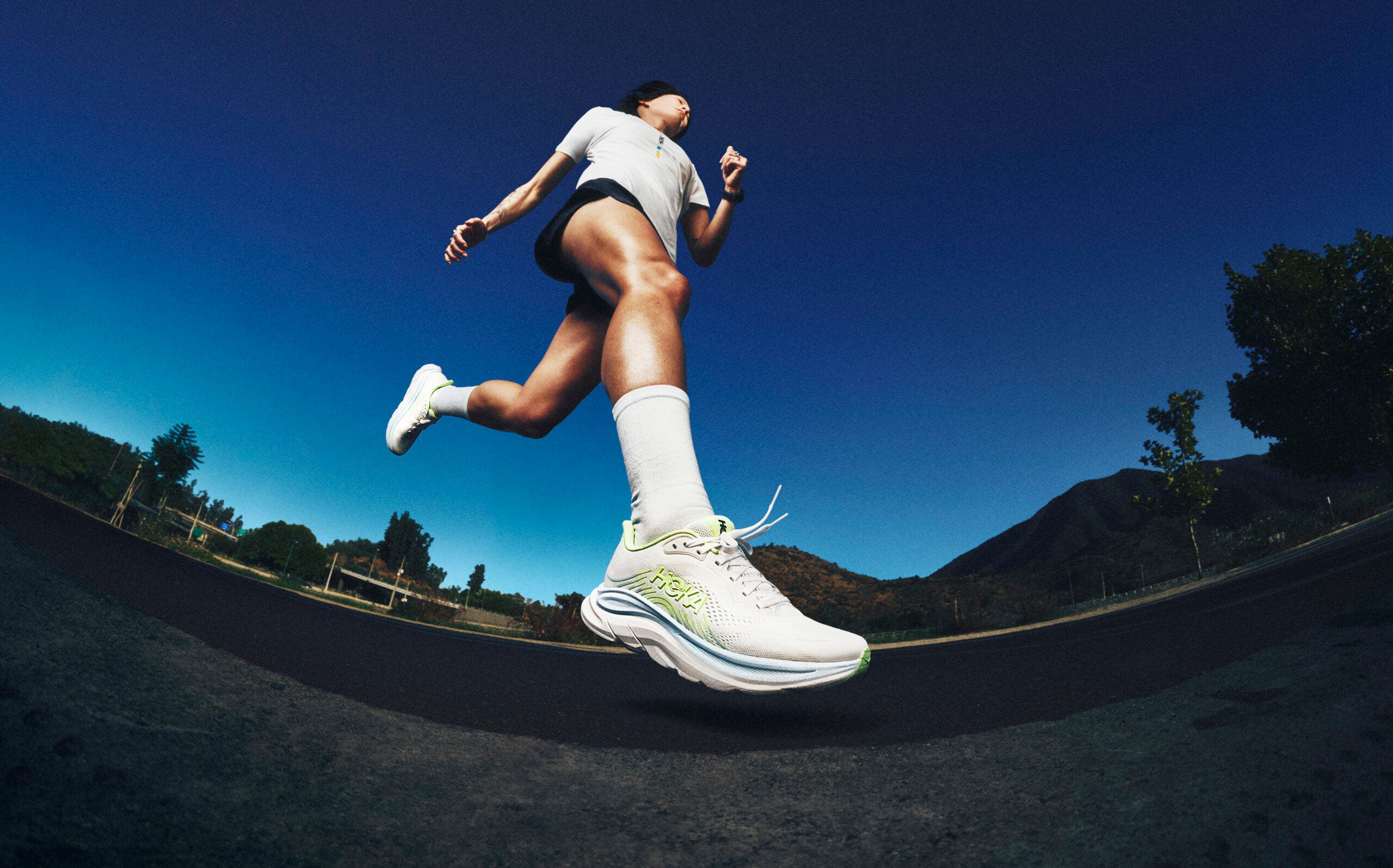
Industry analysts suggest that the Clifton 11’s focus on "smoothness" rather than "aggressive propulsion" (as seen in carbon-plated racing shoes) is a strategic move to capture the largest segment of the market: the daily fitness runner. While carbon-plated "super shoes" dominate the elite racing scene, the daily trainer market is where brand loyalty is built. By refining the Clifton 11 to be more durable and comfortable, HOKA is securing its position as the go-to brand for the "everyday athlete."
Furthermore, the brand’s "Fly Human Fly" campaign, which accompanies the Clifton 11 release, signals a move toward a more inclusive marketing strategy. By highlighting community leaders like Hoffman, HOKA is distancing itself from the "elitist" connotations of high-performance athletics and instead branding itself as a facilitator of human potential and wellness.
Future Outlook and Sustainability
As the footwear industry faces increasing pressure to address its environmental footprint, the Clifton 11 incorporates several sustainable practices. This includes the use of recycled polyester in the mesh upper and laces, as well as a more efficient manufacturing process for the EVA midsole to reduce waste.
Looking ahead, the success of the Clifton 11 will likely dictate the direction of the brand’s road-running category for the next several years. If the Durabrasion outsole and refined mesh upper perform as expected in real-world conditions, it will set a new benchmark for the longevity of lightweight maximalist shoes.
The HOKA Clifton 11 is not merely an incremental upgrade; it is a testament to the enduring power of a single, well-executed idea. From the mountains of France to the streets of Chicago, the series has maintained its identity while adapting to the needs of a changing world. For the runners who have followed the series since 2014, the 11th version offers a familiar comfort; for the new generation of athletes being introduced to the sport through clubs like Peace Runners 773, it offers a gateway to a smoother, more peaceful experience on the road.




 Chandra Hamzah
 Tatiana Tantri Indah Sari
 Budi Mulyono
