
 Anjar Salim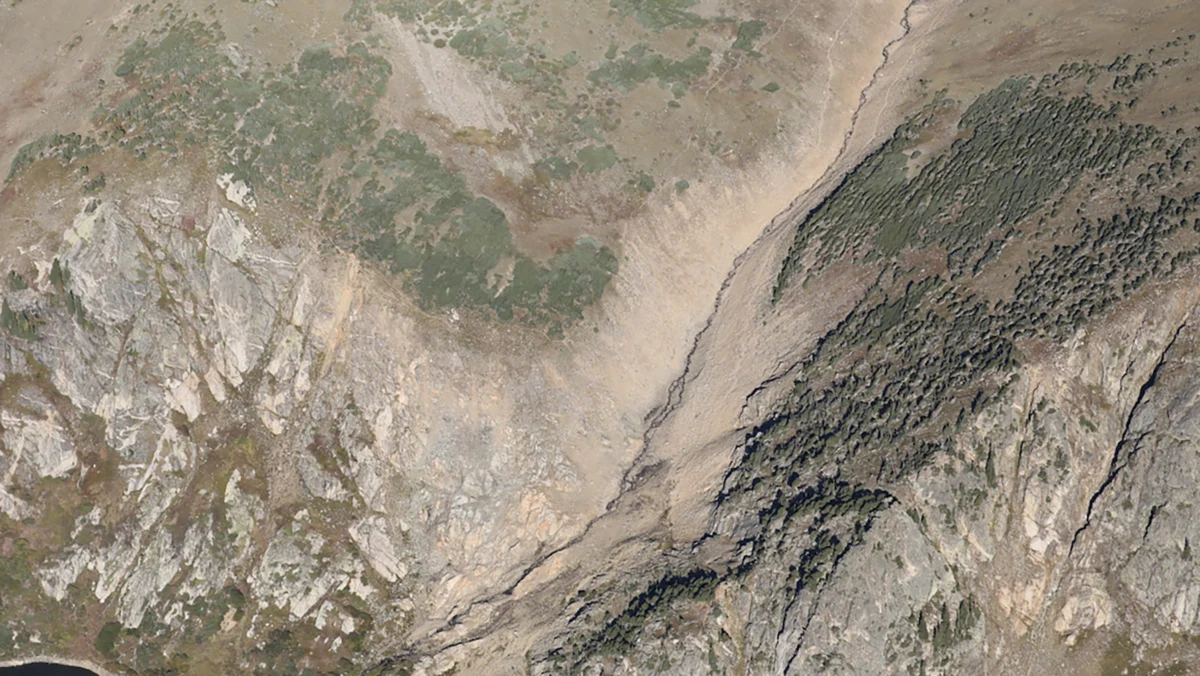
The complete disappearance of St. Mary’s Glacier marks a critical turning point in the environmental history of the American West. Situated along Colorado’s Front Range just 45 minutes from the city of Golden, this iconic geographical feature vanished entirely during the late summer of 2026, reducing a century-old recreational haven and enduring snowfield to a muddy pool of standing water. While scientists have tracked the steady, incremental retreat of regional ice formations for decades, the total loss of St. Mary’s underscores an alarming acceleration in climate degradation. The event has triggered widespread grief among local residents, outdoor enthusiasts, and the scientific community, serving as a stark physical manifestation of global warming trends reshaping high-altitude ecosystems.
Main Facts of the Collapse
St. Mary’s Glacier is not technically a true glacier in the glaciological sense, but rather a semi-permanent alpine snowfield sheltered within a deep, north-facing cirque. For generations, its unique topography protected it from direct solar radiation, allowing accumulated winter snow and wind-driven drift deposits to persist through the hottest months of the year. This resilience made it the closest year-round snow feature to the densely populated Denver metropolitan area.
Historically, the site functioned as a vital cultural and recreational asset. During the Victorian era, city dwellers hiked the rocky trails to escape urban summer heatwaves. In contemporary times, it served as a primary destination for local summer camps, academic field trips, and dedicated skiers seeking to maintain their year-round skiing streaks through July and August.
The complete melting of the snowfield in September 2026 shattered historical precedent. According to regional observers and academic researchers, no records indicate the site ever completely melted out prior to this year. The event was catalyzed by an unprecedented compounding of extreme weather conditions over the preceding twelve months: the lowest winter snowpack recorded in the Front Range in 40 years, immediately followed by the hottest summer on record for the state of Colorado.
Chronology of a Slow-Motion Collapse
The demise of St. Mary’s Glacier was not an isolated catastrophe, but the terminal stage of a decades-long decline driven by rising global temperatures and shifting regional precipitation patterns.
- Late 19th and Early 20th Centuries: Victorian-era visitors begin frequenting the site, establishing it as a prominent recreational and tourist destination accessible from the expanding Denver-Golden corridor.
- Late 20th Century: The snowfield remains a reliable fixture for regional summer camps, environmental education programs, and summer backcountry skiing enthusiasts, though subtle signs of thinning begin to emerge.
- 2010 to 2020: Glaciological studies in Rocky Mountain National Park and surrounding Front Range areas document an accelerating retreat. Neighboring Andrews Glacier begins losing approximately six inches of length annually.
- 2020 to 2024: The rate of glacial and snowfield degradation triples. Annual recession rates for comparable features increase from inches to multiple feet per year as summer temperatures consistently break historical records.
- Winter 2025 to Spring 2026: The Front Range suffers its worst winter snowpack in four decades, depriving high-altitude formations of the heavy accumulation necessary to survive the subsequent warm season.
- Summer 2026: Record-breaking summer heatwaves sweep across Colorado. The remaining ice and snow reserves are rapidly overwhelmed, culminating in the complete disappearance of St. Mary’s Glacier by mid-September.
Supporting Data and Glaciological Analysis
To understand the mechanics behind the disappearance of St. Mary’s, researchers look to advanced monitoring technologies and comparative studies of nearby alpine ice. Dr. Dan McGrath, a professor of geosciences at Colorado State University and a leading expert on Colorado’s glacial and periglacial features, has spent years tracking these changes using aerial Light Detection and Ranging (LIDAR) imagery. This high-resolution mapping allows scientists to measure volume, depth, and spatial extent with pinpoint accuracy.
McGrath’s research on Andrews Glacier, located within nearby Rocky Mountain National Park, provides a quantitative window into the pressures that destroyed St. Mary’s. Between 2010 and 2020, Andrews Glacier thinned and receded at a relatively steady pace of about six inches per year. Between 2020 and 2024, that metric escalated sharply to three feet per year. However, the data compiled following the winter of 2025-2026 revealed an unprecedented shock: Andrews Glacier thinned by 11 feet in a single year, representing a threefold increase in the rate of loss.
While Andrews Glacier and a few other high-elevation formations like the Arapahoe Glacier above Boulder and the Isabelle Glacier near Brainard Lake State Park have managed to cling to survival in severely degraded states, St. Mary’s crossed the irreversible threshold. McGrath characterizes the lifecycle of these snowfields through the metaphor of a depleted financial account.
"With St. Mary’s, the savings account has been drawn down and depleted," McGrath explained. "You could rebuild it for one year, sure. But it will take many years of consistent saving to build it back to what it once was." Given ongoing meteorological forecasts projecting warmer, drier summers and increasingly erratic winter snowpack accumulation, the probability of restoring the snowfield to its historical dimensions remains exceedingly low.
Official Responses and Expert Perspectives
The academic and scientific community views the loss of St. Mary’s through an objective, analytical lens, noting that the event aligns with broader planetary trends. Across the globe, climate change is accelerating the retreat of alpine and polar ice, driving secondary hazards such as rising sea levels, catastrophic glacial lake outburst floods, and destabilized mountain slopes prone to massive avalanches.
Nevertheless, researchers intimately familiar with the region acknowledge the profound cultural weight of the loss. While scientists are primarily tasked with measuring, recording, and projecting the physical impacts of these changes, the psychological and identity-based toll on local populations cannot be dismissed.
"It’s been a part of the culture of Colorado for decades," McGrath noted. "From a recreation perspective, from an identity of Colorado perspective, it’s really significant." For generations of Coloradans, St. Mary’s was not merely a collection of frozen water molecules, but a shared canvas for childhood memories—ranging from impromptu snowball fights under a blazing July sun to sliding down slushy gullies on makeshift sleds.
Broader Impact and Implications
The disappearance of St. Mary’s Glacier extends far beyond the grief of local outdoor enthusiasts and the loss of a niche summer skiing destination. High-altitude snowfields and glaciers function as natural water towers for the American West, slowly releasing meltwater throughout the dry summer months to feed critical watershed basins, agricultural irrigation systems, and municipal water supplies.
As these perennial features vanish, the timing and volume of spring runoff undergo fundamental shifts. Reduced snowpack and the premature melting of high-elevation ice reservoirs exacerbate summer drought conditions, increase wildfire risks across forested mountain slopes, and place mounting strain on downstream aquatic ecosystems. The collapse of St. Mary’s serves as a visible, local bellwether for the broader systemic vulnerabilities facing western water management and ecological preservation in an era of rapid climatic destabilization.
Ultimately, the transformation of St. Mary’s Glacier from a gleaming expanse of perennial ice into a barren rocky puddle leaves behind an altered landscape. The era of dependable summer snowfields along the Front Range has drawn to a close, leaving policymakers, scientists, and the public to confront an irrevocably altered natural heritage.



 Dwi Wanna
 Chandra Hamzah
 Gabriela Annisa
 Tatiana Tantri Indah Sari
 Walid Sujud Trenggono