
 Anjar Salim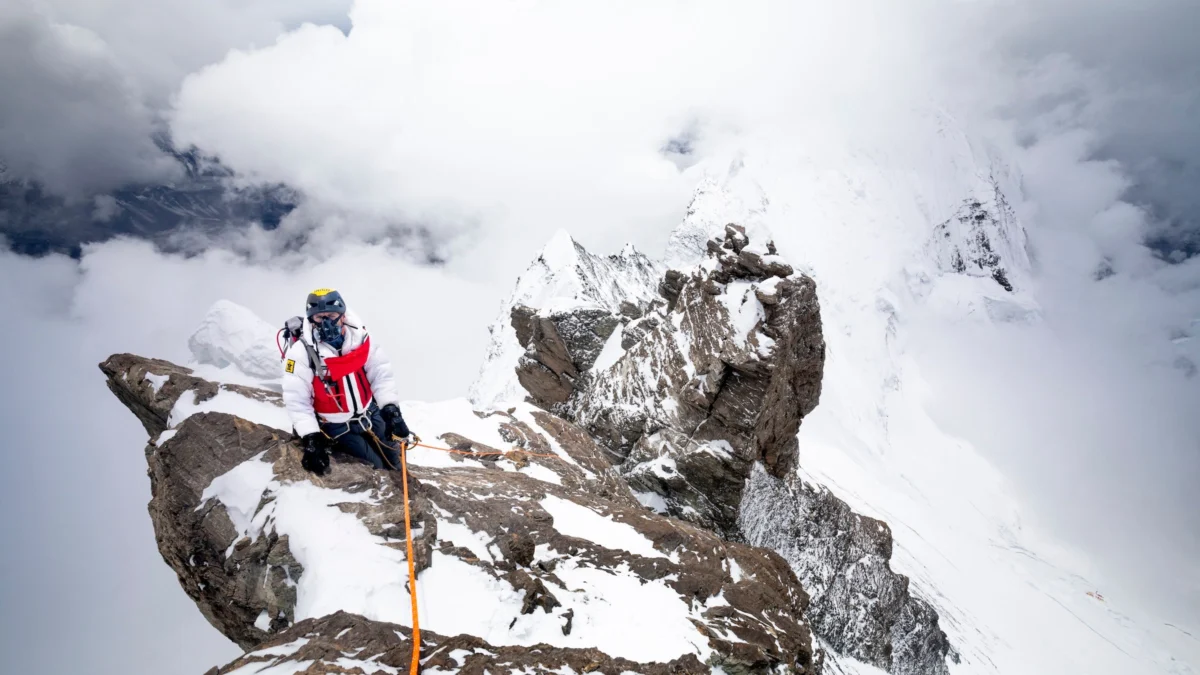
The pursuit of a world record often demands years of meticulous planning, physical conditioning, and the navigation of some of the most treacherous environments on Earth. For British adventurer Tim Howell, a veteran BASE jumper and wingsuit pilot with over 1,200 successful leaps to his credit, the ultimate goal was Lhotse, the world’s fourth-highest peak. Standing at 27,940 feet in the shadow of Mount Everest, Lhotse offered the verticality and altitude necessary for a historic achievement: the highest wingsuit flight ever recorded. However, after two previous attempts were thwarted by logistical hurdles and extreme Himalayan weather, Howell’s third campaign has been brought to an abrupt and unlikely halt—not by the thin air of the "Death Zone," but by a venomous snake in the French Alps.
While preparing for his departure to Nepal, Howell was engaging in routine training and light hiking near Grenoble, France. The incident occurred during a brief rest period when Howell sat near a bush and inadvertently disturbed an asp viper (Vipera aspis). As he moved branches to clear a seat on a rock, he felt a minor prick on his finger, which he initially dismissed as a thorn scratch. Within ten minutes, the situation escalated into a life-threatening medical emergency. Howell experienced rapid swelling of the lips, throat, and extremities, signaling the onset of anaphylactic shock. Accompanied by two friends, he collapsed before reaching his vehicle. A mountain rescue helicopter was dispatched to evacuate him to a nearby hospital, where he spent five days in the Intensive Care Unit (ICU).
The Medical Crisis and Recovery
The asp viper is a venomous species found across southwestern Europe. While its bite is rarely fatal to healthy adults who receive prompt treatment, Howell’s severe allergic reaction transformed the encounter into a near-fatal event. In addition to the systemic shock, the localized venom caused necrosis—the premature death of body tissue—in the affected finger. Surgeons were required to remove the necrotic flesh to prevent further infection, though Howell noted that the ligaments remained intact.
Currently, Howell is undergoing rigorous physical therapy to regain full functionality of his hand. For a wingsuit pilot, manual dexterity is not merely a matter of comfort; it is a critical safety requirement. Pilots must be able to reach and deploy their pilot chutes with precision and strength, often while traveling at speeds exceeding 100 miles per hour. "I’m only going to jump when everything is right; there can be no second-guessing," Howell stated, emphasizing that the margin for error at 27,000 feet is non-existent.
A Legacy of Ambition: The Lhotse Project
The "Lhotse Project" represents one of the most ambitious undertakings in the history of extreme sports. Howell’s objective is to launch from a ridge near the summit of Lhotse at approximately 27,230 feet. If successful, this would surpass the current world record by nearly 2,000 feet. The standing record was established in 2016 by the legendary Russian flyer Valery Rozov, who jumped from Cho Oyu at an altitude of 26,864 feet. Rozov, a pioneer in the field, tragically died in 2017 during a jump in the Himalayas, highlighting the extreme risks associated with high-altitude wingsuiting.
Howell’s journey toward this record has been defined by persistence in the face of the Himalayas’ unpredictable nature. His first attempt in 2024 was primarily a reconnaissance mission. Unlike traditional mountaineering, where the summit is the sole objective, a wingsuit expedition requires the identification of a specific "exit point"—a cliff edge or steep slope with enough vertical drop to allow the suit to inflate and generate lift before the pilot impacts the mountainside. Howell and his team succeeded in establishing a new route to a viable exit point, though they did not jump during that window.
The second attempt in 2025 brought the team even closer to success. They spent four days staged at a high camp near 26,000 feet, breathing supplemental oxygen and waiting for the precise atmospheric conditions required for flight. In wingsuiting, wind speed and direction are the deciding factors between a successful flight and a fatal collision. When the jump day arrived, a sudden, violent storm moved in, trapping the team for three hours and forcing a dangerous retreat down the mountain.
Technical Challenges of High-Altitude Flight
The physics of wingsuiting at 27,000 feet differ significantly from jumps performed at lower elevations. At the altitude of Lhotse’s upper ridges, the air density is roughly one-third of that at sea level. This thin air provides less resistance, meaning the pilot must fall much further and faster before the wingsuit can catch enough air to transition from a vertical drop to horizontal flight.
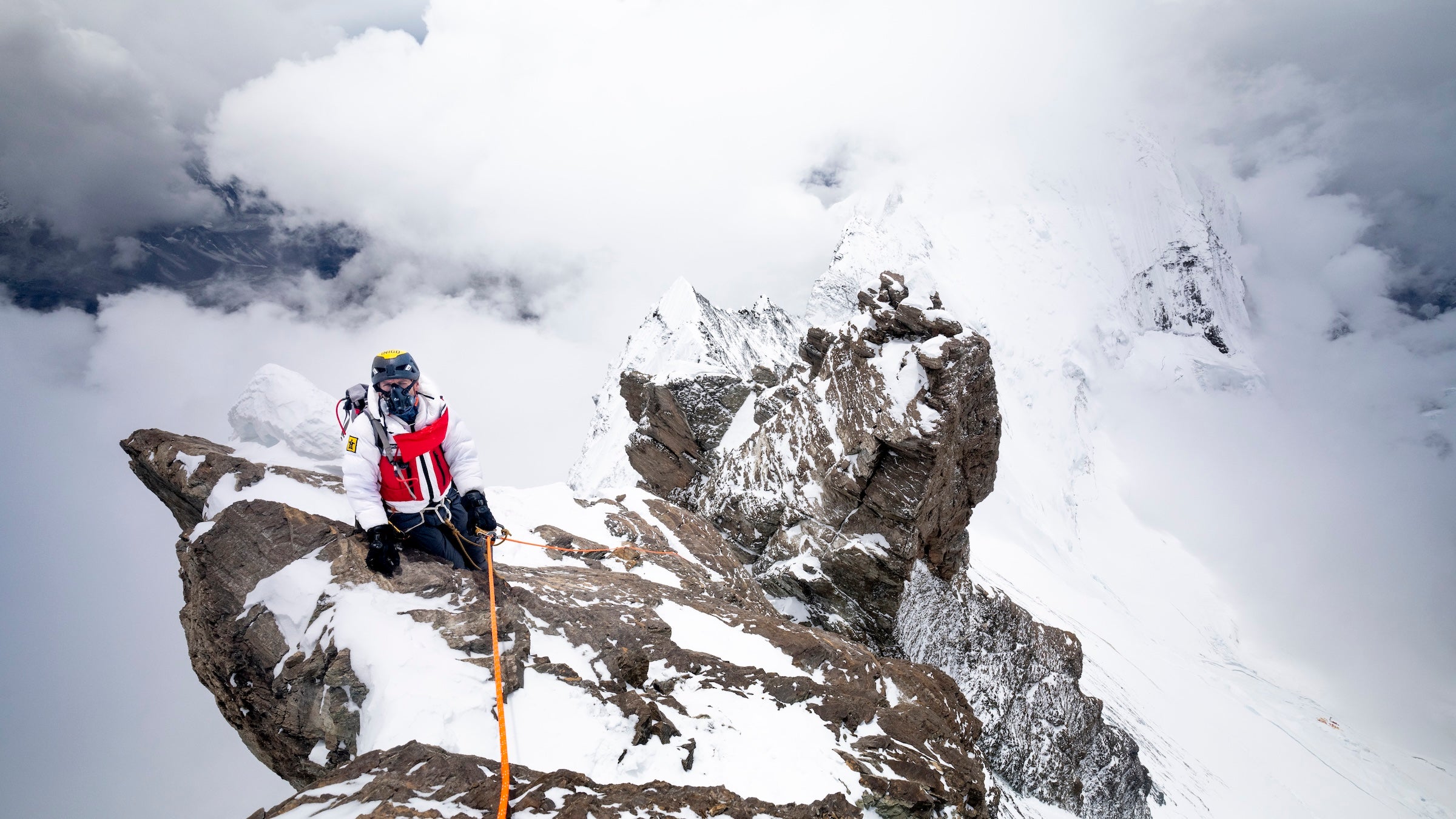
Furthermore, the logistical burden of reaching the exit point is immense. Howell’s team must navigate the Khumbu Icefall and the Lhotse Face, carrying specialized gear alongside standard high-altitude climbing equipment. The use of supplemental oxygen is mandatory for most climbers at this height to prevent cerebral and pulmonary edema, yet the pilot must be able to shed or integrate this equipment seamlessly during the transition to flight.
The Chronology of the Lhotse Expeditions
The timeline of Howell’s pursuit reflects the slow, methodical pace required for survival in the Himalayas:
- 2023–Early 2024: Extensive training in the Alps and Andes; logistics planning for the Lhotse route.
- Spring 2024: First Expedition. Successful scouting of the exit point at 27,230 feet. Establishment of the route through the Lhotse Face.
- Spring 2025: Second Expedition. Reached high camp at 26,000 feet. Four-day weather hold followed by a tactical retreat due to a sudden storm.
- May 2026: Planned Third Expedition. Cancelled one week prior to departure following the asp viper bite and subsequent hospitalization in Grenoble.
- 2027 (Projected): Howell plans to return to Nepal for a fourth attempt, citing the need for full physical recovery and a proper weather window.
Comparative Feats and the Global Landscape
As Howell recovers, the world of high-altitude adventure continues to move forward. Another British adventurer, Joshua Bregmen, has announced a project titled "Unbreakable Everest 2026." Bregmen aims to set an altitude record by parachuting off the summit of Mount Everest (29,032 feet). While both projects involve jumping from Himalayan giants, Howell clarifies that they occupy different categories within the sport.
"He won’t be flying a wingsuit, so his record attempt isn’t competing with mine," Howell noted. Parachuting involves a vertical descent slowed by a canopy immediately or shortly after exit, whereas wingsuiting involves using a webbed suit to glide horizontally at high speeds. The technical requirements for a wingsuit exit—specifically the need for a "clean" vertical drop to gain airspeed—are often more restrictive than those for a parachute jump.
Broader Implications and Analysis
Howell’s delay underscores the fragility of extreme expeditions. In the world of elite alpinism and BASE jumping, the most dangerous moments are often not the headline-grabbing stunts, but the mundane transitions. The fact that a world-class athlete survived two seasons on the world’s fourth-highest mountain only to be sidelined by a walk in a regional park is a poignant reminder of the inherent unpredictability of the natural world.
From a physiological standpoint, Howell’s recovery will be closely watched by the adventure community. Anaphylaxis and necrotic tissue damage can have long-term effects on cardiovascular endurance and peripheral sensitivity. For Howell to return to the 27,000-foot mark, he will need to ensure that his body can once again handle the extreme stress of the "Death Zone," where the body’s ability to heal is virtually non-existent.
The financial and emotional toll of such delays is also significant. High-altitude expeditions to 8,000-meter peaks can cost tens of thousands of dollars in permits, Sherpa support, and equipment. Postponing a mission by a full year often involves renegotiating sponsorships and re-securing permits from the Nepalese Ministry of Tourism.
Looking Toward 2027
Despite the setback, Tim Howell remains resolute. His decision to wait until 2027 reflects a mature approach to risk management—a trait that has likely contributed to his survival over 1,200 jumps. The quest for the world’s highest wingsuit flight remains one of the last great "firsts" in the realm of aerial sports.
For now, the record remains with Valery Rozov’s 2016 flight from Cho Oyu. The slopes of Lhotse will wait, and Howell’s focus has shifted from the Himalayan horizon to the steady, incremental progress of physical therapy. As he told Outside, the time and effort already invested make walking away an impossibility. The "Other Everest" remains his ultimate target, and the world record attempt has been deferred, not defeated.



 Chandra Hamzah
 Gabriela Annisa
 Susilo Edi Turonggo
 Tatiana Tantri Indah Sari
 Walid Sujud Trenggono