
 Anjar Salim
A coalition of more than 150 prominent researchers and scientific institutions has issued a formal appeal to the United States Congress, urging lawmakers to reject a legislative push that would dismantle federal protections for Utah’s Grand Staircase-Escalante National Monument. The scientists argue that the current effort to overturn the monument’s 2025 management plan through the Congressional Review Act (CRA) represents a critical threat not only to one of North America’s most significant "living laboratories" but also to the legal stability of public land protections across the entire nation. This burgeoning conflict highlights a deepening divide between federal conservation goals and local political efforts to regain control over land-use policies in the American West.
A Geographic and Geological Marvel
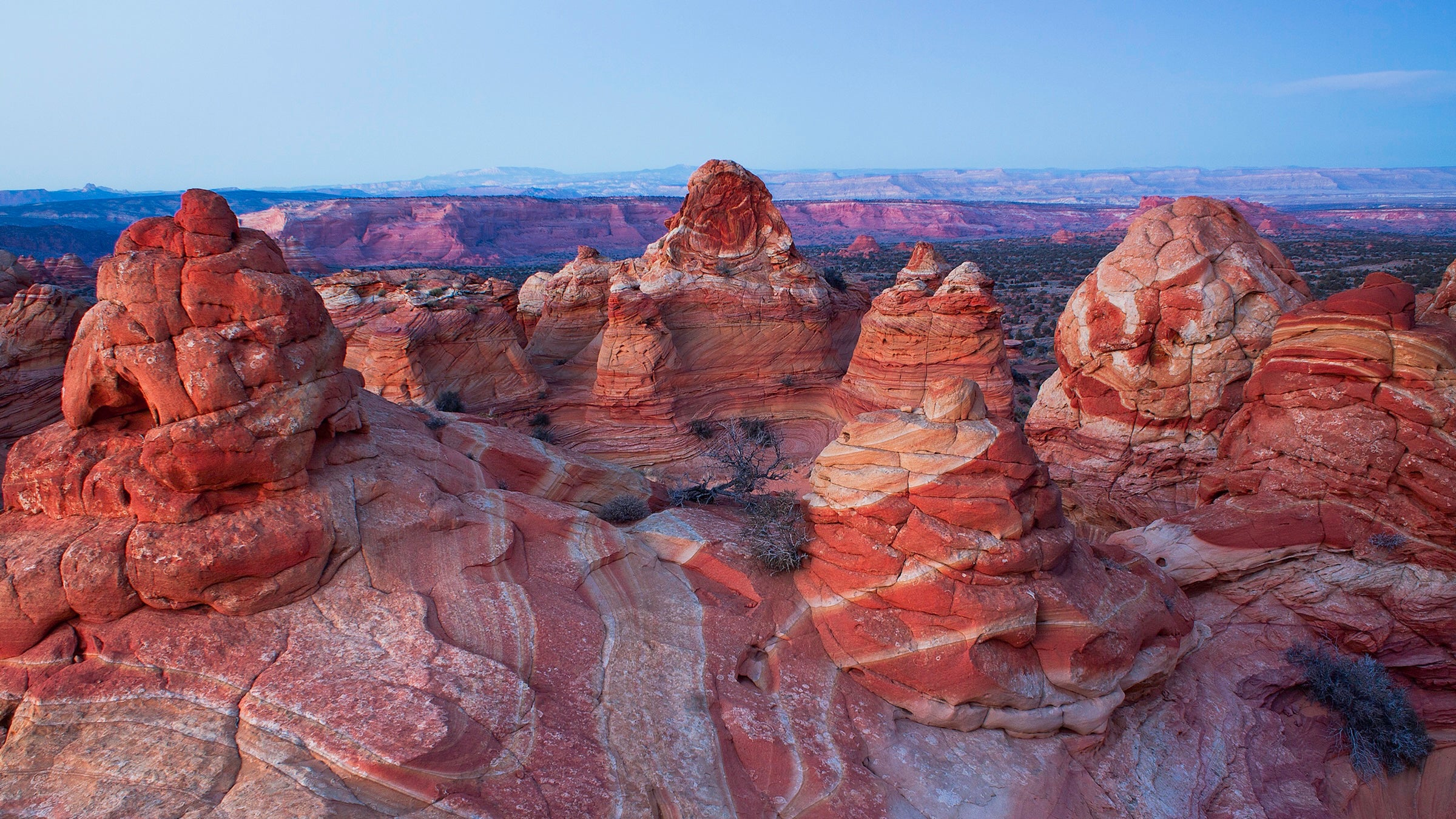
Grand Staircase-Escalante National Monument (GSENM) is a vast expanse of rugged terrain in southern Utah, covering nearly 1.87 million acres of federally managed land. Established in 1996 by President Bill Clinton, it was the first national monument to be managed by the Bureau of Land Management (BLM) rather than the National Park Service. The landscape is defined by its dramatic topography, which includes a series of plateaus that descend like giant steps—the Pink Cliffs, Grey Cliffs, White Cliffs, Vermilion Cliffs, and Chocolate Cliffs—revealing 200 million years of Earth’s history.
The monument is globally recognized for its "Grand Staircase" of cliffs and terraces, as well as the Kaiparowits Plateau and the Canyons of the Escalante. Its remote canyons, sandstone arches, and painted deserts are more than just scenic vistas; they contain one of the most continuous records of the Late Cretaceous Period in the world. For paleontologists, the monument has been a treasure trove, yielding thousands of fossils, including dozens of previously unknown dinosaur species.
The Legislative Mechanism: Understanding the Congressional Review Act
The current threat to the monument stems from the use of the Congressional Review Act (CRA), a 1996 law that allows Congress to overturn rules issued by federal agencies with a simple majority vote in both chambers, provided the resolution is passed within a specific window of time. If a CRA resolution is signed into law, it not only nullifies the specific rule in question but also prohibits the agency from issuing any "substantially similar" rule in the future without new authorization from Congress.
In early 2026, members of the Utah congressional delegation introduced CRA resolutions to overturn the 2025 Resource Management Plan for Grand Staircase-Escalante. This management plan was designed to provide long-term guidance on protecting the monument’s archaeological sites, wildlife habitats, and recreational resources. Critics of the plan, including Senators Mike Lee and Celeste Maloy, argue that the 2025 guidelines are overly restrictive, hampering local economic activities and traditional land uses such as grazing and motorized recreation.
However, legal experts and conservationists warn that using the CRA in this context is a "nuclear option." Because of the "substantially similar" clause, nullifying the 2025 plan could leave the monument in a regulatory vacuum, preventing the BLM from ever implementing similar conservation-focused protections. This could effectively open the door for industrial activities, such as mining or large-scale logging, that were previously restricted.
A Decades-Long Political Tug-of-War: 1996–2026
The history of Grand Staircase-Escalante is one of persistent political volatility. The monument has served as a primary flashpoint in the broader "Sagebrush Rebellion" and ongoing debates over federal versus state control of public lands.
- 1996: President Bill Clinton uses the Antiquities Act to establish the monument, drawing immediate ire from Utah officials who claimed they were not consulted.
- 2017: The Trump administration issues an executive order significantly reducing the size of the monument by nearly 50 percent, splitting it into three smaller units to allow for potential coal mining and other extractive uses.
- 2021: Upon taking office, President Joe Biden issues an executive order restoring the monument to its original boundaries, citing the need to protect its scientific and cultural values.
- 2024–2025: The BLM undergoes an extensive public comment and scientific review process to create a new, comprehensive Resource Management Plan (RMP) to replace the fragmented plans left over from the previous administration.
- 2026: Opponents in Congress move to use the CRA to strike down the 2025 RMP, marking the latest escalation in the effort to weaken the monument’s federal oversight.
The Scientific Imperative: A Living Laboratory
The letter signed by over 150 scientists emphasizes that the value of Grand Staircase-Escalante extends far beyond its aesthetic beauty. The coalition describes the landscape as an "unparalleled record of Earth’s history." The size of the monument is a key factor in its scientific utility; large, contiguous landscapes are necessary to study large-scale ecological processes, such as wildlife migration and the impacts of climate change on desert ecosystems.
Paleontologically, the monument is a global outlier. Since its inception, researchers have discovered more than 20 new species of dinosaurs within its borders, including the "Gore King of the West" (Lythronax argestes) and the ornate horned dinosaur Kosmoceratops. The "Blues" area below Powell Point, specifically mentioned in the scientists’ appeal, remains a site of active excavation where volunteers and researchers from institutions like the Denver Museum of Nature and Science continue to unearth fossils that rewrite the history of the Western Interior Seaway.
Beyond fossils, the monument is home to a staggering diversity of life, including over 650 species of bees—many of which are found nowhere else on Earth. The scientific coalition argues that rolling back protections would disrupt ongoing long-term studies that provide essential data for managing biodiversity across the American West.
The Political Argument: Balancing Local Voice and Federal Oversight
The push to overturn the 2025 management plan is led by those who believe federal agencies have overstepped their bounds. Representative Celeste Maloy (R-UT) has been vocal in her opposition, stating that the current plan ignores the needs of local communities. "This resolution uses Congress’s constitutional responsibility to check executive overreach and returns management to a plan that actually listens to the people on the ground," Maloy said in a statement. She maintains that the land will remain federal but argues that the "communities who live here get their voice back" if the 2025 plan is scrapped.
Opponents of the management plan often cite the impact on the local ranching industry. Grand Staircase-Escalante has a long history of cattle grazing, and some local stakeholders feel that new environmental protections prioritize conservation and recreation at the expense of traditional livelihoods. They argue that the 2025 plan’s restrictions on motorized access and infrastructure development make it increasingly difficult for ranchers to maintain their operations.
Broader Implications for the National Landscape
The use of the CRA to target land management plans is a relatively new strategy that has alarmed conservation groups. Grant Stevens of the Southern Utah Wilderness Alliance (SUWA) points out that this tactic has recently been applied to resource management plans in Wyoming, Alaska, and Montana. The most notable recent application was the override of a mining ban at the headwaters of Minnesota’s Boundary Waters Canoe Area Wilderness.
If the CRA resolution against Grand Staircase-Escalante succeeds, it could set a precedent for any future administration or Congress to quickly dismantle protections for national parks and monuments. Chris Hill, CEO of the Conservation Lands Foundation, warns that this creates "uncertainty, conflict, and chaos." For businesses that rely on the stability of public land rules—such as outdoor gear retailers, guide services, and tourism-dependent local economies—the lack of a permanent management framework could be devastating.
Economic Realities: Recreation vs. Extraction
The debate also involves a significant economic component. While proponents of the rollback point to potential gains from mining or expanded grazing, conservationists point to the booming outdoor recreation economy. According to data from the Bureau of Economic Analysis, outdoor recreation contributes billions of dollars to Utah’s GDP annually.
Grand Staircase-Escalante is a major draw for domestic and international tourists seeking "dark sky" experiences, rugged backpacking, and canyoneering. Communities like Escalante and Kanab have seen their economies shift toward hospitality and recreation services over the last two decades. Critics of the CRA move argue that allowing industrial activities or reducing protections would tarnish the "wild" character of the area, potentially driving away the very visitors who sustain the local economy.
Future Outlook and Civil Engagement
As the CRA resolution moves through the legislative process, the scientific and conservation communities are ramping up their efforts to engage the public. The Coalition to Protect America’s National Parks and other advocacy groups are urging citizens to contact their representatives. They argue that the fate of Grand Staircase-Escalante will serve as a bellwether for the future of the Antiquities Act and the federal government’s ability to protect public lands for future generations.
The decision facing Congress is not merely about a single management plan in rural Utah; it is a choice between maintaining a long-standing framework of conservation based on scientific review and public input, or adopting a new model of land management characterized by rapid, politically driven reversals. As the May 2026 deadline for the CRA resolution approaches, the eyes of the scientific world and the outdoor community remain fixed on the red rock canyons of the Escalante.




 Budi Mulyono
 Chandra Hamzah
 Tatiana Tantri Indah Sari

 Lukman Taruna Persada Ramadan