Anjar Salim
A landmark study released on June 14, 2026, by researchers at Liverpool John Moores University has provided definitive clarity on one of the most enduring debates in sports science: the efficacy and physical impact of aggressive carbohydrate loading. Led by Robyn Jones and Julien Louis, the research published in the Scandinavian Journal of Medicine & Science in Sports suggests that for endurance athletes, the upper limits of recommended carbohydrate intake—specifically 10 grams per kilogram of body weight—yield significantly higher muscle glycogen stores without the gastrointestinal distress or weight gain traditionally feared by competitors.
The findings arrive at a time when the endurance community is increasingly preoccupied with "intra-race" fueling—the consumption of gels and sports drinks during the event itself. However, the Liverpool study underscores a fundamental physiological truth: even the most robust mid-race fueling strategy cannot compensate for an inadequately filled "fuel tank" at the starting line. By testing various protocols under realistic training conditions, the research team has bridged the gap between laboratory theory and the practical realities of a pre-race taper.
The Evolution of Carbohydrate Loading: A Half-Century Perspective
To understand the significance of the 2026 study, one must look back to the 1960s, a decade that revolutionized sports nutrition. Before this era, the relationship between diet and performance was largely anecdotal. The landscape changed when Scandinavian scientists, including Eric Hultman and Jonas Bergström, pioneered the use of the Percutaneous Needle Biopsy. This technique allowed researchers to extract small samples of muscle tissue to measure glycogen—the stored form of glucose that serves as the primary fuel for high-intensity aerobic exercise.
The initial protocols derived from these early studies were notoriously grueling. Known as the "Classical Protocol," the strategy required a seven-day cycle. It began with a glycogen-depleting exercise session to exhaustion, followed by three days of a near-zero carbohydrate diet and further exercise to keep stores low. Only then would the athlete transition to three days of high-carbohydrate intake. While this "supercompensation" method successfully maximized glycogen stores, it often left athletes fatigued, irritable, and physically compromised just days before their goal event.
By the 1980s and 1990s, research shifted toward more moderate "taper" protocols. Scientists discovered that the extreme depletion phase was unnecessary for trained athletes, whose bodies are naturally primed to store glycogen. By the early 2000s, some studies suggested that a single day of high-carb intake (10 g/kg) could suffice. However, the American College of Sports Medicine (ACSM) eventually settled on a consensus recommendation of 10 to 12 grams of carbohydrate per kilogram of body weight (g/kg) over a period of 48 to 72 hours. Despite these guidelines, many athletes remained hesitant to reach the 10 g/kg threshold due to concerns regarding "heavy legs" and digestive upset.
Methodology: Testing the "Ceiling Effect" in Trained Athletes
The Jones and Louis study sought to determine if there is a "ceiling" to how much glycogen a muscle can hold and whether higher intakes correlate with diminishing returns or increased side effects. The researchers recruited 11 highly trained endurance athletes, including eight men and three women, to participate in a rigorous five-day simulated race taper.

The trial was designed to mimic the final week of a marathon or triathlon preparation. The subjects followed a standardized protocol:
- Days 1-2: Baseline diet consisting of 4 g/kg of carbohydrates.
- Day 3: A baseline muscle biopsy and a 45-minute steady-state run to maintain metabolic activity.
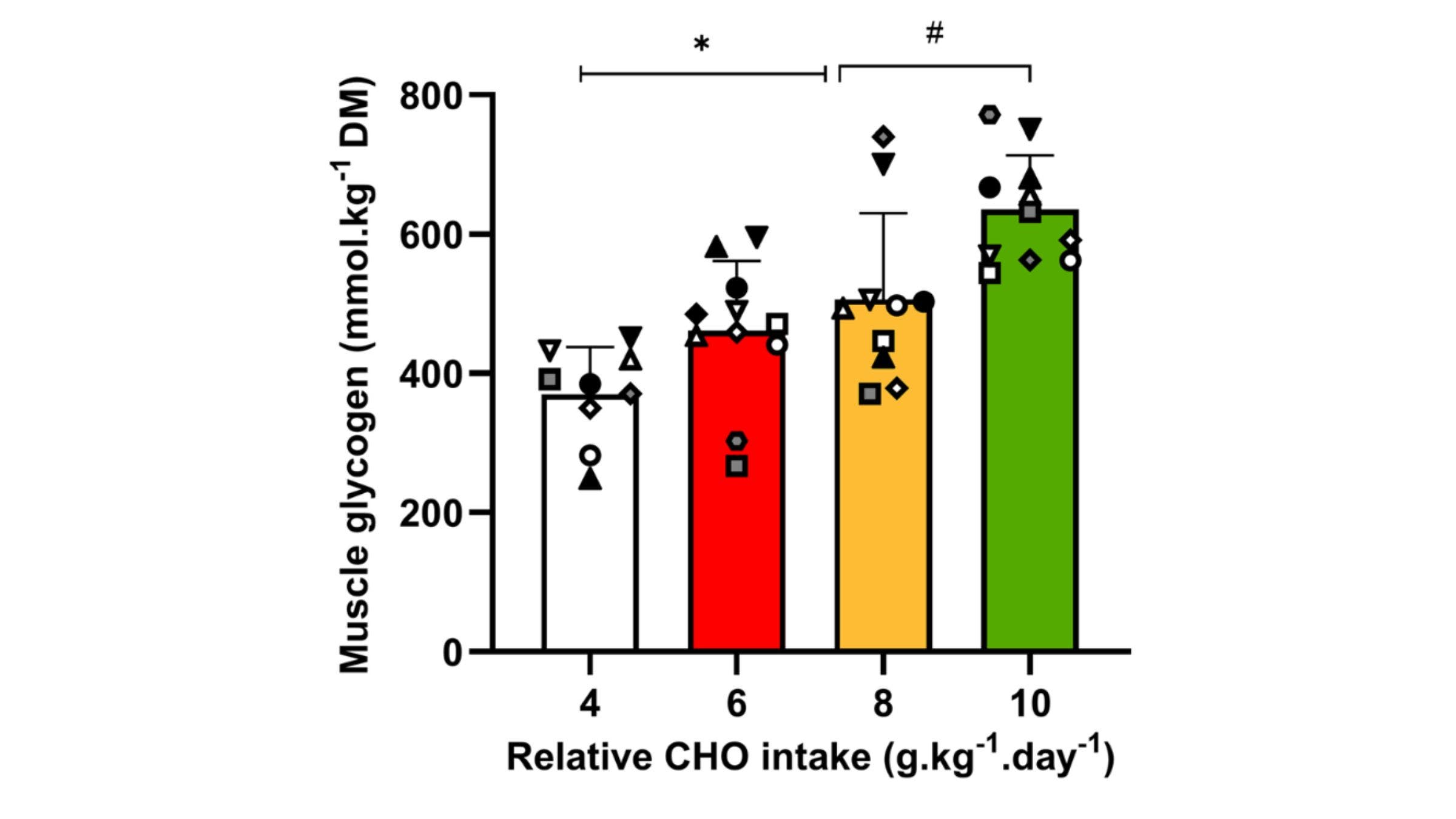
- Days 4-5: The loading phase. Subjects were randomly assigned to one of three protocols: 6 g/kg, 8 g/kg, or 10 g/kg of carbohydrates.
Throughout the loading phase, the researchers provided all meals to ensure strict adherence. For a 150-pound (68 kg) athlete, the 10 g/kg protocol required consuming 680 grams of carbohydrates per day. To put this in perspective, a standard serving of pasta contains roughly 40 to 45 grams of carbohydrates, meaning the athlete would need to consume the equivalent of 15 to 16 servings of pasta daily.
Data Analysis: Linear Gains and the Absence of GI Distress
The results of the study challenged several long-held assumptions. First and foremost, the data revealed a linear relationship between intake and storage. The athletes who consumed 10 g/kg achieved significantly higher muscle glycogen levels than those on the 6 g/kg or 8 g/kg protocols. Notably, there was no evidence of a "ceiling effect"; the muscles continued to absorb and store glucose effectively even at the highest tested dosage.
One of the most surprising findings concerned the physiological "cost" of this intake. For decades, athletes have complained of feeling bloated or "sluggish" when loading. To quantify this, the researchers monitored gastrointestinal (GI) symptoms and used a unique "blue muffin" test to measure transit time—the duration it takes for food to move through the digestive system.
The study found no significant difference in transit times across the three groups:
- 6 g/kg group: 20.2 hours
- 8 g/kg group: 19.0 hours
- 10 g/kg group: 18.7 hours
Furthermore, reports of nausea, cramping, and flatulence did not increase with the higher carb load. While subjects reported feeling "fuller" on the 10 g/kg diet, the sensation was not described as debilitating or problematic for performance.
Perhaps most significantly for weight-conscious athletes, the study found no significant increase in total body mass during the two-day loading phase. This contradicts the traditional "rule of thumb" that every gram of glycogen is stored with three to four grams of water, which theoretically should lead to a weight gain of several pounds. The researchers hypothesize that the lack of weight gain may be attributed to the concurrent reduction in training volume (the taper), which may lead to a shift in total body water distribution.
Practical Application: The "Five-Year-Old’s Diet"
The success of the 10 g/kg protocol in the study was largely attributed to the type of carbohydrates consumed. To reach such high numbers without causing GI distress, the researchers utilized low-fiber, high-glycemic options. This mirrors the real-world strategy used by elite marathoners like Sabastian Sawe, who recently utilized a sophisticated fueling plan to achieve a sub-two-hour marathon performance.
In Sawe’s protocol, a significant portion of the carbohydrate load came from liquid sources. Reports indicate that two days before his race, Sawe added an extra sports drink containing 80 grams of carbohydrates to his diet. On the final day before the race, he consumed 160 grams of carbohydrates through sports drinks alone, supplemented by 40 grams from an energy bar. This strategy—often referred to by professional cyclists as the "five-year-old’s diet"—prioritizes white rice, white bread, jelly sweets, and fruit juices while strictly avoiding whole grains, fibrous vegetables, and fats that can slow digestion.
Expert Reactions and Broader Implications
The sports science community has reacted with cautious optimism to the Liverpool findings. While the study provides a clear green light for the 10 g/kg protocol, some experts suggest that the "more is better" trend must be balanced with individual "gut training."
"The data is compelling because it shows that the human body is remarkably efficient at processing high carbohydrate loads when the fiber is stripped away," says Dr. Mark Henderson, a sports nutritionist not involved in the study. "However, the leap from a standard diet to 10 g/kg should not be made for the first time on the week of a goal race. The ‘gut’ is an adaptable organ; it needs to be trained to handle that volume of glucose."
Conversely, some scientists, such as the prominent South African researcher Tim Noakes, continue to question the necessity of such high glycogen stores. Noakes has famously argued that as long as blood glucose levels are maintained through intra-race fueling, the absolute level of muscle glycogen is secondary. However, the Liverpool study provides a counter-argument, suggesting that maximized stores provide a "buffer" that protects against the late-race "bonk" or "hitting the wall."
Conclusion: A New Standard for Race Week
The Liverpool John Moores University study serves as a pivotal piece of evidence for endurance athletes seeking to optimize their performance. It confirms that a 48-hour loading window at 10 g/kg of body weight is not only effective for maximizing muscle fuel but is also physically tolerable when executed with low-fiber carbohydrate sources.
As the endurance world looks toward the next generation of marathon records, the focus will likely remain on the "total fuel" equation: starting with a full tank through a 10 g/kg load and maintaining it through aggressive intra-race supplementation. For the serious amateur and the elite professional alike, the message from the lab is clear: when it comes to pre-race carbohydrates, the fear of the "ceiling" may be unfounded, and the benefits of the "extra serving" are supported by the data.




 Chandra Hamzah
 Gabriela Annisa
 Tatiana Tantri Indah Sari
 Budi Mulyono