
 Walid Sujud Trenggono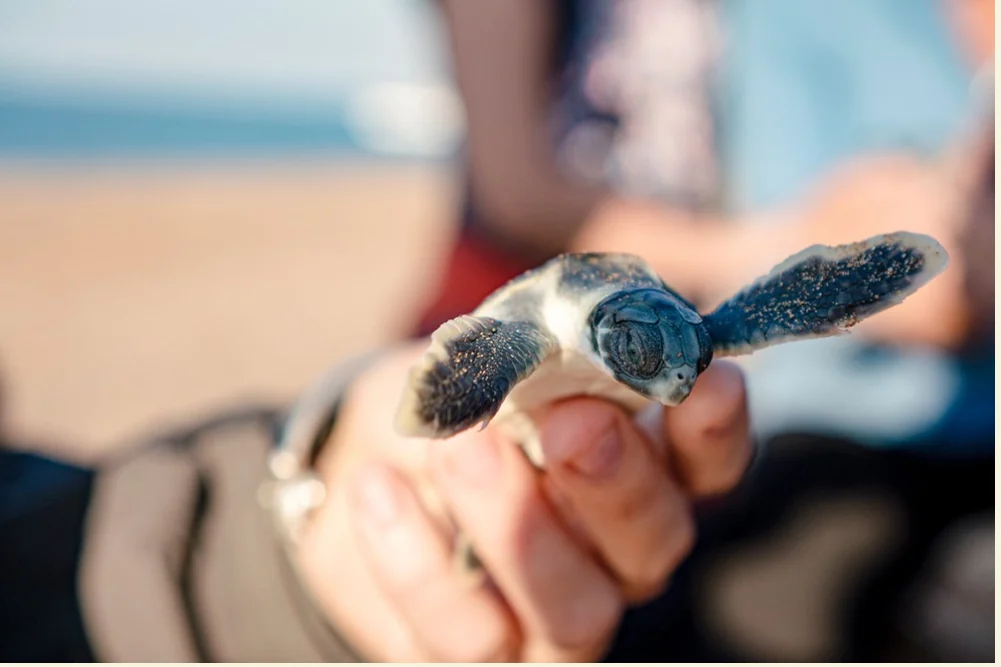
Under the electric canopy of the Milky Way, far removed from the light pollution of Darwin, a silent ritual unfolds along the inky black shores of Bare Sand Island. Here, on a remote stretch of sand in the Joseph Bonaparte Gulf, the flatback turtle (Natator depressus) emerges from the surf to continue a cycle of life that has persisted for millennia. Unlike the six other species of sea turtles found globally, the flatback is uniquely Australian, nesting only on the northern beaches of the continent. Despite this endemic status, the species remains one of the most mysterious marine creatures in the world, classified as "data deficient" by both the Northern Territory government and the International Union for Conservation of Nature (IUCN) Red List.
On Bare Sand Island—known as Ngulbitjik to the traditional Kenbi owners—the efforts of the volunteer research group AusTurtle are bridging the gap between myth and empirical data. Every winter, as the sea calms during the "halcyon days" surrounding the winter solstice, approximately 650 middle-aged flatbacks return to this tiny rookery. Their arrival is timed with precision, occurring within a four-hour window around the high tide. This strategic timing allows these 90-kilogram behemoths to minimize the arduous trek across the sand, a journey that is both physically taxing and fraught with predatory risk.
Biological Profile of the Natator Depressus
The flatback turtle derives its scientific name, Natator depressus, from its distinctively flattened, low-domed carapace, which features upturned edges. This physiological trait distinguishes it from the more rounded shells of the green or loggerhead turtles. Growing to approximately one meter in length, the flatback is also unique in its developmental cycle. While most sea turtles undergo an oceanic phase where hatchlings drift into deep-sea currents, flatbacks remain within the shallow, turbid waters of the Australian continental shelf.
Despite these known traits, the "lost years"—the three-decade gap between a hatchling entering the ocean and returning to its birth beach to nest—remain a total enigma to marine biologists. It is estimated that only one in every 1,000 hatchlings survives to adulthood. The lack of concrete data regarding their migratory patterns and population health at sea is what necessitates the intensive, boots-on-the-ground research currently being conducted on Bare Sand Island.
The AusTurtle Research Mission: Methodology and Chronology
The AusTurtle research camp is a testament to low-impact scientific inquiry. Operating as a "pop-up" facility on traditional Kenbi land, the site is strictly regulated to ensure zero environmental footprint. There are no permanent structures, no ground fires, and even the waste is removed from the island in bricks. Volunteers, ranging from marine biology students to "grey nomads," commit to week-long stints of sleep deprivation to monitor the nesting turtles.
The nightly chronology begins as the tide rises. Researchers, equipped with red-light headlamps to avoid disorienting the animals, patrol the shoreline. When a turtle is spotted, the team records the exact time and location, marking the sand to manage what becomes a "turtle queue." The nesting process is a study in determination: a female may clear several trial sites before selecting an optimal location in the dunes. Using her hind flippers with surprising dexterity, she excavates a deep chamber to deposit a clutch of approximately 50 eggs. Notably, while the flatback lays the fewest eggs of any sea turtle species, its eggs are the largest, a factor believed to give the hatchlings a size advantage against predators upon emergence.
Once the laying process begins—a state of "trance" for the turtle—researchers move in to collect vital statistics. They measure the carapace, check for and record identification tags, and attach new tags to first-time nesters. Crucially, they also record the temperature of the nest. This data point is vital for predicting the future of the species, as sea turtles exhibit temperature-dependent sex determination (TSD).
The Intersection of Native Title and Conservation
The history of Bare Sand Island is as complex as its biology. For years, the island served as a military firing range, evidenced by the gunnery shells still scattered across its surface. However, 2016 marked a turning point when, after one of the longest-running Aboriginal land claims in Australian history, native title was awarded to the Kenbi clan.
The Kenbi people hold Ngulbitjik sacred, believing its seasonal monsoonal pools are linked to mainland waterholes. This cultural connection includes the traditional harvesting of turtle eggs, a practice that sometimes sits in perceived tension with modern conservation ideals. However, seasoned researchers like Andrew Raith, who has worked on the island for over two decades, argue that the two are not mutually exclusive.
Raith posits that the flatback population has coexisted with Indigenous harvesting for thousands of years without collapse. He suggests that by allowing the Kenbi people to maintain their traditional practices, the turtles retain a tangible "value" to the community, ensuring the traditional owners remain the primary stakeholders in the species’ survival. From a conservation standpoint, the impact of harvesting a small percentage of nests is statistically negligible compared to the looming threats of industrial development and climate change.
Climate Change and the "Top of the Territory" Crisis
The most significant threat to the flatback turtle is not predation or traditional hunting, but the shifting global climate. As an indicator species, the health of the flatback population reflects the health of the entire marine ecosystem, including coral reefs, seagrasses, and invertebrate populations.
The phenomenon of rising nest temperatures is a primary concern. The "pivotal temperature" for sea turtle nests is approximately 29 degrees Celsius; nests warmer than this produce a higher ratio of females, while cooler nests produce more males. If global temperatures continue to rise, there is a legitimate fear that turtle populations will become overwhelmingly female, eventually leading to reproductive collapse.
Furthermore, the flatbacks of the Northern Territory face a geographical "dead end." Unlike species that might gradually shift their nesting ranges further south to escape rising temperatures, the NT flatbacks are already at the northernmost limit of the continent. They cannot migrate further north into deeper tropical waters where suitable nesting beaches do not exist, and the vast distances required to reach cooler southern latitudes may be beyond their biological adaptability.
Rescue Operations and Ecological Implications
The work of the AusTurtle team extends into the daylight hours. As the sun rises, researchers perform "nest excavations" on sites that hatched during the night. It is common for several hatchlings to become trapped under collapsed sand or tangled in debris. These "stragglers" are collected and kept in a cool, dark environment until they can be released under the cover of darkness on the next high tide, protecting them from the keen eyes of daytime predators like silver gulls and the island’s resident three-legged saltwater crocodile, "Graham."
This intervention, while small in scale, is vital for a species with such a low survival rate. Every hatchling that reaches the ocean represents a potential data point for the future and a chance for the species to persist. The loss of the flatback would trigger a trophic cascade; without these turtles to graze on algae and soft corals, and without their eggs providing nutrients to the beach ecosystem, the biodiversity of the Joseph Bonaparte Gulf would be significantly diminished.
Future Outlook and Public Engagement
The path to shifting the flatback’s status from "data deficient" to "protected" requires sustained funding and public interest. Currently, the research on Bare Sand Island is almost entirely dependent on volunteer labor and small-scale eco-tourism. Tours operated by groups like Sea Darwin provide the public with a controlled way to witness the nesting process, fostering a sense of stewardship that is necessary for long-term conservation funding.
As the 30-year research project continues, the data gathered on Bare Sand Island will eventually provide a clearer picture of the flatback’s population trends. For now, the island remains a rare sanctuary where science and ancient tradition overlap. The survival of Natator depressus depends on this delicate balance: the tireless work of "insomniac scientists," the respect for Kenbi land rights, and a global commitment to mitigating the temperature rises that threaten to silence the beaches of Ngulbitjik forever.
In the words of researcher Andrew Raith, humans are not separate from this ecosystem but an integral part of it. The fate of the flatback turtle is a harbinger of the fate of the northern Australian coastline. Protecting this endemic "beauty" is more than a conservation effort; it is a necessary act of preservation for the biological and cultural heritage of the continent.



 Anjar Salim
 Chandra Hamzah
 Tatiana Tantri Indah Sari
 Budi Mulyono

