
 Walid Sujud Trenggono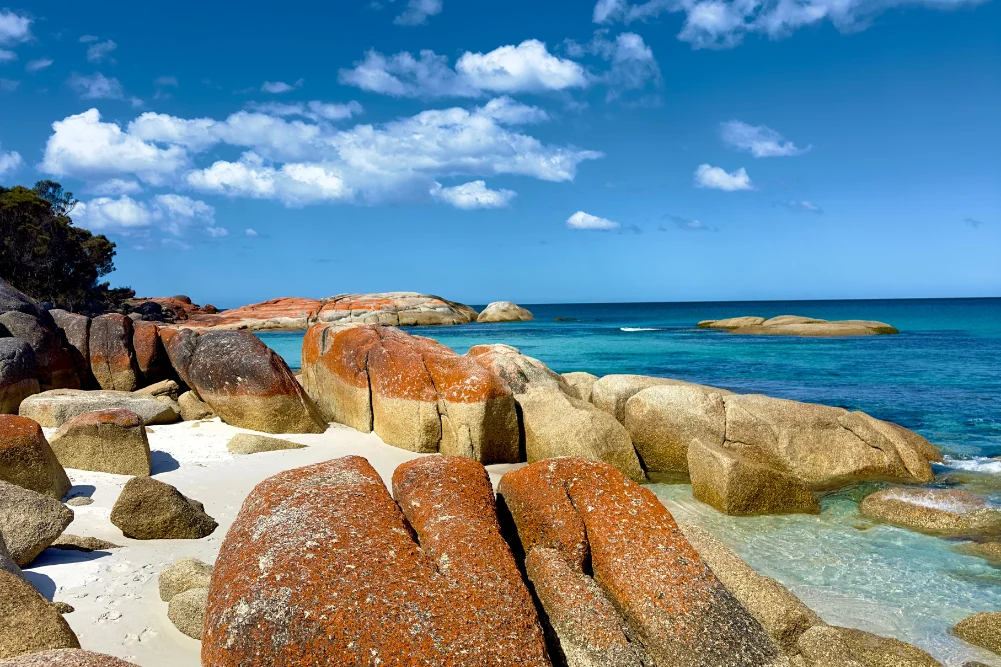
The Bay of Fires, located on the northeastern coast of Tasmania, has long been regarded as a pinnacle of Australian natural beauty, a reputation recently solidified by its designation as the nation’s most beautiful beach for 2025. Spanning approximately 50 kilometers from Binalong Bay in the south to Eddystone Point in the north, the region—known traditionally as Larapuna—is defined by its stark contrasts: brilliant white silica sands, crystalline turquoise waters, and massive granite boulders draped in vibrant orange lichen. As the global tourism market shifts toward "soft adventure"—experiences that combine physical exertion with high-end amenities—the Bay of Fires has emerged as a primary destination for guided trekking operations, such as those managed by Intrepid Travel.
The current landscape of Tasmanian tourism emphasizes immersive, low-impact exploration. For many travelers, the appeal lies in navigating the rugged terrain of the Humbug Point Conservation Area and Mount William National Park without the logistical burdens of traditional backpacking. These guided experiences provide a curated balance of ecological education, physical challenge, and culinary excellence, reflecting a broader trend in the Australian travel industry toward premium wilderness experiences.
Geographic and Cultural Foundations of the Bay of Fires
The nomenclature of the Bay of Fires dates back to 1773, when Captain Tobias Furneaux, sailing on the HMS Adventure, observed numerous fires along the coastline. These fires were the controlled burns and campfires of the Palawa people, the Indigenous inhabitants of Tasmania, who have managed this landscape for millennia. Today, the region remains culturally significant, with Larapuna serving as a vital link to Aboriginal heritage.
Geologically, the area is world-renowned for its granite formations. The characteristic orange hue that coats the boulders is not a mineral property of the rock itself but is caused by a species of lichen. This symbiotic relationship between algae and fungi thrives in the clean, salt-laden air of the Tasman Sea. The white sand, meanwhile, is the result of weathered quartz granite, which breaks down over millions of years into fine, high-silica grains. This unique geological composition creates a visual spectacle that serves as the backdrop for one of Australia’s most celebrated coastal trails.
Chronology of the Expedition: A Three-Day Guided Framework
The standard guided trek through the Bay of Fires is structured to provide an escalating level of physical engagement, typically beginning in Launceston, Tasmania’s northern hub.
Day 1: Transition to the Northeast and Initial Coastal Forays
The expedition commences with a transit from Launceston to St Helens, the largest town on the northeast coast and a critical economic center for the region. Known as the "Game Fishing Capital of Tasmania," St Helens serves as the base camp for trekking groups.
The initial hike typically covers the Skeleton Bay Track, leading toward Dora Point within the Humbug Point Conservation Area. This segment introduces hikers to the "sneaky rain" or "liquid sunshine" characteristic of the Tasmanian maritime climate. The flora in this region is a complex tapestry of coastal heath, flowering paperbarks, banksia, tea trees, and eucalyptus. The first day serves as an acclimatization period, allowing participants to adjust to the variable terrain and weather patterns of the Tasman Sea coastline.
Day 2: The Core Coastal Traverse and Eddystone Point
The second day represents the logistical and physical heart of the trek. It often begins at Eddystone Point, home to a 35-meter-high lighthouse constructed from pink granite in 1889. This structure stands as a sentinel over a stretch of coast notorious for its historical maritime hazards.
The day’s itinerary involves a 12-kilometer traverse, often requiring upwards of 25,000 steps. Hikers navigate Eddystone Beach, where the wind can reach speeds exceeding 60 kilometers per hour. The trek involves navigating "shell coves"—deep deposits of cockle and clam shells—and inland fire trails. This section of the trail offers a direct encounter with the region’s biodiversity, including Pacific gulls, sandpipers, and the distinctive "Neptune’s necklace" seaweed.
Day 3: Mount William National Park and the Search for Megafauna
The final day focuses on Mount William National Park, located at the northern end of the Bay of Fires. The park is a sanctuary for Tasmanian wildlife, particularly the common wombat and the Forester kangaroo. The trek includes a 6-kilometer loop near Stumpy’s Bay, named for the distinctive rock formations rather than the local fauna. The return journey to Launceston often includes stops at landmarks such as the Little Blue Lake—a former tin mine site where mineral suspensions create a vivid, albeit toxic, azure color—and the historic mining town of Derby, now a global hub for mountain biking.
Ecological Profile: Wildlife and Biodiversity
Tasmania’s isolation from the Australian mainland has allowed for the preservation of unique subspecies and high densities of marsupials. The Bay of Fires trek provides a corridor for observing these species in their natural habitat.
The Tasmanian echidna (Tachyglossus aculeatus setosus) is a frequent sight. Larger and more heavily furred than its mainland counterparts, this monotreme is adapted to the cooler, wetter conditions of the island. Birdlife is equally prolific; the region is home to honeyeaters, wattlebirds, green rosellas, and the splendid fairywren.
However, the wombat remains the most iconic resident. With a population estimated at nearly one million—roughly double the human population of Tasmania—these "bulldozers of the bush" are essential to the ecosystem. Their presence is often marked by their distinctive cubic scat, a biological adaptation that prevents the droppings from rolling off the granite boulders they use to mark their territory.
Economic Impact and the Role of Local Industry
The rise of guided trekking has provided a significant economic stimulus to the northeast corner of Tasmania. St Helens, once primarily dependent on commercial fishing and forestry, has successfully pivoted toward eco-tourism.
The culinary sector, in particular, has seen a surge in demand for hyper-local products. The Bay of Fires is famous for its southern rock lobster and oysters. "Lease 65," located just minutes from the center of St Helens, provides plump, creamy oysters that are a staple of the trekking experience. This integration of local supply chains—from bakeries providing chocolate truffles to cafes like Lifebuoy Cafe offering specialized hiking rations—demonstrates the "multiplier effect" of adventure tourism on regional economies.
The Evolution of "Soft Adventure" and Tourism Implications
The Bay of Fires trek, as offered by operators like Intrepid Travel, exemplifies the "soft adventure" market. This segment targets a demographic that seeks the physical rewards of a 40-kilometer trek but requires the comforts of professional guiding, chef-prepared meals, and hotel accommodations.
Analysis of Tourism Trends:
- Demographic Shifting: The presence of diverse participants—ranging from 75-year-old solo travelers to professionals training for more grueling treks like the Kokoda Track—indicates that wilderness hiking is no longer restricted to a niche "hardcore" demographic.
- Sustainability and Management: Guided tours allow for better management of human impact on sensitive coastal ecosystems. By keeping hikers on established trails and managing waste, these tours help preserve the "pristine" nature that attracts visitors in the first place.
- Wellness and Mental Health: There is a growing recognition of "wilderness therapy." Participants frequently cite the "uplifting" nature of the trek and its benefits for mental clarity, a factor that is increasingly being marketed by the Tasmanian tourism board.
Conclusion and Future Outlook
The Bay of Fires remains a crown jewel in Australia’s environmental portfolio. The combination of its 2025 ranking as the nation’s top beach and the continued refinement of guided trekking infrastructure suggests a robust future for the region’s tourism industry. As travelers increasingly seek out "slow travel" options that allow for deep connection with a specific landscape, the three-day traverse from Launceston to the orange-hued boulders of Larapuna stands as a model for sustainable, high-value tourism.
For the Palawa people, the scientific community, and the global traveler, the Bay of Fires is more than a scenic vista; it is a living museum of geological history, a sanctuary for unique biodiversity, and a testament to the enduring allure of the Australian wilderness. As the trek concludes back in the urban center of Launceston, the impact of the coastal elements—the "sneaky rain," the perfume of wildflowers, and the sight of a dark-spiky echidna—leaves a lasting impression that transcends mere sightseeing, fostering a profound respect for one of the world’s last truly wild places.




 Anjar Salim
 Chandra Hamzah
 Tatiana Tantri Indah Sari
 Budi Mulyono
 Lukman Taruna Persada Ramadan
