
 Walid Sujud Trenggono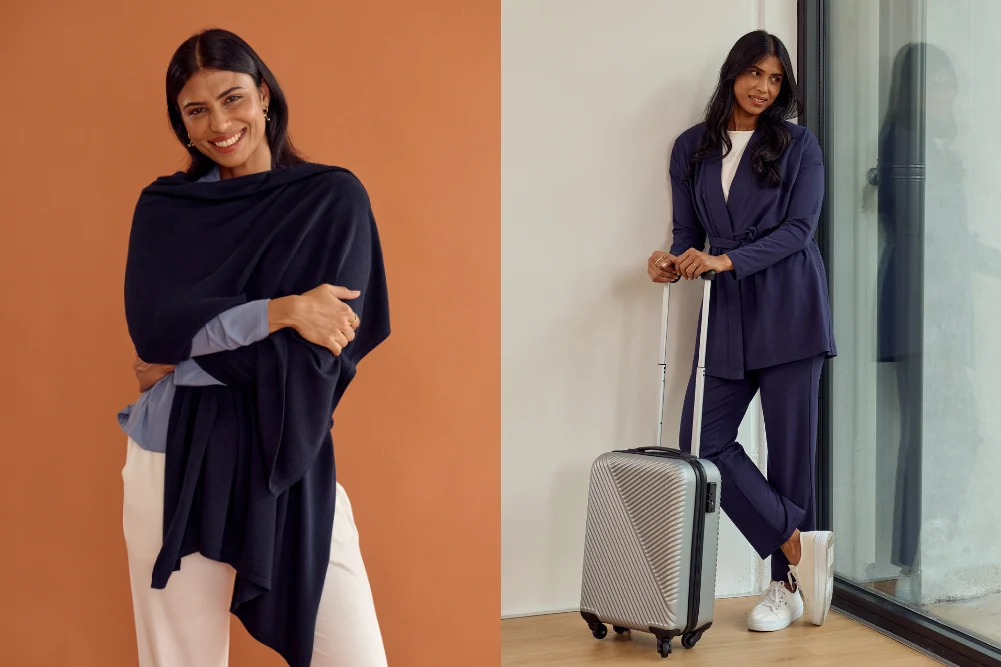
The physical and psychological toll of long-haul travel has become a primary concern for the modern voyager, as global transit times reach record durations and cabin environments remain notoriously difficult to navigate. For the international traveler, the journey often begins long before takeoff, starting with a strategic decision that influences the entirety of the trip: the selection of a travel outfit. Industry experts and textile innovators are increasingly highlighting that the secret to arriving at a destination feeling refreshed and composed lies not in luxury amenities alone, but in the functional engineering of the clothing worn during transit.
In the contemporary travel landscape, where a flight from Australia to Europe or North America can exceed 14 to 17 hours, the limitations of traditional apparel become starkly apparent. Conventional denim, restrictive waistbands, and synthetic fibers often fail to accommodate the physiological changes that occur at 35,000 feet, including limb swelling, fluctuating body temperatures, and skin dehydration. Consequently, the demand for specialized travel-wear has surged, leading Australian brands like Bamboo Body to spend nearly two decades refining the intersection of soft-touch aesthetics and high-performance functionality.
The Physiological Challenges of the Cabin Environment
To understand the necessity of specialized travel attire, one must first examine the unique stressors of the aircraft cabin. Modern aircraft are pressurized to an equivalent altitude of approximately 6,000 to 8,000 feet, which leads to lower oxygen saturation in the blood and can cause gas expansion in the body, resulting in bloating and discomfort. Furthermore, the humidity levels in a cabin typically hover below 20 percent—significantly lower than the 30 to 50 percent found in a typical indoor environment—leading to rapid skin dehydration.
Thermal regulation is another critical factor. While airline cabins are generally maintained between 18°C and 24°C, individual perception of temperature varies wildly based on seat location, air vent proximity, and metabolic rate. A passenger may experience sweltering heat during the boarding process on the tarmac, followed by a precipitous drop in temperature once the aircraft reaches cruising altitude. This volatility necessitates a modular approach to dressing, where layers can be added or removed without compromising the traveler’s dignity or comfort.
The Evolution of Travel Fashion: A Chronological Shift
The history of travel attire has undergone a radical transformation over the last 70 years. During the "Golden Age of Flight" in the 1950s and 1960s, air travel was a formal event. Men typically wore wool suits and ties, while women opted for tailored dresses, hats, and gloves. This era prioritized social status and the "theatre" of aviation over physical comfort.
By the 1980s and 1990s, as air travel became more accessible to the middle class, the dress code relaxed into "smart casual" attire. However, the fabrics remained largely traditional, such as heavy cotton or polyester blends, which lacked the stretch and breathability required for the increasing duration of international routes.
The early 2000s saw the rise of "athleisure," a trend that brought gym-wear into the airport terminal. While comfortable, this era was often criticized for a lack of polish, leading to the "dishevelled" look often associated with long-haul arrivals. Today, the industry has entered a new phase: "Performance Elegance." Brands like Bamboo Body have spearheaded this movement, utilizing sustainable textile technology to create pieces that offer the comfort of sleepwear with the visual sophistication of high-end lounge-wear.
Material Innovation: The Role of Bamboo Textiles
At the heart of this shift is the utilization of bamboo viscose, a fabric that has gained traction for its superior performance metrics compared to cotton or synthetic alternatives. The manufacturing process involves breaking down the starchy pulp of the bamboo plant into a soft, regenerated cellulose fiber. The resulting fabric possesses several key characteristics that are particularly advantageous for travelers:
- Thermal Regulation: Bamboo fibers are naturally cross-filled with micro-gaps and micro-holes, allowing for better ventilation and moisture absorption. This helps the wearer stay cool in warm terminals and warm in chilly cabins.
- Moisture-Wicking Properties: Bamboo can absorb up to three times its weight in water, pulling moisture away from the skin to keep the traveler dry.
- Hypoallergenic and Antimicrobial: Long hours in a confined space can lead to skin irritation. Bamboo is naturally smoother than cotton, reducing friction, and contains an agent called "bamboo kun" that resists the growth of bacteria and odors.
- Elasticity and Recovery: Unlike rigid fabrics, bamboo blends typically offer significant stretch, accommodating the natural swelling of the abdomen and limbs during flight without losing their shape.
Strategic Layering: The Travel Set and the Wrap
The modern travel outfit is increasingly viewed as a "system" rather than a collection of individual items. The core of this system is often a matching Travel Set. By utilizing coordinated pieces with stretchy waistbands and relaxed silhouettes, travelers can eliminate the "decision fatigue" associated with packing while ensuring a cohesive look. Data suggests that passengers who feel "put together" report lower levels of travel-related stress, a phenomenon psychologists refer to as "enclothed cognition"—the systematic influence that clothes have on the wearer’s psychological processes.
A critical component of this system is the Travel Wrap. Often crafted from a blend of bamboo and recycled cashmere, these oversized garments serve multiple functions. In the terminal, they act as a sophisticated scarf or pashmina. On the aircraft, they transition into a personal blanket, providing a hygienic and significantly warmer alternative to the thin, polyester blankets provided by airlines. This versatility is essential for the carry-on-only traveler, where every item must serve at least two purposes.
The Importance of Peripheral Comfort: Circulation and Extremities
While much attention is paid to the torso and legs, the feet are often the most neglected part of the travel outfit. Prolonged sitting increases the risk of edema (swelling) and, in extreme cases, Deep Vein Thrombosis (DVT). While compression socks are often recommended for high-risk individuals, the general traveler benefits significantly from soft, breathable bamboo socks.
Standard synthetic socks can trap heat and moisture, leading to discomfort and odor. In contrast, bamboo socks maintain a consistent temperature and provide a gentle, non-restrictive fit that supports circulation. As passengers frequently remove their shoes during long-haul flights to settle in for sleep, the quality of their hosiery becomes a primary factor in their overall sense of wellbeing.
Market Trends and the Growth of Sustainable Travel-Wear
The rise of brands like Bamboo Body reflects a broader shift in Australian consumer behavior. According to recent retail data, there is a growing intersection between the "wellness" and "sustainability" sectors. Travelers are no longer just looking for comfort; they are seeking products that align with their environmental values. Bamboo, as a fast-growing, rain-fed crop that requires no pesticides, fits the criteria for the eco-conscious voyager.
Furthermore, the Australian travel market is unique. Due to the country’s geographical isolation, "short" international flights are rare. This has created a highly discerning consumer base that prioritizes durability and long-term comfort. Bamboo Body’s nearly 20-year history in the market serves as a testament to the enduring demand for clothing that can withstand the rigors of 24-hour transit cycles.
Broader Implications for the Travel Industry
The focus on travel attire is part of a larger trend toward "frictionless travel." As airports implement biometric scanning and digital boarding passes to reduce procedural stress, the responsibility for physical stress management has shifted to the individual. The "perfect travel outfit" is now viewed as a tool for recovery. By maintaining an optimal body temperature and reducing physical restriction, travelers can mitigate the effects of jet lag and arrive at their destination ready to engage with their itinerary, whether it be a business meeting or a cruise departure.
The implications extend to the cruise and road-trip sectors as well. A cruise departure often involves long waits in embarkation halls, while Australian road trips involve hours of sedentary vibration. In both scenarios, the moisture-wicking and stretch properties of bamboo clothing provide a significant advantage over traditional casual wear.
Conclusion: The Future of Transit Apparel
As the travel industry continues to recover and expand, the emphasis on the "transit experience" will only intensify. The move away from "fast fashion" toward high-quality, multi-purpose travel essentials suggests a permanent change in how we prepare for the journey.
In summary, the secret to arriving refreshed is a combination of material science and strategic planning. By choosing breathable, temperature-regulating fabrics like those offered by Bamboo Body, and by utilizing a modular system of sets and wraps, travelers can exert control over an otherwise unpredictable environment. The modern travel outfit is no longer just about looking good in the lounge; it is about the functional support of the human body at 35,000 feet, ensuring that the journey does not detract from the destination.



 Anjar Salim
 Chandra Hamzah
 Tatiana Tantri Indah Sari
 Budi Mulyono
 Lukman Taruna Persada Ramadan
