
 Budi Mulyono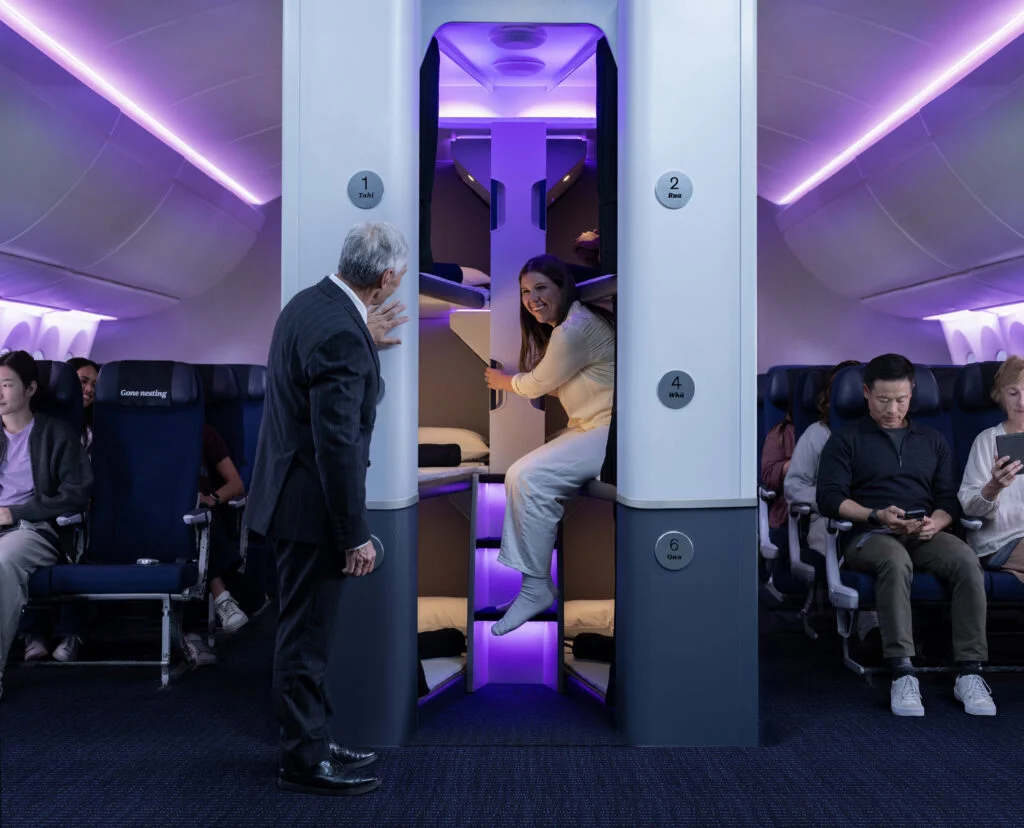
Air New Zealand has officially announced the commercial rollout details for its pioneering Economy Skynest™, a world-first innovation designed to provide lie-flat sleep options for passengers traveling in the Economy and Premium Economy cabins. This development marks a significant shift in the aviation industry’s approach to passenger comfort on ultra-long-haul routes, offering a middle-ground solution between standard seating and high-cost business class suites. Reservations for the Skynest™ are scheduled to open on May 18, with the product making its operational debut onboard the airline’s new Boeing 787-9 Dreamliner aircraft starting in November.
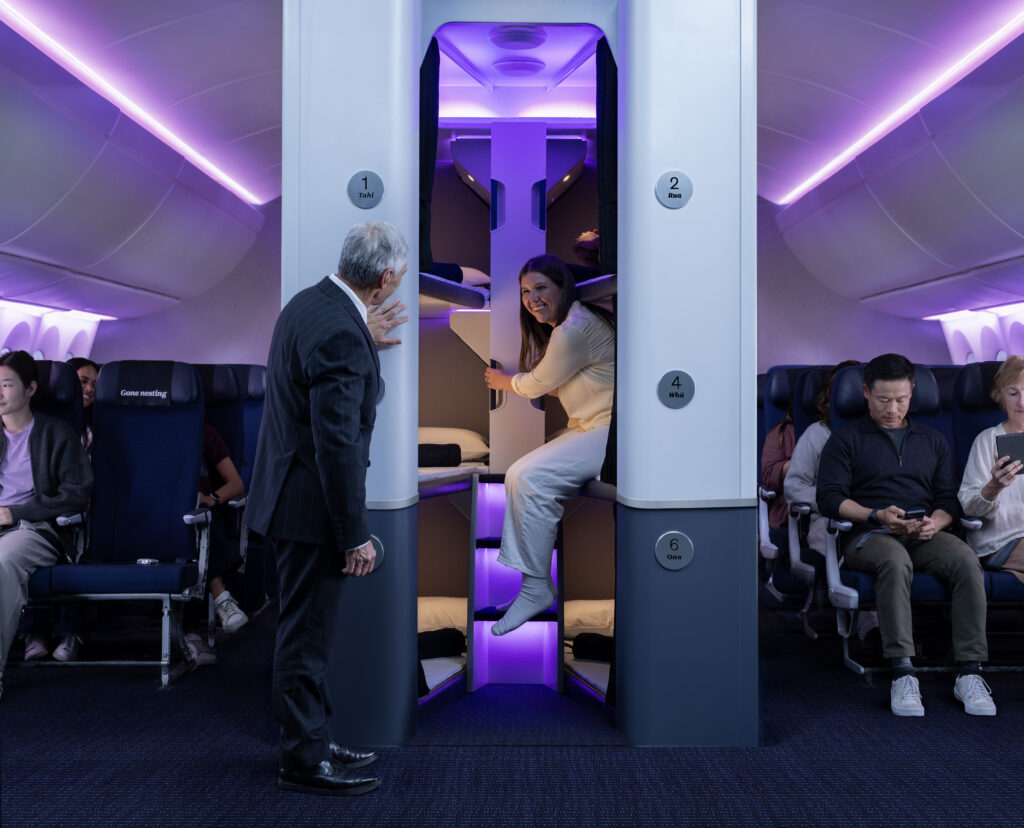
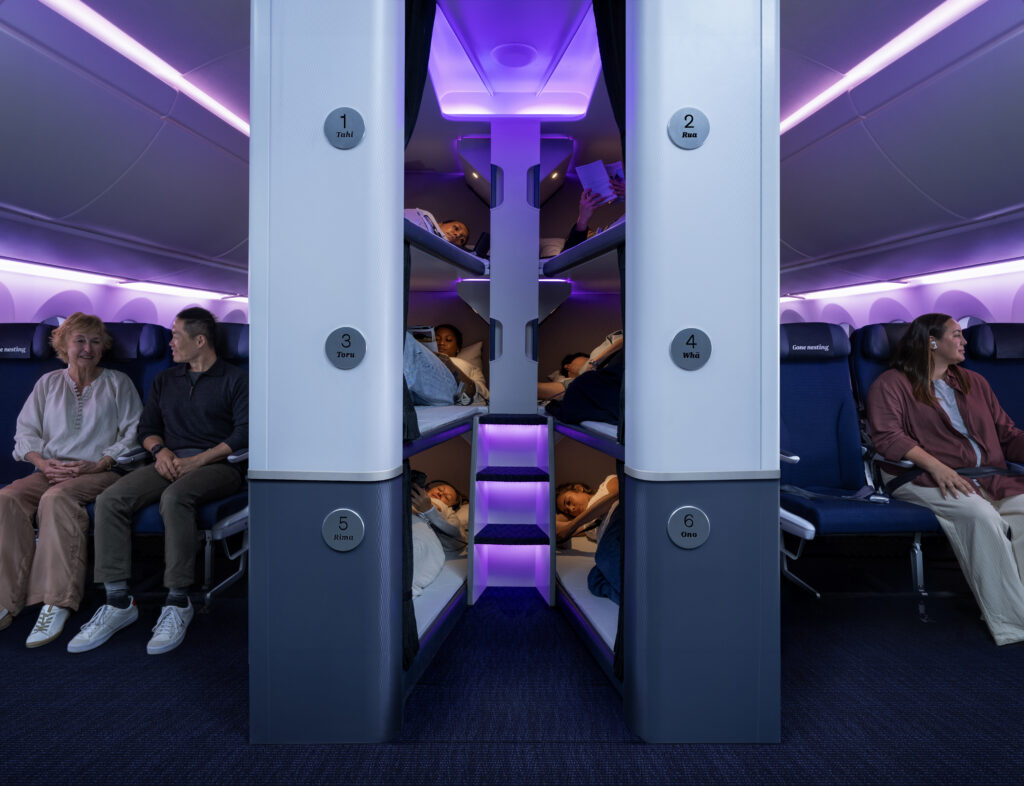
The Skynest™ consists of six lie-flat sleep pods arranged in a triple-bunk configuration. These pods are strategically located between the Premium Economy and Economy cabins, occupying a space that would traditionally be reserved for seating or galley storage. For a fixed price of $495, passengers can reserve a four-hour block of time to sleep horizontally, a luxury previously reserved almost exclusively for premium-tier travelers.
Technical Design and Cabin Integration
The development of the Skynest™ was the result of five years of intensive research and development, involving more than 170,000 hours of design work and testing with over 200 customers at the airline’s "Hangar 22" innovation center in Auckland. The goal was to solve the primary "pain point" of long-distance travel: the inability to stretch out and achieve deep sleep in a vertical seating position.
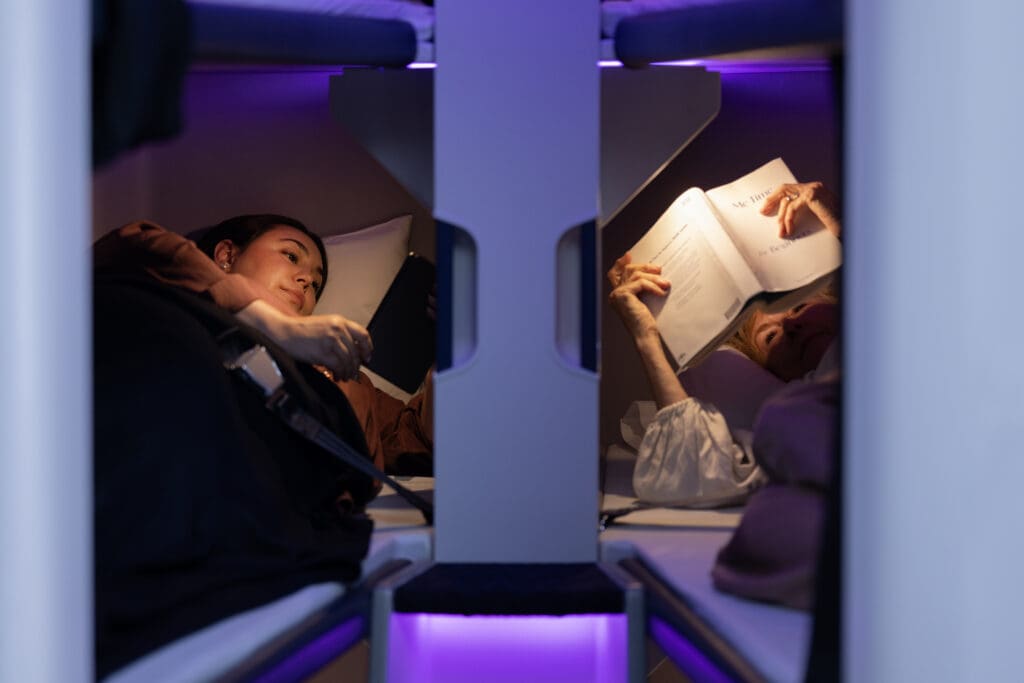
Each of the six pods is a self-contained sleep environment. The dimensions are designed to accommodate a wide range of body types, featuring a full-length mattress and premium bedding, including a cooling pillow and specialized linens designed for the aircraft environment. To ensure a private and calming atmosphere, the pods are equipped with ambient lighting tailored for sleep cycles, individual ventilation outlets, and privacy curtains. Modern connectivity is also integrated, with each pod featuring dedicated USB charging ports, allowing passengers to charge devices while they rest.
Safety was a paramount consideration during the certification process. Each pod includes a dedicated internal seatbelt, ensuring that passengers can remain in the pod even during unexpected turbulence. This design requirement was a critical hurdle in gaining regulatory approval from aviation authorities, as it ensures the pods meet the same rigorous safety standards as traditional aircraft seats.
Pricing Strategy and Revenue Management
The introductory price of $495 for a four-hour session represents a strategic move by Air New Zealand to maximize cabin revenue without devaluing its Business Premier offering. By limiting the duration of each session to four hours, the airline ensures that the six pods can be utilized by multiple passengers over the course of a long-haul flight. On a typical 17-to-18-hour flight, such as the Auckland (AKL) to New York (JFK) route, the airline plans to offer several distinct sessions.
There is a mandatory 30-minute transition period between each session. During this time, cabin crew perform a specialized cleaning service, changing the bedding and ensuring the pod is sanitized for the next occupant. This operational requirement limits the total number of sessions available per flight but maintains the high hygiene standards expected by international travelers.
Air New Zealand has confirmed that, at launch, each passenger will be restricted to one four-hour session per flight. This policy is intended to provide as many passengers as possible with the opportunity to experience the product. From a revenue management perspective, this also prevents the Skynest™ from becoming a direct competitor to Business Class. If a passenger were able to book multiple blocks, the combined cost might still be lower than a Business Class fare, potentially leading to "revenue cannibalization" where high-value travelers downgrade their ticket class while still securing a lie-flat experience.
The Evolution of the Ultra-Long-Haul Experience
The introduction of the Skynest™ is a direct response to the increasing length of commercial flight paths. Air New Zealand operates some of the longest routes in the world, including the flagship service between Auckland and New York City, which covers approximately 8,828 miles and takes nearly 18 hours to complete. On such "ultra-long-haul" (ULH) routes, the physiological impact of sitting upright for nearly a full day becomes a significant factor in passenger choice.
The airline has a history of cabin innovation. In 2011, it introduced the "Skycouch," which allows a row of three economy seats to be converted into a flat surface. While the Skycouch was successful, particularly for families and couples, it still relies on the dimensions of standard economy seating. The Skynest™ takes this a step further by providing a dedicated, bunk-style bed that does not require the purchase of three separate seats.
Industry analysts suggest that the Skynest™ could set a new benchmark for international carriers. As Qantas prepares for its "Project Sunrise" flights—non-stop services from Sydney to London and New York—the competition for passenger comfort in the "back of the plane" is intensifying. Air New Zealand’s proactive approach positions it as a leader in the wellness-focused travel sector.
Passenger Wellness and the "Nestcessities" Kit
To enhance the sleep experience, Air New Zealand is bundling the Skynest™ session with a specialized "Nestcessities" kit. This amenity package is distinct from the standard economy offering and includes items specifically chosen to promote rest. The kit typically features a high-quality eye mask, earplugs, travel socks, and specialized skincare products designed to combat the dehydrating effects of cabin air.
The four-hour duration of the session was not chosen arbitrarily. Sleep science suggests that a four-hour window allows for approximately two full rapid eye movement (REM) cycles, providing the "power nap" necessary to maintain cognitive function and reduce the effects of jet lag upon arrival. The transition periods are also designed to wake passengers naturally through gradual lighting changes, mimicking a sunrise, rather than an abrupt cabin announcement.
Operational Timeline and Aircraft Deployment
The Skynest™ will be featured on the airline’s eight new Boeing 787-9 Dreamliners, which are scheduled for delivery starting in late 2024. These aircraft will feature a redesigned cabin configuration that prioritizes space for the sleep pods. Additionally, the airline has plans to retrofit its existing 787-9 fleet to include the Skynest™, although the timeline for these retrofits will depend on maintenance schedules and global supply chain factors.
The initial rollout will focus on the airline’s longest routes, where the demand for sleep options is highest. This includes:
- Auckland (AKL) to New York (JFK): The primary target for the Skynest™, given the 17.5-hour flight time.
- Auckland (AKL) to Chicago (ORD): Another critical ULH route where passenger fatigue is a major factor.
Market Implications and Competitive Landscape
The aviation industry is watching the Skynest™ launch closely. If successful, it could force other long-haul carriers to reconsider their cabin layouts. Historically, airlines have focused innovation on the "front of the plane" to attract corporate travelers with high margins. However, as the ultra-long-haul market grows, the "premium economy" and "aspirational economy" segments are becoming increasingly important.
"The Economy Skynest is a game-changer for the economy travel experience," an airline spokesperson stated during a recent media briefing. "We wanted to provide our economy passengers with a choice that didn’t exist before—the choice to prioritize sleep without having to pay the full price of a business class seat."
From a logistical standpoint, the Skynest™ presents challenges. It requires a significant footprint within the aircraft, reducing the total number of seats that can be sold. Air New Zealand is betting that the premium price of the Skynest™ sessions, combined with the increased attractiveness of their long-haul flights, will offset the loss of seat density.
Conclusion
As the May 18 booking date approaches, travel industry experts anticipate high demand for the limited number of Skynest™ slots. The $495 price point is viewed as a balanced entry level that makes lie-flat comfort accessible to a broader demographic of travelers, from elderly passengers concerned about circulation to business travelers on a budget.
Air New Zealand’s Skynest™ represents more than just a new piece of hardware; it is a testament to the evolving philosophy of air travel, where the focus is shifting toward passenger well-being and the democratization of comfort. When the first Boeing 787-9 equipped with these pods takes off in November, it will likely mark the beginning of a new era in the golden age of ultra-long-haul aviation.



 Anjar Salim
 Chandra Hamzah
 Tatiana Tantri Indah Sari
 Lukman Taruna Persada Ramadan
