
 Tatiana Tantri Indah Sari
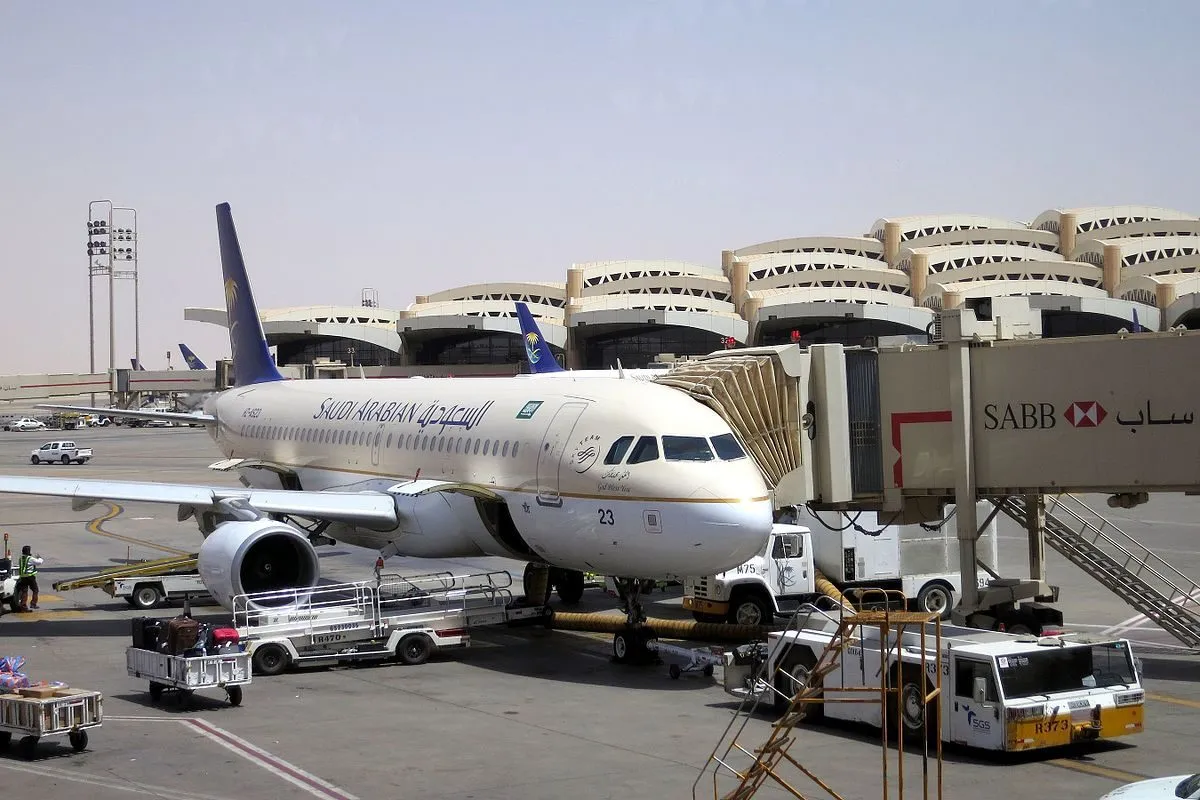
The landscape of corporate travel and regional tourism within the Arabian Peninsula has experienced a profound disruption following a dramatic escalation in security threats directed at the Kingdom of Saudi Arabia. According to leading travel industry executives and regional aviation monitors, virtually all inbound and outbound corporate travel to the kingdom has been brought to an immediate standstill. This sudden paralysis follows a persistent wave of cross-border attacks orchestrated by Iran-aligned Houthi militant forces, which have increasingly targeted critical infrastructure, civilian areas, and vital transportation hubs within Saudi territory.
As commercial aviation options severely contract due to heightened risk assessments and airspace precautionary measures, thousands of business travelers, expatriates, and religious pilgrims find themselves stranded. With major carriers suspending or sharply curtailing their flight schedules to and from Saudi airports, affected individuals are resorting to arduous overland journeys. Travelers are crossing international borders by car and bus to reach neighboring Gulf Cooperation Council (GCC) nations, where international air corridors remain fully operational and secure.
The crisis underscores the fragile geopolitical equilibrium of the Middle East, demonstrating how localized asymmetric warfare can rapidly paralyze multibillion-dollar economic diversification initiatives, international commerce, and global religious tourism networks.
The Ground Reality: Stranded Travelers and Grueling Overland Detours
The collapse of regular aviation schedules has transformed routine business trips into logistical nightmares. Major hubs such as King Khalid International Airport in Riyadh and King Abdulaziz International Airport in Jeddah have witnessed erratic flight operations, cancellations, and long queues as carriers reassess safety protocols. In response, corporate travelers and travel management companies have activated emergency evacuation and rerouting procedures.
Subair Thekepurathvalappil, senior manager at UAE-based travel agency Wise Fox Tourism, provided stark insights into the operational paralysis currently gripping the region. Speaking on the status of corporate deployments, he noted that standard business mobility has completely evaporated.
"There is no new travel being initiated to the kingdom and everything is on hold," Thekepurathvalappil stated. "Those who have gone to the kingdom are trying to return to the UAE by traveling to neighboring Bahrain by road and flying back from there. Others are traveling from Riyadh to Dammam by road for four hours and then to the UAE by road again for a further seven hours."
The disruption extends far beyond corporate executives and consultants. Saudi Arabia routinely welcomes millions of religious pilgrims undertaking the Umrah pilgrimage to the holy sites of Makkah and Madinah. Facing flight cancellations and lingering safety anxieties regarding airspace vulnerability, the majority of visitors performing Umrah are similarly avoiding air transit altogether. Instead, pilgrims are increasingly relying on long-distance coach networks, private vehicles, and cross-border taxis to navigate the Arabian desert, stretching transit times from a matter of hours to grueling multi-day journeys.
Background Context and Chronology of the Security Escalation
To understand the severity of the current travel freeze, it is necessary to examine the broader geopolitical context of the ongoing conflict involving the Houthi movement. Originating in the northern Saada governorate of Yemen, the Houthi movement—formally known as Ansar Allah—has waged a protracted insurgency against the internationally recognized Yemeni government, which has been supported since 2015 by a Saudi-led military coalition.
Over the course of the nearly decade-long conflict, the operational tactics of the Houthi militia have evolved significantly. Initially characterized by conventional ground skirmishes within Yemeni borders, the conflict progressively expanded into the strategic deployment of advanced asymmetric weaponry. Utilizing long-range ballistic missiles, cruise missiles, and loitering munitions—commonly referred to as kamikaze drones—the militia has repeatedly targeted vital infrastructure across the southern and western regions of Saudi Arabia.
The timeline of escalation includes several critical milestones that have progressively heightened risk thresholds for international aviation and corporate stakeholders:
- March 2015: The formation of the Saudi-led coalition initiates military intervention in Yemen, setting off a persistent cycle of retaliatory cross-border rocket and drone strikes targeting Saudi territory.
- September 2019: A sophisticated drone and cruise missile attack strikes critical oil processing facilities at Abqaiq and Khurais, temporarily halving Saudi Arabia’s crude oil production and demonstrating the vulnerability of high-value strategic assets.
- November 2020 – March 2021: A series of precision strikes target petroleum storage tanks, desalination plants, and civilian airports in southern cities such as Abha, Jizan, and Khamis Mushait, prompting repeated temporary suspensions of domestic and regional flights.
- Late 2023 – Present: Regional tensions escalate further amid the broader fallout from the Israel-Hamas conflict. Following regional alignments, Houthi forces expand their maritime interdiction campaign in the Red Sea and Gulf of Aden while maintaining periodic aerial pressure on regional airspace, ultimately triggering the most recent wave of commercial flight cancellations and corporate travel bans.
Economic Implications for Vision 2030 and Corporate Mobility
The abrupt cessation of corporate travel carries significant economic ramifications for Saudi Arabia as the nation aggressively pursues its ambitious Vision 2030 economic transformation agenda. Spearheaded by Crown Prince Mohammed bin Salman, Vision 2030 seeks to pivot the kingdom’s economy away from its historic reliance on hydrocarbon revenues by fostering robust, diversified sectors including international finance, technology, advanced manufacturing, mega-infrastructure projects, and global tourism.
Achieving these diversified economic targets requires a continuous, high-volume influx of international consultants, project managers, investors, and corporate executives. Foreign direct investment (FDI) depends heavily on face-to-face negotiations, site visits, and the unhindered physical presence of multinational leadership teams. When security concerns halt corporate mobility, project timelines across mega-developments such as NEOM, the Red Sea Project, and the Diriyah Gate development face immediate bottlenecks.
Furthermore, the aviation sector itself serves as a foundational pillar of the Saudi economic diversification strategy. The kingdom has invested heavily in establishing Riyadh Air, expanding flag carrier Saudia, and modernizing major airport terminals to position Saudi Arabia as a premier global aviation and logistics transit hub capable of competing with established regional giants in the United Arab Emirates and Qatar. Prolonged flight suspensions and airspace avoidance directly undermine these aviation ambitions, temporarily reducing passenger yields and dampening investor confidence in the sector.
From a corporate risk management perspective, multinational corporations (MNCs) operating in the region are currently re-evaluating their Duty of Care obligations. Human resources and security directors are enforcing stringent travel restrictions, mandating that non-essential personnel remain outside the kingdom until risk assessments stabilize. Companies that maintain physical operations within Riyadh, Jeddah, and the Eastern Province are shifting toward remote work arrangements and virtual meetings, mirroring the contingency protocols developed during the global pandemic, albeit driven this time by geopolitical hazard rather than biological contagion.
Official Responses, Diplomatic Channels, and Airspace Security
In the wake of the renewed security threats, regional governments, aviation regulators, and international stakeholders have engaged in intense diplomatic and logistical coordination.
The Saudi General Authority of Civil Aviation (GACA), alongside the Royal Saudi Air Defense forces, has maintained an aggressive posture to intercept incoming airborne threats. Official statements from Riyadh consistently emphasize the kingdom’s unwavering capability and readiness to protect critical civilian infrastructure, residential areas, and international supply chains from hostile actions. Government authorities have reiterated that domestic air corridors remain heavily monitored and that military assets are actively deployed to neutralize any potential aerial incursions before they reach populated centers or key transportation hubs.
Concurrently, international aviation authorities, including the United States Federal Aviation Administration (FAA) and the European Union Aviation Safety Agency (EASA), continuously issue updated Notice to Air Missions (NOTAMs) advising commercial carriers regarding potential risks in regional airspace. While many international airlines maintain flights into Riyadh, carriers are adjusting flight paths, implementing increased cruising altitudes, and conducting rigorous pre-flight security evaluations before operating schedules within the Arabian Peninsula.
Diplomatic efforts led by the United Nations, alongside mediation by regional partners such as the Sultanate of Oman, continue to push for a sustainable, durable political settlement in Yemen. The overarching objective of these diplomatic tracks is to secure a permanent cessation of hostilities, which would permanently eliminate the cross-border security risks that currently threaten civilian aviation and economic stability.
Fact-Based Analysis of Future Outlook
The immediate future of travel and commerce within Saudi Arabia hinges directly on the trajectory of regional security developments and diplomatic breakthroughs. Industry analysts suggest that while corporate travel has experienced a severe, near-total freeze, the disruption is expected to remain temporary rather than structural.
Multinational enterprises maintain immense financial and strategic commitments in the kingdom, ensuring that corporate mobility will rebound rapidly once verified security guarantees are established and normal flight frequencies are fully restored. Nevertheless, corporate risk management frameworks across major global firms are undergoing permanent evolution. Moving forward, travel risk mitigation strategies for the Middle East will likely incorporate more stringent trip-approval protocols, enhanced real-time intelligence monitoring, and diversified emergency evacuation contingency planning.
For now, the resilience of regional commerce is being tested by the realities of modern asymmetric conflict. As business travelers continue to navigate desert highways to bypass constrained airport hubs, the international business community watches closely for signs of de-escalation, hoping for the swift restoration of open skies and uninterrupted economic engagement across the kingdom.



 Dwi Wanna

 Anjar Salim

 Lukman Taruna Persada Ramadan

 Budi Mulyono
