Anjar Salim
The tragic drowning of a newly married couple on a sunny May afternoon at Browning Lake near Squamish, British Columbia, serves as a stark reminder of the lethal and often misunderstood mechanics of cold water. Jeru Bague and Mariz Bello perished after falling from their paddleboard, adding to an alarming statistical surge that saw British Columbia record 42 drownings—a rate 50 percent higher than the previous year. While public safety campaigns frequently attribute such tragedies to poor swimming ability or a lack of basic precautions, recent scientific literature suggests that the physiological reality of cold-water immersion is far more complex, rapid, and insidious than commonly understood.
A landmark scientific review published in the Journal of Applied Physiology by Italian researchers Laura Leuci and Luca Carenzo maps out peer-reviewed physiological data to dismantle common misconceptions about open-water survival. Contrary to popular belief, hypothermia is rarely the immediate cause of death in these scenarios; true hypothermia typically requires at least thirty minutes to significantly impair core body functions. Instead, a substantial proportion of open-water fatalities occur long before core temperature drops, or conversely, in a perplexing phenomenon immediately following rescue. Over half of all open-water deaths happen within just three meters of safety, and two-thirds of victims are classified as competent swimmers. Understanding the precise chronological stages of cold-water immersion is vital for altering survival outcomes across recreational and competitive aquatic sports.
Stage One: The Immediate Threat of Cold Shock Response
The physiological crisis begins the exact moment an individual is suddenly plunged into water temperatures falling below 15 degrees Celsius (59 degrees Fahrenheit). The immediate reaction is an involuntary, deep gasp for air—a reflexive panic response that proves fatal if the victim is submerged at the exact moment of immersion, instantly initiating the drowning process.
Following this initial gasp, individuals typically enter a state of severe hyperventilating lasting between one and three minutes. In choppy or turbulent open-water conditions, synchronizing rapid, shallow breaths between waves becomes exceedingly difficult, rapidly increasing the likelihood of inhaling water.
Compounding this respiratory distress is an immediate cardiovascular upheaval. The sudden chill triggers the sympathetic nervous system, inducing a fight-or-flight response that accelerates heart rates by 15 to 30 beats per minute within seconds. Simultaneously, if the individual’s face comes into contact with the water, an ancient evolutionary mechanism known as the mammalian diving reflex activates, attempting to slow the heart rate to preserve oxygen.
This biochemical tug-of-war results in "autonomic conflict," creating severe electrical instability within the heart muscle that can precipitate lethal cardiac arrhythmias, particularly among individuals with underlying, undiagnosed heart conditions. Consequently, medical experts believe certain cold-water drownings are caused by sudden cardiac arrest seconds after immersion rather than progressive thermal loss.
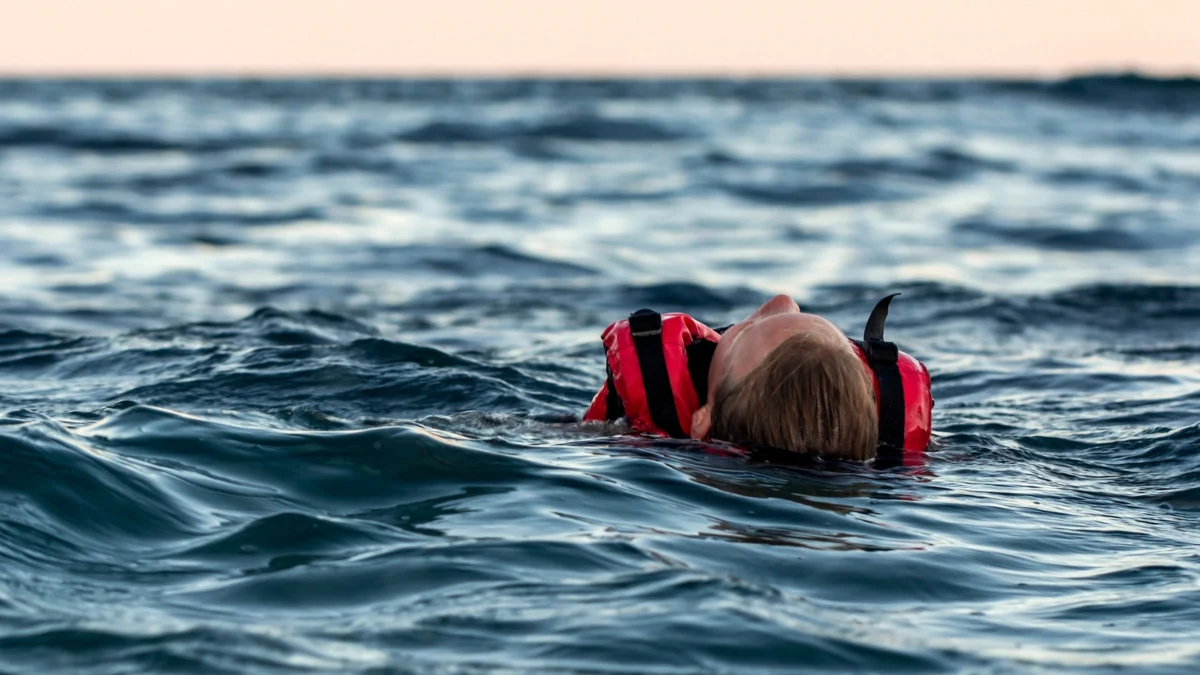
To counteract the cold shock response, water safety organizations such as the Royal National Lifeboat Institution advocate the "Float to Live" protocol. Victims are instructed to suppress the urge to panic, lean backward, and spread their limbs to keep the facial airway clear until hyperventilation subsides. Modern personal flotation devices are engineered to position the body automatically into this posture, though the technique remains viable even without buoyancy aids. Furthermore, researchers note that physiological habituation can mitigate the severity of cold-water shock; regular, controlled exposure to low temperatures blunts the sympathetic response for months, a resilience that is likewise enhanced by entering cold water gradually rather than diving in abruptly.
Stage Two: Progressive Swimming Failure and Neuromuscular Degradation
For those who successfully navigate the initial cold shock, a secondary danger emerges over the subsequent half-hour as the thermal deficit works its way from the body’s exterior inward. As peripheral limbs, skeletal muscles, and extremities chill, neuromuscular function deteriorates rapidly.
Skin temperatures dropping below 15 degrees Celsius severely impair fine motor control in the fingers, while complete tactile numbness typically sets in below 8 degrees Celsius (46 degrees Fahrenheit). This localized paralysis robs the swimmer of manual dexterity, destroying their ability to execute functional tasks such as maintaining a grip on an overturned watercraft, signaling for help, or hoisting themselves out of the water, all while core body temperature remains deceptively near normal.
During this stage, victims face a critical tactical decision: attempt to swim toward distant safety or remain stationary to conserve energy. In 12-degree Celsius water, an average person in swimwear can travel approximately 1,250 meters before experiencing absolute swimming failure, while those wearing heavy clothing will fail at roughly 800 meters due to hydrodynamic drag and water weight. Individuals opting to swim must utilize a backstroke, relying exclusively on leg kicks while keeping arms tightly pinned to the torso to minimize convective heat loss.
If safe harbor is beyond physical reach, abandoning self-rescue swimming in favor of heat-conservation postures—specifically the Heat Escape Lessening Position (HELP), which draws knees to the chest and arms tightly against the ribs—is paramount. Active swimming dramatically accelerates blood circulation to chilled extremities, hastening the onset of total physical failure.
Stage Three: The Onset of Hypothermia and Metabolic Standby
When cold exposure extends beyond thirty minutes, core body temperatures frequently drop below 35 degrees Celsius (95 degrees Fahrenheit), officially establishing clinical hypothermia. As internal temperatures decline, cognitive processing, decision-making capabilities, and conscious awareness become severely clouded. Below approximately 30 degrees Celsius, unconsciousness typically ensues, frequently leading directly to passive drowning if the airway is unmanaged.
However, medical literature documents anomalous instances where severe hypothermia victims have been successfully resuscitated hours after cardiac arrest. Extreme cold can force the human brain into a metabolic standby mode that drastically reduces oxygen demand, occasionally preventing permanent neurological damage. Yet, researchers emphasize that this protective metabolic suppression cannot be relied upon in typical recreational accidents. In accidental immersion scenarios, the fatal cardiac arrest induced by the initial cold shock response frequently occurs long before the body has cooled sufficiently to enter this protective metabolic stasis.
Stage Four: Circum-Rescue Collapse and the Dangers of Extraction
One of the most counterintuitive and lethal phases of cold-water immersion occurs precisely at the moment of rescue, or immediately afterward. Documented frequently enough to eliminate statistical coincidence, circum-rescue collapse accounts for numerous fatalities among individuals who successfully survived the initial shock, swimming failure, and hypothermia phases.
Historically, post-rescue mortality was attributed solely to "afterdrop"—the continued cooling of core body temperature caused by cold peripheral blood returning to the central circulation once external rewarming begins. While afterdrop remains a verified physiological phenomenon, contemporary medical science points to a more immediate hemodynamic crisis: the sudden loss of hydrostatic pressure.
While submerged, the surrounding water exerts immense pressure on the human body, forcing blood out of the extremities and into the core vascular system. When a victim is suddenly extracted from the water, this external pressure vanishes instantaneously, allowing blood to rush back into the lower extremities. This redistribution triggers a catastrophic drop in systemic blood pressure, which is severely exacerbated if the victim is pulled vertically—such as during a helicopter winch extraction.
To mitigate this drop in blood pressure, emergency medical protocols now mandate that rescuers keep extraction victims in a horizontal position during and immediately following removal from the water. Additionally, researchers theorize that psychological relief triggers a sudden "parasympathetic surge," abruptly shifting the nervous system from the hyper-aroused fight-or-flight state to a rest-and-digest profile, further compromising vascular tone and blood pressure stability.
Broader Implications for Water Safety and Public Policy
The comprehensive review by Leuci and Carenzo underscores that while traditional water safety messaging remains foundational—including environmental awareness, route planning, and the mandatory utilization of personal flotation devices—understanding the precise physiological mechanics of aquatic immersion is equally critical.
Public safety officials and emergency response agencies are increasingly utilizing these insights to revise rescue protocols and public education campaigns. By shifting the narrative from a generalized fear of hypothermia to a targeted awareness of cold shock and circum-rescue collapse, safety advocates hope to equip outdoor enthusiasts with the actionable survival tactics necessary to bridge the fatal gap between immersion and rescue.


 Lukman Taruna Persada Ramadan

 Tatiana Tantri Indah Sari

 Budi Mulyono