Tatiana Tantri Indah Sari
Delta Air Lines has officially lowered its full-year 2026 profit guidance, attributing the downward revision to persistent and significant increases in global jet fuel prices. Despite the tempered financial expectations, the major U.S. carrier maintains that it will remain profitable throughout the fiscal year, buoyed by robust passenger demand, strong corporate travel recovery, and strategic operational adjustments. The announcement, delivered by senior corporate leadership, highlights the ongoing vulnerability of the aviation sector to commodity price volatility even as passenger volumes approach and exceed pre-pandemic highs.
According to updated financial disclosures provided by the airline, Delta is now forecasting its earnings per share for the 2026 fiscal year to range between $5.10 and $5.60. This represents a notable reduction from the company’s original financial projections released in previous quarters, which anticipated earnings per share to land between $6.50 and $7.50. The adjustment reflects a rapidly shifting economic landscape characterized by geopolitical tensions, supply chain constraints in the petroleum refining sector, and fluctuating crude oil benchmarks that have directly translated into elevated operating expenses for commercial airlines.
Financial Guidance and Executive Commentary
During a media briefing addressing the revised guidance, Delta Air Lines Chief Financial Officer Erik Snell detailed the primary drivers behind the financial recalibration. Snell pointed directly to the steep escalation in jet fuel expenses as the singular catalyst forcing the adjustment. As of Thursday evening preceding the announcement, jet fuel prices had climbed to an average of $4.50 per gallon, a threshold significantly higher than the internal budget assumptions the airline had established at the start of the strategic planning cycle.
Snell informed reporters and industry analysts that the sustained elevation in fuel pricing would force the airline to absorb an estimated $6 billion in additional fuel expenses over the course of the calendar year. However, the chief financial officer emphasized that the carrier is not entering this period of volatility entirely unprotected. Delta has already successfully accrued $90 million in financial mitigations through structured hedging strategies and operational efficiencies, which will help cushion the blow of the multi-billion-dollar expense surge.
Financial markets and airline industry observers closely monitor Delta’s guidance revisions, as the Atlanta-based carrier is traditionally viewed by Wall Street as a bellwether for the broader commercial aviation sector. The ability of Delta to project continued profitability despite absorbing such a massive macroeconomic shock underscores the underlying structural resilience the airline has built through premium product segmentation, loyalty program profitability, and disciplined capacity management.
Fleet Modernization Amid Economic Headwinds
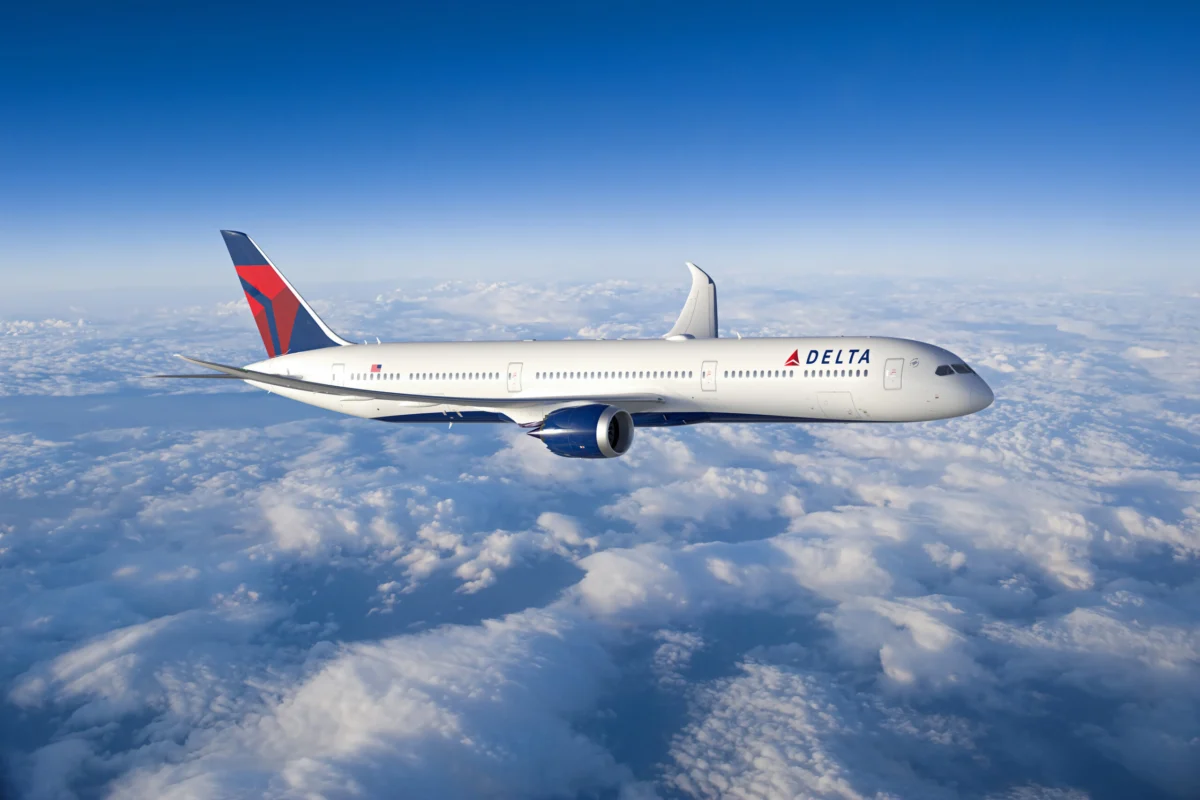
The profit outlook revision arrives concurrently with major capital allocation announcements by the carrier, including a substantial fleet modernization initiative. Delta Air Lines recently confirmed an agreement to order up to 60 Boeing 787 Dreamliner aircraft, a strategic move designed to expand and modernize its widebody fleet over the coming decade. This acquisition underscores Delta’s long-term commitment to fleet efficiency, passenger comfort, and international route expansion.
The Boeing 787 Dreamliner family is renowned for its superior fuel efficiency, burning up to 25 percent less fuel and producing significantly lower emissions compared to the older widebody aircraft it is slated to replace. While the immediate financial horizon is clouded by high fuel costs, the integration of next-generation aircraft like the Dreamliner represents a crucial structural defense mechanism against future energy price shocks. By lowering the baseline fuel burn per available seat mile (ASM), Delta aims to structurally decouple its long-term operating margins from the volatile fluctuations of the global oil market.
Industry analysts note that fleet renewal is a delicate balancing act during periods of high capital expenditure and rising input costs. Delta’s management, however, has consistently defended its long-term capital investments, arguing that modernizing the fleet with advanced composite aircraft is essential for maintaining competitive cost structures on lucrative trans-Atlantic and trans-Pacific long-haul routes.
Chronology of the 2026 Financial Outlook
The path leading to Delta’s recent downward revision of its 2026 profit outlook is defined by a series of macroeconomic shifts and internal corporate milestones that have shaped the airline’s financial trajectory over the past year.
In early 2024 and 2025, commercial aviation experienced a prolonged period of pent-up travel demand, often referred to as revenge travel, which allowed major U.S. carriers to post record revenues and robust profit margins. During this post-pandemic recovery phase, jet fuel prices stabilized within a manageable band, enabling carriers to build optimistic long-term financial models. Delta initially formulated its multi-year strategic plan, including the $6.50 to $7.50 earnings-per-share target for 2026, under the assumption that crude oil and refined jet fuel would follow historical seasonal pricing trends.
However, entering late 2025 and moving into the first quarter of 2026, geopolitical instability in key energy-producing regions, combined with unexpected reductions in global refining capacity, triggered a sharp upward trajectory in petroleum product prices. Spot prices for jet fuel began to detach from broader crude benchmarks, creating a widening crack spread that disproportionately penalized airlines.
By the end of the first quarter of 2026, internal financial reviews at Delta revealed that the baseline fuel assumptions embedded in the annual budget were no longer tenable. Throughout March and April 2026, executive leadership conducted comprehensive stress tests on the airline’s financial model, assessing the limits of fare pass-through capabilities against consumer demand elasticity. Recognizing that consumers were beginning to show signs of price sensitivity on domestic itineraries, leadership concluded that a full cost-recovery via ticket price increases was neither feasible nor strategically prudent. Consequently, the decision was made to publicly lower the full-year earnings guidance during the subsequent media and investor briefing, ensuring transparency and aligning market expectations with current operating realities.

Supporting Data and Industry Context
To fully understand the gravity of Delta’s situation, it is necessary to examine the broader economic data governing the U.S. airline industry. Fuel is historically the second-largest operational expense for commercial airlines, frequently rivaling labor costs for the top spot depending on global market conditions. When jet fuel spikes by multiple dollars per gallon, the financial impact ripples rapidly through corporate income statements.
For Delta Air Lines, an airline that consumes billions of gallons of fuel annually to power its massive domestic and international network, a shift in the average price per gallon from baseline projections to $4.50 creates an immediate liquidity pressure point. To put the $6 billion in additional projected fuel expenses into perspective, that figure represents a double-digit percentage increase in the airline’s annual operating cost base.
Despite these headwinds, macroeconomic indicators for passenger demand remain relatively stable. Corporate travel, which lagged behind leisure travel during the initial post-pandemic recovery years, has shown steady, incremental growth throughout 2025 and into 2026. Premium cabin revenue—comprising Delta One, Delta Premium Select, and First Class—continues to outperform main cabin ticket sales, providing a vital margin buffer that helps absorb spikes in operating expenses.
Furthermore, Delta’s lucrative co-branded credit card partnership with American Express continues to generate billions of dollars in high-margin cash flow annually. This non-ticket revenue stream acts as a crucial financial shock absorber, enabling the airline to maintain profitability even when core transportation margins are compressed by external commodity pricing pressures.
Official Responses and Stakeholder Reactions
The reaction from financial markets to Delta’s revised guidance was swift, characterized by a moderate, orderly repricing of airline equities rather than a disorderly sell-off. Wall Street analysts generally praised management for its proactive transparency and realism. By addressing the fuel cost reality directly rather than attempting to artificially maintain an outdated forecast, Delta preserved its credibility with institutional investors and credit rating agencies.
Competitor airlines, including United Airlines, American Airlines, and Southwest Airlines, are facing identical macroeconomic pressures. Industry trade groups, such as Airlines for America (A4A), have repeatedly emphasized that sustained high energy costs place an undue burden on the U.S. transportation network, potentially threatening the affordability of air travel for consumers and slowing the broader economic recovery.
Labor unions representing Delta pilots, flight attendants, and ground personnel have also closely monitored the financial updates. With ongoing negotiations regarding compensation, productivity, and work rules, union representatives utilize corporate earnings reports and financial forecasts to advocate for competitive wages that reflect the hard work of frontline employees. Delta management has consistently maintained that its financial health, even with the adjusted profit outlook, remains strong enough to honor existing labor agreements and invest in employee well-being, reinforcing the mutual dependency between corporate success and workforce morale.
Broader Impact and Implications for the Aviation Sector
Delta Air Lines’ decision to lower its 2026 profit outlook serves as a case study in the vulnerability of modern global supply chains and transportation networks to geopolitical and commodity risks. The implications of this announcement extend far beyond the corporate headquarters in Atlanta, signaling broader trends for the global aviation industry.
First, the situation highlights the absolute necessity of robust fuel hedging programs and continuous fleet modernization. Airlines that lack disciplined risk-management frameworks or rely on aging, fuel-inefficient aircraft are disproportionately exposed to energy shocks. Delta’s dual strategy of accumulating financial mitigations—such as the reported $90 million in accrued offsets—and investing heavily in next-generation widebody aircraft like the Boeing 787 Dreamliner demonstrates a clear roadmap for long-term survival and profitability in an unpredictable energy market.
Second, the adjustment underscores the limits of consumer pricing power. While airlines successfully passed on surging costs to passengers during the immediate post-pandemic inflationary spike, consumer resistance has hardened. Travelers are increasingly comparing prices, utilizing digital booking tools, and exhibiting elasticity, forcing airlines to absorb a larger share of input cost increases rather than passing every dollar directly to the ticket buyer. This dynamic places a premium on internal cost discipline, network optimization, and ancillary revenue generation.
Finally, the resilience embedded in Delta’s forecast—projecting a healthy profit despite a $6 billion fuel penalty—proves that the structural reforms undertaken by the U.S. airline industry over the past decade have fundamentally strengthened its baseline financial health. Gone are the days when a sudden spike in crude oil prices inevitably pushed major legacy carriers into bankruptcy. Instead, modern airlines enter periods of macroeconomic turbulence equipped with diversified revenue streams, fortified balance sheets, and sophisticated revenue management systems.
As the year progresses, industry stakeholders will continue to track crude oil inventories, Middle Eastern geopolitical developments, and domestic consumer spending data. For Delta Air Lines, successfully navigating the remainder of 2026 will depend on its ability to execute its capacity plans, maximize premium revenue generation, and prudently manage its capital expenditures while keeping a watchful eye on the fluctuating global energy market.




 Gabriela Annisa

 Lukman Taruna Persada Ramadan

 Anjar Salim

 Budi Mulyono