
 Walid Sujud Trenggono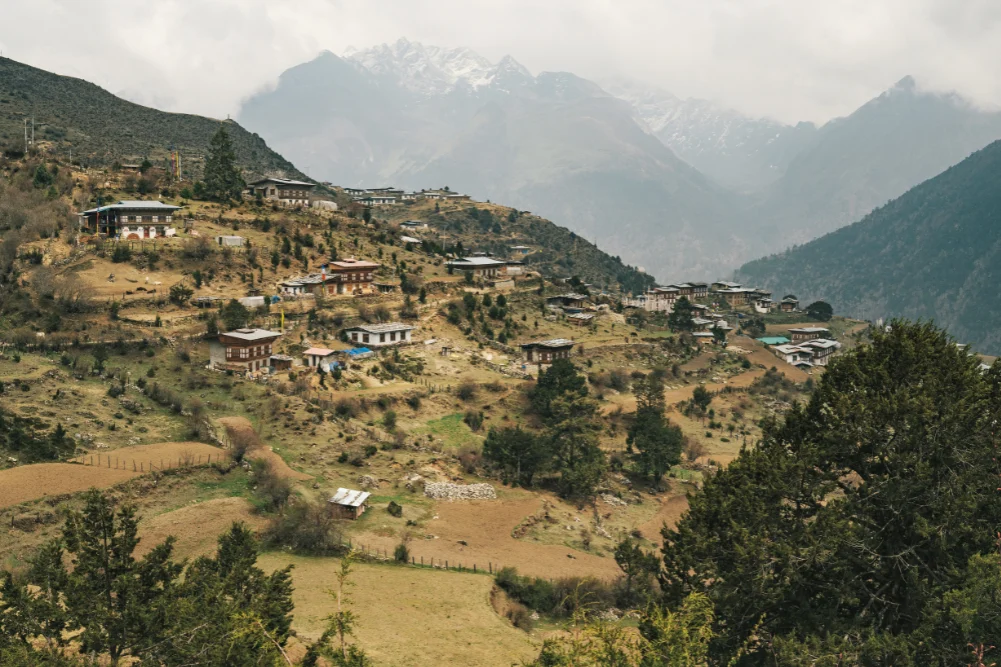
In an era defined by hyper-connectivity, relentless productivity demands, and the pervasive anxieties of the digital age, a growing demographic of overworked professionals is seeking refuge in unconventional destinations. For one solo parent and small business owner, the breaking point arrived not with a catastrophic failure, but in the mundane chaos of a Tuesday morning: an overflowing inbox, burnt toast, and a child’s plea to put the phone away. Stretching thin across dual business ventures, aging parents, and childcare, the realization emerged that a standard vacation would not suffice. The intervention required was far more radical: a complete cessation of modern momentum before reaching total burnout. The destination chosen for this profound reset was the Kingdom of Bhutan, a landlocked Himalayan nation globally renowned for prioritizing Gross National Happiness (GNH) over unbridled economic growth.
Bhutan stands as a unique geopolitical and cultural anomaly. Nestled between the economic and demographic superpowers of China and India, the country spans a rugged terrain with a population of approximately 760,000. Having never been colonized, Bhutan has maintained a fiercely independent cultural identity, historically pursuing a policy of deliberate isolationism. Foreign tourists were permitted entry only beginning in the 1970s, while television and the internet were introduced as late as 1999. Today, the nation remains the world’s first and only carbon-negative country, blanketed by dense, protected forests. Visitors find a landscape entirely devoid of global commercial infrastructure—no fast-food chains, no billboards, and no traffic lights.
Arrival and the Himalayan Threshold
The journey began with a flight weaving precariously through the towering Himalayan peaks toward Paro International Airport, widely regarded as one of the most challenging commercial aviation approaches in the world. Upon disembarking, travelers encounter a stark departure from the frantic pace of modern transit hubs. Rather than rushing toward baggage claim, passengers frequently stand transfixed on the tarmac, overwhelmed by the silent majesty of the surrounding peaks.
This initial sensory pause set the tone for an itinerary designed to strip away modern distractions. The first major phase of the expedition involved a rigorous immersion in Bhutan’s spiritual infrastructure: a night spent at the 12th-century Dodedrak Monastery. Eschewing modern conveniences, the journey required a grueling two-and-a-half-hour ascent up a steep mountain trail, compounded by inclement weather. Arriving at twilight, the visitor was greeted by the ancient architecture of the monastery glowing against the alpine sky, illuminated by flickering butter lamps and the dense scent of juniper incense.
Participating in evening prayers alongside dozens of burgundy-robed monks chanting ancient scriptures provided an immediate physiological shift. The rhythmic vibrations of communal chanting served as a physical antidote to chronic stress, illustrating the profound integration of spirituality into daily Bhutanese life—a stark contrast to the secularized, commercialized wellness retreats common in Western societies.
The Remote Majesty of Laya
A central objective of the expedition was a trek to Laya, one of the highest and most remote inhabited settlements on Earth. Perched at an altitude of 3,800 meters and accessible exclusively by foot or pack animal, Laya is home to roughly 1,600 indigenous Layap people of Tibetan descent. The community inhabits traditional stone houses clustered beneath towering snow-capped peaks, including the sacred Tiger’s Peak.
Local guide Pema Wangchuk describes the geographical and cultural uniqueness of the region, noting that Laya feels like a boundary where the earth meets the sky. The social fabric of the village relies heavily on mutual aid and collective reciprocity, where communal labor—such as collaborative house-building—is standard practice, and hospitality is extended unconditionally to every visitor.
Accommodation during this leg of the journey was hosted within the household of Am Pem, a recently widowed matriarch. The traditional alpine dwelling featured a central woodfire stove serving simultaneously as a heat source, kitchen, and sleeping quarters. Despite the biting mountain cold, the stay coincided with the Bumkor Festival, a biennial cultural celebration. The event features sacred texts carried in grand processions, accompanied by traditional music, dance, and shared feasting, uniting the entire community in a synchronized display of cultural heritage.
Conversations with local residents during the festival underscored a fundamental philosophical divergence from Western consumerism. When asked about the secret to longevity and fulfillment, Am Pem articulated a philosophy rooted in sufficiency rather than accumulation: prioritizing contentment over greed and maximizing the utility of immediate resources. This minimalist ethos starkly contrasted with the perpetual dissatisfaction prevalent in advanced economies, prompting a critical reevaluation of personal and societal metrics of success.
Institutionalized Wellbeing and Gross National Happiness
Bhutan’s approach to human welfare is systematically embedded within its governance and national policy framework. Unlike nations where wellbeing is commodified into a multi-billion-dollar lifestyle industry, Bhutan treats healthcare, education, and environmental stewardship as fundamental, guaranteed rights. Trees are legally protected, education and medical services are universally provided without cost, and a matriarchal social structure emphasizes collective care and community support.
At the core of this societal model is the philosophy of Gross National Happiness (GNH), coined in 1972 by the fourth King of Bhutan, Jigme Singye Wangchuck. GNH serves as an explicit metric for national progress, superseding Gross Domestic Product (GDP). Under this framework, proposed public policies, infrastructure projects, and legislative acts must pass rigorous assessment through the GNH lens. Any initiative deemed detrimental to environmental preservation, cultural heritage, or community cohesion is systematically rejected.
According to data from the Bhutanese GNH Index, approximately half of the national population consistently reports high levels of subjective wellbeing, a testament to the alignment between state policy and human flourishing. This collective orientation is instilled from early childhood, fostering a pervasive social inquiry: "How can I help my community?"
The institutional and cultural commitment to healing extends to natural phenomena, such as the renowned Gasa hot springs. Far from commercialized luxury spas, these geothermal baths consist of rustic communal pools where citizens congregate to seek therapeutic relief. Believed to possess healing properties infused by a 13th-century saint, the springs serve as an egalitarian space where individuals from diverse socioeconomic backgrounds—ranging from yak herders to visiting medical students—interact on equal terms.
Societal Implications and the Paradox of Impermanence
Bhutanese culture also maintains a radically different relationship with mortality compared to industrialized Western nations. While Western societies frequently marginalize or sanitize the concept of death, traditional Bhutanese philosophy encourages individuals to contemplate mortality multiple times a day. Rather than inducing morbidity or despair, this regular acknowledgment of impermanence is viewed as a catalyst for productivity, mindfulness, and appreciation of the present moment.
Furthermore, the national rhythm is deliberately decelerated. Urban speed limits are strictly capped at 20 kilometers per hour, enforcing a physical and psychological pacing that contrasts sharply with the frantic velocities of global metropolitan centers.
Long-Term Integration and Post-Travel Analysis
Evaluating the efficacy of such transformative travel requires longitudinal perspective. Six months following the return to conventional, high-stress professional and domestic environments, the traveler reported that while external pressures—including overscheduled routines and intense administrative demands—persisted, internal coping mechanisms had fundamentally evolved.
The psychological imprint of the journey—recalled through mental imagery of fluttering prayer flags, monastery chants, and the communal rhythms of the Bumkor Festival—serves as a cognitive anchor. These touchstones provide immediate psychological stabilization during periods of acute stress, enabling individuals to resist the compulsion toward overcommitment and chronic scarcity mindsets.
Ultimately, the journey to Bhutan demonstrated that sustainable wellbeing is not achieved through luxury escapes or material acquisition, but through the deliberate cultivation of presence, community connection, and the psychological discipline of recognizing sufficiency. As societies worldwide grapple with escalating mental health crises and burnout epidemics, the Bhutanese model offers vital empirical and philosophical lessons on the structural prerequisites for human contentment.




 Budi Mulyono
 Lukman Taruna Persada Ramadan
 Tatiana Tantri Indah Sari
 Anjar Salim
 Chandra Hamzah