
 Tatiana Tantri Indah Sari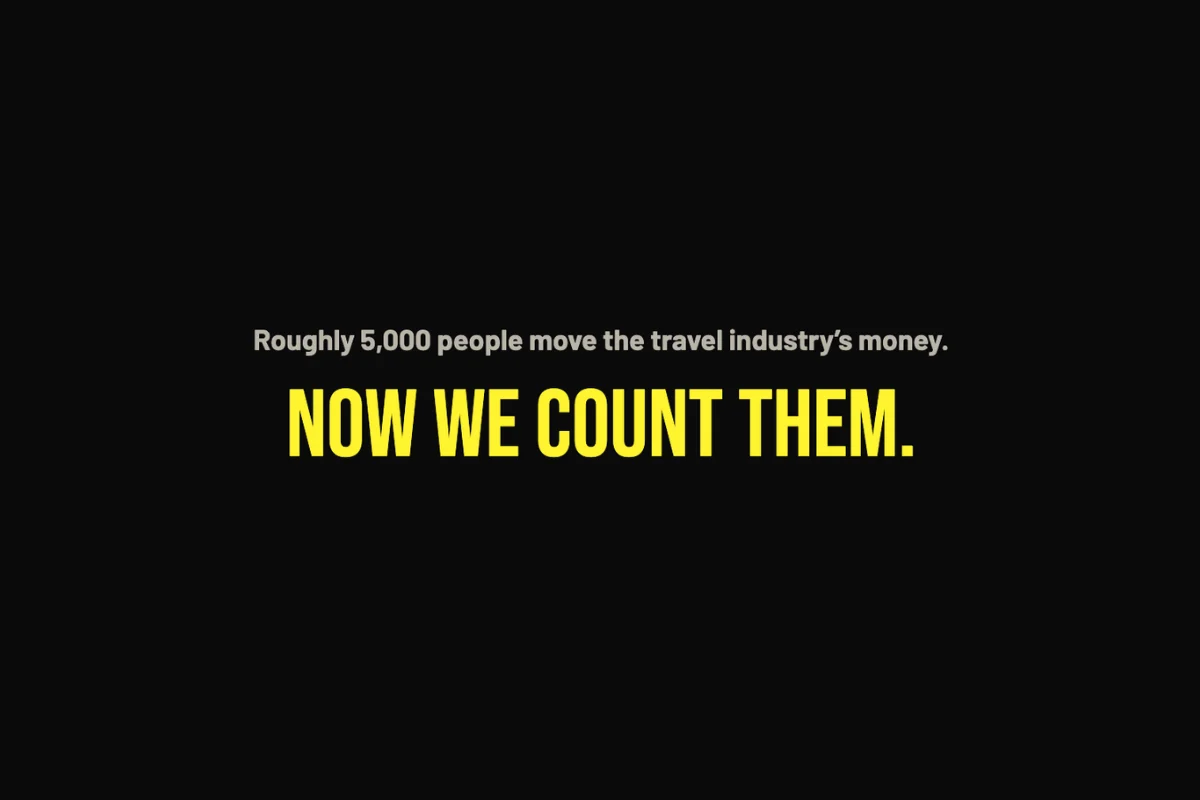
For decades, the global travel industry has measured its health through a rearview mirror. Success has traditionally been quantified by lagging indicators—arrivals, bookings, room nights, airline load factors, and overall consumer spending. However, a fundamental paradigm shift is underway in how business intelligence evaluates the $11 trillion global tourism economy. Analysts, institutional investors, and market strategists are increasingly pivoting their attention away from the "last dollar" spent by a traveler at the end of a journey and toward the "next dollar" allocated by the executives, financiers, and state ministers who dictate where those journeys can happen in the first place.
This structural evolution marks a significant milestone for industry publisher Skift, which formally unveiled a comprehensive analytical framework and a new tracking census known as the Skift 5000 at the Skift Global Forum. Rather than focusing solely on consumer trends, this initiative maps the approximately 5,000 individuals worldwide who hold direct, material authority over the financial capital, corporate assets, technological systems, and operational capacity that shape the future of global mobility and hospitality.
The Philosophy of Capital Allocation: Leading Versus Lagging Indicators
To understand why the travel sector is refocusing its analytical lens, one must examine the mechanics of how the industry operates. A traveler can only book a hotel room after an investor has financed its construction, a brand has been selected, and a distribution strategy has been executed. An airline passenger can only secure a seat after a network planning team has allocated a multi-million-dollar aircraft to a specific international route. A consumer can only seamlessly book an itinerary through a corporate credit card portal after a financial institution decides to invest heavily in proprietary travel infrastructure rather than outsourcing it to third parties.
In essence, consumer demand merely records the consequences of decisions made much earlier in the corporate and political pipelines. Capital allocation, by contrast, is a leading indicator that predicts what those consumer choices will look like months or years down the line. By studying where money moves before a traveler ever opens an app, analysts can anticipate shifts in market dominance, infrastructure development, and pricing power long before they register on traditional balance sheets.
A Chronology of Transformation: From Megadeals to Micro-Allocations
The immense scale and hidden nature of travel capital allocation have become acutely visible through a series of high-stakes transactions over the past decade. The landscape was famously altered in March 2016, when hospitality giant Marriott International engaged in a fierce, multi-billion-dollar bidding war against Chinese insurer Anbang Insurance Group for control of Starwood Hotels & Resorts. The bidding eventually peaked at $13.6 billion, resulting in the creation of the largest hotel conglomerate in the world—a monumental structural shift in global hospitality that occurred entirely without public consumer participation.
Fast forward a decade to 2026, and the mechanisms of capital movement have grown even more complex and varied. The Fertitta family executed a private buyout of Caesars Entertainment valued at $17.6 billion, taking the casino-resort operator off the public stock market entirely. Simultaneously, the first half of 2026 witnessed a wave of consolidation, public-to-private transactions, and strategic reallocations. Notably, credit card giants and financial institutions committed nearly $6 billion directly into the travel distribution and booking ecosystem, highlighted by Capital One’s acquisition of Brex for $5.15 billion.
Furthermore, mega-deals represent only the tip of the iceberg. Beneath the surface of public announcements lies a vast, fragmented ecosystem of capital deployment. During the first six months of 2026, travel mergers and acquisitions surpassed $20 in disclosed deal value for every $1 raised by early-stage startups. However, this figure fails to capture the full picture: more than 54% of all travel acquisitions completed during the first half of 2026 occurred without any publicly disclosed financial terms.
Data and Visibility Challenges in Modern Tourism Finance
The structural opacity of the travel sector has long presented a challenge for financial analysts and economists. While venture capital funding is heavily tracked due to its transparent nature and public reporting requirements, the vast majority of capital movement within incumbent travel enterprises remains obscured.
For instance, the true costs associated with replacing legacy reservation systems—some of which have been operational for over four decades—are rarely made public. Airline fleet expansions, such as massive orders of 1,000 aircraft placed concurrently by Indian carriers, are routinely announced using manufacturer list prices that bear little resemblance to the actual, highly negotiated transaction values. Marketing expenditures, which often encompass billions of dollars per quarter for major online travel agencies and hotel brands, are frequently compressed into a single line item on quarterly corporate filings. Additionally, tourism infrastructure budgets are routinely fractured across municipal governments, national ministries, sovereign wealth funds, and multi-year public-private partnerships.
This lack of standardization has historically prevented the industry from analyzing aviation, hospitality, financial technology, corporate finance, and government tourism policy within a unified framework. Every sector has tended to view capital allocation through its own isolated lens, ignoring the cross-sectoral ripples generated by a single corporate balance sheet decision.
Introducing the Skift 5000: Mapping the Architects of Global Travel
To solve this analytical blind spot, the Skift 5000 establishes a definitive baseline for who actually controls the financial levers of the global tourism economy. Developed through rigorous primary-source verification, the framework isolates the institutions—including major corporations, state tourism ministries, private equity firms, institutional lenders, and asset owners—that direct material travel capital.
The initiative deliberately excludes advisory, consulting, and influencer roles that lack direct decision-making authority. Instead, it focuses exclusively on individuals with actual budget ownership. The resulting universe encompasses roughly 4,000 to 6,000 active roles globally, with 5000 utilized as a stable working median for a dynamic population in constant professional flux.
This global ecosystem of decision-makers is categorized into nine distinct operational groups:
- Corporate operators and executive leadership teams managing operational budgets.
- Financial investors and private equity firms executing mergers, acquisitions, and restructuring.
- Aviation network planners and fleet managers dictating global airline capacity.
- Hospitality asset owners and real estate developers financing physical room inventory.
- Financial technology and banking executives controlling payment gateways and reward ecosystems.
- Marketing chiefs orchestrating large-scale customer acquisition and digital advertising spend.
- Government ministers and sovereign entities directing public tourism infrastructure and regulatory policy.
- Distribution and booking path architects defining consumer access channels.
- Enterprise technology leaders overseeing the modernization of legacy reservations and operational systems.
Broader Industry Implications and Future Outlook
The introduction of the Skift 5000 and its accompanying capital allocation tracking systems arrives at a critical juncture for the travel economy. As traditional industry metrics struggle to keep pace with rapid consolidation, artificial intelligence integration, and shifting macroeconomic conditions, understanding the intent behind financial flows is more valuable than ever.
Industry experts note that tracking capital allocation allows stakeholders to trace the direct lineage of market trends. A minor venture investment or seed-stage backing in an artificial intelligence travel assistant during the spring can rapidly evolve into a multi-million-dollar corporate acquisition by mid-summer—a trajectory demonstrated recently by Expedia’s backing and subsequent purchase of AI trip-planner Layla. Similarly, corporate decisions regarding share buybacks versus long-term technological reinvestment directly dictate a company’s resilience against potential economic downturns.
By bringing transparency to the shadows of private equity, confidential distribution contracts, unlisted acquisition prices, and sovereign infrastructure spending, the industry moves closer to a unified financial understanding. The evolution from tracking the "last dollar" of consumer expenditure to monitoring the "next dollar" of institutional capital allocation ensures that the travel sector can no longer be viewed merely as a collection of fragmented vertical markets, but as a deeply interconnected global financial ecosystem.




 Lukman Taruna Persada Ramadan
 Anjar Salim

 Chandra Hamzah