Tatiana Tantri Indah Sari
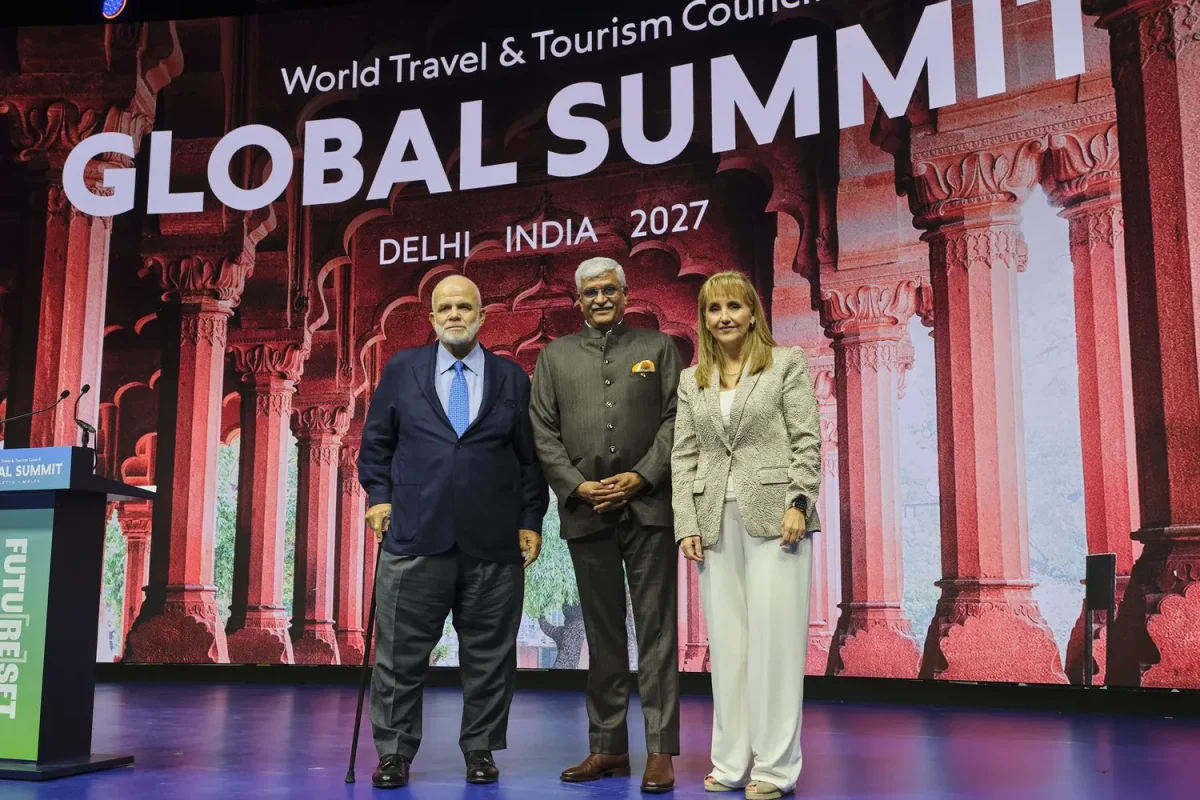
At the prestigious World Travel and Tourism Council (WTTC) Global Summit held in Malta, Indian Tourism Minister Gajendra Singh Shekhawat unveiled an extraordinarily ambitious long-term roadmap for the nation’s travel sector. Addressing an international audience of industry leaders, policymakers, and global hospitality executives, Shekhawat declared that India aims to scale its international tourist arrivals from a modest 9.2 million recorded recently to a staggering 100 million visitors by the year 2047. This target coincides with the centenary of India’s independence, a milestone the government has framed as "Viksit Bharat" or Developed India, wherein tourism is expected to serve as a cornerstone for economic expansion, employment generation, and foreign exchange earnings.
To achieve this exponential tenfold growth over the next two decades, the minister outlined a strategic framework anchored on four foundational pillars, which he termed the four "P’s": political will, public spending, strategic partnership, and people’s participation. While the vision statement was met with optimism regarding the country’s vast cultural, historical, and geographical potential, travel analysts and industry stakeholders immediately juxtaposed these long-range aspirations against a severe and persistent downturn facing India’s immediate tourism landscape.
The Contrast Between Long-Term Ambitions and Immediate Realities
The chasm between India’s 2047 vision and its current operating environment is stark. Official statistics indicate that India welcomed only 9.2 million foreign tourists, representing a concerning 9.4 percent decline compared to the previous year. Furthermore, these figures sit approximately 17 percent below the historical pre-pandemic peak of 10.9 million international arrivals recorded in 2019.
This downward trajectory marks two consecutive years of declining foreign tourist numbers, creating a formidable headwind for a sector that was widely expected to post a robust post-pandemic recovery. Compounding this challenge, early projections for the current year indicate that the downward trend may not reverse anytime soon. A comprehensive recent report published by the PHD Chamber of Commerce and Industry (PHDCCI) estimates that inbound tourism to India could plummet by an additional 15 to 20 percent.
The primary catalyst for this anticipated contraction is geopolitical instability, specifically the ongoing conflict involving Iran. The war has severely disrupted vital air corridors traditionally utilized by long-haul carriers flying from Europe, North America, and parts of the Middle East. Consequently, airlines have been forced to reroute flights, leading to extended flight durations, escalating jet fuel costs, and a subsequent spike in airfares. For long-haul travelers who form the core of high-spending tourists to India, these logistical hurdles and cost escalations have made alternative destinations in Southeast Asia and Europe significantly more attractive and accessible.
Decoding the Four Pillars of India’s Tourism Strategy
Minister Shekhawat’s address in Malta attempted to shift the narrative from short-term vulnerabilities to structural transformation. By emphasizing political will, the tourism minister signaled that the central government intends to place tourism at the very heart of its national development agenda. This involves streamlining visa processes, enhancing tourist police deployments, and improving ease of doing business for hospitality investors.
Public spending constitutes the second pillar, addressing the historic deficit in world-class tourism infrastructure. Over successive fiscal budgets, the Indian government has incrementally increased allocations for the Swadesh Darshan and PRASHAD schemes, aimed at developing thematic tourist circuits and upgrading religious and heritage infrastructure. However, experts argue that federal spending alone is insufficient, making the third pillar—public-private partnerships (PPPs)—crucial. Attracting foreign direct investment (FDI) into hotel development, modern convention centers, and integrated resort towns will be essential to accommodate an influx of millions of visitors.
The final pillar, people’s participation, underscores the philosophy of "Atithi Devo Bhava" (The guest is equivalent to God) scaled to a community level. Sustainable tourism models that empower local communities, preserve indigenous arts, and foster grassroots micro-enterprises are viewed as vital to ensuring that tourism growth is both inclusive and enduring.
A Historical Chronology of Inbound Tourism in India
To understand the magnitude of the 2047 target, it is instructive to trace the trajectory of India’s inbound tourism over the past two decades.
In the early 2000s, India’s "Incredible India!" global marketing campaign fundamentally transformed the country’s brand image, helping push arrivals past the 5-million mark by 2007. Throughout the 2010s, steady economic growth, improved airport connectivity, and the introduction of the Electronic Travel Authorization (e-Visa) scheme for a vast number of nationalities propelled numbers upward. By 2019, inbound arrivals reached an all-time high of 10.9 million, generating substantial employment and contributing significantly to the nation’s Gross Domestic Product (GDP).
The onset of the COVID-19 pandemic in early 2020 brought global travel to a near-complete standstill, resulting in an unprecedented 75 percent collapse in foreign arrivals to India that year. While domestic tourism rebounded remarkably quickly as domestic travelers explored their own country, international tourism recovery has lagged behind global averages. Bureaucratic delays in reinstating full e-Visa privileges for certain source markets, coupled with rising global inflation and regional geopolitical conflicts, stifled the anticipated rebound through 2024 and 2025.
Achieving the Mathematical Reality of 100 Million Arrivals
The arithmetic of reaching 100 million international arrivals by 2047 demands sustained, aggressive expansion. Achieving this goal requires maintaining an average annual compound growth rate (CAGR) of 12 percent or higher over the next twenty-one years.
In global tourism history, very few nations have sustained such high growth rates over multi-decade periods without unprecedented structural shifts in infrastructure and geopolitics. For instance, countries like France, Spain, and the United States—the world’s leading destinations—grew their tourism sectors over generations through open-border policies, high-speed rail networks, and massive marketing budgets. For India to replicate this trajectory, several structural bottlenecks must be systematically dismantled.
Infrastructure and Aviation Challenges
Chief among these bottlenecks is aviation infrastructure and connectivity. Despite significant strides made by domestic carriers like IndiGo and Air India in placing historic aircraft orders, India’s international seat capacity remains constrained. Many foreign carriers face bilateral air service agreement caps that limit their ability to increase flight frequencies to Indian metros. Expanding airport capacity beyond the newly inaugurated greenfield airports—such as Mopa in Goa, Navi Mumbai, and Noida International Airport—will be critical to handling the sheer volume of anticipated traffic.
Furthermore, domestic ground transportation requires a massive overhaul. While highway construction has accelerated dramatically, the comfort, safety, and cleanliness of last-mile connectivity remain inconsistent across various states. High-speed rail networks, akin to the bullet train project currently underway between Mumbai and Ahmedabad, need to be expanded across key tourist corridors, such as the Golden Triangle (Delhi-Agra-Jaipur), to facilitate seamless travel for international visitors.
Economic and Geopolitical Implications
The stakes for India’s economy are immense. Tourism is one of the most effective sectors for job creation, offering employment opportunities ranging from unskilled hospitality roles to high-tech destination management services. It also supports a vast web of allied industries, including handicraft artisans, transport operators, agriculture suppliers, and event management firms.
However, the short-term economic outlook remains cautious. Industry bodies warn that if geopolitical tensions in the Middle East persist and air corridors remain compromised, India’s hospitality sector may experience compressed profit margins and lower occupancies in the near term. Luxury hotels in major cultural hubs may weather the storm by relying on robust domestic corporate and leisure demand, but heritage properties and inbound-heavy tour operators will require targeted government relief or promotional stimuli.
Global Reactions at the WTTC Summit
The announcement in Malta drew mixed reactions from global tourism leaders. Manfredi Lefebvre d’Ovidio, Chairman of the WTTC, acknowledged India’s vast untapped potential, noting that the country possesses a diverse portfolio of natural, cultural, and spiritual tourism assets that few nations can rival. Gloria Guevara, former President and CEO of the WTTC, echoed these sentiments, emphasizing that sustained government commitment and digitization are the primary keys to unlocking emerging market potential.
At the same time, international travel analysts pointed out that destination management and sustainability must accompany volume growth. Over-tourism in fragile ecosystems, heritage sites, and Himalayan hill stations poses a genuine threat if visitor inflows are not managed through intelligent zoning and carrying-capacity assessments.
Path Forward: Turning Vision into Execution
As Minister Shekhawat concluded his remarks at the summit, the underlying message was clear: India’s tourism sector stands at a critical crossroads. The ambition to welcome 100 million international visitors by 2047 is not merely a numbers game; it is a declaration of economic intent.
However, bridging the gap between today’s declining arrival statistics and tomorrow’s grand vision will require relentless execution. By addressing immediate aviation bottlenecks, diversifying source markets beyond Western nations, enhancing safety standards, and aggressively pursuing public-private partnerships, India can lay a resilient foundation for its tourism future. Whether the nation can navigate current geopolitical disruptions and achieve its historic two-decade target will depend heavily on how swiftly and effectively the four strategic "P’s" are translated from political rhetoric into on-the-ground reality.




 Lukman Taruna Persada Ramadan

 Anjar Salim

 Budi Mulyono