
 Anjar Salim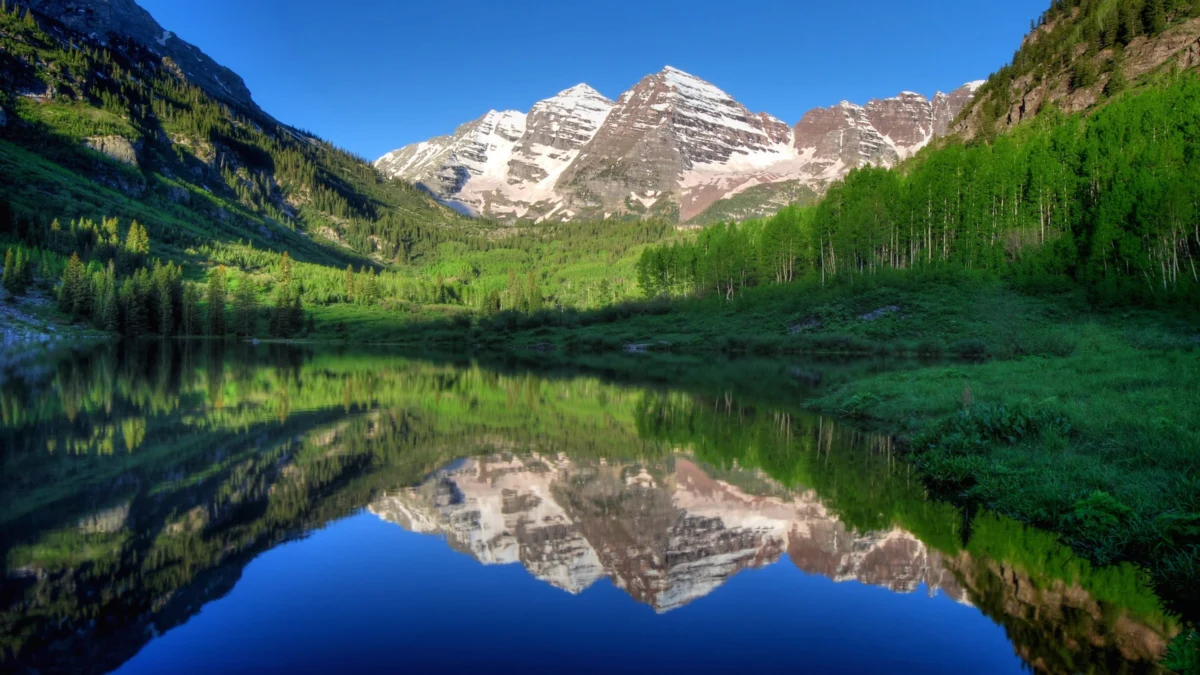
The rugged beauty of the Maroon Bells-Snowmass Wilderness became the site of a high-stakes rescue operation on Saturday, May 30, 2026, after a hiker survived a harrowing 200-foot slide on the snowy slopes of Buckskin Pass. The incident, which occurred during the transitional period between spring and summer, highlights a recurring danger in the Colorado Rockies: the deceptive nature of high-alpine environments where winter conditions often linger months after the lower valleys have thawed.
Emergency services were alerted to the situation shortly after 2:00 P.M. when a distress call reached the Pitkin County Sheriff’s Office. The hiker, whose identity has not been disclosed by authorities, was traversing a section of the trail at approximately 11,300 feet in elevation when they lost their footing. The resulting 200-foot fall down a steep, snow-covered incline left the individual with non-life-threatening but significant injuries, necessitating a complex extraction from one of the most iconic yet unforgiving landscapes in the United States.
Chronology of the Rescue Operation
The response to the May 30 incident was a coordinated effort between the Pitkin County Sheriff’s Office and Mountain Rescue Aspen (MRA), a volunteer-based organization specialized in high-altitude technical saves. Upon receiving the 2:07 P.M. dispatch, MRA mobilized a robust force of 12 personnel, divided into three specialized field teams.
The logistics of the rescue were dictated by the remote location of the accident. Buckskin Pass is situated roughly 3.5 miles from the nearest trailhead, a distance that requires significant physical exertion even under ideal conditions. Rescuers had to contend with the same high-altitude snow and slush that likely contributed to the hiker’s initial fall.
While professional rescuers were en route, the situation was stabilized by the quick thinking of bystanders. A group of hikers in the vicinity reached the fallen individual shortly after the slide, providing immediate basic first aid and emotional support. This "Good Samaritan" intervention is often cited by search and rescue (SAR) teams as a critical factor in preventing shock and hypothermia in high-altitude trauma cases.
By the time MRA field teams arrived on the scene, they were able to conduct a formal medical assessment and stabilize the hiker’s injuries for transport. The extraction process was remarkably efficient; despite the technical terrain and the need to navigate snowy passes, the teams successfully brought the hiker off the mountain in just under three hours. Upon reaching the trailhead, the patient was transferred to a waiting ambulance and transported to Aspen Valley Hospital for further treatment.
The Environmental Context of Buckskin Pass
To understand the severity of the incident, one must consider the specific geography of the Maroon Bells-Snowmass Wilderness. Buckskin Pass sits at an elevation of 12,400 feet, serving as one of the primary high points of the world-renowned Four Pass Loop. This 26-mile trekking circuit is a bucket-list destination for backpackers, crossing four mountain passes—Buckskin, West Maroon, Frigid Air, and Trail Rider—all of which exceed 12,000 feet.
The end of May is a notoriously volatile time in the Colorado high country. While the city of Aspen, located at approximately 8,000 feet, may experience mild spring temperatures and blooming flora, the terrain above 11,000 feet remains locked in a "fifth season" often referred to by locals as "mud season" or "shoulder season." During this window, the snowpack is often "rotten"—a term used to describe snow that has been weakened by internal melting, making it prone to collapsing under a hiker’s weight (post-holing) or acting as a slick, frictionless slide.
According to data from the U.S. Forest Service and the White River National Forest, deep snow drifts can persist on north-facing slopes and high passes well into late July or early August. For hikers coming from lower elevations or out-of-state, the transition from dry trail to a 45-degree snow slope can be sudden and catastrophic if they are not equipped with the proper traction and self-arrest tools.
Official Safety Mandates and Gear Requirements
In the wake of the rescue, Mountain Rescue Aspen and the Pitkin County Sheriff’s Office issued a joint statement via social media and official channels to educate the public on early-season safety. The core of their message focused on the necessity of technical gear and the psychological discipline required to turn back when conditions exceed one’s skill level.
"The Pitkin County Sheriff’s Office reminds climbers and hikers to be prepared for potential injuries in technical terrain, dress appropriately for changing mountain conditions, bring technical gear appropriate for the route, and to carry a two-way satellite communication device when traveling in remote areas where cell service may be unavailable," the MRA statement read.
Safety experts emphasize three specific pieces of equipment for those attempting high-alpine passes in May and June:
- Microspikes or Crampons: Standard hiking boots lack the bite necessary to hold on frozen morning snow. Traction devices are essential for maintaining a grip on inclines.
- Ice Axes: In the event of a slide, an ice axe is the only reliable tool for performing a "self-arrest," a technique where the hiker digs the pick of the axe into the snow to stop their descent. Without this tool, a slide on a steep slope can quickly accelerate to terminal velocity.
- Satellite Communication: As noted by the Sheriff’s Office, cell service in the Maroon Bells-Snowmass Wilderness is non-existent. Devices such as the Garmin inReach or Zoleo allow hikers to send an SOS with precise GPS coordinates, drastically reducing the "search" component of Search and Rescue.
Analysis of Search and Rescue Trends in Colorado
The rescue on Buckskin Pass is part of a broader trend of increasing SAR incidents in Colorado’s backcountry. As outdoor recreation continues to see record-breaking participation numbers, the strain on volunteer organizations like Mountain Rescue Aspen has intensified.
The Maroon Bells, often referred to as the "Deadly Bells," are particularly treacherous due to the composition of the rock. Unlike the solid granite of the Front Range or the Sierra Nevada, the Bells are composed of Maroon Formation siltstone—a sedimentary rock that is notoriously "rotten" and unstable. When this unstable rock is covered in a layer of melting snow, the risk of slips, trips, and falls increases exponentially.
Historical data from the Colorado Search and Rescue Association (CSAR) indicates that a significant percentage of spring rescues involve "unpreparedness for winter conditions." Many hikers plan their trips based on calendar dates rather than real-time mountain conditions. The incident on May 30 serves as a statistical reminder that in the high alpine, the calendar is often secondary to the snowpack.
Furthermore, the economic and physical toll of these rescues is substantial. While Colorado does not currently charge subjects for rescue—fearing that the threat of a bill might cause people to delay calling for help until it is too late—the operations rely on the selfless dedication of volunteers who often risk their own safety in technical terrain. The mobilization of 12 rescuers for a single hiker represents dozens of man-hours and thousands of dollars in equipment wear and tear.
Implications for the 2026 Hiking Season
As the 2026 summer season approaches, the Buckskin Pass incident acts as a harbinger for the months ahead. Forestry officials have noted that the snowpack levels for the current year remain within the median range, suggesting that the high passes of the Four Pass Loop may not be fully clear of snow until mid-summer.
For the thousands of tourists who flock to the Maroon Lake trailhead every year, the distinction between the "scenic stroll" around the lake and the "technical ascent" of the passes must be made clear. Local outfitters and guide services in Aspen are reporting an uptick in inquiries regarding trail conditions, a sign that public awareness may be increasing in the digital age. However, as the May 30 rescue proves, there is no substitute for physical preparedness and the correct equipment.
The hiker involved in the slide is expected to make a full recovery, thanks in large part to the rapid response of Mountain Rescue Aspen and the assistance of nearby bystanders. Their experience, while traumatic, provides a vital case study for the hiking community: the mountains do not adhere to the seasons of the valley, and respect for the terrain is the only way to ensure a safe return.
As the wilderness areas of Colorado prepare for the peak July and August crowds, authorities continue to urge a "safety-first" mindset. The lesson from Buckskin Pass is clear: the beauty of the Maroon Bells is matched only by their potential for danger, and the line between a successful summit and a life-threatening fall is often as thin as a patch of lingering May snow.




 Chandra Hamzah
 Tatiana Tantri Indah Sari
 Budi Mulyono
 Lukman Taruna Persada Ramadan