
 Cholid Fahmi Thalib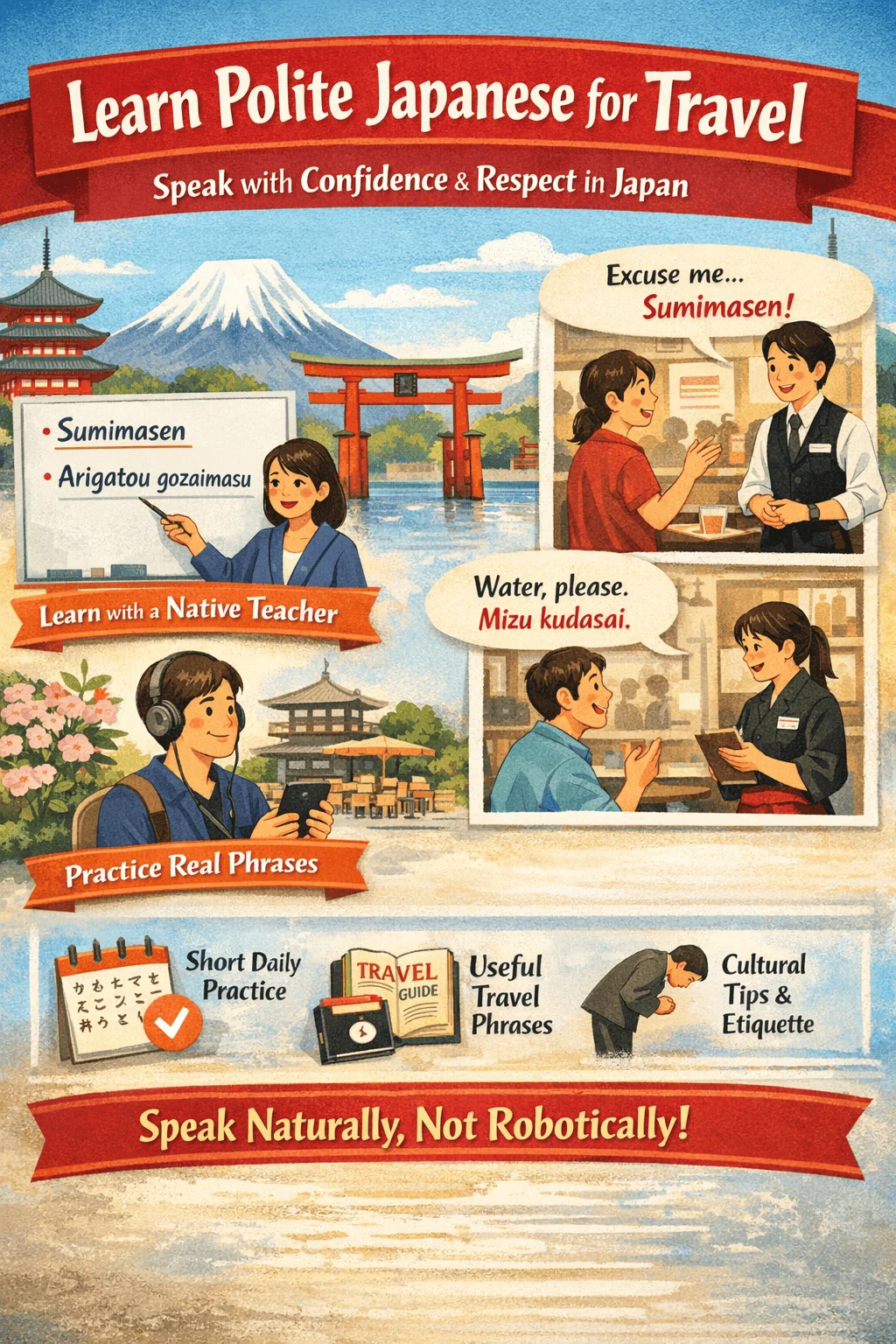
Traveling in Japan offers a rich tapestry of experiences, from the serene beauty of ancient temples to the vibrant energy of modern metropolises. However, the depth of this cultural immersion can be significantly enhanced by the ability to communicate respectfully and confidently, particularly through the nuanced use of polite Japanese. While many travelers envision mastering complex grammar or memorizing extensive phrasebooks, the reality of effective communication in Japan often hinges on understanding and employing a select set of practical, polite expressions. This approach eschews the often-daunting task of rote memorization, instead focusing on real-world conversational contexts and the underlying principles of Japanese politeness, known as keigo. By prioritizing practical application and cultural context, individuals can cultivate natural, respectful interactions that foster deeper connections and a more authentic travel experience.
The challenge for many visitors lies in the perceived complexity of Japanese politeness. Unlike languages with explicit grammatical markers for politeness, keigo in Japanese involves a sophisticated interplay of vocabulary, verb conjugations, and honorifics that can seem overwhelming. Consequently, a common pitfall for travelers is the reliance on lengthy, pre-rehearsed phrase lists. These often result in speech that, while grammatically understandable, can sound stilted, robotic, or even unintentionally impolite due to incorrect tone or inappropriate context. The key to overcoming this hurdle lies in a paradigm shift from memorization to understanding and application. This involves not just learning words, but grasping their function within specific social scenarios and the cultural values they represent.
The Strategic Advantage of Contextual Learning
Understanding polite Japanese is not merely about acquiring a linguistic tool; it is about unlocking a deeper appreciation for Japanese culture. The emphasis on politeness in Japan is deeply ingrained, reflecting a societal structure that values harmony, respect, and consideration for others. This is particularly evident in interpersonal interactions, where the appropriate use of language can significantly influence the perception of an individual and their intentions. For travelers, this translates to a smoother, more welcoming experience. When visitors make an effort to speak politely, even with limited proficiency, it is often met with appreciation and a greater willingness from locals to assist.
The effectiveness of learning polite Japanese is amplified when learners are exposed to its usage in authentic settings. Traditional methods, such as relying solely on guidebooks or generic audio courses, can fall short in capturing the subtle nuances of tone, timing, and situational appropriateness. These resources often provide a foundational understanding but lack the interactive element crucial for developing conversational fluency and cultural sensitivity. In contrast, learners who engage with native speakers, either through direct interaction or guided learning platforms, gain invaluable insights. For instance, seeking guidance from a dedicated Japanese teacher specializing in travel preparation can offer personalized feedback on pronunciation, clarify etiquette surrounding specific situations like dining or hotel check-ins, and address potential cultural faux pas. This tailored approach ensures that learning is not only efficient but also directly relevant to the challenges and opportunities a traveler is likely to encounter.
The principle of spaced repetition and consistent exposure, rather than intensive cramming, underpins effective language acquisition. Daily, short bursts of practice, coupled with immersion in the language through listening and observation, significantly enhance retention compared to prolonged, infrequent study sessions. By actively listening to polite Japanese phrases in context – whether in conversations, dramas, or through language learning applications – learners begin to internalize the natural rhythm, intonation, and structural patterns of respectful speech. This gradual absorption allows for a more intuitive understanding and response, leading to confident, natural-sounding communication rather than the recitation of memorized lines.
Key Takeaways for Cultivating Polite Japanese Proficiency
- Prioritize practical phrases: Focus on expressions most relevant to travel scenarios, such as greetings, apologies, requests, and expressions of gratitude.
- Understand the context: Learn not just what to say, but when and why to say it, considering the social situation and the speaker’s relationship with the listener.
- Embrace active listening: Pay attention to the tone, intonation, and speed of native speakers to develop a natural sense of polite delivery.
- Practice consistently: Short, daily practice sessions are more effective for long-term retention than infrequent, lengthy study periods.
- Leverage cultural cues: Combine language learning with an awareness of non-verbal communication, such as bowing and maintaining eye contact, to enhance politeness.
Mastering Essential Polite Japanese Quickly
Building practical speaking skills in polite Japanese for travel purposes can be achieved by concentrating on a core set of courtesy phrases, fundamental greeting patterns, and concise expressions for immediate or sensitive situations. This targeted approach empowers travelers to navigate daily life in Japan with confidence, bypassing the need to memorize extensive and often irrelevant vocabulary lists. The strategic selection of these linguistic tools ensures that learners are equipped with the most impactful phrases for fostering positive interactions and demonstrating cultural respect.
The Indispensable Role of Core Courtesy Phrases
Certain polite words and phrases are the bedrock of everyday communication in Japan, appearing in nearly every social exchange. The word Sumimasen (すみません) is exceptionally versatile, functioning as both "excuse me" and "sorry." It serves as an essential tool for initiating interaction, such as politely getting a server’s attention, or for offering a mild apology when causing minor inconvenience, like accidentally bumping into someone. Its pervasive use underscores the Japanese cultural emphasis on acknowledging and mitigating potential disruptions to social harmony.
Another foundational phrase is Kudasai (ください), meaning "please." This word is crucial for making respectful requests. For example, the simple phrase mizu kudasai (みず ください), meaning "water, please," demonstrates politeness when ordering at a restaurant or asking for assistance. Its grammatical function as a polite imperative makes it a cornerstone for expressing needs and desires in a socially acceptable manner.
Beyond these core expressions, phrases like Arigatou gozaimasu (ありがとうございます), a more formal and emphatic "thank you very much," and Onegaishimasu (おねがいします), which carries the weight of "please" in a more formal or earnest request context, are vital for conveying gratitude and making polite appeals. The distinct function of each phrase aids in memorization through practical application, solidifying their place in a traveler’s active vocabulary.
To enhance the naturalness of spoken Japanese, attention to tone and timing is paramount. A soft, modulated voice and a slight bow often accompany these polite utterances, reinforcing the message of respect. In commercial settings, such as shops or restaurants, integrating simple Japanese travel phrases like sumimasen or arigatou organically throughout the day not only aids in practice but also strengthens a traveler’s comfort and familiarity with Japanese linguistic basics. These habits, when cultivated, transform rote memorization into ingrained linguistic behavior.
Strategic Greetings for Diverse Situations
Japanese greetings are more than mere salutations; they are indicators of respect, awareness of the temporal context, and understanding of the immediate environment. The standard greetings are tied to the time of day: Ohayou gozaimasu (おはよう ございます) for the morning, Konnichiwa (こんにちは) for midday, and Konbanwa (こんばんは) for the evening. Adapting these greetings to the appropriate time demonstrates attentiveness to local customs and a desire to engage respectfully.
While Sayonara (さようなら) is widely recognized as "goodbye," it often carries a sense of finality and is less commonly used in daily casual farewells among acquaintances. More frequent in casual settings are phrases like Jaa ne (じゃあね) or Mata ne (またね), akin to "see you later." However, for polite farewells in public spaces or when leaving a professional setting, expressions such as Shitsurei shimasu (しつれいします), literally "I am being rude" (implying "excuse me for leaving"), or Dewa mata (ではまた), meaning "well then, again," are more appropriate. Understanding these contextual distinctions prevents sounding overly casual or excessively formal.
The practice of greeting in Japan is intrinsically linked to the concept of omotenashi, the Japanese spirit of wholehearted hospitality. Returning a greeting with sincerity, accompanied by a small smile and a nod, adds a layer of warmth and personal connection that transcends linguistic fluency. This mutual exchange of pleasantries, even in its simplest form, signifies respect for the culture and the individual.
Minimal Phrases for Emergencies and Apologies
In the unpredictable nature of travel, having a few concise emergency phrases readily available can be critical. The exclamation Tasukete! (たすけて!) translates to "Help!" and is a vital phrase for urgent situations. Similarly, knowing how to ask for directions to essential services, such as Byouin wa doko desu ka? (びょういん は どこ です か?), meaning "Where is the hospital?", can be crucial in times of need.
For occasions requiring an apology, Sumimasen can be used for minor transgressions, while Gomen nasai (ごめんなさい) offers a more direct and sincere apology for mistakes or when causing significant inconvenience. These brief expressions effectively convey responsibility and remorse without requiring complex explanations, thereby maintaining composure and politeness even under duress.
Travelers are encouraged to compile a short list of such essential emergency phrases prior to their journey. This proactive step ensures preparedness and allows for a calm, respectful response when faced with unexpected challenges. Such minimal yet impactful phrases enable clear and courteous communication, upholding the high standards of politeness valued in Japanese language and culture.
Effective Learning Methods for Travelers
Acquiring polite and practical Japanese skills for travel need not involve arduous study schedules or the daunting task of memorizing extensive vocabulary. The most effective path lies in a strategic focus on practical application, real-world usage, and the cultivation of simple, consistent habits. By paying close attention to the natural flow of conversation and the cultural underpinnings of politeness, travelers can significantly enhance their ability to communicate respectfully and confidently, thereby enriching their overall experience in Japan.
Memorization-Free Techniques for Rapid Results
The most significant barrier to learning is often the reliance on lengthy vocabulary lists. A more efficient approach is to learn through context. This involves immersing oneself in short, authentic conversations that mirror typical travel scenarios, such as asking for directions, ordering food, or making simple inquiries. The repeated exposure to these concise, highly useful phrases facilitates faster memory retention than traditional rote learning. This method not only aids in memorization but also cultivates an understanding of how polite words and phrases integrate seamlessly into natural dialogue.
To maximize efficiency, learners should divide their focus into small, manageable goals. For example, a traveler might dedicate a week to mastering polite greetings and farewells, followed by a week focusing on phrases for ordering food and drinks. This segmented approach prevents cognitive overload and allows for deeper consolidation of each set of phrases.
A highly effective technique for improving pronunciation, tone, and rhythm is shadow practice. This involves listening to short audio clips of native speakers and immediately repeating them aloud. By mimicking the speaker’s intonation and cadence, learners can refine their accent and develop a more natural delivery without the pressure of memorizing grammatical rules. Over time, this consistent practice trains the ear to recognize and differentiate between polite and casual forms of speech, fostering an intuitive grasp of appropriate language use.
Leveraging Japanese Writing Systems for Politeness
A foundational understanding of the Japanese writing systems can significantly enhance a traveler’s ability to recognize and interpret politeness in written form. While mastering all three scripts – Hiragana, Katakana, and Kanji – is a long-term endeavor, focusing on essential elements can yield immediate benefits. Beginning with Hiragana is crucial, as it forms the basis of grammatical endings, particles, and many common polite expressions. Learning to read Hiragana allows for the recognition of politeness markers embedded within words and sentences.
Next, Katakana is essential for deciphering foreign loanwords, which are prevalent on signage, menus, and product labels. Recognizing Katakana helps in understanding a broader range of written information encountered during travel.
While the full mastery of Kanji – the logographic characters borrowed from Chinese – is extensive, familiarizing oneself with everyday Kanji characters can provide invaluable context. For instance, understanding characters like 日 (nichi/hi – day), 食 (shoku/taberu – eat), or 行 (kou/iku – go) can help in deciphering signs for restaurants, train stations, or specific times. The presence and combination of Kanji often indicate formality and context. For example, Kanji are frequently used in formal settings like official documents, shop signs, and train station announcements, signaling a more formal register. By learning to identify these characters in situ, travelers can infer politeness and formality without needing to memorize individual phrases. This visual association between written characters and their contextual usage reinforces learning through a different sensory pathway.
Maintaining a small notebook or utilizing a digital note-taking app to record useful symbols and phrases encountered in real-life situations serves as a practical reference. This method bridges the gap between visual memory and practical application, solidifying learning through active engagement with the environment.
Using Technology and Cultural Tools to Enhance Politeness
The proliferation of language learning applications and digital tools offers a convenient and efficient means to refine polite Japanese communication. Many modern apps incorporate speech recognition technology, allowing learners to practice pronunciation and receive immediate feedback, thereby correcting errors and improving accuracy. Translation tools, such as Google Translate, can be useful for checking the grammatical accuracy and perceived tone of phrases, but it is imperative to supplement this with verbal practice. Repeating translated phrases aloud helps in assessing their naturalness and suitability for real-world interactions.
Audio-based learning resources, often featuring adjustable playback speeds, are invaluable for enhancing listening comprehension. Pairing these with short, simulated role-playing exercises—such as practicing how to ask for assistance at a train station or politely order tea—can significantly boost confidence and preparedness. These exercises mimic real-life scenarios, allowing learners to apply their knowledge in a controlled environment.
Beyond linguistic tools, understanding and adopting key cultural habits are integral to polite communication in Japan. Subtle non-verbal cues play a significant role. A slight bow, the appropriate use of honorifics like the suffix -san (さん) when addressing individuals, and demonstrating patience in interactions all convey respect and consideration. Integrating these small cultural gestures with basic Japanese phrases creates a more harmonious and positive communication experience, signaling a genuine effort to connect and understand. This holistic approach, combining language acquisition with cultural awareness, is the most effective strategy for mastering polite Japanese for travelers.
Ultimately, the ability to speak polite Japanese is not solely dependent on memorizing extensive phrase lists. It is about understanding and applying a focused set of phrases that are most relevant to everyday travel needs, such as greetings, apologies, and requests. The true key to retention lies in their consistent use in real-life situations, allowing them to become ingrained naturally.
Practicing small, manageable sets of words and actively using them throughout a trip is highly beneficial. For instance, regularly employing "Arigatou" (ありがとう) for "thank you" or "Sumimasen" (すみません) for "excuse me" helps to project a respectful demeanor. Locals often value the effort and sincerity behind these attempts more than perfect grammatical accuracy, which rapidly builds confidence.
Observing and listening to how native speakers communicate is equally crucial. Noticing their tone, intonation, and accompanying gestures provides invaluable insights into what sounds natural and polite. By internalizing these subtle cues, travelers can gradually develop communication habits that make polite speech an automatic part of their interactions.
In essence, the most effective strategy is to learn through practice and genuine interaction, rather than through passive memorization. By focusing on meaningful phrases, engaging in real conversations, and maintaining a patient, persistent attitude, travelers can cultivate both comfort and respect as they explore the rich cultural landscape of Japan. This approach ensures that language learning becomes an integral, enriching component of the travel experience, fostering deeper connections and a more profound appreciation for the destination.



 Anjar Salim
 Dwi Wanna
 Budi Mulyono
 Lukman Taruna Persada Ramadan
 Chandra Hamzah
 Gabriela Annisa