
 Cholid Fahmi Thalib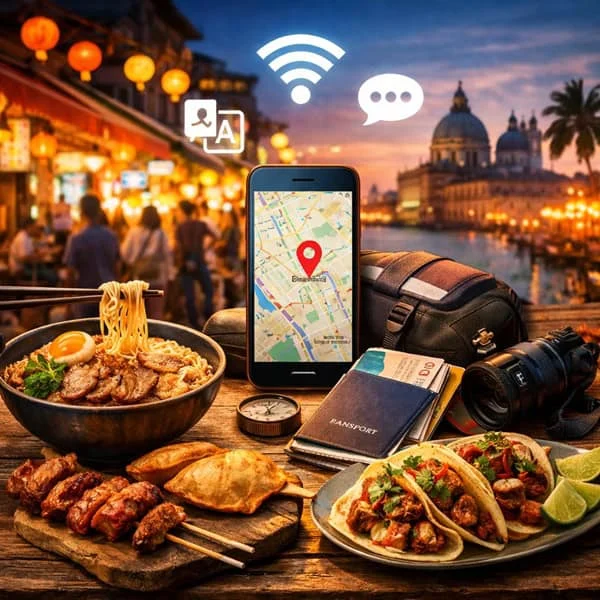
The most magical travel days often unfold like an expertly executed magic trick. You awaken in an unfamiliar city, the aroma of coffee distinctly different from home, and find yourself wandering down streets with names that playfully twist your tongue. Without a rigid itinerary, a serendipitous encounter leads you to a culinary revelation – the best meal of your year. While these moments might appear to be pure chance, they are invariably the product of meticulous, albeit unglamorous, preparation. This isn’t about pre-booking every meal weeks in advance, but rather about possessing the foundational tools that enable spontaneous discovery. These tools include the ability to access a map upon exiting a metro station, to translate menus without resorting to awkward pointing, to share the name of a hidden gem with a friend, to present an allergy card with clarity, to verify operating hours of a seemingly open establishment, and to retrieve reservation QR codes even when facing a struggling Wi-Fi connection.
For the "foodie flashpacker" – a traveler who prioritizes smart navigation, exceptional culinary experiences, and uncompromised flexibility – maintaining connectivity is an unexpectedly crucial element. The objective is not to live online, but to minimize background friction, thereby maximizing presence in the immediate, sensory experience. When that experience is a steaming bowl of noodles, a plate of vibrant tacos, or a neighborhood bakery redolent with the scent of butter and caramel, presence is paramount.
Connectivity has become an indispensable asset for culinary travel, distinguishing it from more conventional sightseeing tours. Food-focused journeys are inherently dynamic, characterized by a fluid movement between bustling markets, unassuming side streets, ephemeral pop-up stalls, late-night eateries, serendipitously discovered cafes, and restaurants with precise operating windows. The accumulation of minor inconveniences can quickly detract from the overall experience:
- Navigational Challenges: The absence of reliable mapping can lead to missed turns and a reluctance to venture off the beaten path, potentially bypassing authentic culinary experiences.
- Language Barriers: Inability to decipher menus or communicate dietary restrictions can result in hesitation, missed opportunities to try local specialties, or even uncomfortable dining experiences.
- Logistical Hurdles: Difficulty confirming operating hours, checking reservation status, or accessing payment options can lead to wasted time and frustration, particularly when pursuing time-sensitive culinary opportunities.
- Information Gaps: The inability to quickly research local dishes, identify ingredient origins, or understand regional culinary customs can limit the depth of understanding and appreciation for the food encountered.
A degree of connectivity transforms these potential stressors into opportunities for confident improvisation. The goal is not constant digital immersion, but rather assured access precisely when it is needed most.
The "Flashpacker" Ethos: Efficiency Meets Spontaneity
The concept of "flashpacking" represents an optimized approach to travel, bridging the gap between the unbridled freedom of backpacking and the practical efficiencies expected in adulthood. It’s about removing unnecessary obstacles to enhance the enjoyment of the core travel experience, rather than deliberately complicating it. For the culinary flashpacker, this translates into a streamlined approach to connectivity that supports, rather than dictates, their journey:
- Lightweight and Adaptable: A connectivity solution should be easy to manage and adjust according to evolving travel plans.
- Reliable and Accessible: Consistent data access is critical for accessing essential information and facilitating communication when it matters most.
- Cost-Effective: Maintaining connectivity should not impose an undue financial burden, allowing resources to be allocated to culinary exploration.
- Seamless Integration: The technology should operate unobtrusively in the background, allowing the traveler to remain present and engaged with their surroundings.
This last point is particularly vital, as culinary plans are inherently the most susceptible to change. The ability to pivot rapidly when circumstances shift is essential for maximizing culinary opportunities.
eSIMs: A Modern Solution for Seamless Travel Connectivity
The traditional "airport SIM counter shuffle" – characterized by fluorescent lighting, perplexing plan options, and hurried exchanges of physical SIM cards – is a familiar ritual for many travelers. This often leaves individuals hoping their essential digital services will function seamlessly post-installation. Embedded SIMs, or eSIMs, offer a significant reduction in this friction. Rather than physically swapping a SIM card, an eSIM allows for the digital activation of a cellular plan directly on a compatible device. For many travelers, particularly those prioritizing culinary exploration over technical troubleshooting, this represents the most straightforward path to immediate connectivity upon arrival. Services like SIMOVO’s travel eSIMs provide a streamlined option, bypassing the conventional complexities of SIM card acquisition. The underlying principle is to safeguard valuable travel time, redirecting minutes spent searching for connectivity towards the pursuit of culinary discoveries.
The Enhanced Culinary Experience Through Connectivity
Reliable connectivity profoundly impacts the quality of a food-focused travel experience, fostering a more adventurous and informed approach to dining.
Encouraging Exploration Beyond the Obvious
Without the assurance of reliable navigation, travelers often default to familiar tourist areas or prominently marked restaurants, opting for perceived safety over genuine discovery. While these choices have their place, the most exceptional culinary finds are frequently located just a few turns off the main thoroughfares. Consistent data access empowers travelers to embrace intriguing detours, knowing they can always reorient themselves. This ability to wander deeper into local neighborhoods, guided by maps and real-time information, significantly increases the probability of stumbling upon authentic and memorable dining experiences.
Facilitating the Following of Local Recommendations
Local recommendations are rarely presented with precise street addresses. Instead, they often rely on landmarks, general ambiance, or descriptive cues like "it’s next to the pharmacy with the green sign." Connectivity allows for rapid triangulation of these directions. By combining mapping data with a quick message to the recommender or a visual confirmation of the storefront, travelers can efficiently locate these sought-after establishments. This direct line to local knowledge is invaluable for uncovering hidden culinary treasures.
Accelerating Menu Comprehension
Translation applications are not a shortcut for intellectual laziness, but rather a tool for cultivating culinary bravery. When the anxiety associated with potential ordering errors is diminished, individuals are more inclined to experiment with less familiar dishes. Furthermore, connectivity enables quick research into specific ingredients, regional culinary terminology, or the composition of mysterious sauces, transforming what could be a time-consuming research endeavor into a brief, informative interlude.
Optimizing Timing for Culinary Pursuits
The success of many culinary experiences hinges on precise timing. The most sought-after birria might sell out by midday, a bakery’s peak freshness could be at 9 a.m., and a vibrant night market may only truly come alive after 8 p.m. The ability to swiftly verify operating hours, confirm availability with vendors, or ascertain seasonal menu items allows for light yet effective planning, without the rigidity of an over-scheduled day. This strategic approach ensures that travelers are present at the optimal moment for a particular culinary delight.
Constructing a Personal Culinary Archive
Every traveler has experienced the frustration of discovering an exceptional dish and then being unable to relocate it on subsequent visits. Reliable connectivity provides the means to create a comprehensive record of these discoveries. This includes:
- Saving Locations: Pinning discovered restaurants, food stalls, or markets on digital maps for future reference.
- Capturing Details: Taking photos of menus, dishes, or storefronts to jog memory and aid in future searches.
- Documenting Experiences: Jotting down notes about specific dishes, ingredients, or the overall ambiance to create a rich and personal culinary journal.
This practice transforms a series of positive food experiences into a repeatable and evolving culinary playbook.
A Principled Approach to Connectivity
A common concern is that constant connectivity inevitably leads to distraction. However, by adopting a deliberate rhythm, connectivity can serve as a supportive tool rather than a disruptive force.
- Morning Briefing: Upon waking, a quick check of critical information – weather, planned reservations, or any last-minute adjustments to the day’s culinary targets.
- On-Demand Assistance: Utilizing connectivity strategically throughout the day for navigation, translation, or quick research when specific needs arise.
- Evening Recap: A brief review of the day’s culinary discoveries, perhaps noting new favorites or planning for the following day based on real-time findings.
This approach ensures that technology remains a functional assistant, not the central focus of the travel experience.
Traveling with Enhanced Confidence, Not Increased Screen Time
The essence of culinary travel is immersion and discovery, not passive consumption. Connectivity does not diminish the thrill of discovery; rather, it actively protects it. When foundational needs are met – access to maps, translation tools, reservation details, and payment information – travelers are liberated to engage fully with their intended purpose:
- Savoring Flavors: The ability to focus on the taste, texture, and aroma of the food without underlying anxieties.
- Engaging with Culture: Interacting with local vendors, understanding the context of the dishes, and absorbing the cultural nuances of the dining experience.
- Embracing Spontaneity: Feeling secure enough to deviate from planned routes and embrace unexpected culinary opportunities.
- Building Memories: Creating lasting impressions and stories centered around the unique flavors and experiences encountered.
This is the core philosophy of foodie flashpacking: establishing structure where it is essential, and fostering freedom in all other aspects. By approaching travel with this balanced perspective, individuals are more likely to encounter those unforgettable "how did we end up here?" meals – the ones that become cherished memories – without the added burden of logistical chaos that often accompanies spontaneity. The objective is to maximize the richness of the travel experience by leveraging technology intelligently, ensuring that the focus remains squarely on the sensory delights and cultural immersion that define truly exceptional culinary journeys.


 Anjar Salim
 Dwi Wanna
 Budi Mulyono
 Lukman Taruna Persada Ramadan
 Chandra Hamzah
 Gabriela Annisa