
 Diana Nuri Rohmawati
The landscape of aerial cinematography has undergone a significant transformation with the commercial availability of specialized consumer technology designed to eliminate traditional framing constraints. Released to the global market in late 2025, the Antigravity A1 360 drone represents a fundamental shift in how aerial media is captured, processed, and utilized by both independent content creators and professional videographers. By discarding the traditional single-lens gimbal configuration in favor of a dual-lens spherical capture system, the A1 introduces a "fly now, frame later" methodology that redefines airborne visual documentation.
Core Architecture and Dual-Lens Technology
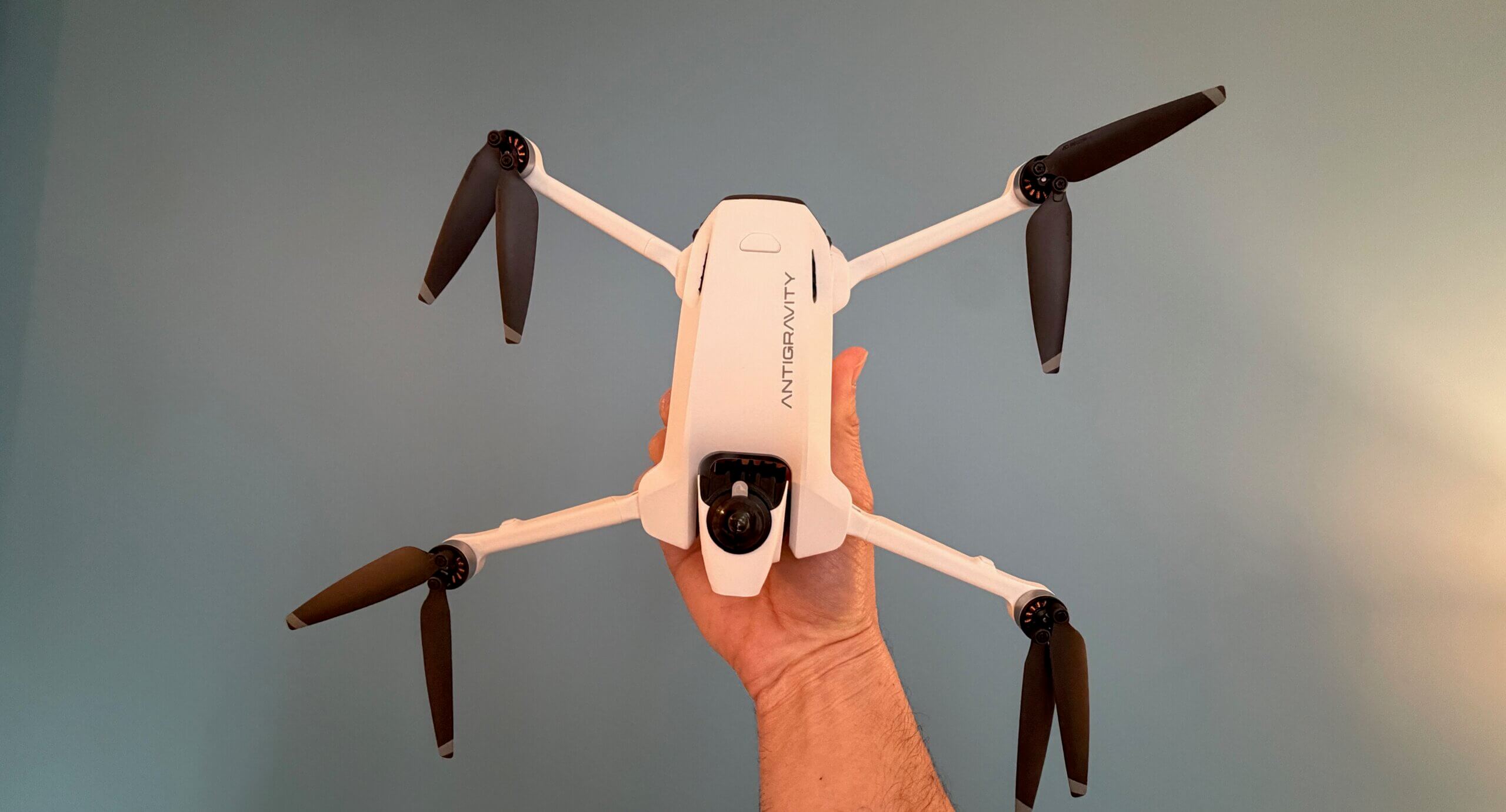
Traditional consumer and professional drones rely on a stabilized, single-lens mechanism mounted on a motorized gimbal to capture linear footage in the direction of travel. This setup requires the pilot to simultaneously manage the flight path of the aircraft and the composition of the camera. The Antigravity A1 addresses this operational complexity by employing two ultra-wide-angle lenses positioned symmetrically on the top and bottom of the central fuselage.
Each lens records a 200-degree field of view, resulting in an overlapping, seamless 360-degree sphere of high-definition video. During the post-processing phase, proprietary algorithms automatically execute a digital removal of the aircraft’s physical body from the frame. This technological execution creates the optical illusion of an independent camera floating freely in mid-air, entirely unsupported by visible hardware.
At the core of this imaging system are dual 1/1.28-inch CMOS sensors. While high-end enterprise drones often incorporate larger 1-inch sensors, the A1’s sensors are substantially larger than those typically found in standard 360-degree action cameras. This scale provides measurable benefits in low-light performance and dynamic range, allowing the equipment to preserve shadow and highlight details under high-contrast lighting conditions, such as direct midday sunlight.
Regulatory Compliance and Physical Specifications
A critical factor in the consumer drone market is the regulatory threshold established by aviation authorities globally, which typically mandates the formal registration of any aircraft weighing 250 grams or greater. Engineering teams at Antigravity calibrated the structural weight of the A1 to measure precisely 249 grams when equipped with its standard flight battery. This strategic specification exempts the drone from mandatory commercial registration in numerous jurisdictions, lowering the barrier to entry for casual travelers and mobile content creators.
The structural integrity of the fuselage is maintained through the use of a high-grade carbon-fiber-reinforced polymer. This material selection yields a superior strength-to-weight ratio compared to the standard acrylonitrile butadiene styrene (ABS) plastics commonly utilized in budget-tier consumer alternatives. When folded for transport, the chassis occupies a footprint comparable to a large smartphone, albeit with increased thickness, making it suitable for compact travel packing.
Chronology of Development and Market Introduction
The conceptualization of 360-degree aerial capture began circulating within engineering laboratories around 2023, as action camera manufacturers perfected spherical sensors and stabilization algorithms. However, transitioning these systems to a flying platform presented significant challenges regarding weight distribution, aerodynamic drag, and wireless video transmission latency.
By mid-2025, early prototypes of the Antigravity A1 underwent rigorous testing phases in varied environmental conditions, ranging from high-wind coastal environments to dense urban settings. Official commercial distribution commenced in the fourth quarter of 2025, accompanied by the rollout of the Antigravity Studio companion application. Industry analysts note that the introduction of the A1 has accelerated competition within the sub-250-gram drone category, prompting legacy manufacturers to reevaluate their single-lens product roadmaps.
Flight Dynamics and Control Mechanics
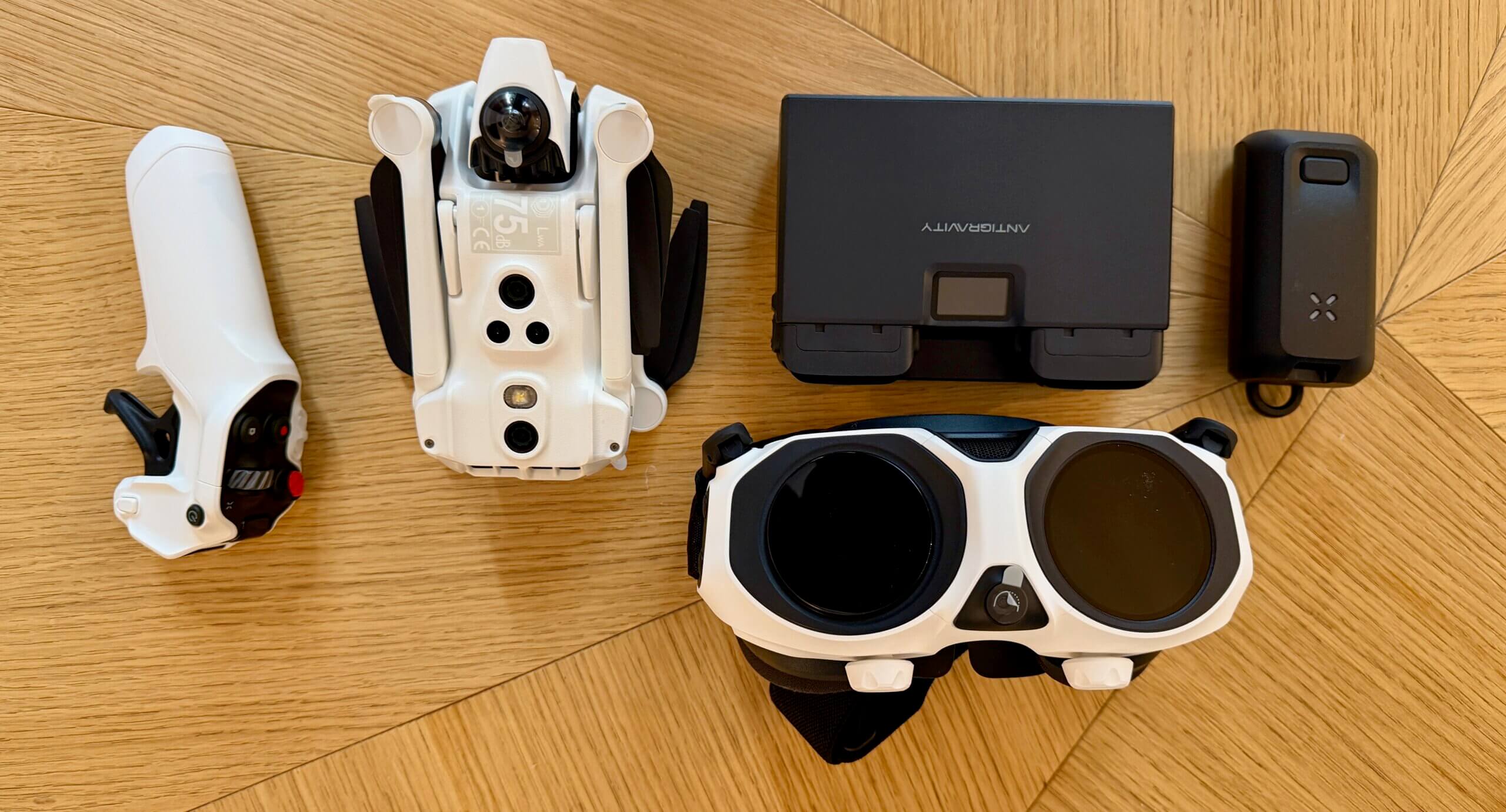
The operational ecosystem of the Antigravity A1 is built around two primary control inputs: immersive vision goggles and a single-handed motion controller.
The accompanying vision goggles feature dual 4K micro-OLED displays operating at a 120Hz refresh rate. Integrated head-tracking technology synchronizes the visual feed with the user’s natural head movements. Because the drone continuously records a full 360-degree sphere, turning one’s head to the left or right pans the perspective within the recorded environment, offering an enhanced sense of spatial awareness compared to fixed-camera displays.
Manual navigation is facilitated via a single-handed motion controller that translates physical gestures into flight trajectories. Pointing the controller dictates the direction of travel, while a trigger mechanism regulates acceleration. For experienced pilots accustomed to traditional acrobatic maneuvers, the A1 retains compatibility with standard "Mode 2" stick controllers.
The aircraft operates under a "cinewhoop" performance profile, prioritizing stability and predictability over extreme agility. With a maximum operational velocity of approximately 36 miles per hour, the drone is optimized for tracking moving subjects like cyclists or automobiles rather than participating in high-speed drone racing. Additionally, an integrated "Turtle Mode" enables the aircraft to utilize its propellers to autonomously flip itself upright following a ground inversion, minimizing manual retrieval interventions.
Camera Resolution and Post-Production Workflow
A point of technical clarification involves the marketing designation of "8K Resolution" associated with spherical cameras. Unlike a traditional 16:9 rectangular sensor where all pixels converge onto a single flat frame, an 8K 360-degree video distributes those pixels across an entire sphere. Consequently, the final exported, flat-screen video represents a cropped subset of the total captured data.
To accommodate different production pipelines, the A1 offers multiple color profiles, ranging from a high-saturation "Vivid" setting optimized for direct social media distribution to a 10-bit "Log" profile designed for professional color-grading suites. Stabilization is managed via proprietary algorithms that maintain horizontal leveling even when operating in sustained winds of up to 20 miles per hour.
The Antigravity Studio application facilitates wireless footage offloading at transfer speeds reaching up to 80 megabytes per second. The software incorporates gyroscope-based reframing, allowing users to direct the virtual camera by moving their mobile device in real-time. Furthermore, an artificial intelligence feature designated "Auto-Frame" analyzes the footage to identify subjects of interest, automatically generating edited cuts that maintain visual focus without manual keyframing.
Battery Performance and Operational Metrics
Power consumption remains a primary limitation for compact aerial hardware. The A1’s standard intelligent flight battery provides a theoretical maximum flight duration of 24 minutes, translating to approximately 19 to 20 minutes under active, real-world operational conditions involving wind resistance and continuous recording.
Industry observers note that while flight times appear brief, the operational efficiency per minute is amplified by the 360-degree capture capability. Because operators are not required to fly multiple passes to secure varying angles of a single subject, a single flight can yield a comprehensive collection of usable perspectives. An optional "Pro Battery" extends flight times to 39 minutes; however, this addition increases the total aircraft weight beyond the 250-gram regulatory threshold and marginally alters the flight dynamics.
Industry Implications and Future Outlook
The commercial viability of the Antigravity A1 signals a broader transition within digital media production. By decoupling the mechanics of flight navigation from the constraints of camera pointing, the technology lowers the technical proficiency required to capture complex cinematic sequences.
Market analysts suggest that the integration of spherical capture systems into sub-250-gram airframes will likely prompt regulatory agencies to closely monitor safety and privacy compliance as consumer adoption increases. As sensor technology and battery efficiencies continue to evolve, the methodologies pioneered by the A1 are expected to influence the design standards of future aerial imaging equipment across both consumer and commercial sectors.




 Anjar Salim
 Chandra Hamzah
 Tatiana Tantri Indah Sari
 Budi Mulyono
 Lukman Taruna Persada Ramadan
