
 Walid Sujud Trenggono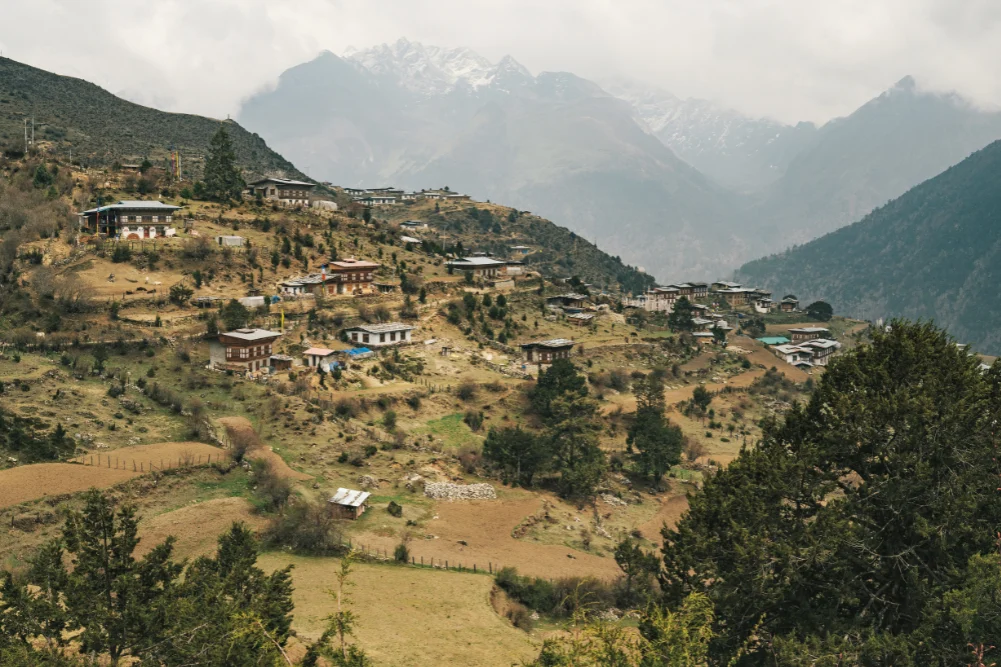
The Kingdom of Bhutan, a landlocked nation nestled in the Eastern Himalayas, has long served as a global outlier in its approach to national development and individual prosperity. Positioned between the geopolitical heavyweights of China and India, this sovereign state of approximately 760,000 residents has resisted the conventional metrics of the Gross Domestic Product (GDP) in favor of a more comprehensive philosophy known as Gross National Happiness (GNH). For the modern traveler, particularly those categorized by sociologists as "midlife professionals" facing the psychological toll of the "always-on" digital economy, Bhutan offers a rigorous case study in the benefits of decelerated living and communal integration.
The Geopolitical and Environmental Context of the "Last Shangri-La"
Bhutan’s unique developmental trajectory is rooted in its historical isolation. The country remained largely closed to foreign visitors until 1974, and it was the last nation in the world to introduce television and the internet, doing so only in 1999. This controlled entry into the globalized world has allowed the kingdom to maintain a carbon-neutral—and often carbon-negative—status, a feat unmatched by any other industrialized nation. Environmental conservation is not merely a policy preference but a constitutional mandate, requiring that at least 60 percent of the land remain under forest cover for all time.
Currently, forests blanket more than 70 percent of the kingdom. The absence of global franchises, such as McDonald’s or Starbucks, and the prohibition of roadside billboards contribute to a visual landscape that remains largely unchanged by the commercial aesthetics of the 21st century. This environment serves as the backdrop for a tourism model defined as "High Value, Low Volume," which utilizes a Sustainable Development Fee (SDF) to ensure that visitors contribute directly to the nation’s free healthcare and education systems.
Chronology of a Cultural Immersion: From Paro to the Highlands
The journey into the Bhutanese interior typically begins at Paro International Airport, widely considered one of the most challenging landings in global aviation due to the surrounding 18,000-foot Himalayan peaks. For those seeking a "midlife reset," the transition from a high-stress urban environment to the thin, quiet air of the Himalayas is immediate.
A standard itinerary for deep cultural immersion involves a transition from the urban centers to the remote monastic and high-altitude regions. The following timeline represents a typical progression for a visitor seeking to understand the intersection of Bhutanese spirituality and daily life:
Phase I: Monastic Integration at Dodedrak
Located above the Thimphu valley, the 12th-century Dodedrak Monastery serves as an initial point of psychological deceleration. Accessing the site requires a rigorous two-to-three-hour ascent on foot. The monastery functions as a living institution where dozens of monks, adorned in traditional burgundy robes, engage in the study of ancient scriptures and the practice of "Pujas" (prayer ceremonies). The sensory environment—defined by the scent of juniper incense and the rhythmic vibrations of chanting—is designed to facilitate a shift from the "digital zombie state" of Western life to a more grounded, present-moment awareness.
Phase II: The High-Altitude Trek to Laya
The village of Laya represents one of the most remote inhabited settlements on Earth. Perched at an elevation of 3,800 meters (approximately 12,500 feet), Laya is inaccessible by motor vehicle. The journey involves a multi-day trek through rugged terrain, relying on yaks and ponies for logistics. The Layap people, an indigenous community with distinct Tibetan roots, maintain a semi-nomadic lifestyle, herding yaks and cultivating high-altitude crops.
Phase III: The Bumkor Festival
The biennial Bumkor Festival in Laya provides a rare window into the community’s collective spiritual life. During this event, sacred Buddhist texts are carried in a grand procession through the village fields to bless the land and ensure a successful harvest. The festival is characterized by the "Tsendhar," a ceremonial flag once used by ancient warriors, and communal dances that involve the entire population.
The Philosophy of Gross National Happiness in Practice
The GNH framework is built upon four pillars: sustainable and equitable socio-economic development, environmental conservation, preservation and promotion of culture, and good governance. According to the 2022 GNH Index, nearly half of the Bhutanese population (48.1%) is classified as "extensively or deeply happy," a statistic that remains resilient despite the country’s relatively modest per capita income.
In Laya, this philosophy is articulated through the hospitality of the local population. Pema Wangchuk, a local guide, notes that the community operates on a principle of reciprocal kindness. "Every guest is welcomed with tea, and when a family builds a house, the whole village comes to help," Wangchuk explains. This social cohesion provides a stark contrast to the "loneliness epidemic" observed in many Western nations.
The wisdom of the elders further illustrates the GNH mindset. Am Pem, a village resident and widow of the late chief’s mother, summarizes the Bhutanese approach to contentment: "To be happy, don’t be greedy. Make the most of what you have. In our village, if we have enough rice to eat, then we are happy." This emphasis on "enoughness" serves as a direct critique of the consumerist "more is better" ethos that drives global market economies.
Traditional Wellness and the "Medicine of Nature"
Wellness in Bhutan is integrated into the landscape rather than relegated to luxury spas. A primary example is the Gasa Tsachu (hot springs). Unlike Western thermal resorts, these springs are sacred communal spaces. Local tradition holds that a 13th-century saint blessed these waters with 128 different medicines.
Visitors often find themselves sharing these pools with locals who have traveled days for the healing properties of the mineral-rich water. Medical students in Bhutan frequently advocate for the use of these springs alongside modern medicine, viewing the two as complementary. Furthermore, the practice of "forest bathing"—spending deliberate time in the dense Himalayan woods—has been scientifically linked to lower cortisol levels and improved cardiovascular health, a fact that Bhutanese culture has intuitively understood for centuries.
The Bhutanese Perspective on Mortality and Presence
One of the most striking aspects of Bhutanese culture is its relationship with death. In the West, death is often a taboo subject, associated with morbidity and fear. Conversely, Bhutanese citizens are encouraged to contemplate death five times a day. This practice is not intended to be macabre; rather, it is a tool for productivity and presence. By acknowledging the impermanence of life, individuals are reminded to prioritize meaningful actions and maintain a "slower, kinder pace."
This slower pace is even reflected in the nation’s infrastructure. In many towns, the maximum speed limit is 20 km/h. For the international traveler accustomed to a "bullet-train tempo," this forced deceleration can initially be a source of frustration, but it eventually facilitates a neurological reset of the nervous system.
Analysis of Long-Term Implications for the Modern Traveler
The impact of a Bhutanese immersion often extends far beyond the duration of the trip. Behavioral experts suggest that the "Bhutan effect" functions as a form of cognitive behavioral therapy. By removing the stimuli of constant connectivity and consumer choice, travelers are forced to confront their own habits of "doom-scrolling" and "overscheduling."
Returning to a Western context, travelers often report a heightened ability to manage stress. The mental imagery of the Himalayas, the memory of the prayer flags, and the echoing chants of the monasteries serve as "cognitive anchors" that help individuals maintain equanimity during periods of professional or personal turmoil.
While the "High Value, Low Volume" tourism model makes Bhutan a more expensive destination than its neighbors, the revenue generated supports a social safety net that is rare for a developing nation. The Sustainable Development Fee ensures that the presence of tourists does not degrade the very culture they come to see.
Conclusion
Bhutan remains a global laboratory for an alternative way of life. It challenges the assumption that economic growth is the only valid measure of a nation’s success. For the individual, particularly those overwhelmed by the demands of modern life, the kingdom offers a blueprint for finding "enoughness" in an era of excess. By prioritizing community over competition, nature over industry, and presence over productivity, Bhutan provides more than just a travel destination; it offers a necessary awakening to the possibilities of a more balanced human existence.
As the world continues to grapple with rising rates of burnout and environmental degradation, the Bhutanese model of Gross National Happiness provides a factual, data-driven argument for a more holistic approach to wellbeing. It suggests that the path to a sustainable future may not be found in moving faster, but in having the courage to stop, observe, and reintegrate with the fundamental rhythms of the natural and communal world.



 Chandra Hamzah
 Tatiana Tantri Indah Sari
 Budi Mulyono
 Anjar Salim

