
 Walid Sujud Trenggono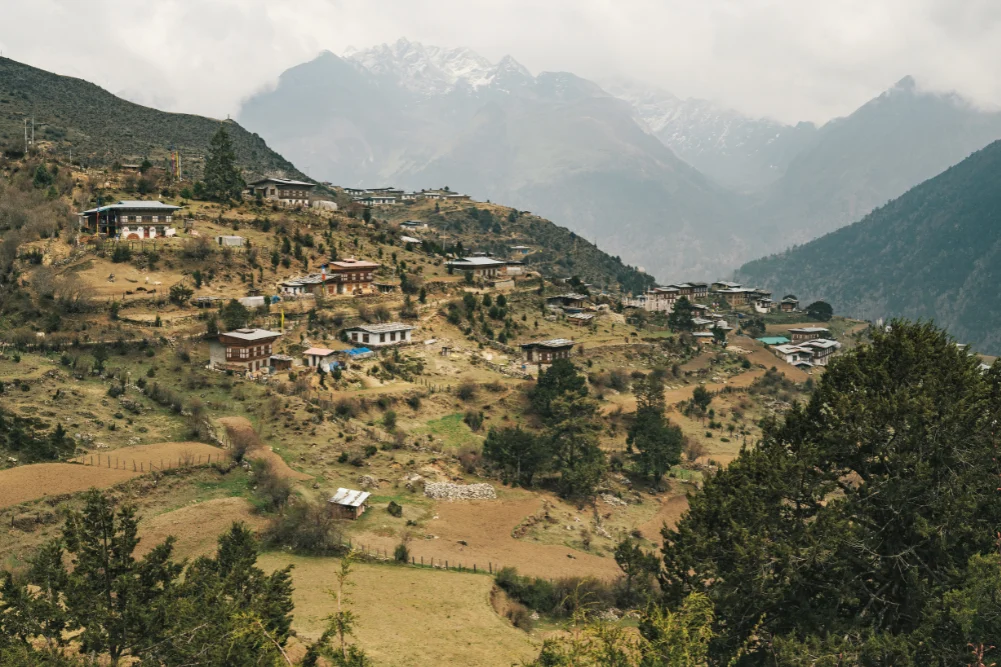
The Kingdom of Bhutan, a landlocked nation nestled in the Eastern Himalayas, has increasingly become a focal point for global researchers and travelers seeking alternatives to Western models of productivity and mental health. While much of the industrialized world grapples with rising rates of burnout and digital saturation, Bhutan continues to operate under a unique socio-economic framework that prioritizes "Gross National Happiness" (GNH) over traditional Gross Domestic Product (GDP). This report examines the Bhutanese approach to societal health, the logistical realities of its remote communities, and the measurable impact of its "High Value, Low Volume" tourism policy on both the environment and the individual visitor experience.
The Geopolitical and Environmental Context of Bhutan
Bhutan occupies a strategic yet isolated position between India and China. With a population of approximately 760,000, it remains one of the few nations never to have been colonized. This historical independence has allowed the kingdom to preserve a distinct cultural identity, which is legally mandated through various government policies. For instance, the nation’s constitution requires that at least 60% of the land remain under forest cover in perpetuity; currently, that figure stands at approximately 70%.
This commitment to environmental stewardship has made Bhutan the world’s first carbon-neutral country—and, at times, carbon-negative. The absence of multinational fast-food chains, such as McDonald’s, and the prohibition of roadside billboards are intentional efforts to mitigate the psychological stresses of consumerism. Television and the internet were only introduced in 1999, making Bhutan one of the last nations to enter the digital age. This delayed entry has provided a unique laboratory for observing the effects of rapid modernization on a traditional society.
The Gross National Happiness (GNH) Framework
The concept of GNH was first proposed by the Fourth King of Bhutan, Jigme Singye Wangchuck, in the 1970s. It is built upon four primary pillars: sustainable and equitable socio-economic development, environmental conservation, preservation and promotion of culture, and good governance.
According to the 2022 GNH Index, which utilizes a complex survey involving 33 indicators across nine domains, nearly half of the Bhutanese population (48.1%) falls into the categories of "deeply" or "extensively" happy. The index serves as a policy-screening tool; every proposed government project must undergo a GNH assessment. If a project is deemed detrimental to the environment or community wellbeing, it is rejected, regardless of its potential for economic profit. This systemic prioritization of collective care over individual gain creates a social fabric characterized by high levels of trust and communal support.
Chronology of Cultural Integration: From Paro to Dodedrak
The logistical journey into Bhutan begins at Paro International Airport, widely considered one of the most challenging landings in the world due to the surrounding 18,000-foot Himalayan peaks. Only a select number of pilots are certified to navigate the approach. Upon arrival, the transition from global connectivity to Himalayan isolation is immediate.
A primary component of the Bhutanese experience involves integration into the country’s deep-rooted Buddhist traditions. Many visitors participate in monastic retreats to observe the intersection of faith and daily life. One such site is the Dodedrak Monastery, a 12th-century institution located on a steep incline above the capital, Thimphu.
The ascent to such monasteries often serves as a physical and mental "reset." In the case of Dodedrak, the journey requires a significant hike, often exacerbated by the high altitude and unpredictable mountain weather. The monastery functions as a center for ancient scriptures and the lighting of butter lamps—a practice intended to dispel ignorance. Observers note that the rhythmic chanting of monks and the lack of digital distractions contribute to a measurable reduction in physiological stress markers, such as heart rate and cortisol levels, among participants.
Case Study in Remote Resilience: The Village of Laya
The village of Laya represents one of the most extreme examples of communal living in the modern world. Perched at an elevation of 3,800 meters, Laya is home to the indigenous Layap people, a community of approximately 1,600 residents with distinct Tibetan roots. Until recently, the village was only accessible via a multi-day trek, as there are no roads leading directly to the settlement. Transport is limited to yaks and ponies.
The social structure in Laya is defined by "collective hospitality." According to local guides, such as Pema Wangchuk, the community operates on a system of mutual aid. When a family constructs a new home, the entire village assists in the labor, operating under the assumption that the kindness will be reciprocated.
During the biennial Bumkor Festival, the village demonstrates its cultural cohesion. This religious event involves the procession of sacred texts through the community, accompanied by traditional music and the Tsendhar (a ceremonial flag). The festival is not merely a performance for tourists—of which there are very few in such remote regions—but a vital social ritual that reinforces communal identity.
Interviews with local residents, such as Am Pem, a widowed mother of the village chief, reveal a philosophy of "contentment through sufficiency." In Laya, wealth is often measured by the availability of basic staples, such as rice and yak wool, rather than the accumulation of luxury goods. This perspective offers a stark contrast to Western "hedonic adaptation," where the constant acquisition of new goods fails to result in a permanent increase in happiness.
Public Health and the "Nature as Medicine" Philosophy
Bhutan’s approach to health is holistic, integrating modern medicine with traditional practices. Healthcare and education are provided free of charge to all citizens, funded in part by the Sustainable Development Fee (SDF) charged to foreign tourists. The SDF, which currently ranges from $100 to $200 per day depending on the season and promotions, ensures that tourism remains a net benefit to the local population rather than a drain on resources.
Communal wellness is also practiced through the use of natural resources, such as the Gasa hot springs (Gasa Tsachu). These springs are considered sacred and are believed to have been blessed by 13th-century saints. Unlike Western luxury spas, these facilities are communal and plain, where locals from various social strata soak together. This shared experience fosters social equality and is part of a broader "nature as medicine" philosophy.
Furthermore, the Bhutanese perspective on mortality is integrated into daily life. Citizens are encouraged to contemplate death five times a day. In Western psychology, this might be viewed as morbid; however, in the Bhutanese context, it is a tool for maintaining perspective and reducing anxiety over trivial matters. By acknowledging the impermanence of life, individuals are encouraged to focus on meaningful actions and present-moment awareness.
Broader Impact and Global Implications
The "Bhutanese model" provides a significant counter-narrative to the prevailing global focus on hyper-connectivity and endless economic growth. For the international visitor, the impact of this environment is often characterized by a "nervous system reset." The kingdom’s mandatory slow pace—exemplified by a national maximum speed limit of 20km/h in many areas—forces a deceleration of the internal "bullet-train tempo" common in industrialized societies.
Analysis suggests that the benefits of the Bhutanese experience are not merely temporary escapes but can lead to long-term psychological shifts. Returning travelers often report a heightened ability to manage stress and a decreased reliance on "doom-scrolling" and other digital compulsions. The lesson of "enough"—the realization that satisfaction can be found in sufficiency—serves as a buffer against the pressures of over-scheduling and consumerist dissatisfaction.
In conclusion, Bhutan remains a unique outlier in the global community. Its commitment to GNH, environmental preservation, and communal welfare offers a provocative blueprint for societal organization. While the country faces challenges—including the pressure of global economic trends and the migration of youth to urban centers—its foundational philosophy continues to provide a robust framework for resilience. For the rest of the world, Bhutan serves as a reminder that the health of a nation is best measured not by the speed of its growth, but by the wellbeing and contentment of its people.



 Budi Mulyono
 Anjar Salim
 Chandra Hamzah
 Tatiana Tantri Indah Sari

 Lukman Taruna Persada Ramadan