Diana Nuri Rohmawati
The landscape of international travel has undergone a radical transformation over the last decade, transitioning from a reliance on physical maps and guidebooks to a digital-first ecosystem where constant connectivity is a logistical necessity. In the early era of mobile telephony, travelers faced the cumbersome task of sourcing local physical SIM cards, navigating language barriers at kiosks, and managing the physical risk of losing tiny plastic chips. Today, the emergence of embedded SIM (eSIM) technology has streamlined this process, allowing for instantaneous network switching without the need for physical hardware. Among the leaders of this technological shift is Holafly, a Spanish-founded firm that has positioned itself as a dominant provider of unlimited data solutions for a global audience.
The Technological Shift from Physical to Digital SIMs
To understand the rise of Holafly, one must examine the broader evolution of the Subscriber Identity Module (SIM). Historically, the SIM card was a physical token containing the international mobile subscriber identity (IMSI) number and its related key. As smartphones became ubiquitous, the physical size of these cards shrank from standard to mini, micro, and finally nano-SIMs. However, the requirement for physical distribution remained a significant friction point for international travelers.
The introduction of the eSIM—a programmable SIM card that is embedded directly into a device’s hardware—marked a pivotal shift. This technology allows users to download "profiles" over the air (OTA), enabling them to connect to local networks in foreign countries within minutes of arrival. For the modern traveler, this connectivity is not merely a luxury but a requirement for navigating public transit, utilizing translation software, and managing digital payments. In markets like China, where mobile payment systems such as Alipay and WeChat Pay are the primary modes of transaction, the absence of mobile data can effectively lock a traveler out of the local economy.
Company Profile: The Rise of Holafly
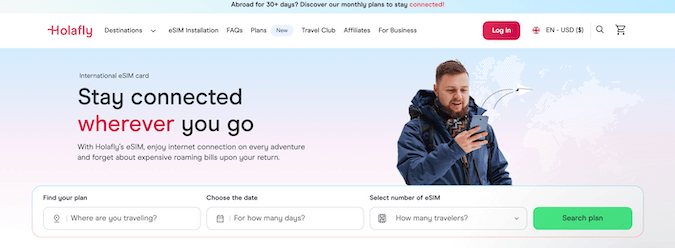
Founded in 2017 in Spain and currently headquartered in Dublin, Ireland, Holafly has emerged as a specialized player in the travel technology sector. The company was established to address the specific pain points of international roaming: high costs, limited data caps, and the complexity of local registrations. Since its inception, Holafly has expanded its reach to over 200 destinations worldwide, establishing partnerships with Tier-1 local carriers to ensure high-speed LTE and 5G connectivity for its users.

Holafly distinguishes itself from its competitors through its pricing and data structure. While many eSIM providers operate on a "pay-per-gigabyte" model, Holafly has pioneered the "unlimited data" approach in over 200 of its supported regions. This model targets heavy data users, such as digital nomads, remote workers, and content creators, who require consistent bandwidth without the fear of sudden disconnection or overage charges.
Operational Framework and User Implementation
The implementation of a Holafly eSIM is designed to be a frictionless process, though it requires specific hardware compatibility. The service is primarily compatible with unlocked devices, including the majority of iPhone models released since 2018 and a growing number of flagship Android devices from manufacturers like Samsung, Google, and Huawei.
The deployment process follows a standardized digital workflow:
- Compatibility Verification: Users must ensure their device is carrier-unlocked and supports eSIM technology before purchase.
- Digital Acquisition: Upon selecting a destination and a duration (ranging from 1 to 90 days), the user receives a digital package via email containing a unique QR code and activation instructions.
- Installation: This typically involves scanning the QR code via the device’s cellular settings. On iOS, this is managed through the "Cellular" or "Mobile Data" menu, while Android users navigate through "Network & Internet" settings.
- Activation: Once the traveler arrives at their destination, they must enable "Data Roaming" for the specific eSIM line.
A critical technical feature of the Holafly service is its ability to function as a secondary data-only line. This allows travelers to keep their primary home SIM active for receiving essential SMS messages (such as bank verification codes) while routing all high-volume data traffic through the Holafly eSIM to avoid exorbitant roaming fees from their domestic provider.
Comparative Market Analysis: Unlimited Data vs. Tiered Plans
In the competitive eSIM marketplace, Holafly competes with entities like Airalo, Maya Mobile, and Nomad. The primary differentiator is the "unlimited" promise. Traditional providers often sell data in increments of 1GB, 3GB, or 5GB. For a traveler using GPS navigation, uploading high-resolution video to social media, or participating in Zoom calls, these small buckets can be exhausted in a single day.

Holafly’s plans typically start at approximately $19.00 USD for a five-day unlimited package, which averages to roughly $3.80 per day. As the duration of the plan increases, the daily cost decreases significantly. This "all-you-can-eat" data model provides a level of psychological security for travelers, eliminating the need to constantly monitor data usage. Furthermore, Holafly has recently introduced subscription-based options and regional eSIMs (e.g., a single eSIM covering all of Europe or North America), catering to multi-country itineraries.
Technical Reliability and Network Infrastructure
The reliability of an eSIM provider is fundamentally tied to its roaming agreements. Holafly does not own physical cellular towers; instead, it acts as a Mobile Virtual Network Operator (MVNO) or a service aggregator. By partnering with leading local networks—such as Movistar in Spain, T-Mobile in the USA, or SoftBank in Japan—Holafly ensures that its users receive the same quality of service as local subscribers.
However, users should note that "unlimited data" is often subject to Fair Usage Policies (FUP). While Holafly provides high-speed data, extreme usage (such as multi-device tethering for 4K streaming) may result in temporary speed throttling by the local carrier to maintain network integrity. Despite this, Holafly has maintained a high reputation for consistency, bolstered by 24/7 multilingual customer support and a flexible six-month refund policy, which is unusually generous for the digital goods sector.
The Economic and Social Impact on Global Tourism
The democratization of mobile data through eSIMs has broader implications for the tourism industry. Real-time connectivity allows for the "spontaneous traveler" phenomenon, where individuals book tours, reservations, and transport on the fly rather than following a rigid, pre-planned itinerary. This flexibility supports local economies by directing tourist traffic to lesser-known establishments found through real-time digital discovery.
For the growing demographic of digital nomads—estimated to reach 35 million globally—services like Holafly are essential infrastructure. The ability to maintain a stable internet connection while moving between countries allows these professionals to contribute to the global economy from anywhere, bridging the gap between work and travel.
Future Outlook: The Sunset of the Physical SIM
Industry analysts predict that the physical SIM card is nearing obsolescence. Apple’s decision to remove the physical SIM slot from the iPhone 14 and subsequent models in the United States served as a major catalyst for eSIM adoption. As other manufacturers follow suit, the demand for digital-first providers like Holafly is expected to surge.
The next frontier for the eSIM market involves the integration of more robust "Global eSIMs," which provide seamless coverage across hundreds of countries under a single profile. While regional and country-specific plans remain more cost-effective for now, the trend is moving toward a truly borderless internet experience.
In conclusion, Holafly represents a significant milestone in the evolution of travel logistics. By replacing the physical SIM card with a versatile, software-based solution, the company has removed one of the final remaining barriers to seamless international movement. As data becomes as essential as a passport for the modern traveler, the simplicity, reliability, and unlimited nature of Holafly’s offerings position it as a foundational tool for 21st-century exploration. The transition from physical guidebooks to digital-everything is complete, and the eSIM is the key that unlocks this new era of global mobility.




 Chandra Hamzah
 Gabriela Annisa
 Tatiana Tantri Indah Sari
 Budi Mulyono
 Anjar Salim