Gabriela Annisa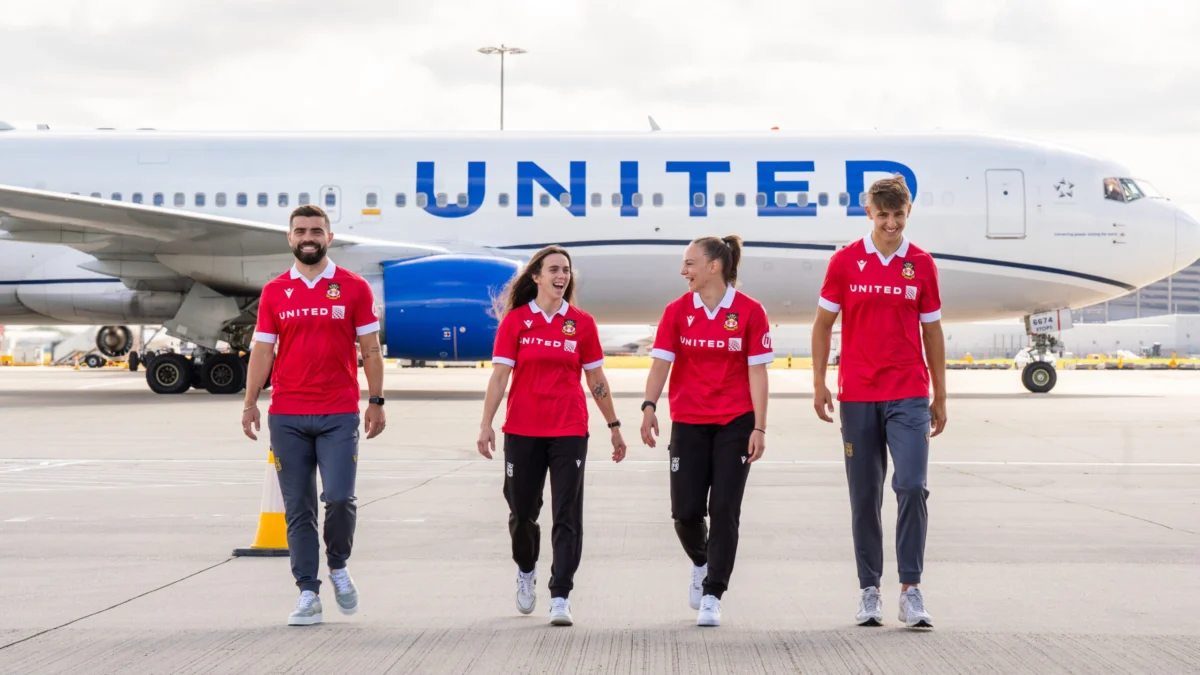
The aviation industry is currently abuzz with discussions and speculative analyses regarding a potential mega-merger between two of America’s largest carriers, United Airlines and American Airlines, raising fundamental questions about market consolidation, competitive landscapes, and the future of air travel. This hypothetical scenario, explored in recent industry dialogues, probes the feasibility and profound implications should such an unprecedented integration come to fruition, challenging existing regulatory frameworks and reshaping global aviation dynamics.
The Genesis of Merger Speculation
The recent dialogue surrounding a United-American merger emerged from observations of ongoing industry pressures, including fluctuating fuel prices, labor negotiations, supply chain disruptions, and the ever-present demand for operational efficiencies. While neither airline has officially commented on such discussions, industry analysts and commentators, including those in prominent aviation podcasts, have begun to dissect the "what if" scenario. The core question revolves around whether the strategic advantages of combining two extensive networks and resource bases could outweigh the monumental regulatory and logistical hurdles. Such a merger would represent the culmination of decades of consolidation within the U.S. airline sector, potentially creating an entity with unparalleled domestic and international reach.
A History of Consolidation in U.S. Aviation
The U.S. airline industry has a rich, albeit turbulent, history of consolidation, often driven by economic downturns, deregulation, and the pursuit of scale efficiencies. The 1980s saw a flurry of mergers post-deregulation, with carriers like Republic Airlines acquiring Air Florida and Frontier, and TWA merging with Ozark. However, the most significant wave of consolidation occurred in the 21st century, largely in response to the financial stresses following 9/11 and subsequent economic recessions.
- 2001-2005: Post-9/11, several legacy carriers faced bankruptcy, setting the stage for restructuring.
- 2008: Delta Air Lines acquired Northwest Airlines, forming a new industry giant. This merger was pivotal, demonstrating the Department of Justice’s (DOJ) willingness to approve large-scale integrations under specific conditions.
- 2010: United Airlines merged with Continental Airlines, creating United Continental Holdings, further reducing the number of legacy carriers.
- 2011: Southwest Airlines acquired AirTran Airways, expanding its low-cost footprint.
- 2013: American Airlines, then operating under bankruptcy protection, merged with US Airways. This merger faced significant initial opposition from the DOJ, which filed an antitrust lawsuit, arguing it would substantially lessen competition. The suit was eventually settled with a divestiture of slots at key airports (including Washington Reagan National and New York LaGuardia) and other concessions. This case set a precedent for the intense scrutiny future mega-mergers would face.
- Post-2013: The industry largely settled into a "Big Four" structure: American, Delta, United, and Southwest, alongside a growing cohort of ultra-low-cost carriers (ULCCs). This structure has been relatively stable, leading to improved profitability for the major carriers but also concerns about reduced competition and potentially higher fares for consumers.
This historical context underscores that any proposed merger between United and American would not be viewed in isolation but against a backdrop of increasing market concentration and intense regulatory oversight.
Profiles of the Potential Partners
United Airlines: Headquartered in Chicago, United operates a comprehensive global route network, particularly strong in trans-Pacific and trans-Atlantic markets, benefiting from its hubs in major metropolitan areas like Chicago (ORD), Denver (DEN), Houston (IAH), Los Angeles (LAX), Newark (EWR), San Francisco (SFO), and Washington D.C. (IAD). As of late 2025, United boasts a fleet of over 900 mainline aircraft, serving more than 330 destinations worldwide. In 2024, United reported revenues exceeding $54 billion and carried approximately 170 million passengers, demonstrating robust post-pandemic recovery and strategic investment in its premium products and international network.
American Airlines: Based in Fort Worth, Texas, American Airlines operates an equally vast network, with significant domestic market share and strong presence in Latin America. Its primary hubs include Dallas/Fort Worth (DFW), Charlotte (CLT), Chicago (ORD), Los Angeles (LAX), Miami (MIA), New York (JFK and LGA), Philadelphia (PHL), Phoenix (PHX), and Washington D.C. (DCA). American’s fleet comprises over 950 mainline aircraft, serving more than 350 destinations. In 2024, American reported revenues close to $53 billion, transporting over 200 million passengers. American has focused heavily on optimizing its hub-and-spoke system and managing its substantial debt load.
A merger would combine two carriers with broadly similar business models, extensive hub networks, and membership in competing global airline alliances (United in Star Alliance, American in Oneworld).
Hypothetical Synergies and Operational Challenges
The rationale for such a merger would likely center on the potential for significant synergies, including:
- Network Optimization: Combining overlapping routes could lead to increased frequency on profitable routes, rationalization of redundant routes, and expansion into underserved markets. A merged entity could offer an unparalleled domestic network.
- Cost Efficiencies: Large-scale mergers often promise significant cost savings through economies of scale, including consolidated purchasing power for fuel, aircraft, and maintenance, as well as reduced administrative overhead.
- Revenue Enhancement: A larger network could attract more corporate contracts and offer more attractive loyalty programs, potentially boosting revenue per available seat mile (RASM).
- Fleet Rationalization: While both airlines operate diverse fleets, there could be opportunities to streamline aircraft types over time, leading to lower maintenance and training costs.
- Global Reach: The combined entity would possess an almost unchallenged global footprint, strengthening its position against international competitors.
However, the challenges would be immense:
- Regulatory Scrutiny: This would be the primary hurdle. The DOJ would almost certainly view this merger as a significant reduction in competition, especially on routes where United and American currently compete head-to-head.
- Integration Complexity: Merging two massive airlines involves integrating disparate IT systems, operational procedures, corporate cultures, and most critically, labor contracts. The American-US Airways merger, though successful, highlighted the multi-year effort required for such integration.
- Labor Relations: Harmonizing seniority lists, pay scales, and work rules across multiple unions (pilots, flight attendants, mechanics, ground staff) is historically contentious and time-consuming.
- Brand Management: Deciding on a unified brand, marketing strategy, and customer experience would be critical.
- Financial Leverage: Both airlines carry substantial debt, and the financing of such a large transaction would be complex.
Regulatory Hurdles and Antitrust Concerns

The Department of Justice, under both Democratic and Republican administrations, has demonstrated increasing skepticism towards airline consolidation. The legal battle over the American-US Airways merger, and more recently, the DOJ’s successful challenge of the JetBlue-Spirit merger and its legal action against the American-JetBlue Northeast Alliance (which was ultimately dissolved), signal a robust antitrust stance.
A United-American merger would create an airline with a dominant market share, potentially exceeding 40% of domestic capacity, depending on how "market" is defined. This would likely trigger:
- Intensive Route-Specific Analysis: The DOJ would scrutinize every route where United and American are direct competitors. This includes major transcontinental routes, specific hub-to-hub connections, and international gateways. Divestitures of slots, gates, and even entire routes would almost certainly be required.
- Impact on Hub Competition: Cities like Chicago (ORD), Los Angeles (LAX), and New York (JFK/LGA) where both airlines maintain significant operations would face particular scrutiny. The concern is that reduced competition could lead to higher fares and fewer choices for consumers.
- Broader Industry Impact: Regulators would assess the impact on the remaining "Big Four" structure, potentially reducing it to a "Big Three" and further consolidating power, possibly stifling the growth of smaller carriers or ULCCs.
- Consumer Welfare Standard: The DOJ’s primary concern is whether the merger would harm consumers through higher prices, reduced service quality, or fewer options. The historical trend of increasing fares post-consolidation would be a key point of contention.
Given the current political climate and regulatory philosophy, securing approval for a United-American merger would be exceptionally challenging, requiring unprecedented concessions.
Implications for Consumers: Fares, Routes, and Service
For the traveling public, a United-American merger would present a mixed bag of potential outcomes, with significant risks of negative impacts.
- Fares: Historically, reduced competition tends to lead to higher fares. With fewer major players, the merged entity would have less incentive to compete aggressively on price, especially on routes where it would become the dominant carrier.
- Route Options: While some redundant routes might be streamlined, potentially leading to fewer direct flights on certain city pairs, the merged network could also open up new one-stop connections. However, the overall trend post-merger is often a reduction in total available seats and less choice, particularly from smaller cities.
- Service Quality: A larger, more complex airline might struggle with consistent service quality during the integration phase. While the long-term goal might be improved efficiency, the immediate aftermath could see operational disruptions, delays, and customer service challenges.
- Loyalty Programs: The integration of two massive loyalty programs (MileagePlus and AAdvantage) would be a complex undertaking, potentially leading to changes in earning rates, redemption values, and elite status benefits.
- Innovation: Some critics argue that reduced competition stifles innovation, as airlines face less pressure to differentiate through new services or products.
Implications for Labor and Global Alliances
Labor: The integration of labor forces would be one of the most contentious aspects. Both United and American have strong unions representing pilots, flight attendants, mechanics, and other employee groups. Key issues would include:
- Seniority Integration: This is often the most difficult and emotionally charged aspect, determining career progression, assignments, and job security for thousands of employees.
- Contract Harmonization: Negotiating new collective bargaining agreements that unify wages, benefits, and work rules across previously separate workforces is a multi-year process fraught with potential for disputes and strikes.
- Job Security: While mergers often promise job security through growth, there are always concerns about redundancies in administrative or overlapping roles.
Global Alliances: A United-American merger would have profound implications for global airline alliances. United is a founding member of Star Alliance, the largest global airline alliance, while American is a key member of Oneworld. A merger would necessitate:
- Alliance Choice: The merged entity would have to choose one alliance or potentially operate as a unique hybrid, which is unprecedented. A withdrawal from either Star Alliance or Oneworld would send shockwaves through the respective alliances, forcing partner airlines to re-evaluate their strategies and potentially seek new affiliations.
- Partnership Realignments: Existing joint ventures and codeshare agreements would need to be renegotiated or terminated, creating instability for international travel. This could reshape the competitive balance of international air travel for years.
Analyst Perspectives and Industry Outlook
Industry analysts generally view a United-American merger as highly unlikely to gain regulatory approval in the current environment. The consensus is that the DOJ would aggressively oppose such a transaction due to its significant antitrust implications.
"While the theoretical synergies might look appealing on paper, the practical realities of regulatory hurdles and integration complexities make this a non-starter," commented a leading aviation consultant, requesting anonymity due to the speculative nature of the topic. "The market is already highly concentrated. Another merger of this magnitude would fundamentally alter the competitive landscape in a way that regulators have explicitly tried to prevent."
Other analysts point to the sheer scale of the integration challenge. "Merging two companies of this size, with their distinct cultures, massive IT infrastructure, and powerful labor unions, is an undertaking that could cripple operations for years," said an independent financial analyst. "The cost savings and revenue synergies would have to be absolutely enormous to justify the risks and costs involved."
Instead of mega-mergers, the industry is more likely to see smaller, targeted acquisitions, strategic partnerships, or joint ventures aimed at specific routes or regions, which can achieve some benefits of scale without triggering intense antitrust scrutiny. For instance, the ongoing discussions about Qantas cutting capacity or Korean Air’s latest financial performance reflect carriers adapting to market conditions and optimizing existing operations rather than seeking transformative mergers of this scale.
Conclusion
The notion of a United-American Airlines mega-merger, while a compelling thought experiment for industry strategists, appears to be a distant prospect in the current regulatory and economic climate. The historical trajectory of airline consolidation, coupled with the DOJ’s demonstrated vigilance against market concentration, suggests that such a transaction would face insurmountable antitrust challenges. While the potential for vast network synergies and cost efficiencies exists, the colossal integration hurdles, potential negative impacts on consumer choice, and the disruption to global airline alliances would likely outweigh any perceived benefits. The airline industry, having largely completed its major consolidation phase, is now focused on optimizing existing structures, managing operational challenges, and adapting to evolving passenger demands, rather than pursuing mergers that could fundamentally redraw the competitive map.

 Chandra Hamzah
 Tatiana Tantri Indah Sari
 Budi Mulyono
 Anjar Salim