Anjar Salim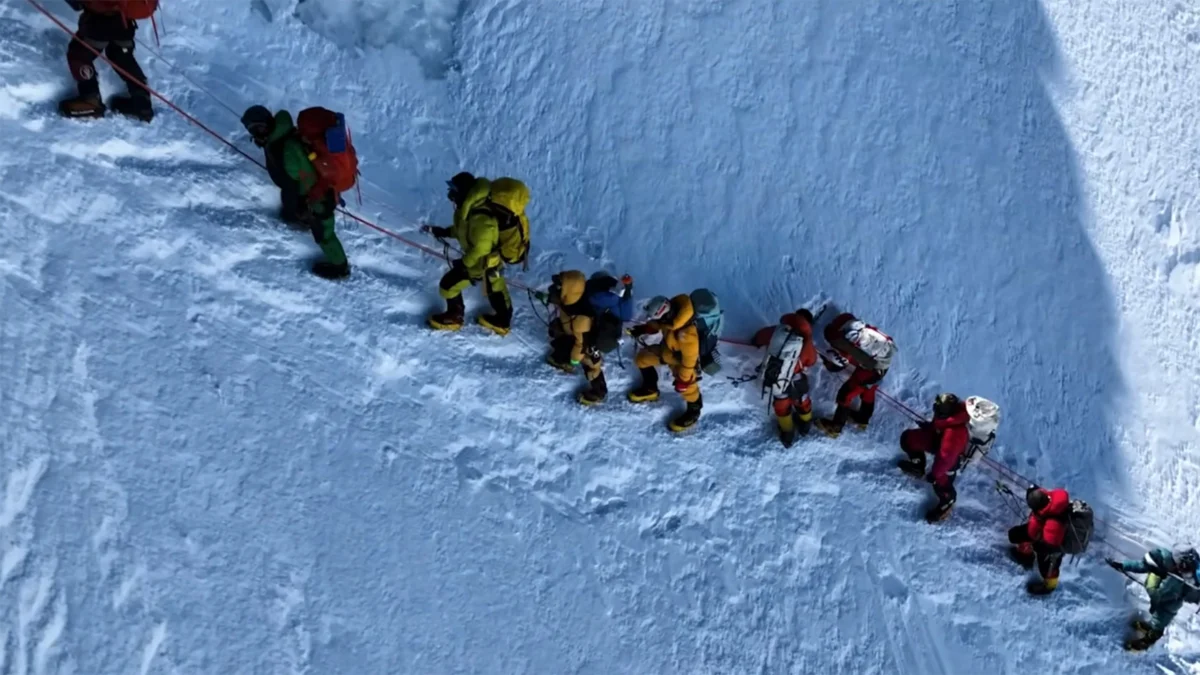
The 2026 spring climbing season on Mount Everest has been marred by tragedy following the deaths of two climbers of Indian origin who perished during their descent from the world’s highest peak. Arun Kumar Tiwari and Sandeep Are, both of whom successfully reached the 8,848.86-meter summit on May 21, succumbed to exhaustion and altitude-related illnesses as they attempted to return to lower camps. Their deaths represent the first client-climber fatalities of the year, bringing the total death toll for the 2026 season to five.
The fatalities occurred during a period of intense activity on the mountain, as hundreds of climbers took advantage of a narrow weather window to make their final pushes for the top. According to reports from Nepal’s Department of Tourism, the deaths were not the result of environmental catastrophes such as avalanches or falls, but rather the physiological toll of extreme altitude and the complications that often arise during the grueling descent from the "Death Zone."
Details of the Fatalities on the Descent
Arun Kumar Tiwari and Sandeep Are were both clients of Pioneer Adventures, a prominent Nepali guiding company. According to Nivesh Karki, the managing director of the agency, both men reached the summit on Thursday, May 21. However, the triumph of reaching the peak was short-lived as both climbers began to experience severe health complications shortly after beginning their downward journey.
Arun Kumar Tiwari died late on the night of May 21 near the Hillary Step, a nearly vertical rock face located at approximately 8,790 meters (28,839 feet) on the southeast ridge. The Hillary Step is one of the most technically challenging and congested points on the mountain, often creating bottlenecks that force climbers to wait for extended periods in sub-zero temperatures with thinning oxygen supplies. Sources at Everest Base Camp indicated that four Sherpa guides had been mobilized in a desperate attempt to rescue Tiwari and assist him to lower elevations, but he passed away before they could reach safety.
Sandeep Are, who also summited on May 21, faced a different but equally harrowing set of challenges. As he descended, Are reportedly developed snow blindness—a painful, temporary loss of vision caused by overexposure to ultraviolet (UV) rays reflected off the snow. This condition, combined with other high-altitude complications, severely hampered his ability to move. Despite being assisted by mountain workers, Are died just above Camp II at an elevation of 21,000 feet (approximately 6,400 meters). While Camp II is significantly lower than the summit ridge, the physical exhaustion accumulated during the descent from the peak can often prove fatal even at lower altitudes.
A Profile of Sandeep Are: Dedication and Preparation
Sandeep Are, a resident of Phoenix, Arizona, was remembered by friends and colleagues as a meticulous and passionate mountaineer. Jesse Ramos, a climbing guide based in Boulder, Colorado, and owner of Boulder Mountain Guiding, spoke of Are’s deep commitment to the sport. Are had been a client and friend of Ramos for several years, visiting Colorado twice a year to hone his skills in preparation for his Everest expedition.
"He wanted to be a more well-rounded mountaineer, so he continued to develop in rock climbing, ice climbing, and fixed-line climbing," Ramos said in an interview from Everest Base Camp. "He took health and wellness very seriously going into Mount Everest."
Are’s preparation was extensive. Prior to attempting Everest, he had successfully climbed Aconcagua in Argentina, the highest peak in the Southern and Western Hemispheres at 22,838 feet. He had also summited Lobuche Peak (20,075 feet) in Nepal to acclimatize to the Himalayan environment. A devoted practitioner of yoga, Are was known for performing headstands at various natural landmarks during his travels. He is survived by a 17-year-old son.
The Growing Toll of the 2026 Season
The deaths of Tiwari and Are add to a growing list of fatalities during the 2026 spring season, which has seen a mix of experienced high-altitude workers and client climbers lose their lives. The season’s first death occurred on May 3, when 52-year-old Lakpa Dende Sherpa, a veteran climbing guide, died while trekking toward Base Camp.
On May 10, Bijaya Ghimire Bishwakarma, a 35-year-old high-altitude worker from Nepal’s Dalit community, died while navigating the treacherous Khumbu Icefall, a constantly shifting glacier that remains one of the most dangerous sections of the South Col route. Only a day later, on May 11, 20-year-old Phura Gyaljen Sherpa died following a fall on the Lhotse Face, a steep wall of glacial ice that climbers must ascend to reach the South Col.
The 2026 season has been characterized by a high volume of permits and a surge in summit attempts. Khim Lal Gautam, the Department of Tourism representative at Base Camp, reported that more than 700 successful summits have been recorded so far this year. This figure includes a mix of international clients, local guides, and support staff.
Crowding and Record-Breaking Achievements
Despite the inherent dangers, the allure of Everest remains undiminished. On May 22, the same day the deaths were confirmed, at least 70 more climbers reached the summit. This followed a massive wave of activity on May 20, which saw record-breaking crowds on the upper slopes.
Among those making headlines for more positive reasons was Pa Dawa Sherpa of Pangboche. On May 22, he reached the summit for the second time this season, marking his 31st successful ascent of Everest. This achievement places him just one summit behind the world-record holder, Kami Rita Sherpa, and underscores the incredible physical endurance of the elite Sherpa community.
Commercial guiding also continues at a massive scale. Lukas Furtenbach, owner of the Austrian-based Furtenbach Adventures, reported that 42 members of his team—comprising both clients and support staff—reached the summit on May 22. Furtenbach indicated that another group of similar size was expected to attempt the summit the following day, provided weather conditions remained stable.
The Perils of the Descent and the "Death Zone"
The deaths of Tiwari and Are highlight a well-documented but often underestimated reality of high-altitude mountaineering: the descent is frequently more dangerous than the ascent. Statistical analyses of Everest fatalities show that a significant majority of deaths occur after the climber has reached the summit and is heading back down.
Physiologically, the human body cannot survive indefinitely above 8,000 meters, an area known as the "Death Zone." At this altitude, the air is so thin that the body’s cells begin to die from a lack of oxygen. Even with supplemental oxygen, climbers experience rapid cognitive decline, impaired judgment, and extreme physical fatigue.
When a climber reaches the summit, they have often exhausted their physical reserves. The descent requires intense focus and physical effort, yet it is performed while the body is in a state of advanced deterioration. Conditions such as High Altitude Cerebral Edema (HACE) and High Altitude Pulmonary Edema (HAPE) can set in rapidly, leading to loss of consciousness and death. In the case of Sandeep Are, snow blindness likely added a layer of psychological terror and physical disorientation to an already desperate situation.
Implications for Safety and Regulation
The recurring tragedies on Everest continue to fuel debates regarding the commercialization of the mountain and the safety protocols governing high-altitude expeditions. Critics argue that the proliferation of low-cost expedition agencies may lead to a higher number of inexperienced climbers on the mountain, which in turn increases the risk of bottlenecks and accidents.
However, in the case of the 2026 fatalities, the victims appeared to be well-prepared and were supported by established agencies. The deaths of Tiwari and Are suggest that even with significant preparation and professional support, the risks of Everest can never be entirely mitigated.
Nepal’s Department of Tourism has faced pressure to implement stricter permit requirements, such as mandating that climbers have previous experience on other 8,000-meter peaks. While some regulations have been introduced in recent years, the economic importance of Everest tourism to Nepal makes radical changes difficult to implement.
As the 2026 season enters its final stages, the focus at Base Camp remains on the safe descent of the hundreds of climbers still on the mountain. For the families of Arun Kumar Tiwari and Sandeep Are, the season ends in mourning, serving as a somber reminder of the thin line between triumph and tragedy on the world’s highest stage. Expedition organizers and the Department of Tourism are currently coordinating the difficult task of body recovery, a process that is itself fraught with danger at such extreme altitudes.



 Chandra Hamzah
 Gabriela Annisa
 Tatiana Tantri Indah Sari
 Budi Mulyono