
 Anjar Salim
A landmark study published in the European Journal of Sport Science has revealed that integrating brief cognitive exercises into a traditional physical warmup can significantly enhance endurance performance in recreational athletes. Conducted by researchers at the University of Birmingham and led by Hannah Mortimer, the study demonstrates that a "combined cognitive and physical warmup" (CCPW) can improve mile run times by as much as 2.8 percent. These findings challenge traditional views of preparation for aerobic exercise, suggesting that the mental state of an athlete before a race is as critical to performance as muscular readiness.
The Methodology: Integrating Mind and Body
The research team recruited 25 recreational runners—13 men and 12 women—to participate in a series of controlled time trials. The participants were characterized as experienced but non-elite, with average personal bests of 6:47 for the mile and 23:31 for the 5K. On average, these individuals maintained a training volume of approximately 20 miles per week, representing a common demographic of fitness enthusiasts and competitive amateur runners.
The study utilized a randomized, cross-over design in which each participant completed three one-mile time trials under different conditions. The physical component of the warmup remained constant across all three trials: a 1,200-meter jog at a self-selected easy pace, followed by four 100-meter strides and a series of dynamic drills, including lunges and high knees.
The variables were introduced through the addition of cognitive tasks performed on a mobile application known as SOMA-NPT. This software provides a battery of tasks designed to engage specific executive functions. In the experimental conditions, runners performed nine minutes of cognitive exercises, broken into three-minute blocks interspersed between the physical elements of the warmup. The two experimental conditions were:
- Combined-Low: Cognitive tasks set at 20 percent of the participant’s maximum capacity.
- Combined-High: Cognitive tasks set at 70 percent of the participant’s maximum capacity.
The tasks were specifically chosen to tax cognitive functions such as task switching, memory updating, response inhibition, and decision-making—elements often associated with high-pressure athletic environments.
Analysis of the Results: Speed, Heart Rate, and Perception
The results of the Birmingham study were statistically significant and consistent across multiple metrics. Compared to the physical-only control group, runners achieved the following improvements:

- Mile Time Performance: In the "Combined-Low" condition, runners were an average of 8 seconds (2.0 percent) faster. In the "Combined-High" condition, they were 11 seconds (2.8 percent) faster.
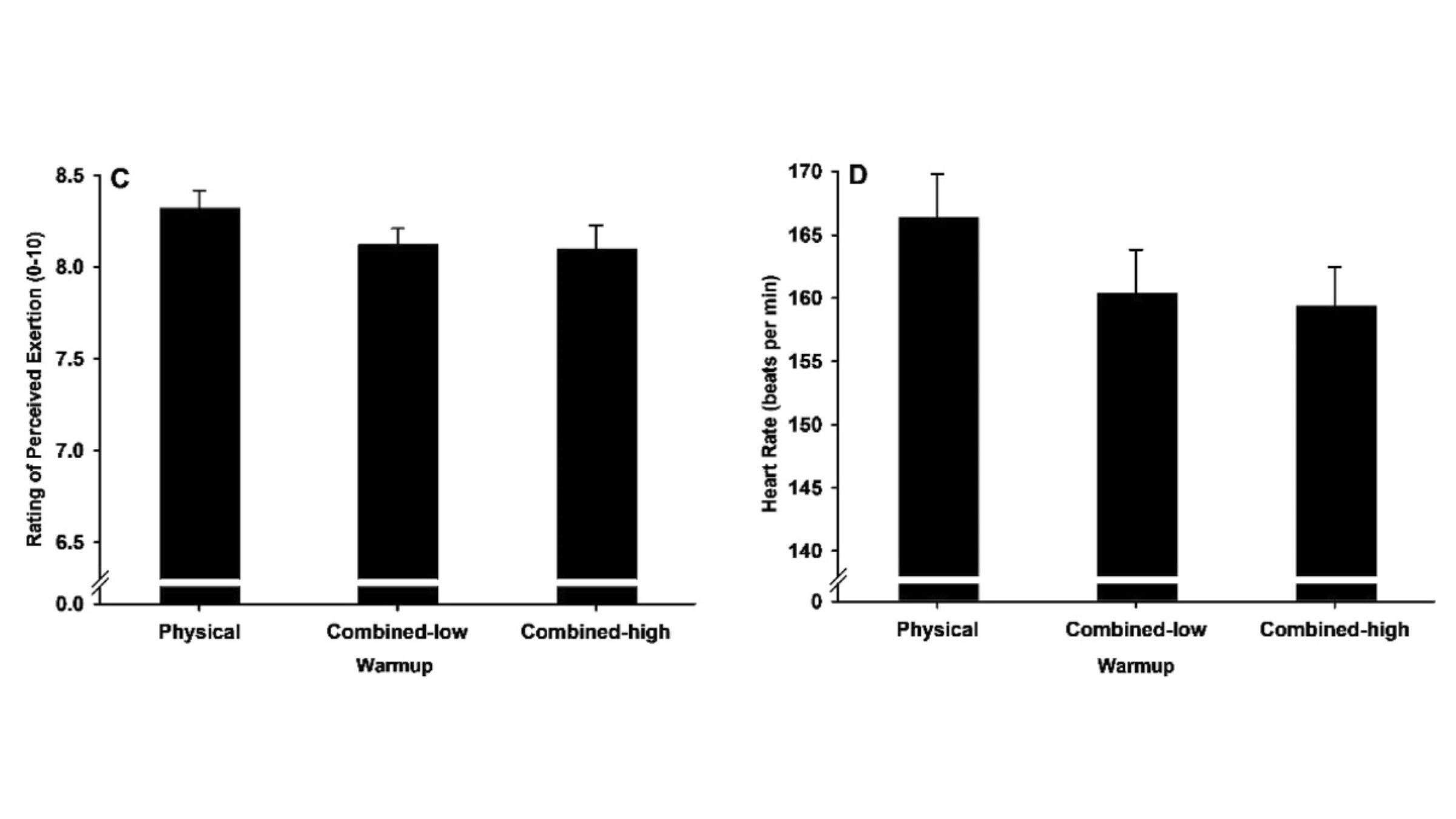
- Heart Rate Metrics: Surprisingly, despite running at a faster pace, participants recorded a lower average heart rate during the cognitive-enhanced trials. Heart rates were approximately seven to eight beats per minute lower than in the physical-only trial.
- Perceived Exertion: The Rating of Perceived Exertion (RPE), a subjective measure of how hard an athlete feels they are working, was lower in the cognitive trials. Runners reported feeling less strained while maintaining a higher velocity.
- Readiness to Perform: Immediately prior to the time trials, participants rated their "readiness" on a scale of one to ten. Those who had completed the cognitive warmup reported significantly higher scores, indicating they felt more mentally prepared and motivated to compete.
These findings are particularly noteworthy because the cognitive tasks used are the same ones often employed in "mental fatigue" studies. Previous research has shown that performing these tasks for extended periods (e.g., 30 to 90 minutes) can deplete mental resources and degrade endurance performance. However, the Birmingham study suggests that in short doses—nine minutes total—these tasks act as a "priming" mechanism rather than a fatiguing one.
Chronology of Warmup Science: From Stretching to Cognition
The concept of the warmup has undergone several paradigm shifts over the last several decades.
- 1980s-1990s: The emphasis was largely on static stretching to increase flexibility. However, later research suggested that static stretching could actually decrease power output in explosive movements.
- 2000s-2010s: The industry shifted toward "dynamic warmups," which include active movements like leg swings and high knees to raise core body temperature and improve neuromuscular activation.
- 2020s: Emerging research began focusing on the psychological and neurological components of preparation.
A pivotal study in 2024 by Italian researchers provided a precursor to Mortimer’s findings. That study examined the FIFA11+ warmup protocol, a standardized routine designed to reduce injuries in soccer players. The Italian researchers found that the protocol itself did not necessarily improve immediate performance unless the athletes were specifically told that it would. This highlighted the "placebo effect" in athletic preparation—the idea that believing a routine is effective can manifest in actual performance gains.
The Birmingham study adds a new layer to this chronology by suggesting that cognitive engagement can produce physiological changes (like lower heart rate) that go beyond a simple placebo effect, or perhaps, that cognitive priming is the most effective way to trigger a beneficial psychological state.
Theoretical Implications: Priming vs. Placebo
The mechanism behind why a nine-minute phone-based task improves a mile run remains a subject of scientific debate. One theory is "cognitive priming." Much like a physical warmup prepares the muscles for the stress of running, a cognitive warmup may "wake up" the prefrontal cortex, the area of the brain responsible for executive function and the regulation of effort. By engaging the brain’s inhibitory control centers, athletes may become better at "filtering" the pain signals that occur during a maximal effort like a mile run.
Another possibility is the "flow state" induction. The cognitive tasks require intense focus. Engaging in these tasks immediately before a race may help an athlete enter a state of "flow" or "the zone," where distractions are minimized and the connection between mind and body is optimized.
However, the "readiness" scores in the study cannot be ignored. The fact that participants felt more prepared suggests a strong psychological component. If an athlete believes they have undergone a cutting-edge, "high-tech" preparation, their confidence may lead to a more aggressive pacing strategy and a higher tolerance for discomfort. The lower heart rate observed in the Birmingham study is particularly puzzling in this context; it suggests that the cognitive warmup might have reduced pre-race anxiety, leading to better running economy and a more efficient cardiovascular response.
Broader Impact on the Athletic Community
The implications of this research are vast for both amateur and professional sports. For recreational runners, the intervention is essentially free and accessible. Unlike "super shoes" or expensive nutritional supplements, cognitive priming requires only a smartphone and a few minutes of time.
For elite athletes, where the margin between a gold medal and fourth place is often less than one percent, a 2.8 percent improvement is monumental. Coaches may begin to integrate "neuro-drills" into race-day protocols to ensure that athletes are not just physically warm, but mentally sharp.
Furthermore, this study opens the door for further research into different types of exercise. If cognitive priming works for a mile run—a high-intensity, short-duration event—does it also work for marathons or ultra-endurance events? Or does the "fatigue" effect eventually take over if the cognitive load is too high?
Conclusion: A New Standard for Preparation
The University of Birmingham study represents a significant step forward in understanding the holistic nature of athletic performance. It suggests that the traditional physical warmup, while necessary, may be incomplete. By ignoring the brain, athletes may be leaving significant performance gains on the table.
While some skeptics may point to the relatively small sample size of 25 runners, the consistency of the data—across speed, heart rate, and subjective exertion—provides a compelling case for the efficacy of cognitive priming. As sports science continues to evolve, the distinction between "mental" and "physical" training continues to blur. The "one weird trick" of playing a brain game before a race may soon become a standard component of the modern athlete’s toolkit, proving that the fastest way to the finish line involves the mind as much as the legs.




 Chandra Hamzah
 Tatiana Tantri Indah Sari
 Budi Mulyono

