
 Anjar Salim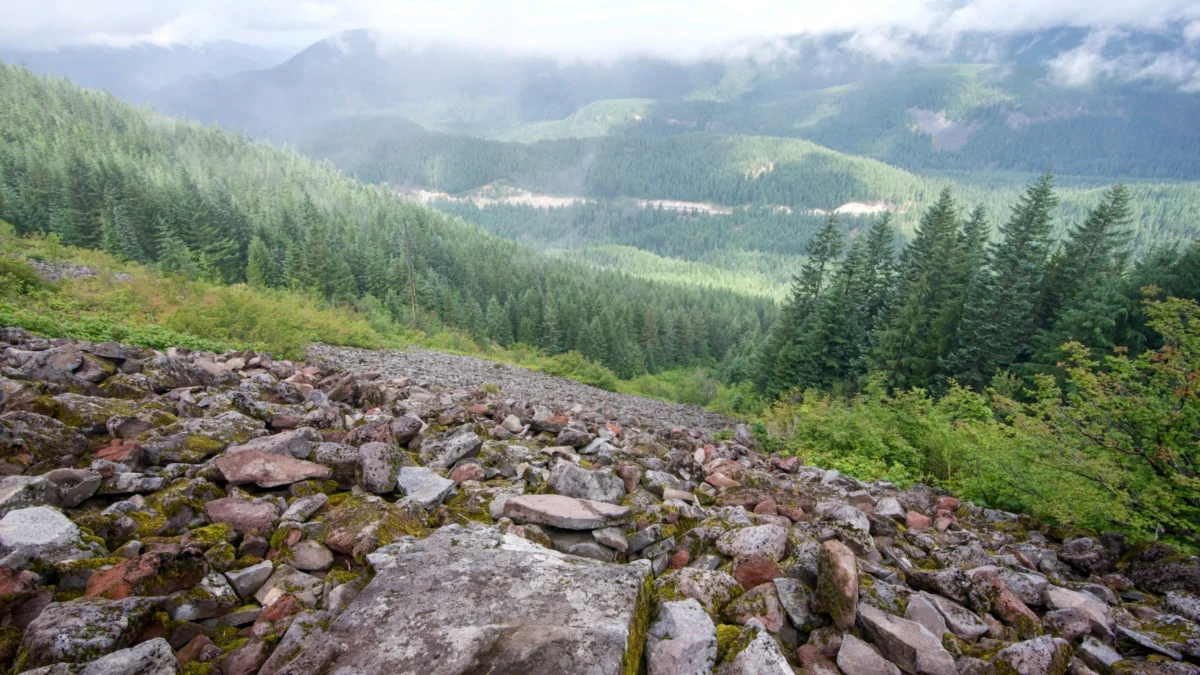
An indie filmmaker working on a wilderness project experienced a brush with tragedy on September 15, when he suffered a catastrophic 100-foot fall from a rocky precipice in Oregon’s Mount Hood National Forest. The 33-year-old unnamed victim was shooting footage on the second peak of Tom, Dick, and Harry Mountain when the accident occurred, prompting an aggressive multi-agency rescue operation. Thanks to the rapid intervention of a bystander physician and a specialized Oregon National Guard helicopter extraction, the filmmaker survived the severe high-angle trauma. The incident has once again drawn attention to the deceptive hazards lurking within the Pacific Northwest’s heavily trafficked recreational corridors, serving as a stark reminder of the risks associated with remote media production in vertical terrain.
Chronology of the Incident: A Timeline of Survival
The sequence of events on September 15 unfolded rapidly, transitioning from a routine creative shoot to a life-threatening medical emergency within seconds.
At approximately 2:45 P.M., the filmmaker and at least one collaborator were navigating the upper ridgeline of the mountain’s second peak. According to Sergeant Adam Peterson, a supervisor with the Clackamas County Sheriff’s Office (CCSO) search-and-rescue team, the crew was utilizing specialized gear to capture dynamic angles. "They were filming with a drone, just a couple of guys, making some sort of an indie film," Peterson explained, noting that the victim had rigged ropes along the cliff band to secure a specific shot.
At roughly 2:50 P.M., disaster struck. While operating near the edge of the vertical drop, the filmmaker lost his footing. Witnesses and investigators reported that he plummeted straight down approximately 100 feet of sheer rock face before tumbling an additional 15 to 20 feet down a punishing, loose-dirt slope.
By 3:00 P.M., emergency dispatchers received urgent calls reporting a severe high-angle fall. Initial reports relayed by witnesses indicated that the victim was lying on his side, trapped on the steep slope, breathing but non-responsive to movement, and suffering from massive trauma.
At approximately 3:30 P.M.—roughly half an hour after the fall—two hikers arrived at the scene. Among them was a licensed medical doctor. Recognizing the severity of the situation, the physician immediately intervened to stabilize the patient, preventing him from sliding further down the unstable embankment and administering critical trauma care to control massive bleeding and mitigate the onset of traumatic shock.
By 4:00 P.M., CCSO search-and-rescue coordinators had mobilized ground units and requested air support from the Oregon National Guard.
At 5:00 P.M., an Oregon National Guard helicopter crew, accompanied by an elite flight paramedic, successfully located the casualty on the rugged mountainside. Rescuers hoisted and secured the patient to a backboard within 30 minutes, executing a technical extraction before flying him directly to a regional trauma center for emergency surgical intervention.
Anatomy of the Hazard: Understanding Tom, Dick, and Harry Mountain
While the name Tom, Dick, and Harry Mountain often brings a lighthearted chuckle to tourists and casual visitors, the geological reality of the formation is profoundly serious. Located roughly 55 miles southeast of Portland and towering above the community of Government Camp, the volcanic ridge spans approximately two miles and features three distinct summits reaching elevations of roughly 5,070 feet.
Etymological history suggests the range was named during the pioneer era after the idiom "every Tom, Dick, and Harry," denoting an assortment of ordinary people. Originally cataloged simply as Tom Dick Mountain, the U.S. Board on Geographic Names officially updated the cartographic designation in 1969 to include "Harry."
Despite its whimsical moniker, the upper elevations of the mountain present severe environmental and topographical challenges. While the lower trail networks—particularly those surrounding the picturesque Mirror Lake—are heavily populated by novice day hikers and families, the upper ridgelines and summit approach are characterized by extreme exposure, vertical cliff bands, and highly unstable, loose scree. According to U.S. Forest Service advisories, the transition from the forested lower loops to the upper volcanic benches requires careful footing, as crumbly rock and steep drop-offs routinely compromise safety.
The Critical Role of Bystander Intervention
The survival of the 33-year-old filmmaker highlights a foundational reality of wilderness medicine: the crucial window of time before organized rescue teams can arrive on the scene. In remote backcountry environments, professional emergency medical services are frequently delayed by distance, topography, and logistical constraints.
In this instance, the presence of a medical doctor among the civilian bystanders fundamentally altered the clinical outcome. According to Sergeant Peterson, the physician’s prompt application of direct pressure and improvised tourniquets successfully governed arterial bleeding, while psychological and physiological management kept traumatic shock at bay.
"The doctor was able to control bleeding and handle essentially shock symptoms on the scene," Peterson stated. "That was very helpful due to the level of trauma."
Wilderness medicine experts consistently emphasize that severe hemorrhage is one of the leading preventable causes of death in high-impact trauma incidents. Without the immediate tourniquet application and hemorrhage control administered by the bystanders, the filmmaker’s prognosis could have been drastically different during the two-hour gap between his fall and his arrival at a hospital.
The Broader Impact: Escalating Rescues in the Mount Hood Corridor
The September 15 incident is emblematic of a broader, persistent trend facing search-and-rescue (SAR) organizations across the Pacific Northwest: an escalating volume of calls for assistance in high-use recreational zones.
Tom, Dick, and Harry Mountain is a perennial consumer of county resources. Situated immediately adjacent to major ski infrastructure and overlooking heavily trafficked tourist routes, the area funnels thousands of visitors upward every season. While the majority of calls handled by CCSO personnel on the mountain historically involve lower-acuity incidents—such as acute lower-extremity sprains, exhaustion, or minor dehydration among hikers—incidents involving vertical environments and high-velocity trauma require complex, multi-jurisdictional responses.
Furthermore, the mountain’s proximity to the treacherous southern slopes of Mount Hood—a notorious arena for mountaineering accidents, sudden weather shifts, and fatal falls—places emergency responders on constant high alert. SAR officials note that the convergence of amateur recreation, commercial media production, and extreme backcountry topography creates an environment where minor miscalculations carry catastrophic consequences.
As outdoor recreation and content creation in wild places continue to surge in popularity, authorities reiterate the importance of stringent safety protocols. Rigging ropes for cinematic production or navigating exposed rock faces requires comprehensive alpine training, redundant safety anchors, and reliable communication devices. For this particular filmmaker, a combination of professional medical luck on the trail and the rapid mobilization of military aviation assets turned what could have been a fatal afternoon into a testament to backcountry resilience.



 Chandra Hamzah
 Tatiana Tantri Indah Sari
 Budi Mulyono
