Tatiana Tantri Indah Sari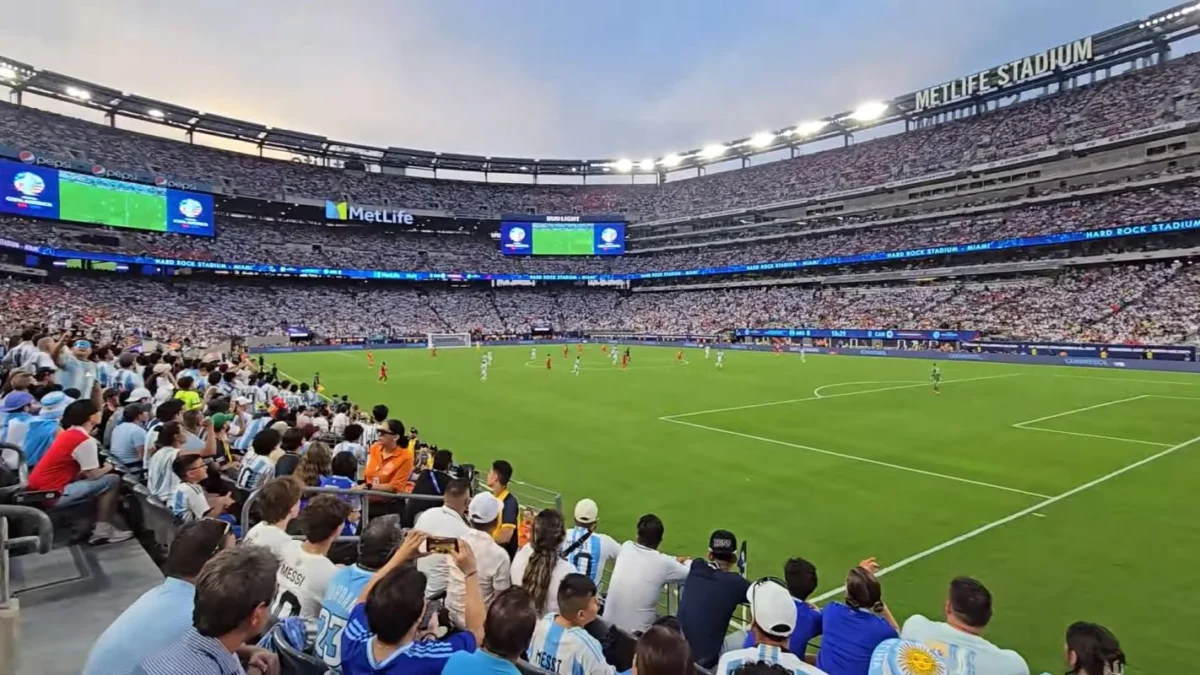
As anticipation builds for the monumental FIFA World Cup 2026, a significant financial hurdle has emerged for fans planning to attend matches at MetLife Stadium in the New York-New Jersey metropolitan area. The World Cup New York New Jersey Host Committee recently announced a staggering $150 round-trip fare for train travel from New York’s Pennsylvania Station to MetLife Stadium for game days. This price represents an almost twelve-fold increase from the typical off-peak round-trip fare of $12.90 for the same route, immediately raising alarms among prospective attendees and sparking a broader debate about the accessibility and affordability of major sporting events.
A Steep Price for Proximity: Unpacking the MetLife Transit Plan
The revelation of the premium transit fare comes amidst a period of escalating costs across various sectors, from general inflation to specific event-related expenses like World Cup tickets themselves. For fans traveling from the heart of Manhattan, the journey to MetLife Stadium in East Rutherford, New Jersey, is typically serviced by NJ Transit, requiring a transfer at Secaucus Junction. The standard fare reflects a commuter service designed for daily travel, whereas the proposed $150 fee is for a dedicated, presumably enhanced, World Cup service. This significant price hike is posited by organizers to cover the increased operational demands, security measures, and the provision of a more streamlined experience for event-goers.
According to the host committee’s announcement, the transportation plan for MetLife Stadium matches will cap rail tickets at 40,000 per game. Given MetLife Stadium’s official capacity of 82,500, and an anticipated spectator count of approximately 78,000 for World Cup matches, this means that close to half of all attendees will need to seek alternative modes of transport. The remaining 38,000 spectators are expected to rely on a mix of options including dedicated bus services, ride-hailing applications, pre-arranged permitted vehicles, and a limited number of parking spaces. While rail tickets will also be available for travelers originating from various New Jersey rail stations, the pricing structure for these points of origin was not immediately detailed, though it is widely expected to reflect similar surge pricing principles. This multi-modal approach, while aiming to distribute traffic, implicitly places a substantial financial burden on a large segment of the fan base.
The Broader Context: World Cup 2026’s Unprecedented Scale
The FIFA World Cup 2026 is set to be a tournament of unprecedented scale, marking the first time 48 nations will compete across three host countries: the United States, Canada, and Mexico. With 16 host cities spread across these vast geographies, the logistical challenges are immense. The U.S. alone will host matches in Seattle, San Francisco (Bay Area), Los Angeles, Kansas City, Dallas, Houston, Atlanta, Miami, Philadelphia, Boston, and the New York-New Jersey metropolitan area. Each city presents its own unique transit landscape and infrastructure capabilities. MetLife Stadium, a jewel in the crown of American sports venues, is one of the largest and most prominent, widely speculated to be a contender for the tournament’s final match. Its selection as a key venue underscores its capacity and accessibility, yet the recently announced transit costs challenge the latter.
The sheer volume of international and domestic travelers expected for the 2026 World Cup will strain existing infrastructure. FIFA estimates that the tournament could attract 5.5 million visitors to the host cities, generating billions in economic activity. While the economic benefits are touted, the ancillary costs, such as these elevated transit fares, directly impact the fan experience and could potentially deter some segments of the audience. The World Cup traditionally draws a diverse global audience, encompassing individuals from various socioeconomic backgrounds, and concerns are mounting that such high access costs could inadvertently create an exclusive environment, moving away from the "beautiful game’s" universal appeal.
A History of Planning and Promises: The Road to 2026
The journey to hosting the 2026 World Cup began years ago with the intricate bidding process. The "United 2026" bid, presented by the three North American nations, emphasized existing world-class infrastructure, stadium readiness, and robust transportation networks as key advantages. Promises were made regarding ease of access and a memorable fan experience. Following the successful bid in 2018, and the subsequent host city selections in 2022, local organizing committees, including the New York New Jersey Host Committee, have been diligently working on operational plans, including transportation strategies.
Throughout this planning phase, discussions often centered on leveraging existing public transit systems to manage the immense crowds, a cornerstone of sustainable event planning. The expectation among many was that while there might be some premium for dedicated services, it would remain within a reasonable range, especially given the extensive public transit networks in a metropolitan hub like New York-New Jersey. The announcement of the $150 fare, therefore, represents a significant deviation from what many might have anticipated, indicating either unforeseen operational challenges, a deliberate strategy to maximize revenue, or an attempt to manage demand by pricing out a segment of potential rail users.
Capacity Crunch and Operational Realities
The rationale behind the limited 40,000 rail tickets and the high cost likely stems from a combination of operational realities and strategic demand management. Running special event services, especially for an international event of this magnitude, involves considerable expenses beyond standard commuter operations. These include:
- Dedicated Train Sets: Utilizing additional trains and staff that might otherwise be used for regular service or held in reserve.
- Enhanced Security: A heightened security presence at stations, on trains, and along the routes, which is a significant cost factor for any large-scale international event.
- Operational Overtime: Paying transit staff overtime for extended hours and additional shifts.
- Infrastructure Modifications: Potentially minor modifications or enhancements to platforms, signage, and accessibility features to handle the specific needs of World Cup crowds.
- Demand Management: Pricing can be used as a tool to spread out demand across different transport modes, preventing over-reliance on a single system. If rail tickets were cheap, the 40,000 limit would be reached almost instantly, potentially leading to chaos.
However, the question remains whether a nearly twelve-fold increase is truly proportional to these added costs or if it incorporates a significant revenue-generating component. The expectation that 38,000 additional spectators will use buses, ride-hailing, or private vehicles also raises concerns about potential traffic gridlock around MetLife Stadium, which is already prone to congestion during major events. This could lead to longer travel times, increased emissions, and a diminished overall experience for those not opting for the premium rail service.
Reactions from Stakeholders: Fans, Authorities, and Organizers
The immediate reaction from potential World Cup attendees has been largely one of dismay and frustration. Fan forums and social media platforms quickly filled with comments expressing disbelief at the pricing. Many international travelers, already factoring in expensive flights and accommodation, view this as an unwelcome additional burden. Domestic fans, particularly those from lower-income brackets or families, expressed concerns that these costs could make attending matches prohibitive, undermining the spirit of inclusivity that FIFA often promotes.
While official statements from fan advocacy groups are yet to emerge, the sentiment suggests that this issue will become a focal point of discussion leading up to 2026. Concerns about affordability extend beyond just transit, encompassing ticket prices, merchandise, and food and beverage costs within the stadiums.
The New York New Jersey Host Committee, in its announcement, likely emphasized the "premium" nature of the service, highlighting its efficiency and convenience. However, they have yet to offer a detailed cost breakdown justifying the $150 price tag. NJ Transit and other regional transport authorities, while partners in the overall plan, typically operate under public service mandates, and any deviation towards highly commercialized pricing for major events would likely be a joint decision with the event organizers and FIFA.
FIFA, as the overarching governing body, often stresses the importance of accessibility and a positive fan experience. How this transit pricing aligns with their broader objectives for the World Cup’s legacy remains to be seen. In past World Cups, such as Brazil 2014 and Russia 2018, transit solutions often involved significant public investment and, in some cases, free or heavily subsidized transport for ticket holders, aimed at easing movement and enhancing the festive atmosphere. The Qatar 2022 World Cup also offered a highly integrated and largely free public transport network for ticket holders, utilizing a new metro system. The decision for the 2026 U.S. hosts to adopt a premium pricing model stands in stark contrast to these recent precedents.
Economic and Social Implications: More Than Just a Fare
The implications of such high transit costs extend beyond individual fan budgets. Economically, while it might generate additional revenue for the host committee or transit operators, it could also lead to reduced spending in other areas. Fans who spend $150 on transport might cut back on local dining, shopping, or other tourism activities, thus offsetting some of the broader economic benefits anticipated by the host cities. Moreover, if these costs deter a significant number of fans, it could impact overall attendance figures and the vibrant atmosphere often associated with World Cup matches.
Socially, the concern revolves around equity and inclusion. Major global events like the World Cup are meant to be unifying experiences, bringing together people from all walks of life. When access becomes contingent on high disposable income, it risks alienating a significant portion of the global football community. This could lead to a less diverse crowd, potentially diminishing the unique cultural exchange and festive spirit that defines the World Cup. The image of the host city and nation could also be affected if the perception grows that the event is primarily for the affluent.
Furthermore, the environmental impact is a critical consideration. With only 40,000 rail tickets available, a substantial portion of the crowd will be pushed towards ride-hailing services and private vehicles. This increases traffic congestion, contributes to carbon emissions, and contradicts the sustainability goals often articulated by major event organizers and host cities. A robust, affordable, and high-capacity public transport system is typically seen as a cornerstone of environmentally responsible event planning.
Looking Ahead: Challenges and Potential Solutions for Fan Mobility
The announcement regarding MetLife Stadium transit fares serves as an early indicator of the logistical and financial challenges that lie ahead for the 2026 World Cup. It also sets a precedent that could be replicated by other host cities grappling with their own transit plans. While the host committee has outlined its initial strategy, the period leading up to 2026 offers opportunities for refinement and potential adjustments based on public feedback and further analysis.
Possible solutions or mitigating factors could include:
- Tiered Pricing: Introducing different price points for rail tickets, perhaps with some standard fares available for early bird purchases or specific time slots, alongside premium options.
- Package Deals: Collaborating with official ticketing partners or hospitality providers to offer integrated travel packages that might include transit at a more favorable rate.
- Corporate Sponsorship: Seeking corporate sponsors to subsidize a portion of transit costs, thereby reducing the burden on individual fans.
- Enhanced Bus Services: Investing heavily in dedicated, high-capacity bus services that are more affordable than premium rail, and implementing efficient bus lanes to circumvent traffic.
- Communication and Transparency: Providing a clearer breakdown of the costs involved in running these special services to help fans understand the rationale behind the pricing.
- Inter-Agency Coordination: Ensuring seamless coordination between all transit authorities (NJ Transit, MTA, PATH, etc.) and local law enforcement to optimize all transport modes and minimize delays.
The FIFA World Cup 2026 promises to be an extraordinary event, showcasing football at its grandest scale across North America. However, the emerging details regarding fan accessibility, particularly the soaring transit costs to key venues like MetLife Stadium, underscore a critical challenge. Balancing the operational demands and financial viability of hosting such a colossal event with the fundamental principle of fan inclusivity will be paramount. As the countdown to 2026 continues, all eyes will be on the host committees and FIFA to ensure that the "beautiful game" remains accessible to all who wish to be a part of its global celebration.

 Budi Mulyono
 Lukman Taruna Persada Ramadan
 Chandra Hamzah
 Gabriela Annisa