
 Anjar Salim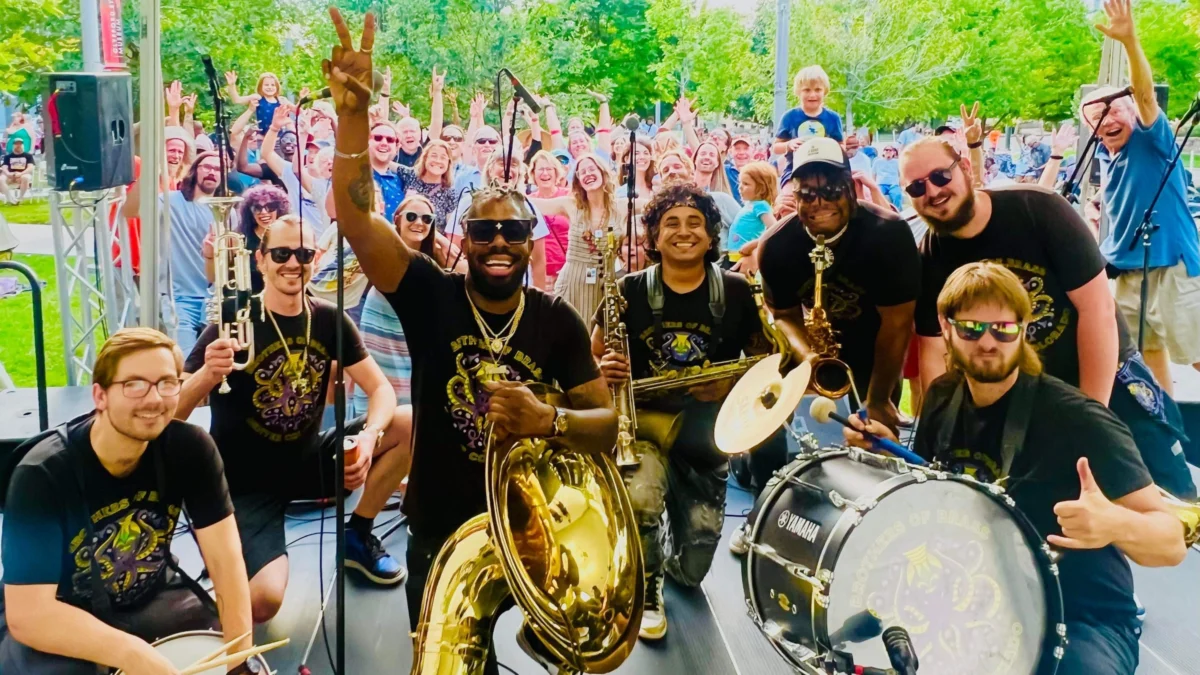
The city of Denver, Colorado, is preparing to host Outside Days, a multifaceted festival celebrating the intersection of outdoor recreation, environmental stewardship, and cultural expression, scheduled for May 30, 2026. Among the headline acts slated to perform is Brothers of Brass, a premier New Orleans-style brass ensemble that has become a staple of the Mile High City’s urban fabric over the last decade. The group’s journey from itinerant street performers to civic fixtures reflects a broader evolution within Denver’s music scene, which has increasingly become a destination for artists seeking to blend traditional genres with the unique demands and inspirations of the American West.
The Genesis of a High-Altitude Brass Tradition
The origins of Brothers of Brass are rooted in the rich musical heritage of the American South, specifically the brass band traditions of New Orleans and Atlanta. The group was founded by Khalil Simon, a sousaphonist who initially honed his craft busking in those southern hubs. Simon’s early career was defined by the "let-out" circuit—the practice of playing for crowds as they exit large stadiums and arenas. This tradition, central to the New Orleans "Second Line" culture, emphasizes high energy, audience interaction, and a rhythmic drive that serves as a communal bridge between events.
Upon arriving in Denver, Simon faced significant institutional hurdles. In a pivotal moment for the city’s street-performance history, Simon was arrested while busking outside the Denver Center for the Performing Arts (DCPA). His instruments were confiscated, leading to a protracted legal dispute regarding First Amendment rights and the use of public sidewalks for artistic expression. Simon ultimately prevailed in court, securing a legal mandate that allowed him to perform at specific high-visibility locations, including the 16th Street Mall.
This legal victory paved the way for the current iteration of the band. Armando Lopez, the group’s saxophonist, joined Simon after a chance encounter on the 16th Street Mall. At the time, Lopez and drummer Jake Herman were seeking a tuba player to anchor their own street ensemble. The synergy between Simon’s southern brass foundation and Lopez’s California-influenced saxophone style proved immediate. By establishing a consistent presence on the mall, the group was able to turn busking into a sustainable enterprise, providing a living wage for six to seven musicians and solidifying their place in Denver’s burgeoning creative economy.
Musical Adaptation and Technical Challenges at 10,000 Feet
One of the most distinctive aspects of Brothers of Brass is their ability to perform in extreme environments. Colorado’s geography presents unique physiological challenges for wind and brass musicians, particularly the thin air found at high elevations. The band frequently performs at mountain resorts and high-altitude municipalities, sometimes reaching elevations of 9,000 to 10,000 feet.
Playing brass instruments requires significant lung capacity and controlled breath support. At 10,000 feet, the effective oxygen level is approximately 30% lower than at sea level. This necessitates a level of physical conditioning uncommon in traditional orchestral or indoor jazz settings. Members of the band have noted that oxygen canisters are occasionally required to sustain the high-energy, long-duration sets characteristic of their style. This adaptation has allowed them to carve out a niche within the Colorado "après-ski" culture, bringing the boisterous sound of New Orleans to the rugged landscapes of the Rocky Mountains.
The band’s repertoire has also evolved to reflect its environment. While maintaining their New Orleans roots, they have integrated "Colorado Brass Band" elements, which include reinterpretations of local anthems. A notable example is their brass arrangement of John Denver’s "Rocky Mountain High," which they performed as the official band for the Colorado Summit ultimate frisbee events. This blending of genres—traditional brass, hip-hop, and folk-rock—mirrors the demographic shifts in Denver, a city that has seen its population grow by nearly 20% since 2010, drawing residents from the Midwest, both coasts, and the South.
Civic Integration and Economic Impact
Brothers of Brass has transitioned from being perceived as a public nuisance to being embraced as a civic asset. This shift is exemplified by their participation in high-profile municipal events, most notably the inauguration of Denver Mayor Mike Johnston. Their involvement in city-sanctioned ceremonies and events for local municipalities across the state underscores the professionalization of the group and the city’s recognition of street culture as a vital component of urban vitality.
The economic impact of the arts in Colorado is substantial. According to data from the Colorado Business Committee for the Arts (CBCA), the cultural sector contributes billions of dollars to the state’s economy annually. Street performers like Brothers of Brass contribute to this by enhancing the "walkability" and "dwell time" of commercial districts like the 16th Street Mall, which is currently undergoing a $150 million renovation to improve infrastructure and public space. By providing a consistent cultural draw, the band supports local businesses and contributes to the unique identity that attracts tourism to the downtown core.
The Cultural Landscape: From Five Points to the 16th Street Mall
The band’s success is also linked to Denver’s historical identity as a jazz hub. The Five Points neighborhood, often referred to as the "Harlem of the West," has a storied history of hosting jazz legends like Duke Ellington and Miles Davis. Brothers of Brass continues this legacy by performing at venues such as Cervantes’ Masterpiece Ballroom, located in the heart of Five Points.
Armando Lopez emphasizes that Denver serves as a "melting pot" for musical experimentation. Unlike cities with more rigid musical hierarchies, Denver’s scene is characterized by a high degree of cross-genre collaboration. The band’s latest single, "Mile High," serves as a sonic tribute to this environment, featuring lyrical references to Colorado’s "fourteeners"—peaks exceeding 14,000 feet—and the various municipalities that make up the Front Range. This localized storytelling, combined with the universal appeal of brass music, has allowed the band to maintain a broad appeal that spans traditional jazz enthusiasts and younger, outdoor-oriented audiences.
Analysis of Implications for the Denver Arts Scene
The trajectory of Brothers of Brass offers several insights into the future of urban arts in the United States. First, it highlights the importance of legal protections for street performers. The band’s ability to win their legal battle against the city was a prerequisite for their eventual success, suggesting that municipal policies regarding public space can have a direct impact on cultural entrepreneurship.
Second, the band’s evolution suggests that "place-based" music is a growing trend. By leaning into the Colorado identity—performing at high altitudes, covering local songs, and referencing local geography—Brothers of Brass has created a brand that is inseparable from its location. This provides a level of authenticity that resonates with both locals and tourists seeking a "uniquely Colorado" experience.
Finally, the band’s participation in Outside Days on May 30 signifies the continued convergence of the outdoor industry and the arts. Festivals that combine gear demos, environmental advocacy, and live music are becoming a standard model for modern outdoor culture. Brothers of Brass, with their history of playing in both urban plazas and mountain summits, are uniquely positioned to bridge these two worlds.
Chronology of Key Events
- 2015–2017: Khalil Simon begins busking in Denver after moving from the South, facing initial legal challenges regarding street performance permits.
- 2018: A pivotal legal settlement between Simon and the City of Denver clarifies the rights of buskers at the DCPA and 16th Street Mall. Armando Lopez joins the group, forming the core of Brothers of Brass.
- 2019–2022: The band expands its reach, performing at major Colorado ski resorts and establishing a presence in the Five Points jazz scene.
- 2023: Brothers of Brass performs at the inauguration of Mayor Mike Johnston, signaling full integration into the city’s official cultural programming.
- 2024–2025: The band records "Mile High" and begins work on a full-length album of original "Colorado Brass" music.
- May 30, 2026: The band is scheduled to perform at the Outside Days festival, marking a major milestone in their career.
As the city prepares for the Outside Days festival, the story of Brothers of Brass serves as a reminder of the resilience of street culture. What began as a legal struggle over the right to play on a sidewalk has evolved into a celebrated musical institution that defines the modern sound of Denver. Their performance on May 30 is expected to draw a diverse crowd, ranging from outdoor enthusiasts to jazz aficionados, all gathered to witness a band that has successfully mastered the art of playing at the limit of both music and altitude.




 Chandra Hamzah
 Tatiana Tantri Indah Sari
 Budi Mulyono
 Lukman Taruna Persada Ramadan