
 Anjar Salim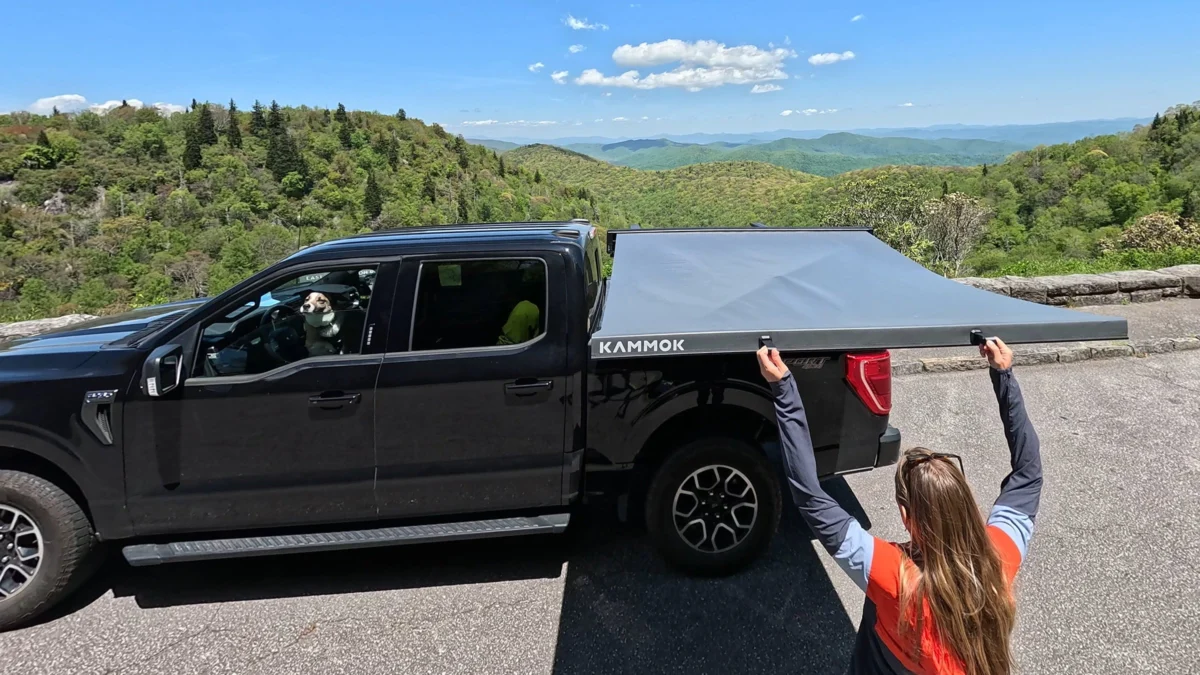
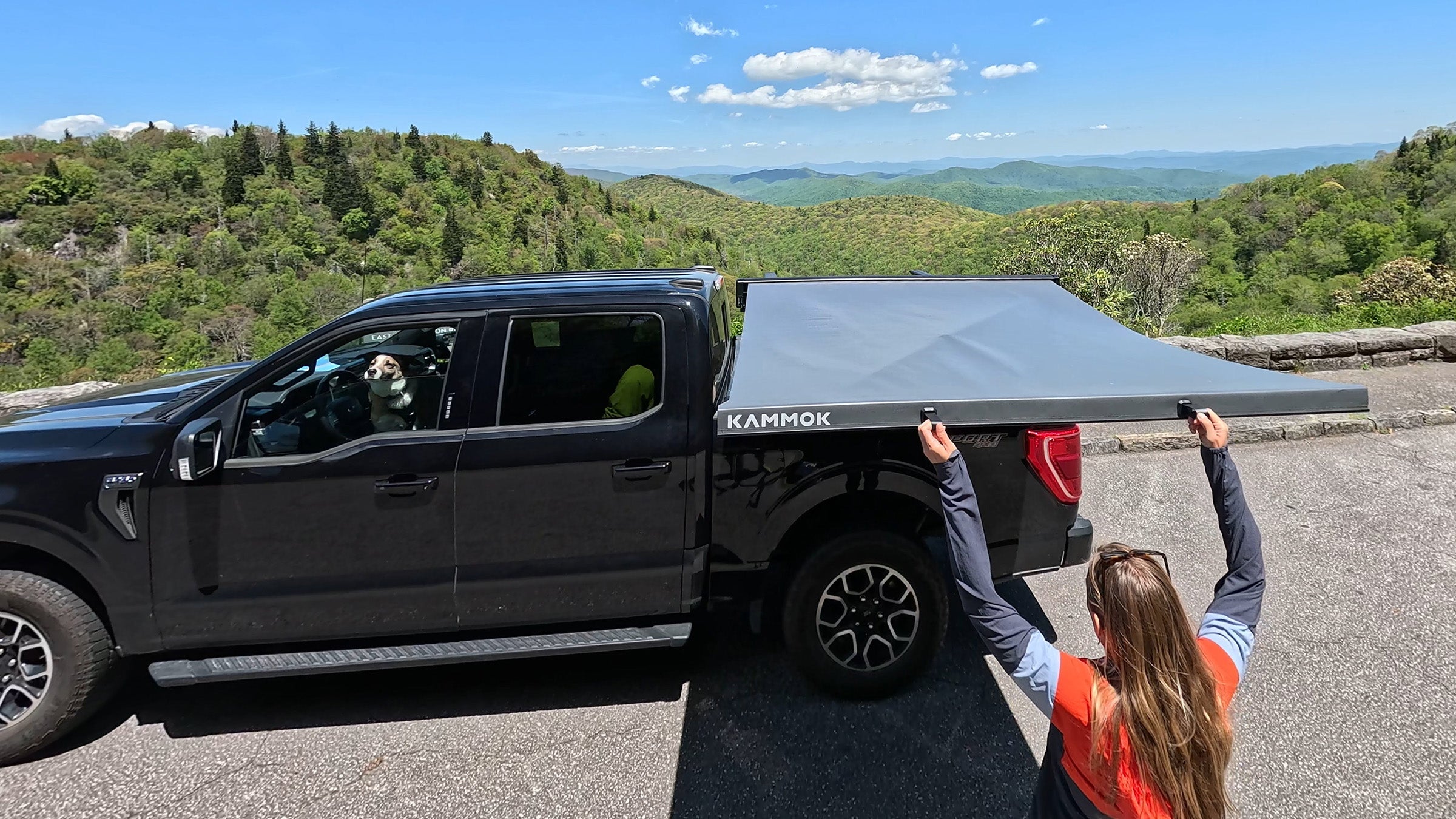
The outdoor gear industry has witnessed a significant shift toward "frictionless" adventure, where the time required for equipment setup is minimized to maximize the duration of the actual activity. A primary example of this evolution is the Kammok Crosswing, a vehicle-mounted retractable awning designed to deploy in approximately five seconds. Unlike traditional vehicle awnings that require a complex sequence of unzipping heavy-duty covers, extending support poles, and securing guy lines to the ground, the Crosswing utilizes a cantilevered, freestanding design. This innovation addresses a long-standing deterrent for outdoor enthusiasts: the reluctance to deploy shade for short-duration stops due to the labor-intensive nature of standard hardware.
The Evolution of Vehicle-Mounted Shade Systems
For decades, the vehicle awning market was dominated by two primary designs: the bag awning and the 270-degree swing-out awning. While effective at providing large areas of coverage, both styles typically require significant manual intervention. Bag awnings, often found on overland rigs and camper vans, require the user to stand on a tire or ladder to unzip a PVC cover before manually unrolling the fabric and setting up vertical supports. The 270-degree variants, while offering more coverage, involve a heavy swing arm that must be braced against wind gusts.
The Kammok Crosswing represents a departure from these traditional architectures. By integrating a spring-loaded tensioning system and high-strength aluminum crossbars, the unit eliminates the need for vertical poles under standard conditions. This "freestanding" capability is facilitated by a ratchet-tensioning mechanism that allows the user to lock the awning at various extension lengths, providing flexibility in cramped environments such as crowded trailheads or narrow campsites.
Technical Specifications and Engineering Architecture
The Crosswing is offered in two primary sizes—a five-foot and a seven-foot model—to accommodate different vehicle wheelbases and mounting configurations. The five-foot model is specifically tailored for short-bed trucks and mid-sized SUVs, weighing approximately 38 pounds. Despite its relatively low profile, the engineering focuses on structural rigidity.
Key Performance Data:
- Deployment Time: 5 seconds (approximate).
- Extension Intervals: 3 feet, 4.9 feet, and 6.5 feet.
- Wind Rating: Freestanding stability in gusts up to 25 mph.
- Weight: 38 lbs (5′ model).
- Material: UV-resistant, waterproof fabric supported by an aluminum chassis.
The internal architecture features a dual-arm cantilever system. When the user releases the primary clasp and pulls the leading edge, the internal spring provides enough resistance to keep the fabric taut but enough give to allow for smooth extension. Once the desired length is reached, a side-mounted ratchet allows the user to fine-tune the tension, ensuring that rain does not pool on the fabric surface—a common failure point in cheaper, non-tensioned awnings.
Market Context and Consumer Trends
The rise of "overlanding"—a form of self-reliant travel to remote destinations—has seen a surge in demand for vehicle-integrated gear. According to market analysis of the outdoor recreation economy, consumers are increasingly prioritizing "day-trip ready" accessories over "basecamp" setups. The Crosswing caters to this "micro-adventure" demographic: individuals who may only have two hours for a post-work mountain bike ride or a quick lunch at a scenic overlook.
In this context, the price point of the Crosswing becomes a subject of analysis. Retailing at a significant premium compared to competitors—nearly double the cost of entry-level models from brands like Yakima or Topoak—the Crosswing positions itself as a luxury performance tool. While a $450 awning like the Yakima OverNOut provides similar shade, the "cost of time" is the metric Kammok is betting on. If a user deploys a five-second awning ten times as often as a five-minute awning, the "cost-per-use" effectively drops below that of the cheaper alternative.
Installation Dynamics and Compatibility Challenges
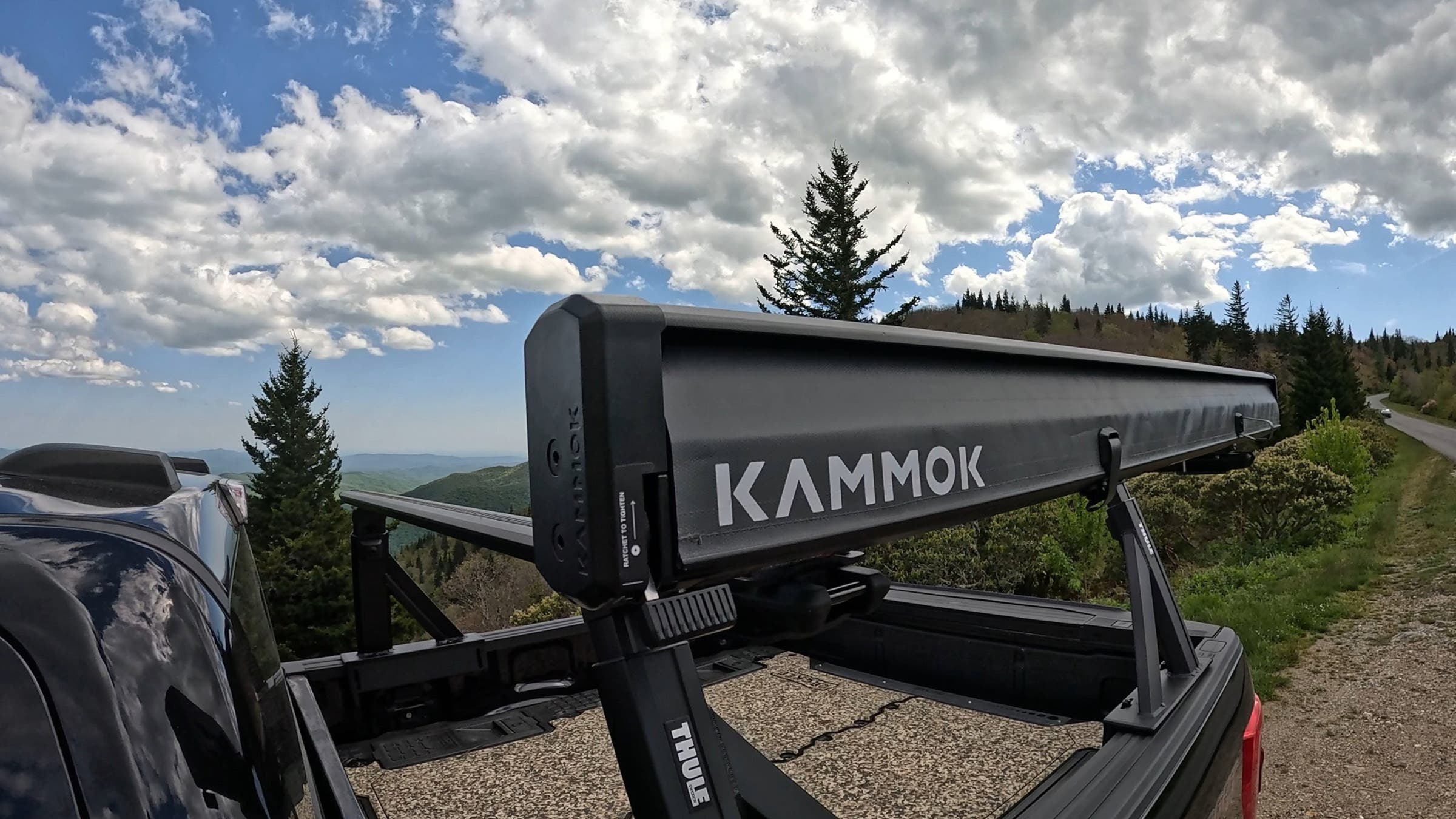
One of the critical factors in the adoption of vehicle-mounted awnings is the ease of integration with existing roof rack ecosystems. The Crosswing is designed to be compatible with a variety of bar shapes, including T-slot rails, aero bars, and round bars. However, field reports and technical assessments indicate that non-standard hardware can present challenges.
For instance, high-profile racks such as the Thule XScape or certain heavy-duty platform racks utilize wider-than-average bars or non-standard T-slot dimensions. While Kammok includes various mounting plates, users with oversized rack systems may find the installation process requires more customization than the "plug-and-play" marketing suggests. Ensuring a secure fit is paramount, as the 38-pound unit exerts significant leverage on the rack bars when fully extended in the freestanding mode.
Operational Performance and Field Observations
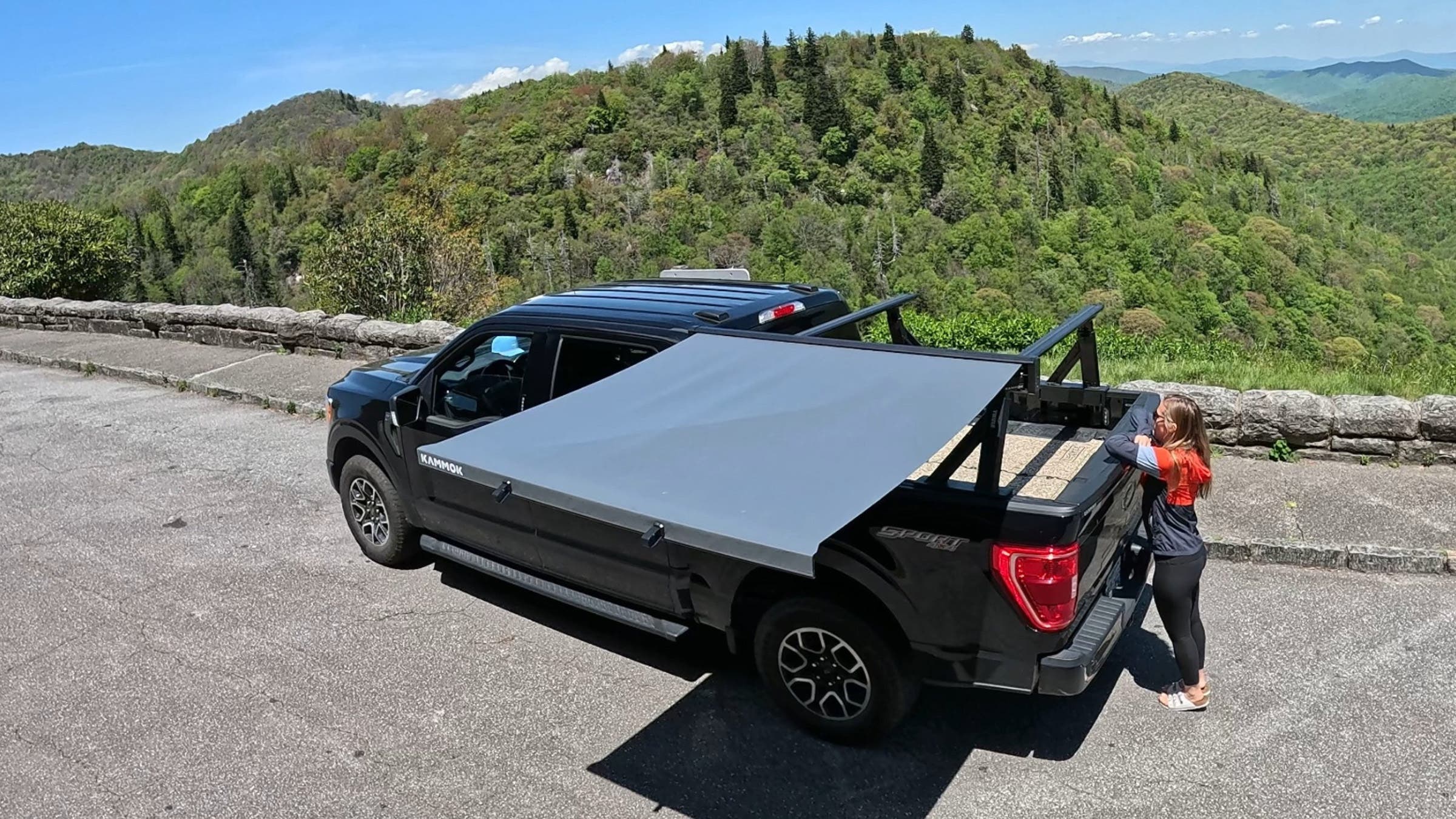
While the Crosswing excels in deployment speed, its mechanical complexity introduces specific operational nuances. Because the system relies on a precise internal retraction mechanism, the fabric must be pulled out evenly from both sides. An uneven pull can lead to the internal crossbars becoming misaligned, resulting in slack on one side of the awning and potentially putting uneven stress on the cantilever arms.
Furthermore, the "rattle factor" remains a consideration for long-distance travelers. The internal aluminum components, while sturdy when deployed, have been noted to produce audible vibration when the vehicle is traveling over corrugated roads or uneven terrain. While this does not typically impact the structural integrity of the device, it is a trade-off of the metal-on-metal retractable design that is less prevalent in soft-shell bag awnings.
In terms of environmental resilience, the 25 mph wind rating is a significant benchmark for a freestanding unit. Traditional awnings without poles often buckle in light breezes, but the Crosswing’s aluminum skeleton provides a rigid frame. For conditions exceeding 25 mph, Kammok offers supplemental support kits, though using them reverts the device to a more traditional (and slower) setup process.
Broader Implications for the Outdoor Gear Industry
The success of products like the Crosswing signals a broader trend in the outdoor industry toward automation and mechanical assistance. We are seeing similar shifts in the rooftop tent market, where gas-strut assisted "clamshell" tents are replacing manual fold-out designs. The goal is to lower the barrier to entry for outdoor activities by removing the "chore" aspect of gear management.
From a sustainability and manufacturing perspective, Kammok, as a certified B-Corp, emphasizes longevity in its design. By using high-grade aluminum and replaceable fabric components, the Crosswing is intended to outlast cheaper, plastic-heavy alternatives that often end up in landfills after a single season of heavy wind damage.
Comparative Analysis: The Competition
To understand the Crosswing’s position, it must be compared to the current market leaders:
- The Budget Entry (e.g., Topoak 180-degree): Priced around $549, these units offer more total square footage of shade but require manual unfolding and the setting of multiple poles. They are ideal for stationary camping but cumbersome for quick stops.
- The Utility Standard (e.g., Yakima OverNOut): Priced around $449, these require poles and guy lines. They are lightweight and reliable but lack the "five-second" convenience of a retractable system.
- The Premium Retractable (Kammok Crosswing): The highest price point in its class, offering the fastest deployment and a freestanding architecture. It is the only option that truly allows for "impromptu" shade.
Conclusion and Future Outlook
The Kammok Crosswing is more than just a car accessory; it is a case study in how user-experience design can redefine a stagnant product category. By identifying "setup friction" as the primary reason car owners stop using their awnings, Kammok has engineered a solution that prioritizes speed and ease of use over low cost.
As the overlanding and car-camping markets continue to mature, it is likely that other manufacturers will attempt to replicate this retractable, pole-free design. However, the complexity of the internal tensioning and the strength-to-weight ratio required for a stable cantilever suggest that the Crosswing will remain a benchmark for the industry in the coming years. For the consumer, the decision rests on a simple calculation: whether the elimination of setup time justifies a premium investment. For those who value the ability to generate shade during a five-minute break as easily as a five-hour stay, the Crosswing represents the current pinnacle of vehicle-integrated textile engineering.




 Chandra Hamzah
 Tatiana Tantri Indah Sari
 Budi Mulyono
 Lukman Taruna Persada Ramadan