
 Walid Sujud Trenggono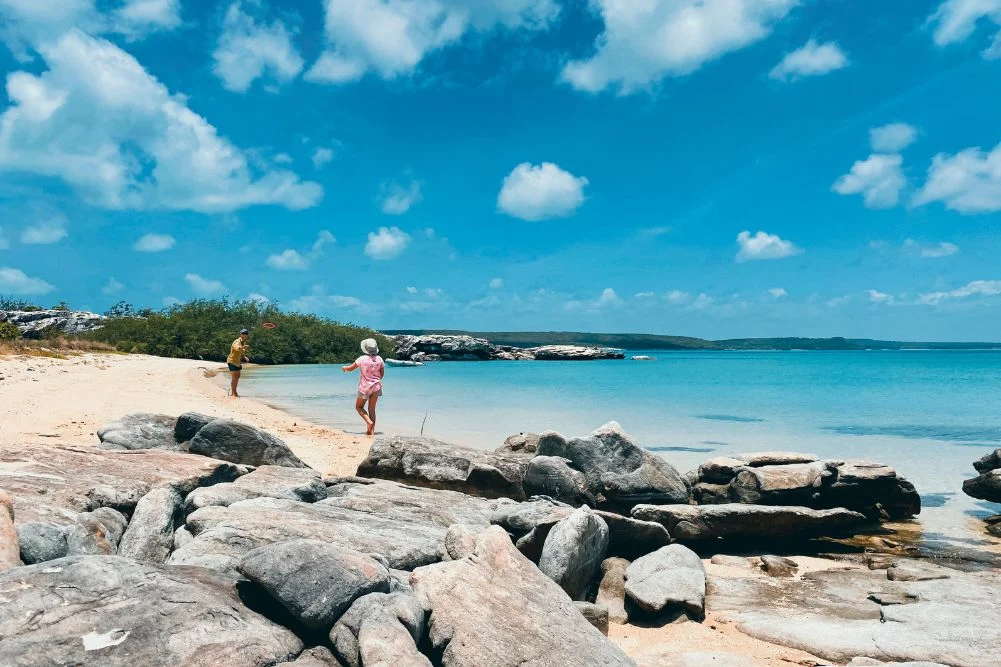
The Gove Peninsula, situated on the northeastern tip of Arnhem Land in Australia’s Northern Territory, represents one of the most significant archaeological and cultural landscapes in the Southern Hemisphere. Far from the popularized narrative of Australian history beginning with European arrival in 1788, the region surrounding Nhulunbuy offers tangible evidence of a sophisticated, multi-centennial international trade network. At sites such as Garanhan and Wurrwurrwuy, the landscape serves as a lithic archive, documenting the profound relationship between the Yolngu people and seafaring merchants from the Indonesian archipelago. This history, preserved in stone arrangements and vibrant contemporary art, continues to shape the socio-economic and cultural identity of the Northern Territory today.
The Makassan Exchange: A Century-Old Maritime Legacy
The historical narrative of the Gove Peninsula is inextricably linked to the Makassan trepangers from Sulawesi. Beginning as early as the mid-17th century, and possibly before, fleets of wooden perahu (sailing vessels) utilized the northwesterly monsoon winds to traverse the Arafura Sea. Their objective was the harvest of trepang, or sea cucumber, a delicacy highly prized in Chinese markets for its culinary and medicinal properties.
This interaction was not merely commercial; it was a structured social and diplomatic engagement. The Yolngu people, specifically the Lamamirri clan, granted the Makassans permission to establish seasonal camps along the coast. In exchange, the visitors introduced new technologies and goods, including metal knives, axes, cloth, tobacco, and the dugout canoe (manipan). The introduction of the dugout canoe revolutionized Yolngu maritime capabilities, allowing for more efficient hunting of large marine animals such as dugong and sea turtles.
The scale of this industry was significant. Historical records suggest that at the peak of the trade in the 19th century, upwards of 60 vessels and over 1,000 crew members would arrive annually. This sustained contact led to deep cultural integration. Yolngu vocabulary still contains hundreds of loanwords from the Makassan language, and shared genealogies persist to this day, as some Yolngu men famously traveled back to Makassar with the returning fleets.
The Wurrwurrwuy Stone Arrangements: History Set in Lithic Form
Located approximately 38 kilometers southeast of Nhulunbuy, the Wurrwurrwuy stone arrangements provide an extraordinary visual record of this pre-colonial era. Unlike many Indigenous archaeological sites that focus on spiritual or totemic beings, Wurrwurrwuy is predominantly secular and documentary in nature. The site features stones meticulously arranged to depict the infrastructure of the Makassan trade.
Visitors to the site can observe outlines of the perahu ships, complete with rudders and masts, as well as the stone fireplaces (tunun) used for boiling the sea cucumbers. The arrangements also depict fish traps and the houses of the Makassan captains. These structures were largely recorded and preserved in the late 19th century by Yolngu elders who recognized the shifting political landscape of Australia and sought to codify their history of international diplomacy.
The site’s preservation owes much to the Yunupingu family. In the 1960s, clan leader Mungurrawuy Yunupingu worked with historian Campbell Macknight to document the significance of these arrangements. Mungurrawuy, a renowned artist and the father of late Australian of the Year recipients Galarrwuy and Mandawuy Yunupingu, emphasized that these stones were a testament to Yolngu sovereignty and their long-standing history of managing international relations.
Yirrkala and the Evolution of Yolngu Art
The cultural heartbeat of the Gove Peninsula is centered in Yirrkala, a community approximately 19 kilometers from Nhulunbuy. The Buku-Larrnggay Mulka Centre serves as a pivotal institution for the preservation and promotion of Yolngu culture. This center is not merely a gallery but a "Mulka," or a sacred holding space, for the collective knowledge of the Yirritja and Dhuwa moieties.
Yolngu art is characterized by its intricate use of natural pigments and traditional techniques. One of the most prominent mediums is the weaving of gunga (pandanus spiralis). Historically, these fibers were used to create nganiyal (conical mats) used for infant protection and shelter. Today, these techniques have evolved into high-art forms, with naturally dyed baskets and mats gaining international acclaim.
Furthermore, Yirrkala is the birthplace of the modern Indigenous land rights movement. The Mulka Museum houses the famous "Church Panels" from 1962. These two large-scale ochre paintings on masonite were created by elders of both moieties to assert their custodianship over the land in the face of encroaching mining interests. These panels directly preceded the Yirrkala Bark Petitions of 1963, the first traditional Native Title documents recognized by the Australian Parliament, which set the legal precedent for the Aboriginal Land Rights Act (Northern Territory) 1976.
Ecological Significance and Sustainable Tourism
The Gove Peninsula and its surrounding islands, such as Dhambaliya (Bremer Island), are recognized for their immense biodiversity. The region serves as a critical habitat for four species of sea turtles: the green, flatback, hawksbill, and olive ridley. These species utilize the secluded, white-sand beaches of the peninsula for nesting, a process monitored by the Dhimurru Aboriginal Corporation’s rangers.
Off the coast of Bremer Island lies the Higginson Important Bird Area (IBA). This site is globally significant for its avian populations, hosting the only known breeding site for common noddies in the Northern Territory. Additionally, the area supports substantial numbers of bridled, roseate, and crested terns.
Tourism in the region is increasingly managed under Indigenous-owned frameworks, such as the Banubanu Beach Retreat on Bremer Island. This solar-powered, off-the-grid facility represents a shift toward low-impact, high-value eco-tourism. By limiting guest numbers and emphasizing cultural education, such enterprises ensure that the environmental and spiritual integrity of the land remains intact while providing economic opportunities for the Yolngu people.
Socio-Economic Context and Regional Logistics
Nhulunbuy was originally established in the early 1970s to service a bauxite mine and alumina refinery. However, with the 2014 curtailment of the refinery operations by Rio Tinto, the town has undergone a significant transition. The regional economy is diversifying, with a heightened focus on government services, space research (through the Arnhem Space Centre), and cultural tourism.
For the modern traveler or researcher, visiting the Gove Peninsula requires adherence to a strict permit system managed by the Dhimurru Aboriginal Corporation. These permits are essential for accessing recreational areas and serve as a vital tool for land management, ensuring that visitor numbers do not overwhelm the fragile ecosystem or interfere with sacred sites.
Travel Data and Accessibility:
- Aviation: Air North and Qantas operate daily flights from Darwin and Cairns to Gove Airport.
- Climate: The region experiences a tropical savanna climate. The "Dry Season" (May to September) is the primary period for tourism, characterized by lower humidity and temperatures ranging from 20°C to 30°C.
- Permits: A Dhimurru General Access Permit is mandatory for all non-Yolngu visitors accessing traditional lands. As of 2024, a three-day permit is priced at approximately $39 AUD per adult.
- Regulation: The Gove Peninsula is a "General Restricted Area" regarding alcohol. Visitors must apply for a liquor permit in advance if they wish to purchase takeaway alcohol, though licensed premises like the Gove Boat Club and the Surf Life Saving Club provide service to the public.
Broader Implications and Future Outlook
The history of Nhulunbuy and the Gove Peninsula challenges the standard "settler-colonial" timeline of Australia. The evidence of the Makassan trade proves that Northern Australia was part of a globalized economy centuries before the arrival of the First Fleet in Sydney Cove. This historical depth provides a unique foundation for reconciliation and cultural understanding.
The transition of Nhulunbuy from a mining outpost to a center for Indigenous art and eco-tourism reflects a broader trend in the Northern Territory. By centering Yolngu law (Rom) and language in the regional identity, the Gove Peninsula offers a model for sustainable development in remote Australia. As the world increasingly looks for authentic, sustainable, and culturally grounded travel experiences, Nhulunbuy stands as a premier destination that balances modern amenities with ancient traditions.
The ongoing preservation of sites like Wurrwurrwuy and the continued success of the Buku-Larrnggay Mulka Centre ensure that the story of the Gove Peninsula—a story of trade, resilience, and artistic brilliance—will continue to be told by its traditional custodians for generations to come.



 Anjar Salim
 Chandra Hamzah
 Tatiana Tantri Indah Sari
 Budi Mulyono
 Lukman Taruna Persada Ramadan
