Anjar Salim
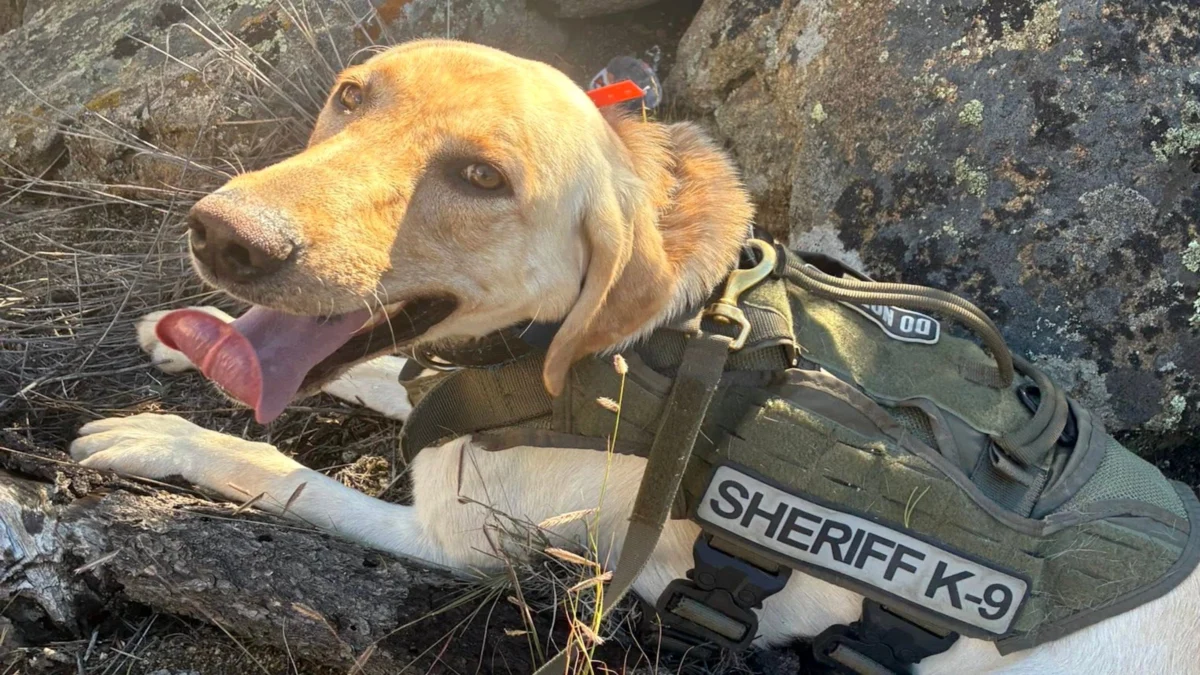
The rugged and unforgiving terrain of the Colorado Rocky Mountains near Buena Vista served as the backdrop for a high-stakes search and rescue operation on September 26, 2026. What began as a terrifying afternoon for a camping group culminated in a triumphant recovery, thanks to a coordinated multi-agency response and the exceptional tracking abilities of a two-year-old yellow Labrador named Archie. The canine officer, handling his very first official deployment for the Chaffee County Sheriff’s Office (CCSO), successfully located three missing children who had wandered 1.5 miles away from their campsite near the popular Midland Bike Trail.
The incident underscores both the inherent unpredictability of wilderness recreation and the critical role that specialized search and rescue (SAR) canine units play in modern emergency response protocols. As outdoor recreation continues to surge across public lands in the American West, the successful outcome of this search provides valuable insights into wilderness safety, canine scent tracking, and the operational logistics required to locate vulnerable populations in dense, mountainous environments.
Anatomy of a Wilderness Disappearance: The Timeline of Events
The chronology of the event began on the morning of September 26 at a dispersed campsite situated on the eastern side of Buena Vista, near the well-traveled Midland Bike Trail—a multi-use singletrack route heavily frequented by hikers, mountain bikers, and campers. The group consisted of multiple families and individuals enjoying the early autumn weather in the Colorado backcountry.
At approximately 9:00 A.M., adult members of the camping party realized that three children—two six-year-olds and one nine-year-old—were no longer within the campsite boundaries. Initially, the family members attempted to locate the trio themselves, scouring the immediate vicinity, calling out names, and checking nearby trails. After two hours of fruitless searching and mounting anxiety, the realization that the children were truly lost prompted a call to emergency dispatch.
The Chaffee County Sheriff’s Office immediately activated a comprehensive mutual-aid search response. Given the youth of the missing individuals and the expansive, rugged nature of the surrounding terrain, incident commanders mobilized a robust multi-pronged strategy. Rescuers deployed ground foot patrol teams to systematically sweep adjacent trails and ridgelines, launched overhead drones equipped with thermal and high-resolution optical cameras, and requested aerial support from a helicopter to scan the wider geographic area from above.
Despite these advanced technological assets, the search faced immediate environmental hurdles. The dense alpine vegetation, natural rock formations, and undulating topography of the Rocky Mountain foothills created numerous blind spots. It quickly became clear that standard aerial surveillance might not be enough to spot children who, panicked or fatigued, may have sought shelter beneath natural overhangs or thickets.
Deploying the K-9 Asset: Archie Enters the Field
Recognizing the limitations of aerial and standard ground searches in complex terrain, CCSO Deputy Kendra Hoffman made a pivotal tactical decision: she called for the deployment of a specialized K-9 scent-tracking unit. At the center of this decision was Archie, affectionately known as "Arch," a two-year-old yellow Labrador retriever owned and handled by local authorities and specifically trained in wilderness scent discrimination.
Archie represents a growing reliance on specialized working dogs within rural and mountain rescue units across North America. Unlike tracking dogs that follow broken vegetation or disturbed earth, scent-specific trailing dogs are introduced to a specific article belonging to the missing person—in this case, a beloved stuffed animal—allowing them to isolate and follow a unique human scent cone regardless of changes in ground disturbance.
According to search and rescue protocols, deploying a trailing dog typically comes with a strict time window. Generally, K-9 handlers hesitate to introduce tracking dogs if a person has been missing for extended periods, as heavy foot traffic from well-meaning family members, civilian volunteers, and first responders can contaminate the initial scene, introducing competing scents that confuse the animal. However, because Archie was brought in swiftly and deployed with a pristine scent article, he was able to cut through the environmental noise.
Upon arriving at the command post, Archie was presented with the children’s stuffed animal. Instantly locking onto the scent profile, the young Labrador set off with purpose. Rather than random wandering, Archie directed his handler and a team of three deputies on a sustained descent downhill toward a sandy wash feature roughly 1.5 miles from the original campsite.
Along this route, the human searchers corroborated the dog’s path when they discovered small children’s footprints pressed into the damp soil of the wash. True to his training, Archie guided the exhausted deputies directly to the location of the three children. Approximately five hours after they were first reported missing, the children were safely contacted, evaluated for medical needs, and found to be in stable condition, though undoubtedly cold, tired, and frightened by their ordeal.
The Strategic Value of K-9s in Mountain Rescue Operations
The successful rescue of the three children highlights the distinct operational advantages that canine units bring to wilderness search and rescue missions. While drones and helicopters offer rapid scanning capabilities over large tracts of land, they operate under significant operational constraints.
As Deputy Kendra Hoffman explained following the incident, children possess a smaller physical profile and often instinctively attempt to hide or hunker down when they realize they are lost.
"Kids are smaller. They like to hide in places," Hoffman noted in interviews following the event. "Just because we have drones and helicopters in the air, if they’re hiding under a rock or a tree, we’re not going to see them through the air. That’s why I was like, ‘let’s get Arch en route.’"
Furthermore, canine units excel in conditions where visibility is impaired by foliage, shadowing, or rugged vertical relief. A dog’s olfactory system—capable of detecting microscopic human shed skin cells, perspiration, and volatile organic compounds carried on the wind—remains one of the most effective tools in the SAR toolkit, outperforming electronic sensors in cluttered natural environments.
For Archie, this mission carried added significance. As a relatively new addition to the department’s roster, this deployment marked his first official on-duty search. The flawless execution of the track has fundamentally shifted the internal perspective on how canine resources will be prioritized in future Chaffee County operations. Deputy Hoffman confirmed that the department plans to integrate Archie and similar K-9 assets much earlier in the response timeline for future missing persons cases in the county’s demanding backcountry.
Backcountry Safety and Prevention: Lessons for Families
While the 2026 Buena Vista incident ended without tragedy, emergency management agencies emphasize that the situation underscores the vital need for proactive safety education among families who recreate in wilderness areas. The vast expanses of public lands across Colorado and the broader Rocky Mountain region present hidden dangers, particularly for young children whose spatial awareness and impulse control are still developing.
To prevent similar emergencies, public safety organizations, including the National Park Service and local sheriff’s offices, advocate for strict foundational safety rules when introducing children to the outdoors. Experts recommend that families adhere to core behavioral guidelines whenever they venture into unfamiliar natural settings:
- Know the Route: Families should thoroughly review their itinerary and ensure that all members understand the boundaries of the recreation area before setting up camp or embarking on a hike.
- The Buddy System: Children should never travel alone. If a child needs to move away from a stationary camp or group, they must be accompanied by a designated buddy.
- Stay Put and "Hug a Tree": If a child realizes they are separated from their group, the single most important rule of wilderness survival is to stop moving immediately. Wandering deeper into the backcountry exponentially increases the search radius and places the individual further away from trained rescuers. Children should be taught to find a safe, sheltered spot—such as a large tree—and stay there.
- Visibility and Identification: Rescuers wear high-visibility gear precisely so they can be spotted. Children should be instructed that if they hear callers or spot rescue personnel, they must make themselves visible and vocal immediately rather than remaining hidden out of fear or shyness. If they encounter law enforcement or search teams, they should clearly state their situation.
- Mandatory Check-Ins: Campers must establish a firm rule that children inform a responsible adult every single time they plan to leave the immediate vicinity of a base camp or trail junction.
Broader Implications for Search and Rescue Agencies
The Buena Vista rescue serves as a micro-case study in the evolution of rural emergency response. As outdoor recreation participation rates continue to climb—driven by demographic shifts, increased tourism, and a post-pandemic cultural emphasis on nature-based activities—rural sheriff’s offices and volunteer search and rescue organizations face mounting operational pressures.
In Chaffee County, which encompasses dramatic vertical relief ranging from the Arkansas River valley to soaring fourteeners in the Sawatch Range, search operations frequently demand high levels of physical endurance, specialized technical rescue skills, and significant financial and personnel commitments. The integration of specialized assets like K-9 scent-tracking units represents a crucial multiplier for force efficiency. By narrowing down expansive search grids to specific scent cones and tracks, dogs reduce the total time-to-find metric—a vital statistic when dealing with hypothermia, dehydration, and pediatric panic in alpine environments.
As emergency services analyze the lessons of the September 26 operation, the prevailing takeaway is one of validation for community investment in specialized animal handlers. Archie’s prompt and accurate tracking not only spared three young lives from potential exposure-related trauma during the crisp mountain autumn but also cemented the status of K-9 units as indispensable guardians of the backcountry. For the Chaffee County Sheriff’s Office, the operation stands as a textbook example of multi-agency coordination, swift decision-making, and the enduring bond between human rescuers and their four-legged counterparts.

 Lukman Taruna Persada Ramadan

 Tatiana Tantri Indah Sari

 Budi Mulyono