Anjar Salim
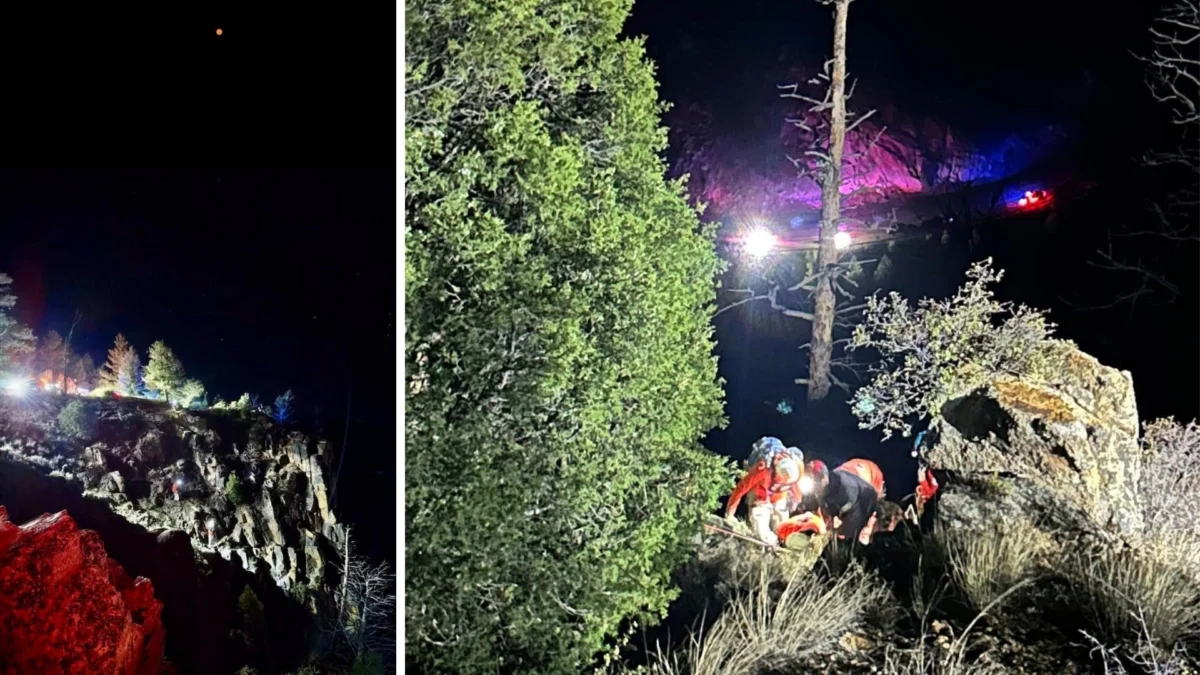
Midnight operations in remote mountain terrain present some of the most formidable challenges emergency responders can face. On September 18, 2026, those challenges were compounded by treacherous topography, loose rock, and complete darkness when a utility terrain vehicle (UTV) plummeted 250 feet down a steep, exposed embankment near Hot Sulphur Springs, Colorado. The incident triggered a complex, five-hour rescue operation involving a dozen members of Grand County Search and Rescue (GCSAR), who utilized sophisticated technical rope systems and an innovative aerial drone lighting setup to safely extract the injured driver.
The emergency unfolded just outside Hot Sulphur Springs, a municipality located approximately 96 miles west of Denver known for its rugged off-road vehicle trails and natural mineral pools. While the precise cause of the crash remains under investigation by authorities, the physical consequences of the accident immediately tested the limits and ingenuity of the responding rescue personnel. The driver, whose identity and current medical condition have not been publicly released by officials, went off-road shortly before 11:30 p.m., tumbling down a vertical drop characterized by unstable terrain and a stark absence of natural rigging points.
The rapid deployment of specialized search and rescue resources in the dead of night highlights the critical nature of backcountry infrastructure in rural Colorado, where recreation-heavy public lands frequently intersect with demanding topography. For GCSAR, the operation required a delicate balance of speed, patient stabilization, and meticulous risk management to ensure that the midnight extraction did not result in further injuries to the rescue crew.
A Chronology of the Midnight Operation
The timeline of the September 18 rescue underscores the high-stakes efficiency required during backcountry emergencies. The sequence of events unfolded over a rigorous four-and-a-half-hour window, testing the physical endurance and technical capabilities of the GCSAR team.
At 11:30 p.m., the initial emergency call alerted GCSAR to the severe UTV accident off a roadway near Hot Sulphur Springs. Within minutes, response protocols were activated, mobilizing a specialized team of a dozen mountain rescue professionals equipped for technical rope operations and nocturnal extractions.
By midnight, the response team arrived at the staging area near the rim of the 250-foot embankment. Faced with pitch-black conditions, responders immediately recognized the limitations of standard portable lighting. Traditional headlamps and handheld spotlights are notorious for creating severe tunnel vision in mountainous environments, narrowing the field of view and obscuring peripheral hazards such as shifting rocks or unstable edges. To mitigate this danger, team leadership deployed thermal and spotlight-equipped drones to hover above the accident site, casting a wide, even pool of artificial illumination across the entire cliffside.
Between 12:15 a.m. and 2:30 a.m., the technical phase of the rescue commenced. Because the slope lacked sufficient trees, boulders, or secure natural formations to anchor heavy-duty mechanical advantage systems, rescuers engineered an innovative rigging solution, anchoring their primary rope lines directly to a response vehicle positioned at the top of the embankment. Once the anchor system was deemed secure and load-tested, technicians began lowering medical supplies, specialized gear, and rescue personnel down the 250-foot precipice. Simultaneously, designated spotters were posted along the rim to monitor the slope continuously for unexpected rockfall or sliding debris.
By 3:00 a.m., rescuers reached the patient. Medical personnel immediately began stabilizing the injured driver, treating trauma sustained during the long fall. Following preliminary care, responders fitted the patient with a protective helmet to guard against potential falling debris during the vertical ascent. Using a sophisticated mechanical counter-balance and haul system, the team carefully raised the patient, alongside the attending medical staff and line technicians, back up the sheer cliff face to the safety of the staging area.
By 4:00 a.m., the patient was successfully transferred to Grand County Emergency Medical Services (EMS) for advanced stabilization and subsequent transport via Med Evac to a regional trauma center. With the patient en route to definitive care and all equipment packed, the final GCSAR field members cleared the scene, concluding a flawless execution of an extraordinarily hazardous night operation.
Technical Challenges and Aerial Innovation
The geography of Grand County offers premier recreational opportunities for off-highway vehicle (OHV) enthusiasts, but the landscape is inherently unforgiving. According to Scott Sutcliffe of GCSAR, the primary obstacle in the Hot Sulphur Springs rescue was not merely the depth of the fall, but the composition of the cliffside itself.
The slope featured an unstable combination of loose rock, steep exposure, and a severe deficit of traditional anchor points. In standard technical rescue training, teams rely heavily on live trees, rock outcrops, or buried deadman anchors to secure their load-bearing ropes. When those elements are absent, operators must improvise safely. By utilizing a heavy rescue vehicle as a deadman anchor, the GCSAR rigging team established a robust, reliable point of failure resistance capable of supporting the multi-hundred-pound loads of personnel and equipment traversing the void.
Compounding these structural hurdles was the nocturnal environment. Night operations inherently elevate the risk profile of backcountry missions. Shadows stretch, depth perception falters, and the psychological weight of isolation amplifies the difficulty of complex communication. GCSAR countered these traditional impediments by integrating commercial drone technology into the tactical workflow.
Rather than relying solely on point-source lighting from the ground, the aerial drones functioned as floating lighting rigs. This overhead perspective illuminated the vertical plane uniformly, allowing incident commanders to track the movement of the rescue basket, monitor the structural integrity of the slope, and identify potential rockfall hazards before they threatened personnel below. Furthermore, the aerial perspective enhanced real-time coordination between the rope handlers at the top and the medical team at the bottom, drastically reducing the friction and communication lags typically associated with high-angle night rescues.
Broader Implications for Backcountry Safety and OHV Recreation
Incidents of this magnitude focus renewed attention on the realities of off-highway vehicle safety in western states. Colorado’s vast public lands attract millions of outdoor recreationists annually, ranging from casual tourists to seasoned backcountry explorers. However, the proliferation of UTVs and all-terrain vehicles (ATVs) has coincided with a notable frequency of serious backcountry accidents.
UTVs, while engineered with roll cages and multi-point harness systems, present unique safety profiles. Their high center of gravity, combined with the loose, shifting gravel typical of mountain roads and marginal trails, makes them susceptible to rollovers and loss of control, particularly when operated after dark or on unfamiliar terrain.
Emergency management agencies across Colorado frequently emphasize that backcountry rescues are resource-intensive operations. A single midnight deployment like the one in Hot Sulphur Springs pulls specialized volunteers away from their families and regular employment, committing significant county resources and exposing first responders to considerable personal risk. While GCSAR and similar volunteer-based organizations train rigorously for these exact scenarios, they consistently advocate for preventative measures within the off-road community.
Following the conclusion of the September 18 operation, GCSAR issued a formal advisory reminding all OHV operators to exercise heightened caution. The agency stressed the fundamental importance of knowing personal and machine limits, adjusting driving speeds to match changing terrain and visibility conditions, and consistently wearing proper safety equipment—specifically emphasizing the mandatory use of seat belts and helmets, which remain the primary line of defense against catastrophic injury during vehicular ejections or rollovers.
As outdoor recreation continues to grow in popularity throughout Grand County and the broader Rocky Mountain region, the integration of advanced technologies like drone-assisted tactical lighting demonstrates how modern search and rescue operations are evolving to meet increasingly complex backcountry emergencies. Yet, as first responders continue to push the boundaries of innovation to save lives, the underlying message from the field remains unchanged: preparation, situational awareness, and adherence to basic safety protocols are the most effective tools for preventing tragedy in the wilderness.


 Gabriela Annisa
 Lukman Taruna Persada Ramadan
 Tatiana Tantri Indah Sari

 Budi Mulyono