
 Chandra Hamzah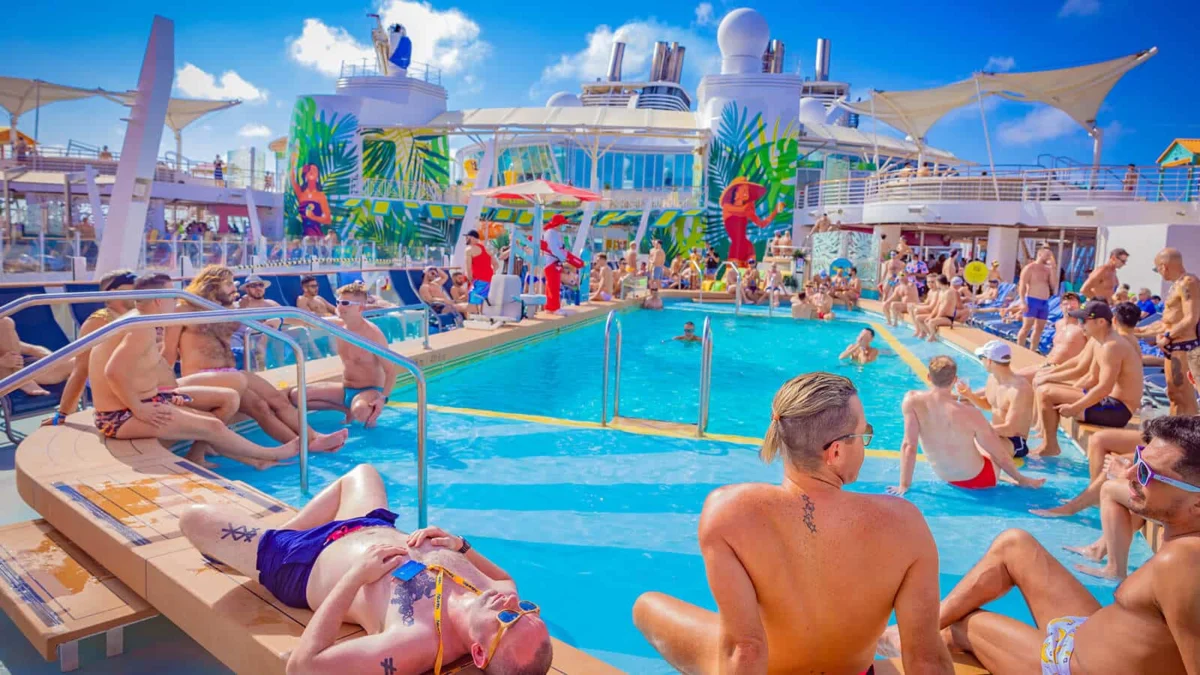
An LGBTQ+ chartered cruise aboard Virgin Voyages’ Scarlet Lady has ignited a global controversy after both Türkiye and Egypt denied the vessel port access, refusing entry to its passengers. The incident, which saw the ship diverted from its planned itinerary, has drawn sharp criticism from LGBTQ+ advocacy groups, travel industry experts, and passengers alike, raising serious concerns about discrimination and the shifting geopolitical landscape for LGBTQ+ rights.
The voyage, organized by Atlantis Events, a company specializing in tailored travel experiences for the LGBTQ+ community, was en route from Athens to Venice. The ship, the Scarlet Lady, carried over 1900 passengers. According to Travel Weekly, Australian passengers constituted the second-largest national group onboard, following those from the United States, indicating a significant international turnout for the specialized cruise.
Chronology of the Incident
The Atlantis Events cruise embarked on its journey with a meticulously planned itinerary that had previously included stops in both Türkiye and Egypt without incident. This familiarity with the destinations, coupled with the company’s extensive experience in organizing LGBTQ+ travel, made the eventual denial of port access a surprising and deeply disappointing development for those on board.
Sources indicate that Atlantis Events had secured all necessary approvals for the cruise stops in question. However, at what was described as the "11th hour," both the Turkish and Egyptian authorities rescinded their permission, leaving the cruise organizers and passengers blindsided.
Rich Campbell, President and CEO of Atlantis Events, expressed his bewilderment and frustration to CNN. "We had full approval and they denied us clearance at the 11th hour," Campbell stated. He conveyed his understanding of the disappointment felt by the passengers, acknowledging, "I know how much this visit meant to so many of you. We successfully sailed a similar itinerary last year without issue, so we were surprised by this unfortunate decision."
The specific reasons cited by Türkiye for their refusal were that the company running the cruise was "known for behaviours incompatible with the fabric of our society and our moral values." This statement suggests a deliberate targeting of the LGBTQ+ nature of the cruise, framing it as a violation of national ethos. While Egypt has not issued a public statement detailing its specific rationale, the parallel denial points towards a coordinated or at least aligned stance against the vessel and its passengers.
Background and Context
Atlantis Events has a long-standing history of organizing successful LGBTQ+ cruises and tours, often to destinations that, while not always having fully progressive LGBTQ+ rights, have historically welcomed such tourism. The company’s president, Rich Campbell, explicitly mentioned that a similar itinerary had been executed without issue in the preceding year. This detail underscores the sudden and unexpected nature of the port refusals, prompting questions about what may have changed in the interim.
The cruise itself was not solely populated by LGBTQ+ individuals but was chartered specifically for this community, fostering an environment of inclusivity and shared experience. The presence of notable public figures, such as acclaimed actress Patti LuPone, has been speculated by some travel experts as a potential factor that might have amplified the cruise’s visibility this year. However, this remains speculative, and the official statements from the involved countries point to a more direct ideological opposition.
Shifting Political Landscapes and Discrimination Concerns
The incident has fueled broader discussions about the increasing conservatism in various parts of the world and its impact on LGBTQ+ rights and travel. Kyle Olsen, owner of Hermes Holidays, another company specializing in LGBTQ+ travel, views this event as symptomatic of a worrying global trend.
"We’re seeing a rise in right-wing governments and increasingly conservative political movements, and in many places LGBTQI+ rights are being rolled back as a result," Olsen observed. He emphasized that the decisions by Türkiye and Egypt "don’t exist in isolation," suggesting they are part of a larger, concerning pattern of regression in LGBTQ+ acceptance.
Historically, many countries have benefited economically from tourism, including LGBTQ+ tourism, even if their domestic policies do not fully align with LGBTQ+ rights. The refusal to allow the Scarlet Lady to dock suggests a potential shift in this dynamic, where ideological considerations are now outweighing economic benefits, or perhaps, the economic argument is being reframed to align with perceived national values.
Passenger Reactions and Onboard Resilience
Despite the significant disruption and disappointment caused by the port denials, reports from onboard the Scarlet Lady suggest a resilient and unified spirit among the passengers. The unexpected circumstances, rather than dampening morale, appear to have fostered an even stronger sense of community.
"Redirecting this ship has created an even greater sense of community onboard. It is beautiful to experience," commented Kyle Olsen, who was likely referring to observations made by those on the ship or reports filtering back to the industry. This sentiment highlights the adaptive and positive coping mechanisms within the LGBTQ+ community when faced with adversity.
Online forums and social media platforms saw widespread discussion and reaction to the news. On Reddit, users expressed a range of views. One user, ClassicHando, commented, "Won’t lie, if I was going on a gay cruise I’d want to be stopping in places more friendly." This sentiment reflects a practical consideration for travelers seeking welcoming environments.
Another user, 2daytrending, provided a poignant observation: "This case is the reminder that being tolerated for tourism is not the same as being accepted." This distinction underscores the fundamental difference between a country allowing tourism for economic reasons and genuinely embracing or accepting LGBTQ+ individuals.
Debate on Destination Choice
The controversy also ignited a debate among some cruisers regarding the initial choice of destinations. Some questioned the strategic decision to include countries with known or perceived anti-LGBTQ+ sentiments in an LGBTQ+-focused cruise itinerary. One anonymous user articulated this perspective: "I am 100% pro LGBTQ+ and thinks it’s messed up these countries are this way. But who in the blue hell thought it was a good idea to have a gay cruise in the Middle East? Sadly what’s going on may very well be a best-case scenario."
However, others countered this by reiterating the historical context of successful cruises to these regions. "They’ve been doing these cruises for years and never had issues in the past. It’s the governments of Türkiye and Egypt that were the ones who decided to change anything," a user pointed out, placing the onus squarely on the governing bodies for altering the status quo.
Economic and Social Implications
The decision by Türkiye and Egypt to deny port access has tangible economic and social implications. For the tourism industry, it signals potential instability and a need for greater diligence in assessing the political climate of potential destinations. For LGBTQ+ travelers, it underscores the ongoing need for advocacy and the importance of supporting destinations that demonstrate genuine inclusivity.
Several users on social media platforms indicated that they would be reconsidering or canceling future travel plans to these countries. "We were seriously considering a trip to Türkiye this winter and we changed plans after reading this. Vote with your tourist dollars," wrote user Another_Dragon, illustrating a direct consumer response to the perceived discrimination.
Past experiences shared by some travelers highlighted the challenges faced by LGBTQ+ individuals in destinations like Egypt, even prior to this incident. One individual recounted their experience: "I’ve met gay tourists on my trip to Egypt in a group tours, and they unfortunately had to be really careful about hiding the fact that they were gay. Just seems like a less than great idea to go to an anti-lgbt country on an openly lgbt activity. Hopefully one day the attitude there will shift to being tolerant of the LGBT, as the Middle East and northern African regions are beautiful." This personal account reflects the difficult balancing act LGBTQ+ travelers often face, seeking to explore the world while navigating environments that may not be fully accepting.
The refusal of port access by Türkiye and Egypt represents a significant event in the context of international LGBTQ+ travel. It serves as a stark reminder of the persistent challenges faced by the community in various parts of the world and highlights the critical role of destination choice and the impact of geopolitical shifts on individual travel experiences and the broader tourism industry. The incident is likely to prompt further discussions and re-evaluations of travel strategies by LGBTQ+ tour operators and advocacy groups alike, emphasizing the need for continued vigilance and advocacy in the pursuit of global acceptance and equality.



 Anjar Salim
 Tatiana Tantri Indah Sari
 Budi Mulyono
 Lukman Taruna Persada Ramadan
